
How to Grow and Care for Allium senescens
Allium senescens
Written by Emilio Marruso · last checked
Toxic to: Dogs · Why
At a glance
This onion cousin is generous in the kitchen: the bulb, the leaves and the flowers can all be eaten raw or cooked, with a fairly strong onion flavor. Sow or plant it in spring, give it well-drained soil and moderate watering, and once settled it handles dry spells well. Just keep it out of damp ground, where the bulbs rot.
- Water
Water moderately; once settled it handles dry spells well
What the sources say (2)
Watering: Moderate; established plants are fairly drought tolerant
Light full sun Shade tolerance no shade Water moderate
— German Garlic (Allium senescens) — Practical Plants [3] Prefers a sunny position in a light well-drained soil [1] . Established plants are fairly drought tolerant [5] .
— German Garlic (Allium senescens) — Practical Plants [3] - Cold
Survives winters down to −30 °F (−34.4 °C)
Very hardy · USDA 4a · RHS H7 · Z4
What the sources say (6)
Hardiness, coldest zone: 4a [winter low −34.4 to −31.7 °C (−30 to −25 °F)]
According to University of Wisconsin Extension: The species is native to a wide area from central Europe to Northern Asia (Siberia, China and Korea) and is hardy in zones 4a to 8b .
— German Garlic, Allium senescens ssp. glaucum – Wisconsin Horticulture [1] According to Fine Gardening: Zones : 10, 4, 5, 6, 7, 8, 9 - Plant Height : 6 to 12 inches
— Ornamental onion, Allium senescens - Fine Gardening [5] The species is native to a wide area from central Europe to Northern Asia (Siberia, China and Korea) and is hardy in zones 4a to 8b .
— German Garlic, Allium senescens ssp. glaucum – Wisconsin Horticulture [1] Hardiness, warmest zone: 8b [winter low −9.4 to −6.7 °C (15 to 20 °F)]
According to University of Wisconsin Extension: The species is native to a wide area from central Europe to Northern Asia (Siberia, China and Korea) and is hardy in zones 4a to 8b .
— German Garlic, Allium senescens ssp. glaucum – Wisconsin Horticulture [1] According to Fine Gardening: Zones : 10, 4, 5, 6, 7, 8, 9 - Plant Height : 6 to 12 inches
— Ornamental onion, Allium senescens - Fine Gardening [5] The species is native to a wide area from central Europe to Northern Asia (Siberia, China and Korea) and is hardy in zones 4a to 8b .
— German Garlic, Allium senescens ssp. glaucum – Wisconsin Horticulture [1] - Soil
Well-drained soil only: the bulbs rot in damp ground
What the sources say (2)
Watering notes: Needs well-drained soil; bulbs rot in damp conditions
Propagation Sow seed in spring in containers or in situ. Divide clump-forming plants in spring. Problems Bulb rot in damp conditions.
— Ornamental onion, Allium senescens - Fine Gardening [5] Prefers a sunny position in a light well-drained soil [1] . Established plants are fairly drought tolerant [5] .
— German Garlic (Allium senescens) — Practical Plants [3] - Planting
Plant out in spring, once the seedlings are growing strongly
What the sources say (1)
Planting: Spring (seedlings, once growing vigorously)
Grow them on in the greenhouse for at least their first winter and plant them out into their permanent positions in spring once they are growing vigorously and are large enough.
— German Garlic (Allium senescens) — Practical Plants [3] - Harvest
Bulb, leaves and flowers are edible raw or cooked, with an onion flavor
- Pests
Onion flies and thrips; bulbs rot in wet soil
- Propagation
Grow from seed or divide the clumps during the growing season
What the sources say (2)
Propagation: Seed, division (spring; any time in the growing season)
Division in spring. Very easy, the plants divide successfully at any time in the growing season and the divisions can be planted straight out into their permanent positions if required.
— German Garlic (Allium senescens) — Practical Plants [3] Propagation Sow seed in spring in containers or in situ. Divide clump-forming plants in spring.
— Ornamental onion, Allium senescens - Fine Gardening [5] - Sowing
Sow in spring, in pots, a cold frame or straight in the ground
What the sources say (2)
Sowing: Spring (cold frame, containers or in situ)
Seed - sow spring in a cold frame. Prick out the seedlings into individual pots when they are large enough to handle
— German Garlic (Allium senescens) — Practical Plants [3] Propagation Sow seed in spring in containers or in situ. Divide clump-forming plants in spring.
— Ornamental onion, Allium senescens - Fine Gardening [5] - Safety
Keep dogs away: eating large amounts can poison them
Overview
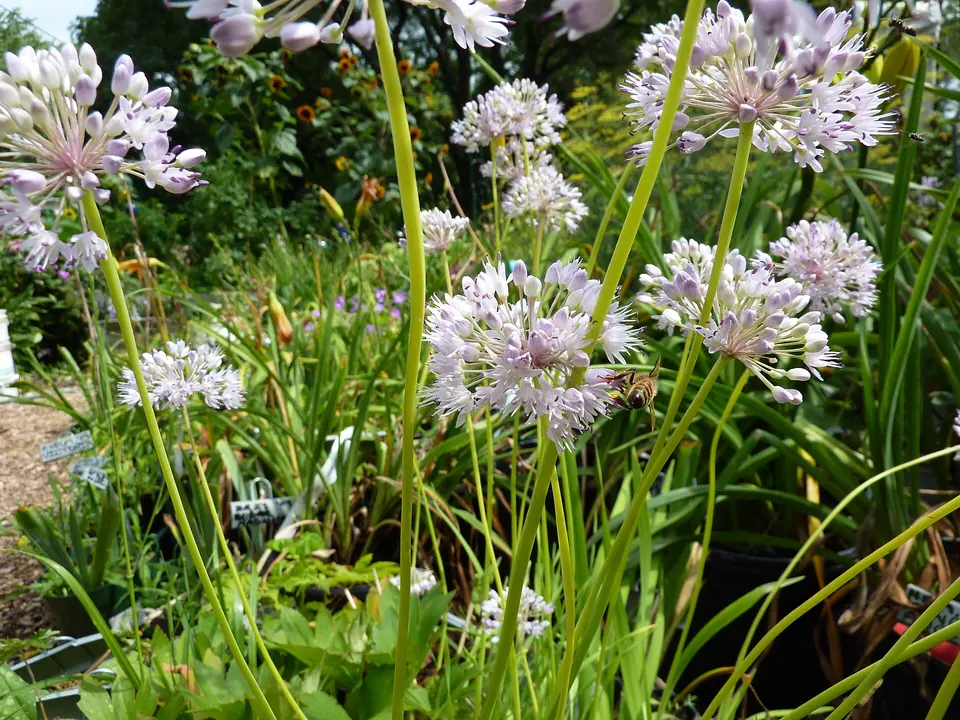
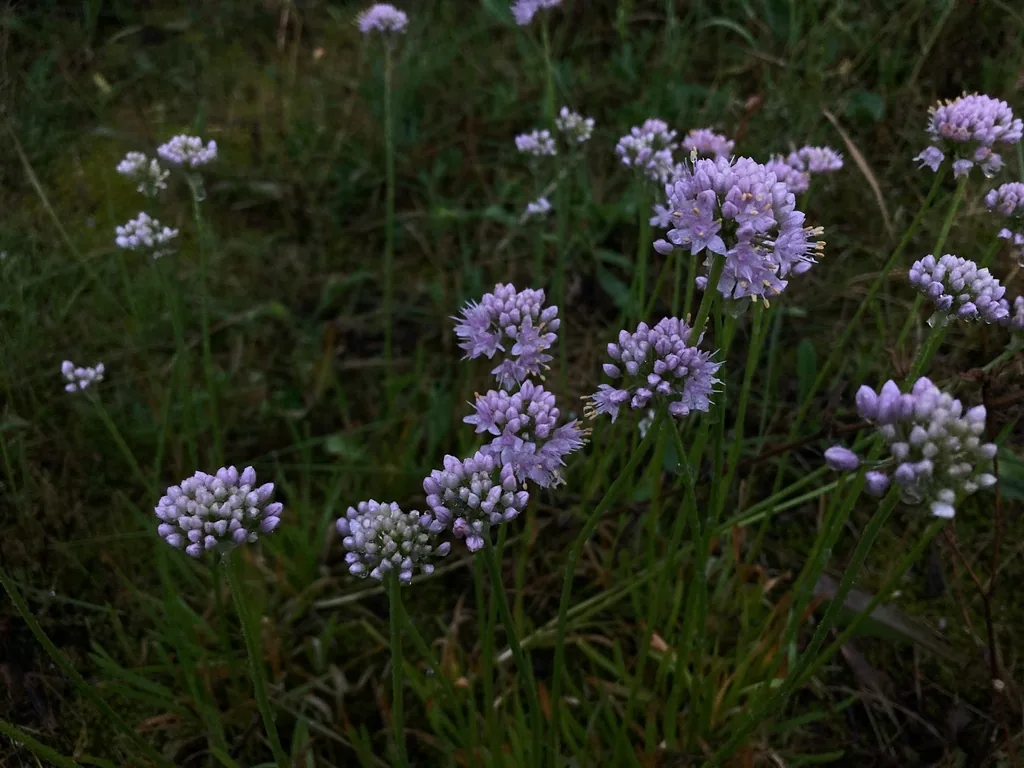
Allium senescens is a herbaceous perennial onion that grows from clusters of small bulbs on a short horizontal rhizome. [2] It produces pink or lilac flowers in mid to late summer and is grown mainly as an ornamental. [5][2] The bulbs, leaves and flowers are eaten raw or cooked, and the bulb is used as an onion substitute. [3]
This record is incomplete: the sources we read do not cover every field yet.
Not yet covered by our sources: Pruning
Allium senescens care
How to water Allium senescens
Watering
Moderate; established plants are fairly drought tolerant
What the sources say (2)
Light
full sun
Shade tolerance
no shade
Water
moderatePrefers a sunny position in a light well-drained soil [1] . Established plants are fairly drought tolerant [5] .Watering notes
Needs well-drained soil; bulbs rot in damp conditions
What the sources say (2)
Propagation Sow seed in spring in containers or in situ. Divide clump-forming plants in spring.
Problems Bulb rot in damp conditions.Prefers a sunny position in a light well-drained soil [1] . Established plants are fairly drought tolerant [5] .How much light Allium senescens needs
The sources give different values depending on region, zone or growing conditions.
What each source says
According to Practical Plants: Full sun, no shade
According to Useful Temperate Plants: Sunny position
According to Fine Gardening: Full sun to partial shade
What the sources say (3)
According to Practical Plants: Light
full sun
Shade tolerance
no shade
Water
moderateAccording to Useful Temperate Plants: Prefers a sunny position in a light well-drained soil[ 1 TitleAccording to Fine Gardening: Light :
Full Sun to Partial Shade
-
Bloom Time :
Late Summer, SummerHow much cold Allium senescens can take
Hardiness, coldest zone
4a [winter low −34.4 to −31.7 °C (−30 to −25 °F)]
What each source says
According to University of Wisconsin Extension: 4a-8b [winter low −34.4 to −6.7 °C (−30 to 20 °F)]
According to Fine Gardening: 4-10 [winter low −34.4 to 4.4 °C (−30 to 40 °F)]
What the sources say (3)
According to University of Wisconsin Extension: The species is native to a wide area from central Europe to Northern Asia (Siberia, China and Korea) and is hardy in zones 4a to 8b .According to Fine Gardening: Zones :
10, 4, 5, 6, 7, 8, 9
-
Plant Height :
6 to 12 inchesThe species is native to a wide area from central Europe to Northern Asia (Siberia, China and Korea) and is hardy in zones 4a to 8b .Hardiness, warmest zone
8b [winter low −9.4 to −6.7 °C (15 to 20 °F)]
What each source says
According to University of Wisconsin Extension: 4a-8b [winter low −34.4 to −6.7 °C (−30 to 20 °F)]
According to Fine Gardening: 4-10 [winter low −34.4 to 4.4 °C (−30 to 40 °F)]
What the sources say (3)
According to University of Wisconsin Extension: The species is native to a wide area from central Europe to Northern Asia (Siberia, China and Korea) and is hardy in zones 4a to 8b .According to Fine Gardening: Zones :
10, 4, 5, 6, 7, 8, 9
-
Plant Height :
6 to 12 inchesThe species is native to a wide area from central Europe to Northern Asia (Siberia, China and Korea) and is hardy in zones 4a to 8b .How to propagate Allium senescens
Seed, division (spring; any time in the growing season)
What the sources say (2)
Division in spring. Very easy, the plants divide successfully at any time in the growing season and the divisions can be planted straight out into their permanent positions if required.Propagation Sow seed in spring in containers or in situ. Divide clump-forming plants in spring.How to grow Allium senescens
The plant
Mature height
The sources give different values depending on region, zone or growing conditions.
What each source says
subsp. glaucum: 15-30 cm (6-12 in)
What the sources say (1)
subsp. glaucum: This small ornamental onion grows in dense clumps 6 to 12 inches tall and wide.Mature width
The sources give different values depending on region, zone or growing conditions.
What each source says
subsp. glaucum: 15-30 cm (6-12 in)
What the sources say (1)
subsp. glaucum: This small ornamental onion grows in dense clumps 6 to 12 inches tall and wide.Allium senescens pests and problems
Bulb rot
What to do: Avoid damp conditions; grow in well-drained soil.
What the sources say (1)
Propagation Sow seed in spring in containers or in situ. Divide clump-forming plants in spring. Problems Bulb rot in damp conditions.
— Ornamental onion, Allium senescens - Fine Gardening [5] Onion fly and thrips
What the sources say (1)
Divide clump-forming plants in spring. Problems Bulb rot in damp conditions. Onion fly and thrips.
— Ornamental onion, Allium senescens - Fine Gardening [5]
Remedies
Each remedy shows what official sources say about it; traditional remedies without an official source are marked as such. Harmful ones are listed so you know to avoid them.
Getting rid of it
unwanted self-seeding
deadheading Official source, not independently tested
How: Deadhead the flowers before they form seeds.
The blooms are highly attractive to butterflies, bees and other insects . Deadhead the flowers before they form seeds to prevent possible unwanted self-seeding.
— German Garlic, Allium senescens ssp. glaucum – Wisconsin Horticulture [1]
Is Allium senescens toxic to pets?
Reported by the source, quoted verbatim. This is not medical or veterinary advice: if a person or an animal may have eaten this plant, contact a poison control centre or a veterinarian.
there have been cases of poisoning caused by the consumption, in very large quantities and by some mammals, of certain members of this genus. Dogs seem to be particularly susceptible
[2]Genus-level warning: refers to the whole genus, not documented for this species
The source flags the risk for this animal but does not explain why.
Calendar
Sowing
Spring (cold frame, containers or in situ)
What the sources say (2)
Seed - sow spring in a cold frame. Prick out the seedlings into individual pots when they are large enough to handlePropagation Sow seed in spring in containers or in situ. Divide clump-forming plants in spring.Planting
Spring (seedlings, once growing vigorously)
What the sources say (1)
Grow them on in the greenhouse for at least their first winter and plant them out into their permanent positions in spring once they are growing vigorously and are large enough.Pruning
Not stated in the sources we read.
Months as given by the sources, which are mostly from the United States (northern hemisphere). In the southern hemisphere they shift by about six months.
Edibility
Reported by the source, quoted verbatim. Do not eat a plant on the basis of this page alone: identification mistakes can be dangerous.
Indicative values
Values from a secondary source, not checked word for word like the rest of this page. Use them as a starting point.
- Life cycle
- PerennialIndicative value, adapt it to your climate · Secondary source
- Hours of sun
- 6-8 hoursIndicative value, adapt it to your climate · Secondary source
- Drought tolerant
- yesIndicative value, adapt it to your climate · Secondary source
- Soil pH
- 6-7Indicative value, adapt it to your climate · Secondary source
- Care level
- MediumIndicative value, adapt it to your climate · Secondary source
- Growth rate
- LowIndicative value, adapt it to your climate · Secondary source
- Pruning
- March, April, May, June, JulyIndicative value, adapt it to your climate · Secondary source
Similar plants
- Allium schubertii Allium schubertii
- Allium siculum Allium siculum
- Allium triquetrum Allium triquetrum
- Blue Globe Onion Allium caeruleum
- Broadleaf wild leek Allium ampeloprasum
- Chives Allium schoenoprasum
- Cultivated garlic Allium sativum
- Field Garlic Allium vineale
Sources
Every value above is quoted from these documents. Links lead to the original publisher.
- German Garlic, Allium senescens ssp. glaucum – Wisconsin Horticulture · hort.extension.wisc.edu, consulted
- Allium senescens - Useful Temperate Plants · temperate.theferns.info, consulted
- German Garlic (Allium senescens) — Practical Plants · practicalplants.org, consulted
- Allium senescens | Pacific Bulb Society · pacificbulbsociety.org, consulted
- Ornamental onion, Allium senescens - Fine Gardening · finegardening.com, consulted
Written by Emilio Marruso · last checked