
Cómo cultivar y cuidar Avellano de Lambert
Corylus maxima
Escrito por Emilio Marruso · última revisión
Tóxica para: Personas · Por qué
De un vistazo
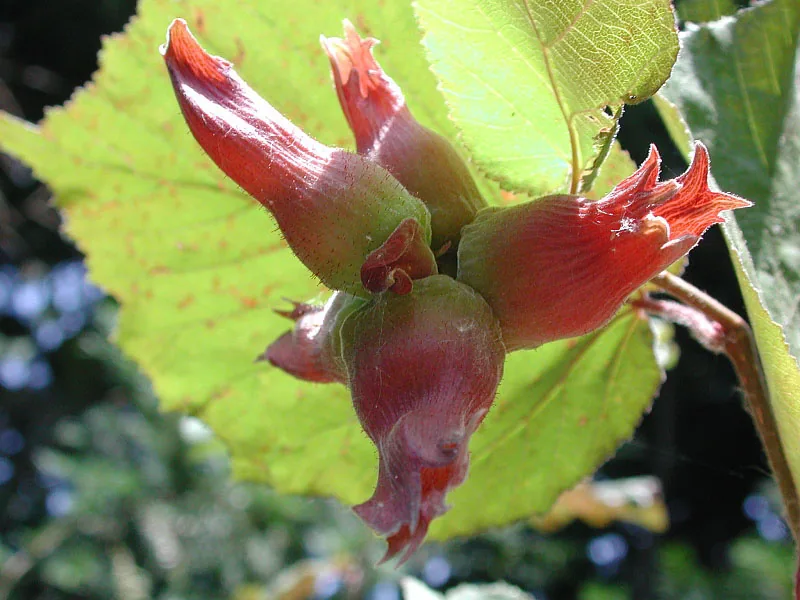
Este avellano crece hasta formar un árbol de 4,6–7,6 m y da una buena cosecha de avellanas grandes y sabrosas de septiembre a noviembre. Le va bien a pleno sol o a media sombra, en un suelo húmedo pero con buen drenaje. Plántalo en noviembre, diciembre, enero o marzo, mezcla compost en el hoyo y vigila las ardillas: a ellas también les encantan.
- Sol
De pleno sol a media sombra
Qué dicen las fuentes (3)
Luz: Pleno sol a semisombra
Grow Corylus maxima in moist but well-drained soil in full sun to partial shade.
— Corylus maxima | BBC Gardeners World Magazine [4] Moderately drought tolerant. Needs full sun and moist to dry and well-drained soil.
— Filbert, Purple Giant | TreeBrowser | USU [2] Light full sun Shade tolerance light shade Water moderate Hardiness Zone 5+
— Filbert (Corylus maxima) — Practical Plants [5] - Riego
Mantén el suelo húmedo pero con buen drenaje
Qué dicen las fuentes (2)
Notas sobre el riego: Suelo húmedo pero bien drenado
Grow Corylus maxima in moist but well-drained soil in full sun to partial shade.
— Corylus maxima | BBC Gardeners World Magazine [4] Moderately drought tolerant. Needs full sun and moist to dry and well-drained soil.
— Filbert, Purple Giant | TreeBrowser | USU [2] - Plantación
Planta en noviembre, diciembre, enero o marzo
Qué dicen las fuentes (3)
Plantación: Enero, marzo, noviembre, diciembre
Según Gardeners World: | Feb | Mar | Apr | May | Jun | Jul | Aug | Sep | Oct | Nov | Dec | Plant | yes | | yes | | | | | | | | yes | yes
— Corylus maxima | BBC Gardeners World Magazine [4] plántulas criadas a partir de semillas (Practical Plants): Plant them out into their permanent positions in late spring or early summer
— Filbert (Corylus maxima) — Practical Plants [5] | Feb | Mar | Apr | May | Jun | Jul | Aug | Sep | Oct | Nov | Dec | Plant | yes | | yes | | | | | | | | yes | yes
— Corylus maxima | BBC Gardeners World Magazine [4] - Abonado
Compost al plantar (1 parte por 3 de tierra); abona en primavera solo si el árbol lo necesita
Qué dicen las fuentes (4)
Abonos naturales: Compost mezclado con la tierra de relleno al plantar, 1 parte de compost por 3 partes de tierra
Incorporate organic matter (compost) into the soil at the time of planting and mix into the back-fill soil at a ratio of 1 part organic matter to 3 parts soil.
— Hazelnuts in the Home Orchard | USU [3] Cuándo: Solo en primavera, cuando los árboles comienzan su crecimiento activo
Additionally, hazelnuts should only be fertilized in the spring as trees begin actively growing.
— Hazelnuts in the Home Orchard | USU [3] Frecuencia: Solo cuando un análisis del suelo o el aspecto de la planta lo indique; ninguno si la planta se ve sana y produce bien
A soil test reveals soil nutrient levels and composition, which greatly assists in determining if fertilization is warranted.
— Hazelnuts in the Home Orchard | USU [3] Another help in determining if they may need fertilizer is their overall appearance. If the plant appears healthy and yields sufficiently, no fertilizer is needed.
— Hazelnuts in the Home Orchard | USU [3] - Cosecha
Recoge las avellanas grandes y sabrosas de septiembre a noviembre; se comen crudas o cocinadas
Qué dicen las fuentes (2)
- Plagas
Pulgones, ácaros y algunas enfermedades de las hojas
Qué dicen las fuentes (2)
Plagas: pulgones, ácaros
Moderately drought tolerant. Needs full sun and moist to dry and well-drained soil. Susceptible to aphids, mites, and various foliar diseases.
— Filbert, Purple Giant | TreeBrowser | USU [2] Enfermedades: diversas enfermedades foliares (no nombradas)
Moderately drought tolerant. Needs full sun and moist to dry and well-drained soil. Susceptible to aphids, mites, and various foliar diseases.
— Filbert, Purple Giant | TreeBrowser | USU [2] - Atención
Las ardillas pueden acabar con toda la cosecha de avellanas
- Tamaño
De 4,6 a 7,6 m de alto
Qué dicen las fuentes (1)
Altura adulta: 457.2-762 cm (15-25 pies)
General : Native to southeastern Europe and western Asia. A tough, large, round, shrubby tree; 15' to 25' tall.
— Filbert, Purple Giant | TreeBrowser | USU [2] - Multiplicación
Por semilla, por acodo en otoño o dividiendo los chupones a principios de primavera
Qué dicen las fuentes (3)
Propagación: Semillas; acodo en otoño; división de chupones a principios de primavera
Seed - best sown as soon as it is harvested in autumn in a cold frame
— Filbert (Corylus maxima) — Practical Plants [5] Layering in autumn. Easy, it takes about 6 months
— Filbert (Corylus maxima) — Practical Plants [5] Division of suckers in early spring. Very easy, they can be planted out straight into their permanent positions.
— Filbert (Corylus maxima) — Practical Plants [5] - Siembra
Siembra en otoño en cuanto recojas la semilla, en cajonera fría
Qué dicen las fuentes (1)
Siembra: Otoño, en cuanto se cosechan las semillas (en un invernadero frío)
Seed - best sown as soon as it is harvested in autumn in a cold frame
— Filbert (Corylus maxima) — Practical Plants [5] - Seguridad
No se conocen efectos tóxicos para las personas
Resumen
Corylus maxima es un árbol grande, redondeado y arbustivo, nativo del sureste de Europa y Asia occidental. [2] Produce grandes nueces comestibles, llamadas filbertos, y se cultiva en suelo húmedo pero bien drenado, a pleno sol o semisombra. [4] Se propaga por semilla, acodo y división de chupones. [5]
Citado en inglés, como en la fuente.
Esta ficha está incompleta: las fuentes consultadas aún no cubren todos los campos.
Aún no cubierto por nuestras fuentes: Riego, Distancia de plantación
Cuidados
Riego
Riego
Las fuentes dan valores distintos según la región, la zona o las condiciones de cultivo.
Lo que dice cada fuente
Según USU TreeBrowser: Moderadamente tolerante a la sequía
Según Practical Plants: Riego: moderado
Qué dicen las fuentes (2)
Según USU TreeBrowser: Moderately drought tolerant. Needs full sun and moist to dry and well-drained soil.Según Practical Plants: Light
full sun
Shade tolerance
light shade
Water
moderate
Hardiness
Zone 5+Notas sobre el riego
Suelo húmedo pero bien drenado
Luz
Pleno sol a semisombra
Qué dicen las fuentes (3)
Grow Corylus maxima in moist but well-drained soil in full sun to partial shade.Moderately drought tolerant. Needs full sun and moist to dry and well-drained soil.Light
full sun
Shade tolerance
light shade
Water
moderate
Hardiness
Zone 5+Clima y frío
Rusticidad, zona más fría
Las fuentes dan valores distintos según la región, la zona o las condiciones de cultivo.
Lo que dice cada fuente
Según USU TreeBrowser: 4 [mínima invernal de −34,4 a −28,9 °C (de −30 a −20 °F)]
Según USU Hazelnuts in the Home Orchard: 3 [mínima invernal de −40 a −34,4 °C (de −40 a −30 °F)]
Según Practical Plants: 5 [mínima invernal de −28,9 a −23,3 °C (de −20 a −10 °F)]
Qué dicen las fuentes (3)
Según USU TreeBrowser: Hardiness Zone
| 4-8Según USU Hazelnuts in the Home Orchard: | Large filbert (C. maxima)
| Other seed grown large filbert plants. Purchase 2-3 plants for sufficient pollination.
| 3Según Practical Plants: Light
full sun
Shade tolerance
light shade
Water
moderate
Hardiness
Zone 5+Rusticidad, zona más cálida
8 [mínima invernal de −12,2 a −6,7 °C (de 10 a 20 °F)]
Qué dicen las fuentes (1)
Hardiness Zone
| 4-8Dónde cultivarla
No figura en las fuentes consultadas.
Propagación
Semillas; acodo en otoño; división de chupones a principios de primavera
Qué dicen las fuentes (3)
Seed - best sown as soon as it is harvested in autumn in a cold frameLayering in autumn. Easy, it takes about 6 monthsDivision of suckers in early spring. Very easy, they can be planted out straight into their permanent positions.Cultivo
La planta
Familia
Betulaceae (familia del abedul)
Qué dicen las fuentes (1)
Corylus maxima
Betulaceae - Birch
## Description
Leaves : Similar to European filbert, but slightly largerAltura adulta
457.2-762 cm (15-25 pies)
Qué dicen las fuentes (1)
General : Native to southeastern Europe and western Asia. A tough, large, round, shrubby tree; 15' to 25' tall.Plagas y enfermedades
Plagas
pulgones, ácaros
Qué dicen las fuentes (1)
Moderately drought tolerant. Needs full sun and moist to dry and well-drained soil. Susceptible to aphids, mites, and various foliar diseases.Enfermedades
diversas enfermedades foliares (no nombradas)
Qué dicen las fuentes (1)
Moderately drought tolerant. Needs full sun and moist to dry and well-drained soil. Susceptible to aphids, mites, and various foliar diseases.Abonado
Cuándo
Solo en primavera, cuando los árboles comienzan su crecimiento activo
Qué dicen las fuentes (1)
Additionally, hazelnuts should only be fertilized in the spring as trees begin actively growing.Frecuencia
Solo cuando un análisis del suelo o el aspecto de la planta lo indique; ninguno si la planta se ve sana y produce bien
Qué dicen las fuentes (2)
A soil test reveals soil nutrient levels and composition, which greatly assists in determining if fertilization is warranted.Another help in determining if they may need fertilizer is their overall appearance. If the plant appears healthy and yields sufficiently, no fertilizer is needed.Abonos naturales
Compost mezclado con la tierra de relleno al plantar, 1 parte de compost por 3 partes de tierra
Qué dicen las fuentes (1)
Incorporate organic matter (compost) into the soil at the time of planting and mix into the back-fill soil at a ratio of 1 part organic matter to 3 parts soil.Problemas
Áfidos, ácaros y enfermedades foliares
Síntoma: Susceptible a pulgones, ácaros y diversas enfermedades foliares.
Qué dicen las fuentes (1)
Susceptible to aphids, mites, and various foliar diseases.
— Filbert, Purple Giant | TreeBrowser | USU [2] Ardillas
Síntoma: Las ardillas son una plaga importante y a menudo diezman la cosecha de nueces.
Qué dicen las fuentes (1)
Squirrels are a major pest of this plant, often decimating the crop of nuts
— Filbert (Corylus maxima) — Practical Plants [5]
Remedios
Las fuentes consultadas no dan remedios para esta planta.
Toxicidad
Según la fuente, citada textualmente. No es un consejo médico ni veterinario: si una persona o un animal pudo haber ingerido esta planta, contacta con un centro de toxicología o con un veterinario.
Corylus ‘Maxima’ has no toxic effects reported.
[4]
Calendario
Otoño, en cuanto se cosechan las semillas (en un invernadero frío)
Qué dicen las fuentes (1)
Seed - best sown as soon as it is harvested in autumn in a cold frameEnero, marzo, noviembre, diciembre
Lo que dice cada fuente
Según Gardeners World: Enero, marzo, noviembre, diciembre
plántulas criadas a partir de semillas (Practical Plants): Finales de primavera o principios de verano
Qué dicen las fuentes (3)
Según Gardeners World: | Feb | Mar | Apr | May | Jun | Jul | Aug | Sep | Oct | Nov | Dec
| Plant | yes | | yes | | | | | | | | yes | yesplántulas criadas a partir de semillas (Practical Plants): Plant them out into their permanent positions in late spring or early summer| Feb | Mar | Apr | May | Jun | Jul | Aug | Sep | Oct | Nov | Dec
| Plant | yes | | yes | | | | | | | | yes | yesMeses tal como los dan las fuentes, en su mayoría de Estados Unidos (hemisferio norte). En el hemisferio sur se desplazan unos seis meses.
Comestibilidad
Según la fuente, citada textualmente. No comas una planta basándote solo en esta página: los errores de identificación pueden ser peligrosos.
Valores orientativos
Valores de una fuente secundaria, no comprobados palabra por palabra como el resto de esta página. Úselos como punto de partida.
- Ciclo de vida
- PerenneValor orientativo, adáptalo a tu clima · Fuente secundaria
- Horas de sol
- 6-8 horasValor orientativo, adáptalo a tu clima · Fuente secundaria
- pH del suelo
- 6-7.5Valor orientativo, adáptalo a tu clima · Fuente secundaria
- Nivel de cuidado
- MedioValor orientativo, adáptalo a tu clima · Fuente secundaria
- Crecimiento
- BajoValor orientativo, adáptalo a tu clima · Fuente secundaria
- Poda
- FebreroValor orientativo, adáptalo a tu clima · Fuente secundaria
Plantas similares
- Beaked Hazelnut Corylus cornuta
- Farges Filbert Corylus fargesii
- Avellano turco Corylus colurna
- Avellano americano Corylus americana
- Avellano común Corylus avellana
- Abeto de Vancuver Abies grandis
- Abraham Trachystemon orientalis
- Bananero de Etiopía Ensete ventricosum
Fuentes
Cada valor anterior se cita de estos documentos. Los enlaces llevan al editor original.
- Corylus maxima Mill. | Plants of the World Online | Kew Science · powo.science.kew.org, consultado
- Filbert, Purple Giant | TreeBrowser | USU · extension.usu.edu, consultado
- Hazelnuts in the Home Orchard | USU · extension.usu.edu, consultado
- Corylus maxima | BBC Gardeners World Magazine · gardenersworld.com, consultado
- Filbert (Corylus maxima) — Practical Plants · practicalplants.org, consultado
- Corylus maxima - Useful Temperate Plants · temperate.theferns.info, consultado
Escrito por Emilio Marruso · última revisión