
How to Grow and Care for Filbert
Corylus maxima
Written by Emilio Marruso · last checked
Toxic to: People · Why
At a glance
This filbert grows into a handsome tree 15–25 ft tall and gives a good crop of large, tasty nuts from September to November. It's happy in full sun or partial shade, in soil that stays moist but drains well. Plant it in November, December, January or March, mix compost into the hole, and keep an eye on squirrels: they love the nuts too.
- Sun
Full sun to partial shade
What the sources say (3)
Light: Full sun to partial shade
Grow Corylus maxima in moist but well-drained soil in full sun to partial shade.
— Corylus maxima | BBC Gardeners World Magazine [4] Moderately drought tolerant. Needs full sun and moist to dry and well-drained soil.
— Filbert, Purple Giant | TreeBrowser | USU [2] Light full sun Shade tolerance light shade Water moderate Hardiness Zone 5+
— Filbert (Corylus maxima) — Practical Plants [5] - Water
Keep the soil moist but well drained
What the sources say (2)
Watering notes: Moist but well-drained soil
Grow Corylus maxima in moist but well-drained soil in full sun to partial shade.
— Corylus maxima | BBC Gardeners World Magazine [4] Moderately drought tolerant. Needs full sun and moist to dry and well-drained soil.
— Filbert, Purple Giant | TreeBrowser | USU [2] - Planting
Plant in November, December, January or March
What the sources say (3)
Planting: January, March, November, December
According to Gardeners World: | Feb | Mar | Apr | May | Jun | Jul | Aug | Sep | Oct | Nov | Dec | Plant | yes | | yes | | | | | | | | yes | yes
— Corylus maxima | BBC Gardeners World Magazine [4] seedlings raised from seed (Practical Plants): Plant them out into their permanent positions in late spring or early summer
— Filbert (Corylus maxima) — Practical Plants [5] | Feb | Mar | Apr | May | Jun | Jul | Aug | Sep | Oct | Nov | Dec | Plant | yes | | yes | | | | | | | | yes | yes
— Corylus maxima | BBC Gardeners World Magazine [4] - Feeding
Compost at planting (1 part to 3 parts soil); feed in spring only if the tree needs it
What the sources say (4)
Natural fertilizers: Compost mixed into the backfill soil at planting, 1 part compost to 3 parts soil
Incorporate organic matter (compost) into the soil at the time of planting and mix into the back-fill soil at a ratio of 1 part organic matter to 3 parts soil.
— Hazelnuts in the Home Orchard | USU [3] When: Only in spring, as the trees begin active growth
Additionally, hazelnuts should only be fertilized in the spring as trees begin actively growing.
— Hazelnuts in the Home Orchard | USU [3] How often: Only when a soil test or the plant's appearance shows a need; none if the plant looks healthy and yields well
A soil test reveals soil nutrient levels and composition, which greatly assists in determining if fertilization is warranted.
— Hazelnuts in the Home Orchard | USU [3] Another help in determining if they may need fertilizer is their overall appearance. If the plant appears healthy and yields sufficiently, no fertilizer is needed.
— Hazelnuts in the Home Orchard | USU [3] - Harvest
Pick the large, tasty nuts from September to November; eat them raw or cooked
What the sources say (2)
- Pests
Aphids, mites and some leaf diseases
What the sources say (2)
Pests: aphids, mites
Moderately drought tolerant. Needs full sun and moist to dry and well-drained soil. Susceptible to aphids, mites, and various foliar diseases.
— Filbert, Purple Giant | TreeBrowser | USU [2] Diseases: various foliar diseases (not named)
Moderately drought tolerant. Needs full sun and moist to dry and well-drained soil. Susceptible to aphids, mites, and various foliar diseases.
— Filbert, Purple Giant | TreeBrowser | USU [2] - Watch out
Squirrels can wipe out the whole nut crop
- Size
15 to 25 ft tall
What the sources say (1)
Mature height: 457.2-762 cm (15-25 ft)
General : Native to southeastern Europe and western Asia. A tough, large, round, shrubby tree; 15' to 25' tall.
— Filbert, Purple Giant | TreeBrowser | USU [2] - Propagation
By seed, by layering in autumn, or by dividing the suckers in early spring
What the sources say (3)
Propagation: Seed; layering in autumn; division of suckers in early spring
Seed - best sown as soon as it is harvested in autumn in a cold frame
— Filbert (Corylus maxima) — Practical Plants [5] Layering in autumn. Easy, it takes about 6 months
— Filbert (Corylus maxima) — Practical Plants [5] Division of suckers in early spring. Very easy, they can be planted out straight into their permanent positions.
— Filbert (Corylus maxima) — Practical Plants [5] - Sowing
Sow in autumn as soon as you harvest the seed, in a cold frame
What the sources say (1)
Sowing: Autumn, as soon as the seed is harvested (in a cold frame)
Seed - best sown as soon as it is harvested in autumn in a cold frame
— Filbert (Corylus maxima) — Practical Plants [5] - Safety
No toxic effects reported for people
Overview
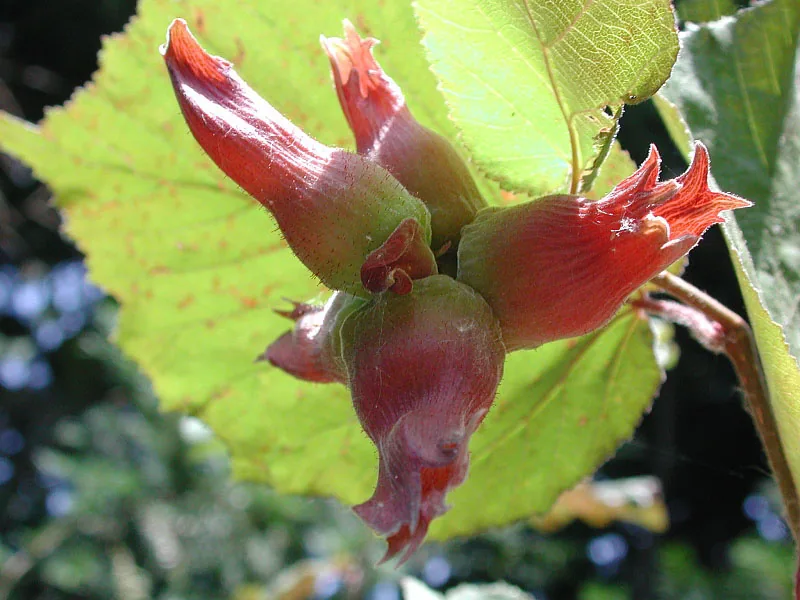
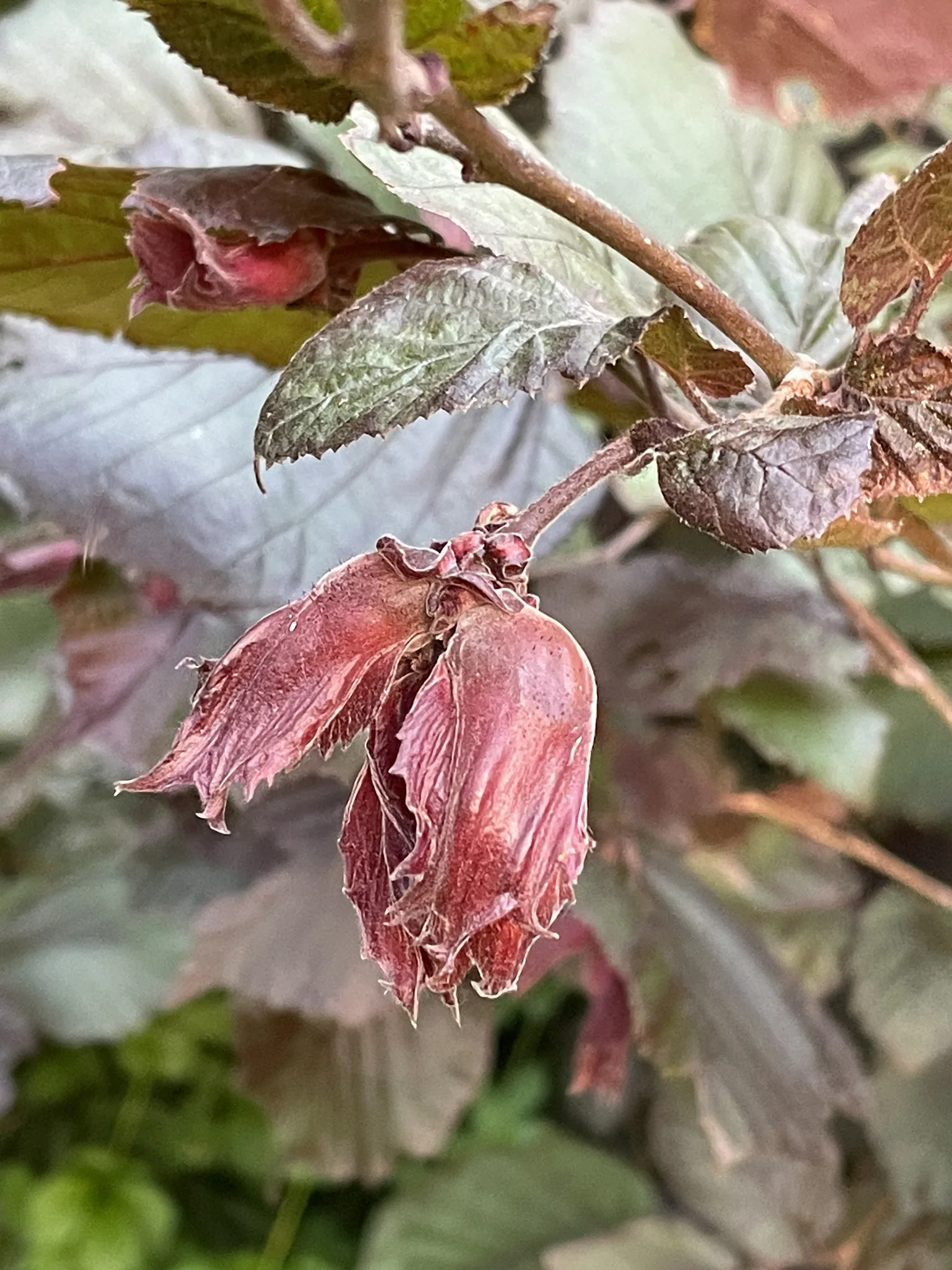
Corylus maxima is a large, round, shrubby tree native to southeastern Europe and western Asia. [2] It bears large edible nuts, called filberts, and is grown in moist but well-drained soil in full sun to partial shade. [4] It is propagated by seed, layering and division of suckers. [5]
This record is incomplete: the sources we read do not cover every field yet.
Not yet covered by our sources: Watering, Spacing
Filbert care
How to water Filbert
Watering
The sources give different values depending on region, zone or growing conditions.
What each source says
According to USU TreeBrowser: Moderately drought tolerant
According to Practical Plants: Water: moderate
What the sources say (2)
According to USU TreeBrowser: Moderately drought tolerant. Needs full sun and moist to dry and well-drained soil.According to Practical Plants: Light
full sun
Shade tolerance
light shade
Water
moderate
Hardiness
Zone 5+Watering notes
Moist but well-drained soil
How much light Filbert needs
Full sun to partial shade
What the sources say (3)
Grow Corylus maxima in moist but well-drained soil in full sun to partial shade.Moderately drought tolerant. Needs full sun and moist to dry and well-drained soil.Light
full sun
Shade tolerance
light shade
Water
moderate
Hardiness
Zone 5+How much cold Filbert can take
Hardiness, coldest zone
The sources give different values depending on region, zone or growing conditions.
What each source says
According to USU TreeBrowser: 4 [winter low −34.4 to −28.9 °C (−30 to −20 °F)]
According to USU Hazelnuts in the Home Orchard: 3 [winter low −40 to −34.4 °C (−40 to −30 °F)]
According to Practical Plants: 5 [winter low −28.9 to −23.3 °C (−20 to −10 °F)]
What the sources say (3)
According to USU TreeBrowser: Hardiness Zone
| 4-8According to USU Hazelnuts in the Home Orchard: | Large filbert (C. maxima)
| Other seed grown large filbert plants. Purchase 2-3 plants for sufficient pollination.
| 3According to Practical Plants: Light
full sun
Shade tolerance
light shade
Water
moderate
Hardiness
Zone 5+Hardiness, warmest zone
8 [winter low −12.2 to −6.7 °C (10 to 20 °F)]
What the sources say (1)
Hardiness Zone
| 4-8Where to grow Filbert
Not stated in the sources we read.
How to propagate Filbert
Seed; layering in autumn; division of suckers in early spring
What the sources say (3)
Seed - best sown as soon as it is harvested in autumn in a cold frameLayering in autumn. Easy, it takes about 6 monthsDivision of suckers in early spring. Very easy, they can be planted out straight into their permanent positions.How to grow Filbert
The plant
Family
Betulaceae (birch family)
What the sources say (1)
Corylus maxima
Betulaceae - Birch
## Description
Leaves : Similar to European filbert, but slightly largerMature height
457.2-762 cm (15-25 ft)
What the sources say (1)
General : Native to southeastern Europe and western Asia. A tough, large, round, shrubby tree; 15' to 25' tall.Pests and diseases
Pests
aphids, mites
What the sources say (1)
Moderately drought tolerant. Needs full sun and moist to dry and well-drained soil. Susceptible to aphids, mites, and various foliar diseases.Diseases
various foliar diseases (not named)
What the sources say (1)
Moderately drought tolerant. Needs full sun and moist to dry and well-drained soil. Susceptible to aphids, mites, and various foliar diseases.Fertilizing
When
Only in spring, as the trees begin active growth
What the sources say (1)
Additionally, hazelnuts should only be fertilized in the spring as trees begin actively growing.How often
Only when a soil test or the plant's appearance shows a need; none if the plant looks healthy and yields well
What the sources say (2)
A soil test reveals soil nutrient levels and composition, which greatly assists in determining if fertilization is warranted.Another help in determining if they may need fertilizer is their overall appearance. If the plant appears healthy and yields sufficiently, no fertilizer is needed.Natural fertilizers
Compost mixed into the backfill soil at planting, 1 part compost to 3 parts soil
What the sources say (1)
Incorporate organic matter (compost) into the soil at the time of planting and mix into the back-fill soil at a ratio of 1 part organic matter to 3 parts soil.Filbert pests and problems
Aphids, mites and foliar diseases
Symptom: Listed as susceptible to aphids, mites and various foliar diseases
What the sources say (1)
Susceptible to aphids, mites, and various foliar diseases.
— Filbert, Purple Giant | TreeBrowser | USU [2] Squirrels
Symptom: Squirrels are a major pest, often decimating the crop of nuts
What the sources say (1)
Squirrels are a major pest of this plant, often decimating the crop of nuts
— Filbert (Corylus maxima) — Practical Plants [5]
Remedies
The sources we checked give no remedies for this plant.
Is Filbert poisonous?
Reported by the source, quoted verbatim. This is not medical or veterinary advice: if a person or an animal may have eaten this plant, contact a poison control centre or a veterinarian.
Corylus ‘Maxima’ has no toxic effects reported.
[4]
Calendar
Autumn, as soon as the seed is harvested (in a cold frame)
What the sources say (1)
Seed - best sown as soon as it is harvested in autumn in a cold frameJanuary, March, November, December
What each source says
According to Gardeners World: January, March, November, December
seedlings raised from seed (Practical Plants): Late spring or early summer
What the sources say (3)
According to Gardeners World: | Feb | Mar | Apr | May | Jun | Jul | Aug | Sep | Oct | Nov | Dec
| Plant | yes | | yes | | | | | | | | yes | yesseedlings raised from seed (Practical Plants): Plant them out into their permanent positions in late spring or early summer| Feb | Mar | Apr | May | Jun | Jul | Aug | Sep | Oct | Nov | Dec
| Plant | yes | | yes | | | | | | | | yes | yesMonths as given by the sources, which are mostly from the United States (northern hemisphere). In the southern hemisphere they shift by about six months.
Edibility
Reported by the source, quoted verbatim. Do not eat a plant on the basis of this page alone: identification mistakes can be dangerous.
Indicative values
Values from a secondary source, not checked word for word like the rest of this page. Use them as a starting point.
- Life cycle
- PerennialIndicative value, adapt it to your climate · Secondary source
- Hours of sun
- 6-8 hoursIndicative value, adapt it to your climate · Secondary source
- Soil pH
- 6-7.5Indicative value, adapt it to your climate · Secondary source
- Care level
- MediumIndicative value, adapt it to your climate · Secondary source
- Growth rate
- LowIndicative value, adapt it to your climate · Secondary source
- Pruning
- FebruaryIndicative value, adapt it to your climate · Secondary source
Similar plants
- Beaked Hazelnut Corylus cornuta
- Farges Filbert Corylus fargesii
- Turkish Hazel Corylus colurna
- Hazelnut Corylus americana
- Hazelnut Corylus avellana
- Abies grandis Abies grandis
- Abraham Trachystemon orientalis
- Abyssinian banana Ensete ventricosum
Sources
Every value above is quoted from these documents. Links lead to the original publisher.
- Corylus maxima Mill. | Plants of the World Online | Kew Science · powo.science.kew.org, consulted
- Filbert, Purple Giant | TreeBrowser | USU · extension.usu.edu, consulted
- Hazelnuts in the Home Orchard | USU · extension.usu.edu, consulted
- Corylus maxima | BBC Gardeners World Magazine · gardenersworld.com, consulted
- Filbert (Corylus maxima) — Practical Plants · practicalplants.org, consulted
- Corylus maxima - Useful Temperate Plants · temperate.theferns.info, consulted
Written by Emilio Marruso · last checked