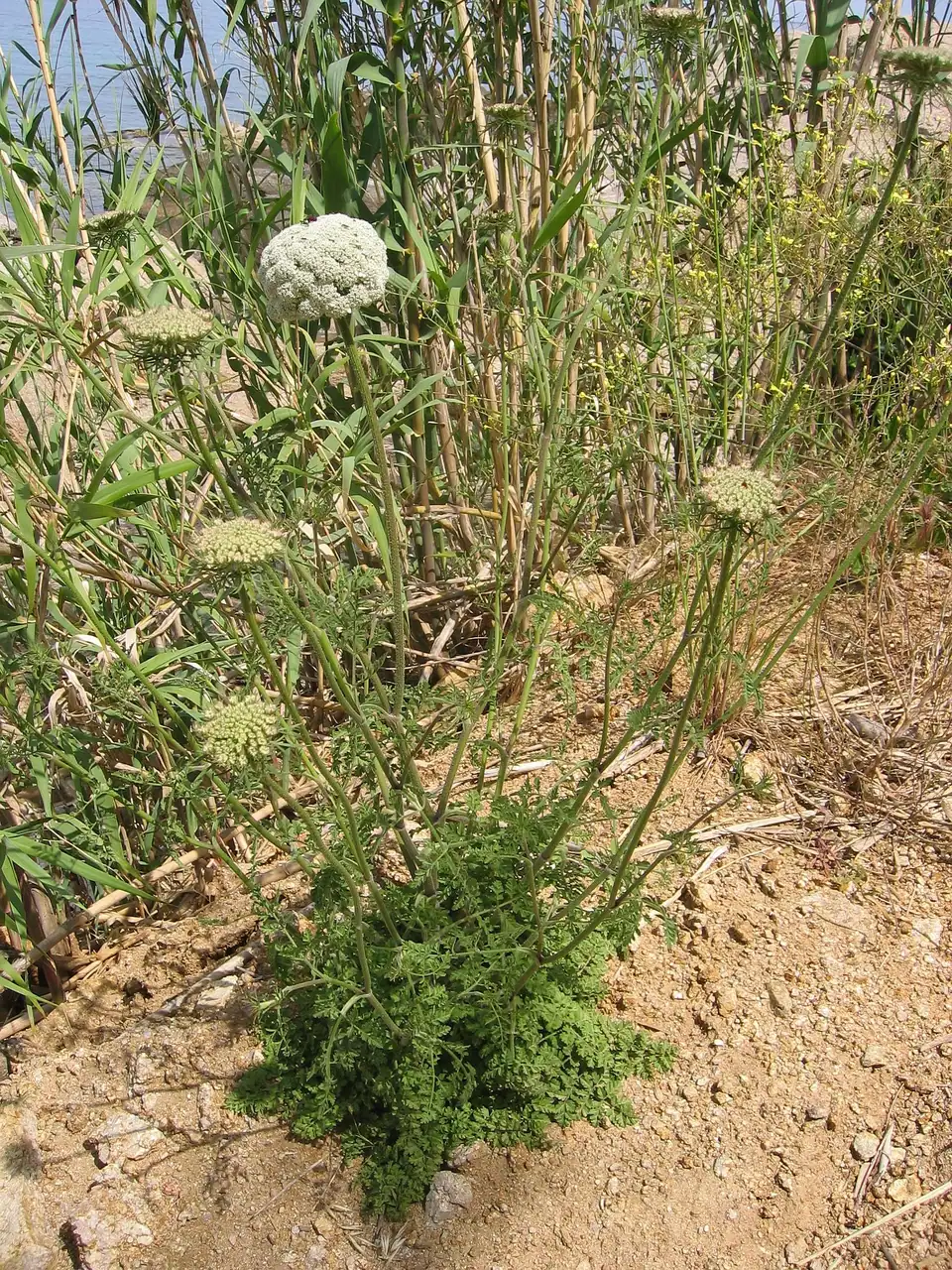


Cómo cultivar y cuidar Zanahoria silvestre
Daucus carota
Escrito por Emilio Marruso · última revisión
Tóxica para: Personas · Por qué
De un vistazo
La zanahoria es un cultivo ideal para empezar: siembra directamente en el huerto de primavera a verano, a pleno sol o en semisombra. Mantén la tierra húmeda de forma constante y empieza a cosechar cuando las raíces tengan 1 cm de grosor. Las siembras de finales de verano y otoño pueden quedarse bajo un acolchado y cosecharse hasta que la tierra se congele.
- Sol
Sol pleno o semisombra
Qué dicen las fuentes (1)
Luz: Pleno sol a semisombra
Light: Full sun (6 or more hours of direct sunlight a day) Partial Shade (Direct sunlight only part of the day, 2-6 hours)
— Daucus carota (Bee's Nest-Plant, Bird's-Nest, Devil's Plague, Queen Anne's Lace, Wild Carrot) | North Carolina Extension Gardener Plant Toolbox [1] - Riego
Mantén la tierra húmeda de forma constante; riega menos cerca de la cosecha para que no se agrieten las raíces
Qué dicen las fuentes (3)
Riego: Humedad constante y uniforme durante el crecimiento (zanahorias cultivadas); riega cuando se seque.
Carrots require consistent, uniform moisture while they are growing to have proper root development (that is why we grow them after all), meaning you’ll need to water them when it becomes dry.
— How to Grow Carrots | Good Growing | Illinois Extension | Illinois [5] Notas sobre el riego: Mantén la tierra húmeda hasta que las plántulas tengan al menos 1 pulgada [2,5 cm] de alto; reduce el riego cerca de la cosecha porque demasiada humedad puede agrietar las raíces
Therefore, keep the soil moist until the seedlings are at least 1 inch tall.
— How to Grow Carrots | Good Growing | Illinois Extension | Illinois [5] When it gets close to harvest time, back off on watering because too much moister may cause the roots to crack.
— How to Grow Carrots | Good Growing | Illinois Extension | Illinois [5] - Frío
Aguanta inviernos de hasta −34,4 °C (−30 °F)
Muy rústica · USDA 4a · RHS H7 · Z4
Qué dicen las fuentes (2)
Rusticidad, zona más fría: 4a [mínima invernal de −34,4 a −31,7 °C (de −30 a −25 °F)]
Soil Drainage: Good Drainage Moist Occasionally Dry USDA Plant Hardiness Zone: 4a, 5a, 5b, 6a, 6b, 7a, 7b, 8a, 8b, 9a, 10a, 10b, 11a, 11b
— Daucus carota (Bee's Nest-Plant, Bird's-Nest, Devil's Plague, Queen Anne's Lace, Wild Carrot) | North Carolina Extension Gardener Plant Toolbox [1] Rusticidad, zona más cálida: 11b [mínima invernal de 7,2 a 10 °C (de 45 a 50 °F)]
Soil Drainage: Good Drainage Moist Occasionally Dry USDA Plant Hardiness Zone: 4a, 5a, 5b, 6a, 6b, 7a, 7b, 8a, 8b, 9a, 10a, 10b, 11a, 11b
— Daucus carota (Bee's Nest-Plant, Bird's-Nest, Devil's Plague, Queen Anne's Lace, Wild Carrot) | North Carolina Extension Gardener Plant Toolbox [1] - Suelo
Mulle la tierra hasta 20–23 cm y quita las piedras, o las raíces saldrán torcidas
- Distancia
5 cm entre plantas tras aclarar, 30–46 cm entre hileras
Qué dicen las fuentes (3)
Distancia de plantación: 5.1 cm (2 pulgadas) entre plantas después del raleo; hileras separadas 30.5-45.7 cm (12-18 pulgadas)
Once carrots germinate and are about two inches tall, they should be thinned, so they are about two inches apart.
— How to Grow Carrots | Good Growing | Illinois Extension | Illinois [5] Rows should be 12 to 18 inches apart.
— How to Grow Carrots | Good Growing | Illinois Extension | Illinois [5] Distancia entre hileras: 30-46 cm (12 a 18 pulgadas)
Rows should be 12 to 18 inches apart.
— How to Grow Carrots | Good Growing | Illinois Extension | Illinois [5] - Abonado
Abona antes de sembrar y otra vez cuando las hojas midan 10 cm; el exceso de nitrógeno deforma las raíces
Qué dicen las fuentes (11)
Cuándo: Antes de plantar, mezclado con el suelo; luego junto a las plantas cuando las puntas midan 10.2 cm [4 in] de alto
Campos comerciales (California): In California, typically 40-50 lbs N/acre or less is applied prior to or at planting, and the remainder is sidedressed or fertigated in-season [N19,N28] .
— [6] Before planting carrots, scatter on the soil 1 cup of a complete fertilizer such as 10-10-10 for each 10 feet of row to be planted.
— [7] Once the plants emerge, scatter 2 tablespoons of fertilizer per 10 feet of row beside the plants when the tops are about 4 inches high.
— [7] Light to medium requirement for nutrients, either from soil organic matter or fertilizers. Incorporate fertilizer prior to planting.
— [8] Evitar: Demasiado nitrógeno, especialmente antes de plantar; fertilizantes con alto contenido de sal; urea y fosfato diamónico cerca de la semilla en germinación
once carrots are about 4 inches tall. Too much nitrogen will decrease root growth.
— [9] Excessive pre-plant N application should be avoided, as it has been associated with forking [N2,N36] and reduced stands [N15,N30,N36] .
— [6] Carrots are more sensitive to salt than any other vegetable crop [N9] , so if soil salinity is of concern materials with a high salt index should be avoided.
— [6] Urea and diammonium phosphate (DAP) should be used with care, as they release ammonia, which can inhibit germination [N3,N27] .
— [6] Signos de exceso: Reducción del crecimiento de las raíces, raíces bifurcadas y peor calidad de las raíces
once carrots are about 4 inches tall. Too much nitrogen will decrease root growth.
— [9] Excessive pre-plant N application should be avoided, as it has been associated with forking [N2,N36] and reduced stands [N15,N30,N36] .
— [6] Excess N applications and large N fluctuations should be avoided, as they can hurt carrot quality [N1,N10,N13,N16] .
— [6] - Cosecha
Cosecha cuando la raíz tenga 1 cm de grosor; mulle antes la tierra para que no se rompan las hojas
Qué dicen las fuentes (6)
Cosecha: Cuando las raíces tengan al menos 1/2 pulgada [1,3 cm] de diámetro; las siembras de fines de verano y otoño pueden cubrirse con mantillo y cosecharse hasta que el suelo se congele por completo
Zanahorias (siembra de primavera/verano): You can begin to harvest carrots when their roots are at least ½” in diameter.
— How to Grow Carrots | Good Growing | Illinois Extension | Illinois [5] Zanahorias sembradas a fines de verano y otoño: Carrots planted in the late summer and fall can be covered with mulch and harvested until the ground freezes solid.
— How to Grow Carrots | Good Growing | Illinois Extension | Illinois [5] You can begin to harvest carrots when their roots are at least ½” in diameter.
— How to Grow Carrots | Good Growing | Illinois Extension | Illinois [5] Carrots planted in the late summer and fall can be covered with mulch and harvested until the ground freezes solid.
— How to Grow Carrots | Good Growing | Illinois Extension | Illinois [5] Cómo cosechar: Comienza a cosechar cuando las raíces tengan al menos 1.3 cm [0,5 in] (½ pulgada) de diámetro; afloja la tierra alrededor de las zanahorias antes de arrancarlas, o desentiérralas, porque las puntas a menudo se rompen al arrancarlas
You can begin to harvest carrots when their roots are at least ½” in diameter.
— How to Grow Carrots | Good Growing | Illinois Extension | Illinois [5] Often carrot tops will break when being pulled while trying to harvest, so it may be beneficial to loosen the soil around carrots prior to pulling or dig them.
— How to Grow Carrots | Good Growing | Illinois Extension | Illinois [5] - Atención
Cubre con tierra la parte de la raíz que asoma: el sol la vuelve verde y de mal sabor
- Tamaño
Los tallos en flor alcanzan de 60 cm a 1,2 m de alto
Qué dicen las fuentes (2)
Altura adulta: 61-122 cm (2 a 4 pies, tallos florales)
Hollow, branched flower stems grow 2 to 4 feet tall, and both the stems and leaves are covered with short, coarse hairs.
— Queen Anne's Lace, Daucus carota – Wisconsin Horticulture [3] The 2 to 4 foot tall umbels of white flowers appear in its second year of growth from mid-summer to mid-fall and have a lacy look.
— Daucus carota (Bee's Nest-Plant, Bird's-Nest, Devil's Plague, Queen Anne's Lace, Wild Carrot) | North Carolina Extension Gardener Plant Toolbox [1] - Multiplicación
Se multiplica por semilla
Qué dicen las fuentes (1)
Propagación: Semilla
Life Cycle: Annual Biennial Recommended Propagation Strategy: Seed Country Or Region Of Origin: Europe, Eastern Asia and northern Africa
— Daucus carota (Bee's Nest-Plant, Bird's-Nest, Devil's Plague, Queen Anne's Lace, Wild Carrot) | North Carolina Extension Gardener Plant Toolbox [1] - Siembra
Siembra directa de primavera a verano, a 6–13 mm de profundidad; puede tardar 3 semanas en nacer
Qué dicen las fuentes (3)
Siembra: Siembra directa desde primavera hasta verano (cultivo de clima fresco)
Carrots are a cool-season crop that can be direct seeded from spring through summer.
— How to Grow Carrots | Good Growing | Illinois Extension | Illinois [5] Profundidad de siembra: 0.6-1.3 cm [0,2–0,5 in] (¼ a ½ de pulgada) para siembras tempranas; 1.3-1.9 cm [0,5–0,7 in] (½ a ¾ de pulgada) para siembras de verano
Carrot seeds should be planted ¼ to ½ inch deep for early plantings and can be planted ½ to ¾ inch deep when planted during the summer
— How to Grow Carrots | Good Growing | Illinois Extension | Illinois [5] Días de germinación: hasta 21 (a menudo hasta tres semanas)
Carrots are notoriously slow to germinate, often taking up to three weeks
— How to Grow Carrots | Good Growing | Illinois Extension | Illinois [5] - Maceta
Crece también en maceta
Qué dicen las fuentes (1)
En maceta: Sí
Miniature/Oxheart/Paris Market types have short, stocky roots that are only 2 to 3 inches long. These are good types for heavy, clay soils, or container gardening.
— How to Grow Carrots | Good Growing | Illinois Extension | Illinois [5] - Seguridad
Las hojas pueden irritar la piel, sobre todo si eres sensible al apio
Resumen
Daucus carota es la zanahoria silvestre o encaje de la Reina Ana, una bienal de la familia Apiaceae de la que descienden las zanahorias cultivadas. [5] La planta silvestre crece a pleno sol o semisombra y se considera invasiva en algunos estados. [1] Las zanahorias cultivadas son cultivos de clima fresco que se cultivan por su raíz y se siembran directamente desde la primavera hasta el verano. [5]
Citado en inglés, como en la fuente.
Cuidados
Las medidas entre corchetes son nuestra conversión al otro sistema de unidades; el texto citado no cambia.
Riego
Riego
Humedad constante y uniforme durante el crecimiento (zanahorias cultivadas); riega cuando se seque.
Qué dicen las fuentes (1)
Carrots require consistent, uniform moisture while they are growing to have proper root development (that is why we grow them after all), meaning you’ll need to water them when it becomes dry.Notas sobre el riego
Mantén la tierra húmeda hasta que las plántulas tengan al menos 1 pulgada [2,5 cm] de alto; reduce el riego cerca de la cosecha porque demasiada humedad puede agrietar las raíces
Qué dicen las fuentes (2)
Therefore, keep the soil moist until the seedlings are at least 1 inch tall.When it gets close to harvest time, back off on watering because too much moister may cause the roots to crack.Luz
Pleno sol a semisombra
Qué dicen las fuentes (1)
Light:
Full sun (6 or more hours of direct sunlight a day)
Partial Shade (Direct sunlight only part of the day, 2-6 hours)Clima y frío
Rusticidad, zona más fría
4a [mínima invernal de −34,4 a −31,7 °C (de −30 a −25 °F)]
Qué dicen las fuentes (1)
Soil Drainage:
Good Drainage
Moist
Occasionally Dry
USDA Plant Hardiness Zone:
4a, 5a, 5b, 6a, 6b, 7a, 7b, 8a, 8b, 9a, 10a, 10b, 11a, 11bRusticidad, zona más cálida
11b [mínima invernal de 7,2 a 10 °C (de 45 a 50 °F)]
Qué dicen las fuentes (1)
Soil Drainage:
Good Drainage
Moist
Occasionally Dry
USDA Plant Hardiness Zone:
4a, 5a, 5b, 6a, 6b, 7a, 7b, 8a, 8b, 9a, 10a, 10b, 11a, 11bDónde cultivarla
En maceta
Sí
Qué dicen las fuentes (1)
Miniature/Oxheart/Paris Market types have short, stocky roots that are only 2 to 3 inches long. These are good types for heavy, clay soils, or container gardening.Distancia de plantación
5.1 cm (2 pulgadas) entre plantas después del raleo; hileras separadas 30.5-45.7 cm (12-18 pulgadas)
Qué dicen las fuentes (2)
Once carrots germinate and are about two inches tall, they should be thinned, so they are about two inches apart.Rows should be 12 to 18 inches apart.Propagación
Semilla
Qué dicen las fuentes (1)
Life Cycle:
Annual
Biennial
Recommended Propagation Strategy:
Seed
Country Or Region Of Origin:
Europe, Eastern Asia and northern AfricaCultivo
La planta
Ciclo de vida
bienal
Lo que dice cada fuente
cultivado como cultivo de raíz (tratado como anual):
Qué dicen las fuentes (3)
cultivado como cultivo de raíz (tratado como anual): Since we are typically growing carrots for their roots, we treat them as annuals.Queen Anne's lace is a summer biennial wildflower in the Apiaceae (carrot) family that was introduced from Europe and is considered invasive in some states.Carrots are biennials. This means it takes two years to complete their life cycle.Familia
Apiaceae
Qué dicen las fuentes (1)
Queen Anne’s lace, Daucus carota (Family Apiaceae), is a common sight in dry fields, roadside ditches and open areasAltura adulta
61-122 cm (2 a 4 pies, tallos florales)
Qué dicen las fuentes (2)
Hollow, branched flower stems grow 2 to 4 feet tall, and both the stems and leaves are covered with short, coarse hairs.The 2 to 4 foot tall umbels of white flowers appear in its second year of growth from mid-summer to mid-fall and have a lacy look.Siembra y crecimiento
Días de germinación
hasta 21 (a menudo hasta tres semanas)
Qué dicen las fuentes (1)
Carrots are notoriously slow to germinate, often taking up to three weeksProfundidad de siembra
0.6-1.3 cm [0,2–0,5 in] (¼ a ½ de pulgada) para siembras tempranas; 1.3-1.9 cm [0,5–0,7 in] (½ a ¾ de pulgada) para siembras de verano
Qué dicen las fuentes (1)
Carrot seeds should be planted ¼ to ½ inch deep for early plantings and can be planted ½ to ¾ inch deep when planted during the summerDistancia entre hileras
30-46 cm (12 a 18 pulgadas)
Qué dicen las fuentes (1)
Rows should be 12 to 18 inches apart.Cosecha y conservación
Cómo cosechar
Comienza a cosechar cuando las raíces tengan al menos 1.3 cm [0,5 in] (½ pulgada) de diámetro; afloja la tierra alrededor de las zanahorias antes de arrancarlas, o desentiérralas, porque las puntas a menudo se rompen al arrancarlas
Qué dicen las fuentes (2)
You can begin to harvest carrots when their roots are at least ½” in diameter.Often carrot tops will break when being pulled while trying to harvest, so it may be beneficial to loosen the soil around carrots prior to pulling or dig them.Conservación
Las siembras de finales de verano y otoño se pueden cubrir con mantillo y dejar en el suelo, cosechando hasta que el suelo se congele por completo
Qué dicen las fuentes (1)
Carrots planted in the late summer and fall can be covered with mulch and harvested until the ground freezes solid.Abonado
Cuándo
Antes de plantar, mezclado con el suelo; luego junto a las plantas cuando las puntas midan 10.2 cm [4 in] de alto
Lo que dice cada fuente
Campos comerciales (California): Parte del nitrógeno al momento de plantar o antes, el resto en abono lateral o fertirrigación durante la temporada
Qué dicen las fuentes (4)
Campos comerciales (California): In California, typically 40-50 lbs N/acre or less is applied prior to or at planting, and the remainder is sidedressed or fertigated in-season [N19,N28] .Before planting carrots, scatter on the soil 1 cup of a complete fertilizer such as 10-10-10 for each 10 feet of row to be planted.Once the plants emerge, scatter 2 tablespoons of fertilizer per 10 feet of row beside the plants when the tops are about 4 inches high.Light to medium requirement for nutrients, either from soil organic matter or fertilizers. Incorporate fertilizer prior to planting.Frecuencia
Una vez antes de plantar y otra cuando las puntas midan 10.2 cm [4 in] de alto, con un abono adicional a 15.2-20.3 cm [6–8 in] si las puntas se ponen pálidas
Qué dicen las fuentes (3)
Before planting carrots, scatter on the soil 1 cup of a complete fertilizer such as 10-10-10 for each 10 feet of row to be planted.Once the plants emerge, scatter 2 tablespoons of fertilizer per 10 feet of row beside the plants when the tops are about 4 inches high.Fertilize again when tops are 6 to 8 inches high if the tops become pale.Abonos minerales
Fertilizante completo como 10-10-10: 237 mL por 3.05 m [10 ft] de hilera antes de plantar, luego 29.6 mL por 3.05 m [10 ft] de hilera junto a las plantas
Lo que dice cada fuente
En contenedores con suelo artificial: Fertilizante de uso general como 10-10-10 o 10-15-15 a las dosis indicadas en la etiqueta
En el suelo (Dakota del Sur): 29.6-44.4 mL de fertilizante para césped sin herbicidas por 3.05 m [10 ft] de hilera una vez que las plantas midan 10.2 cm [4 in] de alto
Suelos salinos (campos comerciales, California): Sulfato de potasio en lugar de cloruro de potasio
Qué dicen las fuentes (5)
En contenedores con suelo artificial: If growing in a container with artificial soil, apply an all-purpose fertilizer such as 10-10-10 or 10-15-15 according to package instructions.En el suelo (Dakota del Sur): 2 to 3 tablespoons of lawn fertilizer (make sure it does not have an herbicide in it) may be applied to 10 ft. of row, once carrots are about 4 inches tall.Suelos salinos (campos comerciales, California): If soil salinity is of concern potassium sulfate (K 2 SO 4 ) may be a better choice than muriate of potash (MOP; potassium chloride; KCl), which has a high salt content.Before planting carrots, scatter on the soil 1 cup of a complete fertilizer such as 10-10-10 for each 10 feet of row to be planted.Once the plants emerge, scatter 2 tablespoons of fertilizer per 10 feet of row beside the plants when the tops are about 4 inches high.Evitar
Demasiado nitrógeno, especialmente antes de plantar; fertilizantes con alto contenido de sal; urea y fosfato diamónico cerca de la semilla en germinación
Qué dicen las fuentes (4)
once carrots are about 4 inches tall. Too much nitrogen will decrease root growth.Excessive pre-plant N application should be avoided, as it has been associated with forking [N2,N36] and reduced stands [N15,N30,N36] .Carrots are more sensitive to salt than any other vegetable crop [N9] , so if soil salinity is of concern materials with a high salt index should be avoided.Urea and diammonium phosphate (DAP) should be used with care, as they release ammonia, which can inhibit germination [N3,N27] .Signos de carencia
Nitrógeno: plantas más pequeñas con hojas más delgadas, hojas viejas verde pálido o amarillas con tintes rojos; fósforo: plantas pequeñas y delgadas con hojas viejas fuertemente rojas o moradas; potasio: hojas verdaderas verde pálido y cotiledones marchitos en las plántulas
Qué dicen las fuentes (3)
Nitrogen deficient carrot plants tend to be smaller and have thinner leaves. Older leaves may become pale green or yellow, develop red tints, and die early.Phosphorus deficient carrot plants are small and thin. The older leaves have strong red or purple tints, and die early.True leaves of K deficient seedlings are pale green, while the cotyledon leaves become withered and dry.Signos de exceso
Reducción del crecimiento de las raíces, raíces bifurcadas y peor calidad de las raíces
Qué dicen las fuentes (3)
once carrots are about 4 inches tall. Too much nitrogen will decrease root growth.Excessive pre-plant N application should be avoided, as it has been associated with forking [N2,N36] and reduced stands [N15,N30,N36] .Excess N applications and large N fluctuations should be avoided, as they can hurt carrot quality [N1,N10,N13,N16] .Problemas
Partes verdes (hombros quemados por el sol)
Síntoma: La parte superior de la raíz se vuelve verde y de sabor desagradable cuando se expone a la luz solar.
Qué hacer: Levanta tierra sobre las partes superiores de las raíces expuestas.
Qué dicen las fuentes (1)
These green areas of the carrot are distasteful. This is caused when the top of the root is exposed to sunlight; they’re basically sunburned.
— How to Grow Carrots | Good Growing | Illinois Extension | Illinois [5] Raíces deformes.
Síntoma: Las zanahorias bifurcadas o retorcidas son el resultado de piedras, terrones o residuos en el suelo.
Qué hacer: Afloja el suelo a 8 o 9 pulgadas de profundidad y elimina obstrucciones, o usa camas elevadas o tipos de raíz más corta.
Qué dicen las fuentes (1)
If these are present in the soil, it can lead to misshapen (forked, twisted, etc.) carrots.
— How to Grow Carrots | Good Growing | Illinois Extension | Illinois [5] Propagación agresiva (planta silvestre)
Síntoma: La planta silvestre se propaga agresivamente y su raíz principal es difícil de arrancar.
Qué hacer: Retira las cabezas de semillas antes de que maduren.
Qué dicen las fuentes (1)
To reduce the spread of this plant, remove seedheads before they mature.
— Queen Anne's Lace, Daucus carota – Wisconsin Horticulture [3]
Remedios
Cada remedio indica qué dicen las fuentes oficiales; los remedios tradicionales sin fuente oficial aparecen marcados. Los perjudiciales están para que sepas evitarlos.
Cuidar la planta
pulgones
solución de jabón líquido No verificado
Remedio tradicional, no verificado por una fuente oficial.
For example, spraying home remedies that contain dish detergent on plants on a sunny day can injure the plant, essentially burning it.
— extension.psu.edu [10] Most dish soaps are not naturally occurring substances nor are they biodegradable.
— ucanr.edu [11] Cómo: Disuelve 2 cucharadas de jabón líquido en 5 litros de agua; rocía por la mañana o por la tarde.
mosca de la zanahoria
spray de infusión de ajo No verificado
Remedio tradicional, no verificado por una fuente oficial.
Cómo: Pica 100 g de ajo, viértelo con 1 litro de agua tibia, déjalo reposar 12 horas, cuélalo y dilúyelo en 5 litros de agua; rocía cada 7-10 días en clima fresco y tranquilo.
enfermedades fúngicas
solución de ceniza de madera No verificado
Remedio tradicional, no verificado por una fuente oficial.
Cómo: Vierte 1 taza de ceniza de madera con 5 litros de agua tibia, deja reposar durante 24 horas, cuela; usa para regar o rociar una vez cada dos semanas.
gusanos del perejil
recolección manual de gusanos del perejil Funciona
Cómo: Recoge las orugas de las plantas a mano.
Since parsleyworms are highly visible and pose so small a threat, handpicking these caterpillars from plants is the best method of controlling them.
— content.ces.ncsu.edu [12] Qué dicen las pruebas Since parsleyworms are highly visible and pose so small a threat, handpicking these caterpillars from plants is the best method of controlling them.
— content.ces.ncsu.edu [12]
podredumbre negra
tratamiento de semillas con agua caliente Fuente oficial, sin prueba independiente
Cómo: Planta solo semilla libre de patógenos; trata las semillas con agua caliente antes de plantarlas.
plant only pathogen-free seed; treat seeds with hot water prior to planting
— plantvillage.psu.edu [13]
Cómo eliminarla
propagación agresiva
eliminación de las cabezas de semillas antes de que maduren Fuente oficial, sin prueba independiente
Cómo: Retira las cabezas de semilla antes de que maduren para reducir la dispersión de la planta.
To reduce the spread of this plant, remove seedheads before they mature.
— Queen Anne's Lace, Daucus carota – Wisconsin Horticulture [3]
Toxicidad
Según la fuente, citada textualmente. No es un consejo médico ni veterinario: si una persona o un animal pudo haber ingerido esta planta, contacta con un centro de toxicología o con un veterinario.
Calendario
Siembra
Siembra directa desde primavera hasta verano (cultivo de clima fresco)
Qué dicen las fuentes (1)
Carrots are a cool-season crop that can be direct seeded from spring through summer.Cosecha
Cuando las raíces tengan al menos 1/2 pulgada [1,3 cm] de diámetro; las siembras de fines de verano y otoño pueden cubrirse con mantillo y cosecharse hasta que el suelo se congele por completo
Lo que dice cada fuente
Zanahorias (siembra de primavera/verano): Cuando las raíces tengan al menos 1/2 pulgada [1,3 cm] de diámetro
Zanahorias sembradas a fines de verano y otoño: Cubiertas con mantillo y cosechadas hasta que el suelo se congele por completo
Qué dicen las fuentes (4)
Zanahorias (siembra de primavera/verano): You can begin to harvest carrots when their roots are at least ½” in diameter.Zanahorias sembradas a fines de verano y otoño: Carrots planted in the late summer and fall can be covered with mulch and harvested until the ground freezes solid.You can begin to harvest carrots when their roots are at least ½” in diameter.Carrots planted in the late summer and fall can be covered with mulch and harvested until the ground freezes solid.Meses tal como los dan las fuentes, en su mayoría de Estados Unidos (hemisferio norte). En el hemisferio sur se desplazan unos seis meses.
Comestibilidad
Según la fuente, citada textualmente. No comas una planta basándote solo en esta página: los errores de identificación pueden ser peligrosos.
Valores orientativos
Valores de una fuente secundaria, no comprobados palabra por palabra como el resto de esta página. Úselos como punto de partida.
- pH del suelo
- 6-6.8Valor orientativo, adáptalo a tu clima · Fuente secundaria · Dato de la variedad Daucus carota ssp. sativus
- Crecimiento
- ModeradoValor orientativo, adáptalo a tu clima · Fuente secundaria · Dato de la variedad Daucus carota ssp. sativus
- Poda
- Marzo, abril, mayo, junio, julio, agosto, septiembreValor orientativo, adáptalo a tu clima · Fuente secundaria · Dato de la variedad Daucus carota ssp. sativus
- Plagas
- Pulgones, adélgidos, escarabajos, gorgojos, oruga, gusano cortador, chicharrita, espumadora, pudrición de raízValor orientativo, adáptalo a tu clima · Fuente secundaria · Dato de la variedad Daucus carota ssp. sativus
Plantas similares
- Apio caballar Smyrnium olusatrum
- Angélica Angelica archangelica
- Asiatic pennywort Centella asiatica
- Bishop's Weed Ammi majus
- Common Hedge Parsley Torilis arvensis
- Cilantro Coriandrum sativum
- Perifollo verde Anthriscus sylvestris
- Echinophora spinosa Echinophora spinosa
Fuentes
Cada valor anterior se cita de estos documentos. Los enlaces llevan al editor original.
- Daucus carota (Bee's Nest-Plant, Bird's-Nest, Devil's Plague, Queen Anne's Lace, Wild Carrot) | North Carolina Extension Gardener Plant Toolbox · plants.ces.ncsu.edu, consultado
- Queen Anne's Lace - Daucus carota | North Carolina Extension Gardener Plant Toolbox · plants.ces.ncsu.edu, consultado
- Queen Anne's Lace, Daucus carota – Wisconsin Horticulture · hort.extension.wisc.edu, consultado
- Devil's Plague - Daucus carota | North Carolina Extension Gardener Plant Toolbox · plants.ces.ncsu.edu, consultado
- How to Grow Carrots | Good Growing | Illinois Extension | Illinois · extension.illinois.edu, consultado
- cdfa.ca.gov · cdfa.ca.gov
- agrilifeextension.tamu.edu · agrilifeextension.tamu.edu
- extension.umd.edu · extension.umd.edu
- extension.sdstate.edu · extension.sdstate.edu
- extension.psu.edu · extension.psu.edu
- ucanr.edu · ucanr.edu
- content.ces.ncsu.edu · content.ces.ncsu.edu
- plantvillage.psu.edu · plantvillage.psu.edu
Escrito por Emilio Marruso · última revisión