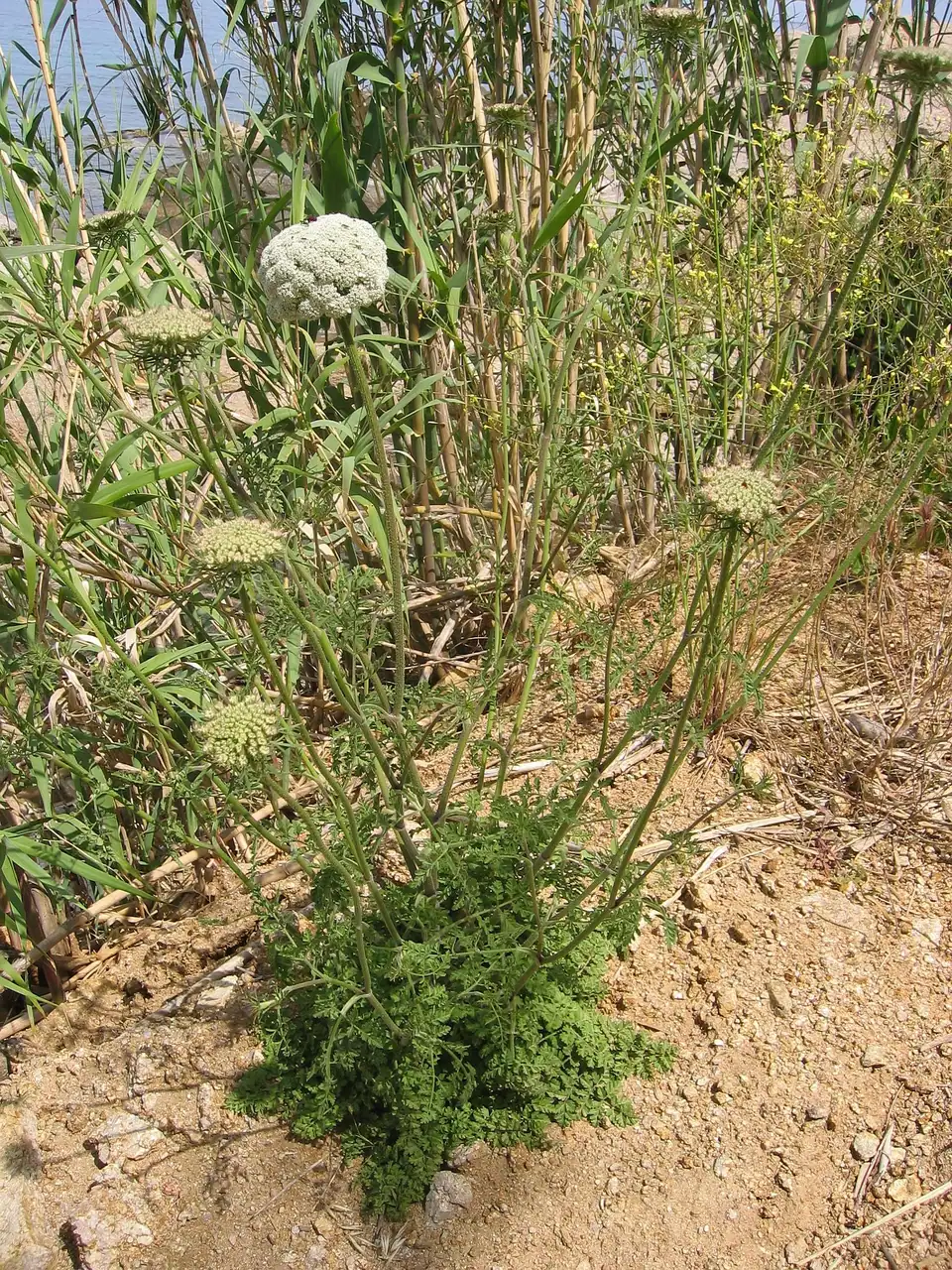


How to Grow and Care for Wild Carrot
Daucus carota
Written by Emilio Marruso · last checked
Toxic to: People · Why
At a glance
Carrots are a friendly first crop: sow the seeds right in the garden from spring through summer, in full sun or partial shade. Keep the soil evenly moist and start harvesting once the roots are 1/2 inch wide. Late-summer and fall sowings can rest under mulch and be harvested until the ground freezes solid.
- Sun
Full sun to partial shade
What the sources say (1)
Light: Full sun to partial shade
Light: Full sun (6 or more hours of direct sunlight a day) Partial Shade (Direct sunlight only part of the day, 2-6 hours)
— Daucus carota (Bee's Nest-Plant, Bird's-Nest, Devil's Plague, Queen Anne's Lace, Wild Carrot) | North Carolina Extension Gardener Plant Toolbox [1] - Water
Keep the soil evenly moist; water less near harvest so the roots don't crack
What the sources say (3)
Watering: Consistent, uniform moisture while growing (cultivated carrots); water when it becomes dry
Carrots require consistent, uniform moisture while they are growing to have proper root development (that is why we grow them after all), meaning you’ll need to water them when it becomes dry.
— How to Grow Carrots | Good Growing | Illinois Extension | Illinois [5] Watering notes: Keep the soil moist until seedlings are at least 1 inch [2.5 cm] tall; reduce watering close to harvest because too much moisture may crack the roots
Therefore, keep the soil moist until the seedlings are at least 1 inch tall.
— How to Grow Carrots | Good Growing | Illinois Extension | Illinois [5] When it gets close to harvest time, back off on watering because too much moister may cause the roots to crack.
— How to Grow Carrots | Good Growing | Illinois Extension | Illinois [5] - Cold
Survives winters down to −30 °F (−34.4 °C)
Very hardy · USDA 4a · RHS H7 · Z4
What the sources say (2)
Hardiness, coldest zone: 4a [winter low −34.4 to −31.7 °C (−30 to −25 °F)]
Soil Drainage: Good Drainage Moist Occasionally Dry USDA Plant Hardiness Zone: 4a, 5a, 5b, 6a, 6b, 7a, 7b, 8a, 8b, 9a, 10a, 10b, 11a, 11b
— Daucus carota (Bee's Nest-Plant, Bird's-Nest, Devil's Plague, Queen Anne's Lace, Wild Carrot) | North Carolina Extension Gardener Plant Toolbox [1] Hardiness, warmest zone: 11b [winter low 7.2 to 10 °C (45 to 50 °F)]
Soil Drainage: Good Drainage Moist Occasionally Dry USDA Plant Hardiness Zone: 4a, 5a, 5b, 6a, 6b, 7a, 7b, 8a, 8b, 9a, 10a, 10b, 11a, 11b
— Daucus carota (Bee's Nest-Plant, Bird's-Nest, Devil's Plague, Queen Anne's Lace, Wild Carrot) | North Carolina Extension Gardener Plant Toolbox [1] - Soil
Loosen the soil 8–9 in deep and remove stones, or the roots grow forked
- Spacing
2 in between plants after thinning, 12–18 in between rows
What the sources say (3)
Spacing: 5.1 cm (2 in) between plants after thinning; rows 30.5-45.7 cm (12-18 in) apart
Once carrots germinate and are about two inches tall, they should be thinned, so they are about two inches apart.
— How to Grow Carrots | Good Growing | Illinois Extension | Illinois [5] Rows should be 12 to 18 inches apart.
— How to Grow Carrots | Good Growing | Illinois Extension | Illinois [5] Row spacing: 30-46 cm (12 to 18 in)
Rows should be 12 to 18 inches apart.
— How to Grow Carrots | Good Growing | Illinois Extension | Illinois [5] - Feeding
Feed before sowing and again when tops are 4 in tall; too much nitrogen gives forked roots
What the sources say (11)
When: Before planting, mixed into the soil; then beside the plants when the tops are 10.2 cm [4 in] tall
commercial fields (California): In California, typically 40-50 lbs N/acre or less is applied prior to or at planting, and the remainder is sidedressed or fertigated in-season [N19,N28] .
— [6] Before planting carrots, scatter on the soil 1 cup of a complete fertilizer such as 10-10-10 for each 10 feet of row to be planted.
— [7] Once the plants emerge, scatter 2 tablespoons of fertilizer per 10 feet of row beside the plants when the tops are about 4 inches high.
— [7] Light to medium requirement for nutrients, either from soil organic matter or fertilizers. Incorporate fertilizer prior to planting.
— [8] Avoid: Too much nitrogen, especially before planting; high-salt fertilizers; urea and diammonium phosphate near germinating seed
once carrots are about 4 inches tall. Too much nitrogen will decrease root growth.
— [9] Excessive pre-plant N application should be avoided, as it has been associated with forking [N2,N36] and reduced stands [N15,N30,N36] .
— [6] Carrots are more sensitive to salt than any other vegetable crop [N9] , so if soil salinity is of concern materials with a high salt index should be avoided.
— [6] Urea and diammonium phosphate (DAP) should be used with care, as they release ammonia, which can inhibit germination [N3,N27] .
— [6] Signs of excess: Reduced root growth, forked roots and poorer root quality
once carrots are about 4 inches tall. Too much nitrogen will decrease root growth.
— [9] Excessive pre-plant N application should be avoided, as it has been associated with forking [N2,N36] and reduced stands [N15,N30,N36] .
— [6] Excess N applications and large N fluctuations should be avoided, as they can hurt carrot quality [N1,N10,N13,N16] .
— [6] - Harvest
Harvest once roots are 1/2 in wide; loosen the soil first so the tops don't break
What the sources say (6)
Harvest: When roots are at least 1/2 inch [1.3 cm] in diameter; late summer and fall plantings can be mulched and harvested until the ground freezes solid
Carrots (spring/summer sowing): You can begin to harvest carrots when their roots are at least ½” in diameter.
— How to Grow Carrots | Good Growing | Illinois Extension | Illinois [5] Carrots planted in the late summer and fall: Carrots planted in the late summer and fall can be covered with mulch and harvested until the ground freezes solid.
— How to Grow Carrots | Good Growing | Illinois Extension | Illinois [5] You can begin to harvest carrots when their roots are at least ½” in diameter.
— How to Grow Carrots | Good Growing | Illinois Extension | Illinois [5] Carrots planted in the late summer and fall can be covered with mulch and harvested until the ground freezes solid.
— How to Grow Carrots | Good Growing | Illinois Extension | Illinois [5] How to harvest: Begin harvesting when roots are at least 1.3 cm [0.5 in] (½ in) in diameter; loosen the soil around the carrots before pulling, or dig them, because the tops often break when pulled
You can begin to harvest carrots when their roots are at least ½” in diameter.
— How to Grow Carrots | Good Growing | Illinois Extension | Illinois [5] Often carrot tops will break when being pulled while trying to harvest, so it may be beneficial to loosen the soil around carrots prior to pulling or dig them.
— How to Grow Carrots | Good Growing | Illinois Extension | Illinois [5] - Watch out
Cover exposed root tops with soil: sunlight turns them green and bad-tasting
- Size
Flowering stems reach 2–4 ft tall
What the sources say (2)
Mature height: 61-122 cm (2 to 4 ft, flowering stems)
Hollow, branched flower stems grow 2 to 4 feet tall, and both the stems and leaves are covered with short, coarse hairs.
— Queen Anne's Lace, Daucus carota – Wisconsin Horticulture [3] The 2 to 4 foot tall umbels of white flowers appear in its second year of growth from mid-summer to mid-fall and have a lacy look.
— Daucus carota (Bee's Nest-Plant, Bird's-Nest, Devil's Plague, Queen Anne's Lace, Wild Carrot) | North Carolina Extension Gardener Plant Toolbox [1] - Propagation
Grown from seed
What the sources say (1)
Propagation: Seed
Life Cycle: Annual Biennial Recommended Propagation Strategy: Seed Country Or Region Of Origin: Europe, Eastern Asia and northern Africa
— Daucus carota (Bee's Nest-Plant, Bird's-Nest, Devil's Plague, Queen Anne's Lace, Wild Carrot) | North Carolina Extension Gardener Plant Toolbox [1] - Sowing
Sow directly from spring through summer, 1/4–1/2 in deep; seeds can take 3 weeks to sprout
What the sources say (3)
Sowing: Direct seeded from spring through summer (cool-season crop)
Carrots are a cool-season crop that can be direct seeded from spring through summer.
— How to Grow Carrots | Good Growing | Illinois Extension | Illinois [5] Sowing depth: 0.6-1.3 cm [0.2–0.5 in] (¼ to ½ in) for early plantings; 1.3-1.9 cm [0.5–0.7 in] (½ to ¾ in) for summer plantings
Carrot seeds should be planted ¼ to ½ inch deep for early plantings and can be planted ½ to ¾ inch deep when planted during the summer
— How to Grow Carrots | Good Growing | Illinois Extension | Illinois [5] Days to germination: up to 21 (often up to three weeks)
Carrots are notoriously slow to germinate, often taking up to three weeks
— How to Grow Carrots | Good Growing | Illinois Extension | Illinois [5] - Containers
Grows in containers too
What the sources say (1)
In containers: Yes
Miniature/Oxheart/Paris Market types have short, stocky roots that are only 2 to 3 inches long. These are good types for heavy, clay soils, or container gardening.
— How to Grow Carrots | Good Growing | Illinois Extension | Illinois [5] - Safety
The leaves can irritate the skin, especially if you're sensitive to celery
Overview
Daucus carota is the wild carrot or Queen Anne's lace, a biennial in the Apiaceae family from which cultivated carrots descend. [5] The wild plant grows in sun to partial shade and is considered invasive in some states. [1] Cultivated carrots are cool-season crops grown for the root and direct seeded from spring through summer. [5]
Wild Carrot care
Measurements in square brackets are our conversion into the other unit system; the quoted text is unchanged.
How to water Wild Carrot
Watering
Consistent, uniform moisture while growing (cultivated carrots); water when it becomes dry
What the sources say (1)
Carrots require consistent, uniform moisture while they are growing to have proper root development (that is why we grow them after all), meaning you’ll need to water them when it becomes dry.Watering notes
Keep the soil moist until seedlings are at least 1 inch [2.5 cm] tall; reduce watering close to harvest because too much moisture may crack the roots
What the sources say (2)
Therefore, keep the soil moist until the seedlings are at least 1 inch tall.When it gets close to harvest time, back off on watering because too much moister may cause the roots to crack.How much light Wild Carrot needs
Full sun to partial shade
What the sources say (1)
Light:
Full sun (6 or more hours of direct sunlight a day)
Partial Shade (Direct sunlight only part of the day, 2-6 hours)How much cold Wild Carrot can take
Hardiness, coldest zone
4a [winter low −34.4 to −31.7 °C (−30 to −25 °F)]
What the sources say (1)
Soil Drainage:
Good Drainage
Moist
Occasionally Dry
USDA Plant Hardiness Zone:
4a, 5a, 5b, 6a, 6b, 7a, 7b, 8a, 8b, 9a, 10a, 10b, 11a, 11bHardiness, warmest zone
11b [winter low 7.2 to 10 °C (45 to 50 °F)]
What the sources say (1)
Soil Drainage:
Good Drainage
Moist
Occasionally Dry
USDA Plant Hardiness Zone:
4a, 5a, 5b, 6a, 6b, 7a, 7b, 8a, 8b, 9a, 10a, 10b, 11a, 11bWhere to grow Wild Carrot
In containers
Yes
What the sources say (1)
Miniature/Oxheart/Paris Market types have short, stocky roots that are only 2 to 3 inches long. These are good types for heavy, clay soils, or container gardening.Spacing
5.1 cm (2 in) between plants after thinning; rows 30.5-45.7 cm (12-18 in) apart
What the sources say (2)
Once carrots germinate and are about two inches tall, they should be thinned, so they are about two inches apart.Rows should be 12 to 18 inches apart.How to propagate Wild Carrot
Seed
What the sources say (1)
Life Cycle:
Annual
Biennial
Recommended Propagation Strategy:
Seed
Country Or Region Of Origin:
Europe, Eastern Asia and northern AfricaHow to grow Wild Carrot
The plant
Life cycle
biennial
What each source says
grown as a root crop (treated as an annual):
What the sources say (3)
grown as a root crop (treated as an annual): Since we are typically growing carrots for their roots, we treat them as annuals.Queen Anne's lace is a summer biennial wildflower in the Apiaceae (carrot) family that was introduced from Europe and is considered invasive in some states.Carrots are biennials. This means it takes two years to complete their life cycle.Family
Apiaceae
What the sources say (1)
Queen Anne’s lace, Daucus carota (Family Apiaceae), is a common sight in dry fields, roadside ditches and open areasMature height
61-122 cm (2 to 4 ft, flowering stems)
What the sources say (2)
Hollow, branched flower stems grow 2 to 4 feet tall, and both the stems and leaves are covered with short, coarse hairs.The 2 to 4 foot tall umbels of white flowers appear in its second year of growth from mid-summer to mid-fall and have a lacy look.Sowing and growth
Days to germination
up to 21 (often up to three weeks)
What the sources say (1)
Carrots are notoriously slow to germinate, often taking up to three weeksSowing depth
0.6-1.3 cm [0.2–0.5 in] (¼ to ½ in) for early plantings; 1.3-1.9 cm [0.5–0.7 in] (½ to ¾ in) for summer plantings
What the sources say (1)
Carrot seeds should be planted ¼ to ½ inch deep for early plantings and can be planted ½ to ¾ inch deep when planted during the summerRow spacing
30-46 cm (12 to 18 in)
What the sources say (1)
Rows should be 12 to 18 inches apart.Harvest and storage
How to harvest
Begin harvesting when roots are at least 1.3 cm [0.5 in] (½ in) in diameter; loosen the soil around the carrots before pulling, or dig them, because the tops often break when pulled
What the sources say (2)
You can begin to harvest carrots when their roots are at least ½” in diameter.Often carrot tops will break when being pulled while trying to harvest, so it may be beneficial to loosen the soil around carrots prior to pulling or dig them.Storage
Late-summer and fall plantings can be covered with mulch and left in the ground, harvested until the ground freezes solid
What the sources say (1)
Carrots planted in the late summer and fall can be covered with mulch and harvested until the ground freezes solid.Fertilizing
When
Before planting, mixed into the soil; then beside the plants when the tops are 10.2 cm [4 in] tall
What each source says
commercial fields (California): Part of the nitrogen at or before planting, the rest side-dressed or fertigated during the season
What the sources say (4)
commercial fields (California): In California, typically 40-50 lbs N/acre or less is applied prior to or at planting, and the remainder is sidedressed or fertigated in-season [N19,N28] .Before planting carrots, scatter on the soil 1 cup of a complete fertilizer such as 10-10-10 for each 10 feet of row to be planted.Once the plants emerge, scatter 2 tablespoons of fertilizer per 10 feet of row beside the plants when the tops are about 4 inches high.Light to medium requirement for nutrients, either from soil organic matter or fertilizers. Incorporate fertilizer prior to planting.How often
Once before planting and once when the tops are 10.2 cm [4 in] tall, with a further feeding at 15.2-20.3 cm [6–8 in] if the tops turn pale
What the sources say (3)
Before planting carrots, scatter on the soil 1 cup of a complete fertilizer such as 10-10-10 for each 10 feet of row to be planted.Once the plants emerge, scatter 2 tablespoons of fertilizer per 10 feet of row beside the plants when the tops are about 4 inches high.Fertilize again when tops are 6 to 8 inches high if the tops become pale.Mineral fertilizers
Complete fertilizer such as 10-10-10: 237 mL per 3.05 m [10 ft] of row before planting, then 29.6 mL per 3.05 m [10 ft] of row beside the plants
What each source says
in containers with artificial soil: All-purpose fertilizer such as 10-10-10 or 10-15-15 at label rates
in the ground (South Dakota): 29.6-44.4 mL of herbicide-free lawn fertilizer per 3.05 m [10 ft] of row once the plants are 10.2 cm [4 in] tall
salty soils (commercial fields, California): Potassium sulfate rather than potassium chloride
What the sources say (5)
in containers with artificial soil: If growing in a container with artificial soil, apply an all-purpose fertilizer such as 10-10-10 or 10-15-15 according to package instructions.in the ground (South Dakota): 2 to 3 tablespoons of lawn fertilizer (make sure it does not have an herbicide in it) may be applied to 10 ft. of row, once carrots are about 4 inches tall.salty soils (commercial fields, California): If soil salinity is of concern potassium sulfate (K 2 SO 4 ) may be a better choice than muriate of potash (MOP; potassium chloride; KCl), which has a high salt content.Before planting carrots, scatter on the soil 1 cup of a complete fertilizer such as 10-10-10 for each 10 feet of row to be planted.Once the plants emerge, scatter 2 tablespoons of fertilizer per 10 feet of row beside the plants when the tops are about 4 inches high.Avoid
Too much nitrogen, especially before planting; high-salt fertilizers; urea and diammonium phosphate near germinating seed
What the sources say (4)
once carrots are about 4 inches tall. Too much nitrogen will decrease root growth.Excessive pre-plant N application should be avoided, as it has been associated with forking [N2,N36] and reduced stands [N15,N30,N36] .Carrots are more sensitive to salt than any other vegetable crop [N9] , so if soil salinity is of concern materials with a high salt index should be avoided.Urea and diammonium phosphate (DAP) should be used with care, as they release ammonia, which can inhibit germination [N3,N27] .Signs of deficiency
Nitrogen: smaller plants with thinner leaves, older leaves pale green or yellow with red tints; phosphorus: small, thin plants with strongly red or purple older leaves; potassium: pale green true leaves and withered cotyledons on seedlings
What the sources say (3)
Nitrogen deficient carrot plants tend to be smaller and have thinner leaves. Older leaves may become pale green or yellow, develop red tints, and die early.Phosphorus deficient carrot plants are small and thin. The older leaves have strong red or purple tints, and die early.True leaves of K deficient seedlings are pale green, while the cotyledon leaves become withered and dry.Signs of excess
Reduced root growth, forked roots and poorer root quality
What the sources say (3)
once carrots are about 4 inches tall. Too much nitrogen will decrease root growth.Excessive pre-plant N application should be avoided, as it has been associated with forking [N2,N36] and reduced stands [N15,N30,N36] .Excess N applications and large N fluctuations should be avoided, as they can hurt carrot quality [N1,N10,N13,N16] .Wild Carrot pests and problems
Green tops (sunburned shoulders)
Symptom: The top of the root turns green and distasteful when exposed to sunlight.
What to do: Pull soil up over exposed root tops.
What the sources say (1)
These green areas of the carrot are distasteful. This is caused when the top of the root is exposed to sunlight; they’re basically sunburned.
— How to Grow Carrots | Good Growing | Illinois Extension | Illinois [5] Misshapen roots
Symptom: Forked or twisted carrots result from rocks, clods or debris in the soil.
What to do: Loosen the soil 8 or 9 inches deep and remove obstructions, or use raised beds or shorter-rooted types.
What the sources say (1)
If these are present in the soil, it can lead to misshapen (forked, twisted, etc.) carrots.
— How to Grow Carrots | Good Growing | Illinois Extension | Illinois [5] Aggressive spread (wild plant)
Symptom: The wild plant spreads aggressively and its taproot is hard to pull up.
What to do: Remove seedheads before they mature.
What the sources say (1)
To reduce the spread of this plant, remove seedheads before they mature.
— Queen Anne's Lace, Daucus carota – Wisconsin Horticulture [3]
Remedies
Each remedy shows what official sources say about it; traditional remedies without an official source are marked as such. Harmful ones are listed so you know to avoid them.
Treating the plant
aphids
liquid soap solution Not verified
Traditional remedy, not verified by an official source.
For example, spraying home remedies that contain dish detergent on plants on a sunny day can injure the plant, essentially burning it.
— extension.psu.edu [10] Most dish soaps are not naturally occurring substances nor are they biodegradable.
— ucanr.edu [11] How: Dissolve 2 tablespoons of liquid soap in 5 liters of water; spray in the morning or evening.
carrot fly
garlic infusion spray Not verified
Traditional remedy, not verified by an official source.
How: Chop 100 g of garlic, pour it with 1 liter of warm water, steep for 12 hours, strain and dilute in 5 liters of water; spray every 7-10 days in cool and calm weather.
fungal diseases
wood ash solution Not verified
Traditional remedy, not verified by an official source.
How: Pour 1 cup of wood ash with 5 liters of warm water, steep for 24 hours, strain; use for watering or spraying once every two weeks.
parsleyworms
handpicking parsleyworms Works
How: Handpick the caterpillars from the plants.
Since parsleyworms are highly visible and pose so small a threat, handpicking these caterpillars from plants is the best method of controlling them.
— content.ces.ncsu.edu [12] What the evidence says Since parsleyworms are highly visible and pose so small a threat, handpicking these caterpillars from plants is the best method of controlling them.
— content.ces.ncsu.edu [12]
black rot
hot water seed treatment Official source, not independently tested
How: Plant only pathogen-free seed; treat seeds with hot water prior to planting.
plant only pathogen-free seed; treat seeds with hot water prior to planting
— plantvillage.psu.edu [13]
Getting rid of it
aggressive spread
removing seedheads before they mature Official source, not independently tested
How: Remove seedheads before they mature to reduce the spread of the plant.
To reduce the spread of this plant, remove seedheads before they mature.
— Queen Anne's Lace, Daucus carota – Wisconsin Horticulture [3]
Is Wild Carrot poisonous?
Reported by the source, quoted verbatim. This is not medical or veterinary advice: if a person or an animal may have eaten this plant, contact a poison control centre or a veterinarian.
Calendar
Sowing
Direct seeded from spring through summer (cool-season crop)
What the sources say (1)
Carrots are a cool-season crop that can be direct seeded from spring through summer.Harvest
When roots are at least 1/2 inch [1.3 cm] in diameter; late summer and fall plantings can be mulched and harvested until the ground freezes solid
What each source says
Carrots (spring/summer sowing): When roots are at least 1/2 inch [1.3 cm] in diameter
Carrots planted in the late summer and fall: Covered with mulch and harvested until the ground freezes solid
What the sources say (4)
Carrots (spring/summer sowing): You can begin to harvest carrots when their roots are at least ½” in diameter.Carrots planted in the late summer and fall: Carrots planted in the late summer and fall can be covered with mulch and harvested until the ground freezes solid.You can begin to harvest carrots when their roots are at least ½” in diameter.Carrots planted in the late summer and fall can be covered with mulch and harvested until the ground freezes solid.Months as given by the sources, which are mostly from the United States (northern hemisphere). In the southern hemisphere they shift by about six months.
Edibility
Reported by the source, quoted verbatim. Do not eat a plant on the basis of this page alone: identification mistakes can be dangerous.
Indicative values
Values from a secondary source, not checked word for word like the rest of this page. Use them as a starting point.
- Soil pH
- 6-6.8Indicative value, adapt it to your climate · Secondary source · Data for the variety Daucus carota ssp. sativus
- Growth rate
- ModerateIndicative value, adapt it to your climate · Secondary source · Data for the variety Daucus carota ssp. sativus
- Pruning
- March, April, May, June, July, August, SeptemberIndicative value, adapt it to your climate · Secondary source · Data for the variety Daucus carota ssp. sativus
- Pests
- Aphids, adelgids, Beetles, weevils, Caterpillar, cutworm, Leafhopper, spittlebug, Root rotIndicative value, adapt it to your climate · Secondary source · Data for the variety Daucus carota ssp. sativus
Similar plants
- Alexanders Smyrnium olusatrum
- Angelica Angelica archangelica
- Asiatic pennywort Centella asiatica
- Bishop's Weed Ammi majus
- Common Hedge Parsley Torilis arvensis
- Coriander Coriandrum sativum
- Cow Parsley Anthriscus sylvestris
- Echinophora spinosa Echinophora spinosa
Sources
Every value above is quoted from these documents. Links lead to the original publisher.
- Daucus carota (Bee's Nest-Plant, Bird's-Nest, Devil's Plague, Queen Anne's Lace, Wild Carrot) | North Carolina Extension Gardener Plant Toolbox · plants.ces.ncsu.edu, consulted
- Queen Anne's Lace - Daucus carota | North Carolina Extension Gardener Plant Toolbox · plants.ces.ncsu.edu, consulted
- Queen Anne's Lace, Daucus carota – Wisconsin Horticulture · hort.extension.wisc.edu, consulted
- Devil's Plague - Daucus carota | North Carolina Extension Gardener Plant Toolbox · plants.ces.ncsu.edu, consulted
- How to Grow Carrots | Good Growing | Illinois Extension | Illinois · extension.illinois.edu, consulted
- cdfa.ca.gov · cdfa.ca.gov
- agrilifeextension.tamu.edu · agrilifeextension.tamu.edu
- extension.umd.edu · extension.umd.edu
- extension.sdstate.edu · extension.sdstate.edu
- extension.psu.edu · extension.psu.edu
- ucanr.edu · ucanr.edu
- content.ces.ncsu.edu · content.ces.ncsu.edu
- plantvillage.psu.edu · plantvillage.psu.edu
Written by Emilio Marruso · last checked