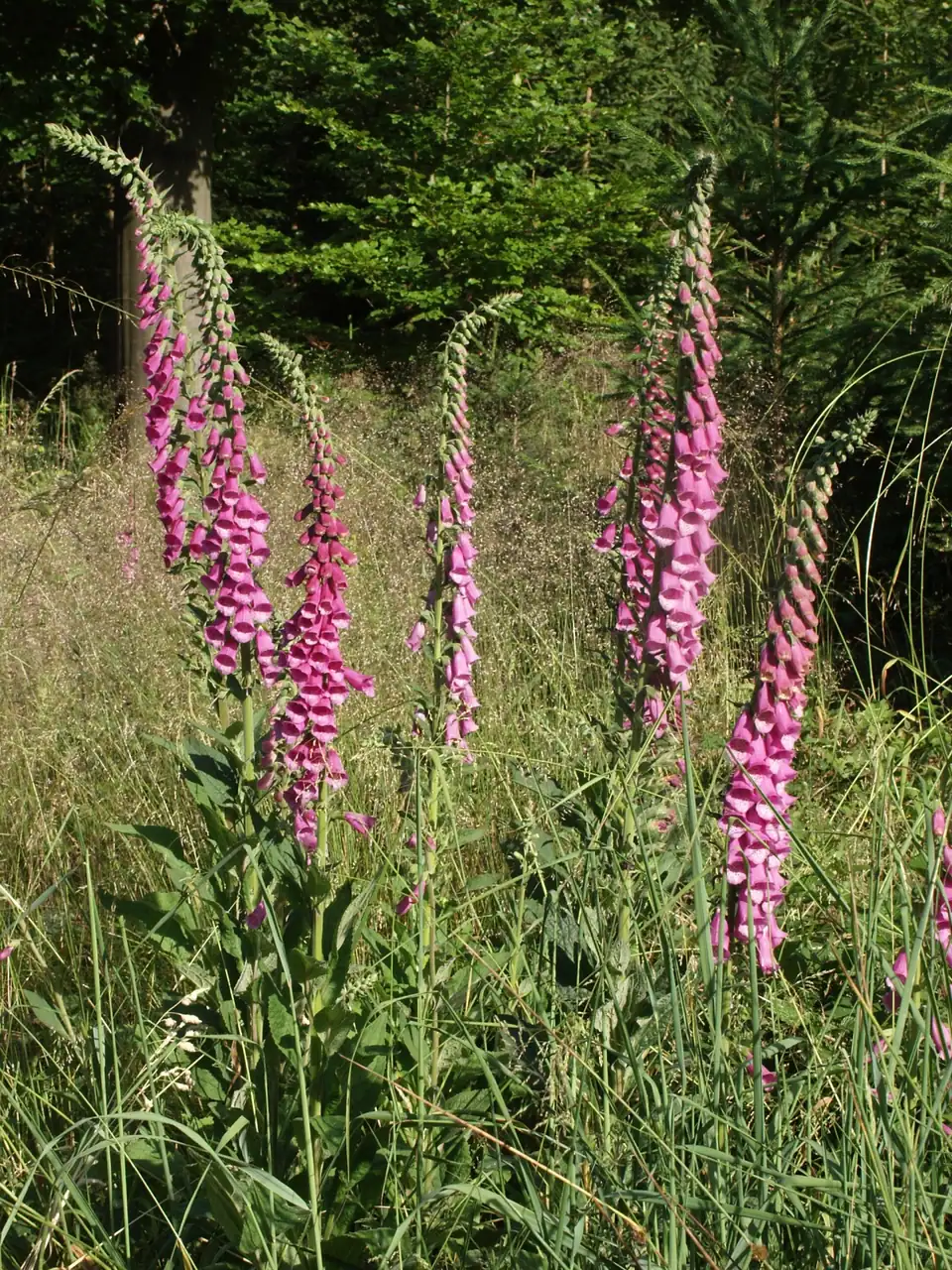
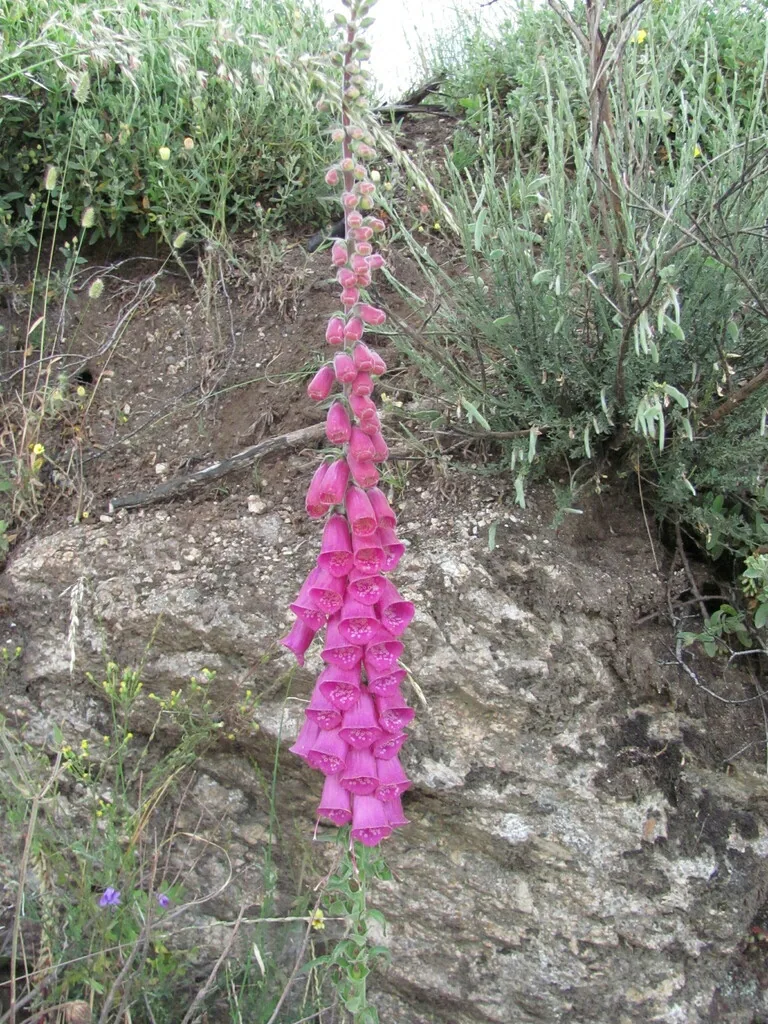

Cómo cultivar y cuidar Dedalera común
Digitalis purpurea
Escrito por Emilio Marruso · última revisión
Tóxica para: Gatos, Perros, Caballos, Animales, Personas · Por qué
De un vistazo
La dedalera es una bienal que levanta espigas de flores en plantas de 61 cm a 1,5 m de alto, feliz al sol o en semisombra. Siémbrala a finales de verano, sin cubrir la semilla porque necesita luz, y florecerá al año siguiente. Mantén la tierra húmeda, corta algunas espigas para ramos y deja una o dos para que den semilla.
- Sol
Sol pleno o semisombra; agradece la sombra por la tarde
Qué dicen las fuentes (6)
Luz: Pleno sol a semisombra
Según NC State Extension: Foxglove does best with afternoon shade.
— Digitalis purpurea (Common Foxglove, Foxglove) | North Carolina Extension Gardener Plant Toolbox [1] Según University of Wisconsin Extension: Grow common foxglove in full sun to light shade.
— Common Foxglove, Digitalis purpurea – Wisconsin Horticulture [2] Carolina del Sur: Plant foxglove in a location that receives morning sun and afternoon shade in South Carolina.
— Foxglove | Home & Garden Information Center [4] Según University of Arkansas Extension: It grows in full sun or medium shade and usually persists for three or four years
— Foxglove [5] Light: Full sun (6 or more hours of direct sunlight a day) Partial Shade (Direct sunlight only part of the day, 2-6 hours)
— Digitalis purpurea (Common Foxglove, Foxglove) | North Carolina Extension Gardener Plant Toolbox [1] Grow common foxglove in full sun to light shade.
— Common Foxglove, Digitalis purpurea – Wisconsin Horticulture [2] - Riego
Mantén la tierra húmeda, nunca seca; la sequía reduce la floración
Qué dicen las fuentes (3)
Riego: Mantén la tierra húmeda y no dejes que se seque
It prefers moist, well-drained soil high in organic matter that should not be allowed to dry out, as periods of drought stress will limit flower production.
— Digitalis purpurea (Common Foxglove, Foxglove) | North Carolina Extension Gardener Plant Toolbox [1] It does best in a moderately fertile, well-drained soil that receives some water during the summer.
— Foxglove [5] Notas sobre el riego: Los períodos de estrés por sequía limitan la producción de flores; el suelo debe estar bien drenado
It prefers moist, well-drained soil high in organic matter that should not be allowed to dry out, as periods of drought stress will limit flower production.
— Digitalis purpurea (Common Foxglove, Foxglove) | North Carolina Extension Gardener Plant Toolbox [1] - Frío
Aguanta inviernos de hasta −34,4 °C (−30 °F)
Muy rústica · USDA 4a · RHS H7 · Z4
Qué dicen las fuentes (4)
Rusticidad, zona más fría: 4a [mínima invernal de −34,4 a −31,7 °C (de −30 a −25 °F)]
4a, 4b, 5a, 5b, 6a, 6b, 7a, 7b, 8a, 8b, 9a, 9b
— Digitalis purpurea (Common Foxglove, Foxglove) | North Carolina Extension Gardener Plant Toolbox [1] in some places is considered a weed or invasive plant. It is hardy in zones 4a-9b.
— Common Foxglove, Digitalis purpurea – Wisconsin Horticulture [2] Rusticidad, zona más cálida: 9b [mínima invernal de −3,9 a −1,1 °C (de 25 a 30 °F)]
4a, 4b, 5a, 5b, 6a, 6b, 7a, 7b, 8a, 8b, 9a, 9b
— Digitalis purpurea (Common Foxglove, Foxglove) | North Carolina Extension Gardener Plant Toolbox [1] in some places is considered a weed or invasive plant. It is hardy in zones 4a-9b.
— Common Foxglove, Digitalis purpurea – Wisconsin Horticulture [2] - Suelo
Suelo bien drenado con pH de 6,0 como máximo
Qué dicen las fuentes (2)
pH del suelo, máximo: 6.0
Soil pH: Acid (<6.0) Soil Drainage: Good Drainage Moist
— Digitalis purpurea (Common Foxglove, Foxglove) | North Carolina Extension Gardener Plant Toolbox [1] Notas sobre el riego: Los períodos de estrés por sequía limitan la producción de flores; el suelo debe estar bien drenado
It prefers moist, well-drained soil high in organic matter that should not be allowed to dry out, as periods of drought stress will limit flower production.
— Digitalis purpurea (Common Foxglove, Foxglove) | North Carolina Extension Gardener Plant Toolbox [1] - Distancia
46 cm entre plantas
Qué dicen las fuentes (1)
Distancia de plantación: 45.7 cm (18 in)
Transplant seedlings to the garden after the last frost in spring. Space or thin the seedlings to about 18 inches apart.
— Common Foxglove, Digitalis purpurea – Wisconsin Horticulture [2] - Plantación
Pasa las plántulas al jardín después de la última helada de primavera
Qué dicen las fuentes (4)
Plantación: Trasplanta las plántulas al jardín después de la última helada en primavera; las plantas de primer año en su ubicación final en septiembre
plántulas (fuente: University of Wisconsin Extension): Transplant seedlings to the garden after the last frost in spring.
— Common Foxglove, Digitalis purpurea – Wisconsin Horticulture [2] plantas de primer año (fuente: University of Arkansas Extension): The first-year plants should be planted in their final location in the garden during September
— Foxglove [5] Transplant seedlings to the garden after the last frost in spring. Space or thin the seedlings to about 18 inches apart.
— Common Foxglove, Digitalis purpurea – Wisconsin Horticulture [2] The first-year plants should be planted in their final location in the garden during September so that they can establish themselves before cold weather arrives.
— Foxglove [5] - Abonado
Entierra mucho compost antes de plantar y luego pon un acolchado grueso en la base
Qué dicen las fuentes (2)
Cuándo: Materia orgánica excavada antes de plantar
Before planting, improve the soil by digging in plenty of organic matter , such a leafmould or garden compost . Then lay a thick mulch over the soil surface around the plants
— [6] Abonos naturales: Abundante materia orgánica como mantillo de hojas o compost de jardín excavada antes de plantar, luego un mantillo grueso sobre el suelo en la base de las plantas
Before planting, improve the soil by digging in plenty of organic matter , such a leafmould or garden compost . Then lay a thick mulch over the soil surface around the plants
— [6] - Poda
Quita las flores marchitas después de la floración
Qué dicen las fuentes (1)
Poda: Quita las flores marchitas después de la floración
Deadhead after flowering to avoid excessive numbers of seedlings, but some flowers must be allowed to form seeds if the population is to persist.
— Digitalis purpurea (Common Foxglove, Foxglove) | North Carolina Extension Gardener Plant Toolbox [1] - Cosecha
Corta espigas para ramos; cortar la central hace salir más espigas
Qué dicen las fuentes (1)
Cómo cosechar: Corta las espigas de flores para ramos; al cortar la espiga central, estimulas más espigas de flores.
Cut flower spikes to use in bouquets. More flower spikes will be encouraged after the central spike is cut.
— Foxglove | Home & Garden Information Center [4] - Plagas
Pulgones, escarabajo japonés y cochinillas algodonosas; oídio en las hojas a finales de verano
Qué dicen las fuentes (4)
Plagas: pulgones, escarabajos japoneses, cochinillas
Insects, Diseases, and Other Plant Problems: Fungal diseases and aphids, Japanese beetles, and mealy bugs are problems.
— Digitalis purpurea (Common Foxglove, Foxglove) | North Carolina Extension Gardener Plant Toolbox [1] This plant has few pest problems and is not bothered by deer or rabbits , although powdery mildew can infect the foliage in late summer and will occasionally be infested with aphids.
— Common Foxglove, Digitalis purpurea – Wisconsin Horticulture [2] Enfermedades: enfermedades fúngicas (no especificadas), mildiu polvoriento
Insects, Diseases, and Other Plant Problems: Fungal diseases and aphids, Japanese beetles, and mealy bugs are problems.
— Digitalis purpurea (Common Foxglove, Foxglove) | North Carolina Extension Gardener Plant Toolbox [1] This plant has few pest problems and is not bothered by deer or rabbits , although powdery mildew can infect the foliage in late summer and will occasionally be infested with aphids.
— Common Foxglove, Digitalis purpurea – Wisconsin Horticulture [2] - Atención
Se resiembra con facilidad: deja que solo una o dos espigas den semilla
- Tamaño
De 61 cm a 1,5 m de alto y de 30 a 76 cm de ancho
Qué dicen las fuentes (2)
Altura adulta: 61-152 cm (2 pies - 5 pies)
Height: 2 ft. 0 in. - 5 ft. 0 in. Width: 1 ft. 0 in. - 2 ft. 6 in.
— Digitalis purpurea (Common Foxglove, Foxglove) | North Carolina Extension Gardener Plant Toolbox [1] Anchura adulta: 30-76 cm (1 pie - 2 pies 6 pulgadas)
Height: 2 ft. 0 in. - 5 ft. 0 in. Width: 1 ft. 0 in. - 2 ft. 6 in.
— Digitalis purpurea (Common Foxglove, Foxglove) | North Carolina Extension Gardener Plant Toolbox [1] - Multiplicación
Por semilla: recógela de una espiga y siémbrala fresca
Qué dicen las fuentes (4)
Propagación: Semilla
Common foxglove can be direct sown in late summer where plants are desired to grow to bloom the following year, or sown indoors in late spring. Seeds need light to germinate, so do not cover.
— Common Foxglove, Digitalis purpurea – Wisconsin Horticulture [2] Foxglove seeds need light to germinate, so they should not be covered with soil.
— Foxglove | Home & Garden Information Center [4] Guardar semillas: Deja una o dos espigas de flores para que produzcan semillas, recolecta las semillas deseadas de ellas y siembra mientras la semilla esté fresca. Las semillas necesitan luz para germinar, así que no las cubras con tierra.
Collect the number of wanted seeds from those remaining spikes and sow while the seed is fresh.
— Foxglove | Home & Garden Information Center [4] Foxglove seeds need light to germinate, so they should not be covered with soil.
— Foxglove | Home & Garden Information Center [4] - Siembra
Siembra a finales de verano para flores al año siguiente; no cubras la semilla, necesita luz
Qué dicen las fuentes (8)
Siembra: Siembra directa a fines del verano para florecer al año siguiente; siembra en interiores a fines de la primavera; plantación al aire libre en contenedores en mayo o junio
siembra directa (fuente: University of Wisconsin Extension): Common foxglove can be direct sown in late summer where plants are desired to grow to bloom the following year, or sown indoors in late spring.
— Common Foxglove, Digitalis purpurea – Wisconsin Horticulture [2] siembra en interiores (fuente: University of Wisconsin Extension): Common foxglove can be direct sown in late summer where plants are desired to grow to bloom the following year, or sown indoors in late spring.
— Common Foxglove, Digitalis purpurea – Wisconsin Horticulture [2] cultivares que florecen el primer año (fuente: Clemson HGIC): Sow these in the fall for blooms the following spring.
— Foxglove | Home & Garden Information Center [4] al aire libre en contenedores (fuente: University of Arkansas Extension): Seeds can be planted outside in containers in May or June.
— Foxglove [5] Common foxglove can be direct sown in late summer where plants are desired to grow to bloom the following year, or sown indoors in late spring.
— Common Foxglove, Digitalis purpurea – Wisconsin Horticulture [2] Seeds can be planted outside in containers in May or June.
— Foxglove [5] Profundidad de siembra: 0 cm [0 in] (la semilla no está cubierta: necesita luz para germinar)
Seeds need light to germinate, so do not cover. Transplant seedlings
— Common Foxglove, Digitalis purpurea – Wisconsin Horticulture [2] Foxglove seeds need light to germinate, so they should not be covered with soil.
— Foxglove | Home & Garden Information Center [4] - Seguridad
Toda la planta es venenosa para personas, gatos, perros y caballos; las hojas irritan la piel
Resumen
La dedalera común es una bienal o perenne de vida corta originaria de Europa occidental que se cultiva en jardines de cottage, de sombra y para polinizadores. [2] Prefiere suelo húmedo, bien drenado y rico en materia orgánica y le va mejor con semisombra por la tarde. [1] Todas las partes de la planta son tóxicas si se ingieren. [2]
Citado en inglés, como en la fuente.
Cuidados
Riego
Riego
Mantén la tierra húmeda y no dejes que se seque
Qué dicen las fuentes (2)
It prefers moist, well-drained soil high in organic matter that should not be allowed to dry out, as periods of drought stress will limit flower production.It does best in a moderately fertile, well-drained
soil that receives some water during the summer.Notas sobre el riego
Los períodos de estrés por sequía limitan la producción de flores; el suelo debe estar bien drenado
Qué dicen las fuentes (1)
It prefers moist, well-drained soil high in organic matter that should not be allowed to dry out, as periods of drought stress will limit flower production.Luz
Pleno sol a semisombra
Lo que dice cada fuente
Según NC State Extension: Se prefiere la sombra por la tarde
Según University of Wisconsin Extension: Pleno sol a semisombra
Carolina del Sur: Sol por la mañana y sombra por la tarde
Según University of Arkansas Extension: Pleno sol o sombra media
Qué dicen las fuentes (6)
Según NC State Extension: Foxglove does best with afternoon shade.Según University of Wisconsin Extension: Grow common foxglove in full sun to light shade.Carolina del Sur: Plant foxglove in a location that receives morning sun and afternoon shade in South Carolina.Según University of Arkansas Extension: It grows in full sun or medium shade and usually persists for three or four yearsLight:
Full sun (6 or more hours of direct sunlight a day)
Partial Shade (Direct sunlight only part of the day, 2-6 hours)Grow common foxglove in full sun to light shade.Clima y frío
Rusticidad, zona más fría
4a [mínima invernal de −34,4 a −31,7 °C (de −30 a −25 °F)]
Qué dicen las fuentes (2)
4a, 4b, 5a, 5b, 6a, 6b, 7a, 7b, 8a, 8b, 9a, 9bin some places is considered a weed or invasive plant. It is hardy in zones 4a-9b.Rusticidad, zona más cálida
9b [mínima invernal de −3,9 a −1,1 °C (de 25 a 30 °F)]
Qué dicen las fuentes (2)
4a, 4b, 5a, 5b, 6a, 6b, 7a, 7b, 8a, 8b, 9a, 9bin some places is considered a weed or invasive plant. It is hardy in zones 4a-9b.Suelo
6.0
Qué dicen las fuentes (1)
Soil pH:
Acid (<6.0)
Soil Drainage:
Good Drainage
MoistDónde cultivarla
45.7 cm (18 in)
Qué dicen las fuentes (1)
Transplant seedlings to the garden after the last frost in spring. Space or thin the seedlings to about 18 inches apart.Propagación
Semilla
Qué dicen las fuentes (2)
Common foxglove can be direct sown in late summer where plants are desired to grow to bloom the following year, or sown indoors in late spring. Seeds need light to germinate, so do not cover.Foxglove seeds need light to germinate, so they should not be covered with soil.Cultivo
La planta
Ciclo de vida
bienal
Lo que dice cada fuente
:
:
Qué dicen las fuentes (4)
: Common foxglove, Digitalis purpurea , is an herbaceous biennial or short-lived perennial from western Europe in the plantain family (Plantaginaceae): Foxglove ( Digitalis purpurea ) is a biennial or short-lived perennial belonging to the snapdragon family, a native of western Europe.It is a biennial, having only a rosette of leaves the first year.Common foxglove ( Digitalis purpurea) is biennial, meaning it will live for two years.Familia
Plantaginaceae
Qué dicen las fuentes (2)
Foxglove is a biennial (that sometimes behaves like an annual and sometimes like an herbaceous perennial). It is native to western Europe and Morocco and is a member of the plantain family (Plantaginaceae).It is native to Europe and is a member of the plantain (Plantaginaceae) family.Altura adulta
61-152 cm (2 pies - 5 pies)
Qué dicen las fuentes (1)
Height: 2 ft. 0 in. - 5 ft. 0 in. Width: 1 ft. 0 in. - 2 ft. 6 in.Anchura adulta
30-76 cm (1 pie - 2 pies 6 pulgadas)
Qué dicen las fuentes (1)
Height: 2 ft. 0 in. - 5 ft. 0 in. Width: 1 ft. 0 in. - 2 ft. 6 in.Siembra y crecimiento
Profundidad de siembra
0 cm [0 in] (la semilla no está cubierta: necesita luz para germinar)
Cosecha y conservación
Cómo cosechar
Corta las espigas de flores para ramos; al cortar la espiga central, estimulas más espigas de flores.
Qué dicen las fuentes (1)
Cut flower spikes to use in bouquets. More flower spikes will be encouraged after the central spike is cut.Guardar semillas
Deja una o dos espigas de flores para que produzcan semillas, recolecta las semillas deseadas de ellas y siembra mientras la semilla esté fresca. Las semillas necesitan luz para germinar, así que no las cubras con tierra.
Plagas y enfermedades
Plagas
pulgones, escarabajos japoneses, cochinillas
Qué dicen las fuentes (2)
Insects, Diseases, and Other Plant Problems: Fungal diseases and aphids, Japanese beetles, and mealy bugs are problems.This plant has few pest problems and is not bothered by deer or rabbits , although powdery mildew can infect the foliage in late summer and will occasionally be infested with aphids.Enfermedades
enfermedades fúngicas (no especificadas), mildiu polvoriento
Qué dicen las fuentes (2)
Insects, Diseases, and Other Plant Problems: Fungal diseases and aphids, Japanese beetles, and mealy bugs are problems.This plant has few pest problems and is not bothered by deer or rabbits , although powdery mildew can infect the foliage in late summer and will occasionally be infested with aphids.Abonado
Cuándo
Materia orgánica excavada antes de plantar
Qué dicen las fuentes (1)
Before planting, improve the soil by digging in plenty of organic matter , such a leafmould or garden compost . Then lay a thick mulch over the soil surface around the plantsFrecuencia
Las fuentes dan valores distintos según la región, la zona o las condiciones de cultivo.
Lo que dice cada fuente
en suelos pobres: Una vez al año
Qué dicen las fuentes (1)
en suelos pobres: On poor soils, foxgloves benefit from a yearly application of a balanced granular fertiliserAbonos naturales
Abundante materia orgánica como mantillo de hojas o compost de jardín excavada antes de plantar, luego un mantillo grueso sobre el suelo en la base de las plantas
Qué dicen las fuentes (1)
Before planting, improve the soil by digging in plenty of organic matter , such a leafmould or garden compost . Then lay a thick mulch over the soil surface around the plantsAbonos minerales
Las fuentes dan valores distintos según la región, la zona o las condiciones de cultivo.
Lo que dice cada fuente
en suelos pobres: Fertilizante granulado equilibrado, una vez al año
Qué dicen las fuentes (1)
en suelos pobres: On poor soils, foxgloves benefit from a yearly application of a balanced granular fertiliserProblemas
Plagas y enfermedades fúngicas
Síntoma: Se reportan enfermedades fúngicas, pulgones, escarabajos japoneses y cochinillas; el mildiu polvoriento puede infectar el follaje a fines del verano.
Qué hacer: No se indica.
Qué dicen las fuentes (2)
Fungal diseases and aphids, Japanese beetles, and mealy bugs are problems.
— Digitalis purpurea (Common Foxglove, Foxglove) | North Carolina Extension Gardener Plant Toolbox [1] although powdery mildew can infect the foliage in late summer and will occasionally be infested with aphids.
— Common Foxglove, Digitalis purpurea – Wisconsin Horticulture [2] Plántulas en exceso
Síntoma: Las plantas se autosembran fácilmente y pueden producir más plántulas de las deseadas.
Qué hacer: Quita las flores marchitas después de la floración, pero deja que algunas flores produzcan semillas para mantener la población; o corta todas las espigas florales excepto una o dos antes de la formación de semillas.
Qué dicen las fuentes (2)
Deadhead after flowering to avoid excess numbers of seedlings, but some flowers must go to seed to maintain a permanent planting
— Common Foxglove, Digitalis purpurea – Wisconsin Horticulture [2] To reduce the number of seedlings, cut down all but one or two flower spikes before they produce seeds.
— Foxglove | Home & Garden Information Center [4] Aspecto desaliñado después de la floración
Síntoma: Las plantas pueden verse bastante desaliñadas después de la floración.
Qué hacer: Las plantas pueden eliminarse del jardín si se desea.
Qué dicen las fuentes (1)
Plants can become rather ragged looking after they finish flowering, and could be removed from the garden, if desired.
— Common Foxglove, Digitalis purpurea – Wisconsin Horticulture [2]
Remedios
Cada remedio indica qué dicen las fuentes oficiales; los remedios tradicionales sin fuente oficial aparecen marcados. Los perjudiciales están para que sepas evitarlos.
Cuidar la planta
cochinillas harinosas
hisopo con alcohol isopropílico No verificado
Remedio tradicional, no verificado por una fuente oficial.
Wear gloves when handling the plant, especially when deadheading or dividing.
— bloomingexpert.com [7] Cómo: Quítalas con un hisopo de algodón empapado en alcohol de frotar.
babosas
recolección manual por la tarde No verificado
Remedio tradicional, no verificado por una fuente oficial.
Wear gloves when handling the plant, especially when deadheading or dividing.
— bloomingexpert.com [7] Cómo: Las trampas de cerveza, la cinta de cobre alrededor de los contenedores y la recolección manual por la tarde ayudan a reducir las poblaciones.
escarabajos japoneses
Recoge a mano en agua jabonosa No verificado
Remedio tradicional, no verificado por una fuente oficial.
Wear gloves when handling the plant, especially when deadheading or dividing.
— bloomingexpert.com [7] Cómo: Recoge los escarabajos a mano en un cubo con agua jabonosa por la mañana, cuando están lentos.
Venenosa para los animales
Según la fuente, citada textualmente. No es un consejo médico ni veterinario: si una persona o un animal pudo haber ingerido esta planta, contacta con un centro de toxicología o con un veterinario.
Animales
Problems: Poisonous to Humans Problem for Cats Problem for Children Problem for Dogs Problem for Horses
[1]- Gravedad
This plant has high severity poison characteristics.
[1]
Deer and rabbits usually do not browse foxglove since all parts of the plants are toxic.
[4]- Partes venenosas
all parts of the plants are toxic
[4]
Personas
Poison Severity: High Poison Symptoms: Nausea, vomiting, diarrhea, stomach pain, severe headache, irregular and slow pulse, tremors, unusual color visions, convulsions, Cardiac arrhythmias, death Poison Toxic Principle: cardiac glycosides
[1]- Partes venenosas
Poison Part: Flowers Leaves Roots Stems
[1]- Principio tóxico
Poison Toxic Principle: cardiac glycosides
[1]- Síntomas
Nausea, vomiting, diarrhea, stomach pain, severe headache, irregular and slow pulse, tremors, unusual color visions, convulsions, Cardiac arrhythmias, death
[1]- Gravedad
Poison Severity: High
[1]
However, all parts of the species are toxic if ingested and contact with the leaves can irritate sensitive skin
[2]
Calendario
Siembra
Siembra directa a fines del verano para florecer al año siguiente; siembra en interiores a fines de la primavera; plantación al aire libre en contenedores en mayo o junio
Lo que dice cada fuente
siembra directa (fuente: University of Wisconsin Extension): Fines del verano, para florecer al año siguiente
siembra en interiores (fuente: University of Wisconsin Extension): Fines de la primavera
cultivares que florecen el primer año (fuente: Clemson HGIC): Otoño, para florecer en la primavera siguiente
al aire libre en contenedores (fuente: University of Arkansas Extension): Mayo o junio
Qué dicen las fuentes (6)
siembra directa (fuente: University of Wisconsin Extension): Common foxglove can be direct sown in late summer where plants are desired to grow to bloom the following year, or sown indoors in late spring.siembra en interiores (fuente: University of Wisconsin Extension): Common foxglove can be direct sown in late summer where plants are desired to grow to bloom the following year, or sown indoors in late spring.cultivares que florecen el primer año (fuente: Clemson HGIC): Sow these in the fall for blooms the following spring.al aire libre en contenedores (fuente: University of Arkansas Extension): Seeds can be planted outside in containers in May or June.Common foxglove can be direct sown in late summer where plants are desired to grow to bloom the following year, or sown indoors in late spring.Seeds can be planted outside in
containers in May or June.Plantación
Trasplanta las plántulas al jardín después de la última helada en primavera; las plantas de primer año en su ubicación final en septiembre
Lo que dice cada fuente
plántulas (fuente: University of Wisconsin Extension): Después de la última helada en primavera
plantas de primer año (fuente: University of Arkansas Extension): Septiembre, en su ubicación final
Qué dicen las fuentes (4)
plántulas (fuente: University of Wisconsin Extension): Transplant seedlings to the garden after the last frost in spring.plantas de primer año (fuente: University of Arkansas Extension): The first-year plants should be planted in their final location in the garden during SeptemberTransplant seedlings to the garden after the last frost in spring. Space or thin the seedlings to about 18 inches apart.The first-year plants should be planted in their final location in the garden during
September so that they can establish themselves before cold weather arrives.Poda
Quita las flores marchitas después de la floración
Qué dicen las fuentes (1)
Deadhead after flowering to avoid excessive numbers of seedlings, but some flowers must be allowed to form seeds if the population is to persist.Meses tal como los dan las fuentes, en su mayoría de Estados Unidos (hemisferio norte). En el hemisferio sur se desplazan unos seis meses.
Respecto a las heladas
Estimación menos precisa: no hay ninguna estación meteorológica a menos de 300 km.
Busca las fechas de heladas por código postal o ciudad
Trasplante: hacia la última helada
Transplant seedlings to the garden after the last frost in spring. Space or thin the seedlings to about 18 inches apart.
— Common Foxglove, Digitalis purpurea – Wisconsin Horticulture [2]
Cuenta desde las fechas medias de las heladas de tu zona.
Valores orientativos
Valores de una fuente secundaria, no comprobados palabra por palabra como el resto de esta página. Úselos como punto de partida.
- Horas de sol
- 6-8 horasValor orientativo, adáptalo a tu clima · Fuente secundaria
- Suelo
- Rico en humus, Bien drenadoValor orientativo, adáptalo a tu clima · Fuente secundaria
- Nivel de cuidado
- MedioValor orientativo, adáptalo a tu clima · Fuente secundaria
- Crecimiento
- AltaValor orientativo, adáptalo a tu clima · Fuente secundaria
Plantas similares
- Digital de flores grandes Digitalis grandiflora
- Digital amarilla Digitalis lutea
- Dedalera negra Digitalis obscura
- Angelonia Angelonia angustifolia
- Birdeye Speedwell Veronica persica
- Blue Toadflax Linaria canadensis
- Brazilian Snapdragon Achetaria azurea
- Buckhorn plantain Plantago coronopus
Fuentes
Cada valor anterior se cita de estos documentos. Los enlaces llevan al editor original.
- Digitalis purpurea (Common Foxglove, Foxglove) | North Carolina Extension Gardener Plant Toolbox · plants.ces.ncsu.edu, consultado
- Common Foxglove, Digitalis purpurea – Wisconsin Horticulture · hort.extension.wisc.edu, consultado
- Foxglove - Digitalis purpurea | North Carolina Extension Gardener Plant Toolbox · plants.ces.ncsu.edu, consultado
- Foxglove | Home & Garden Information Center · hgic.clemson.edu, consultado
- Foxglove · uaex.uada.edu, consultado
- rhs.org.uk · rhs.org.uk
- bloomingexpert.com · bloomingexpert.com
Escrito por Emilio Marruso · última revisión