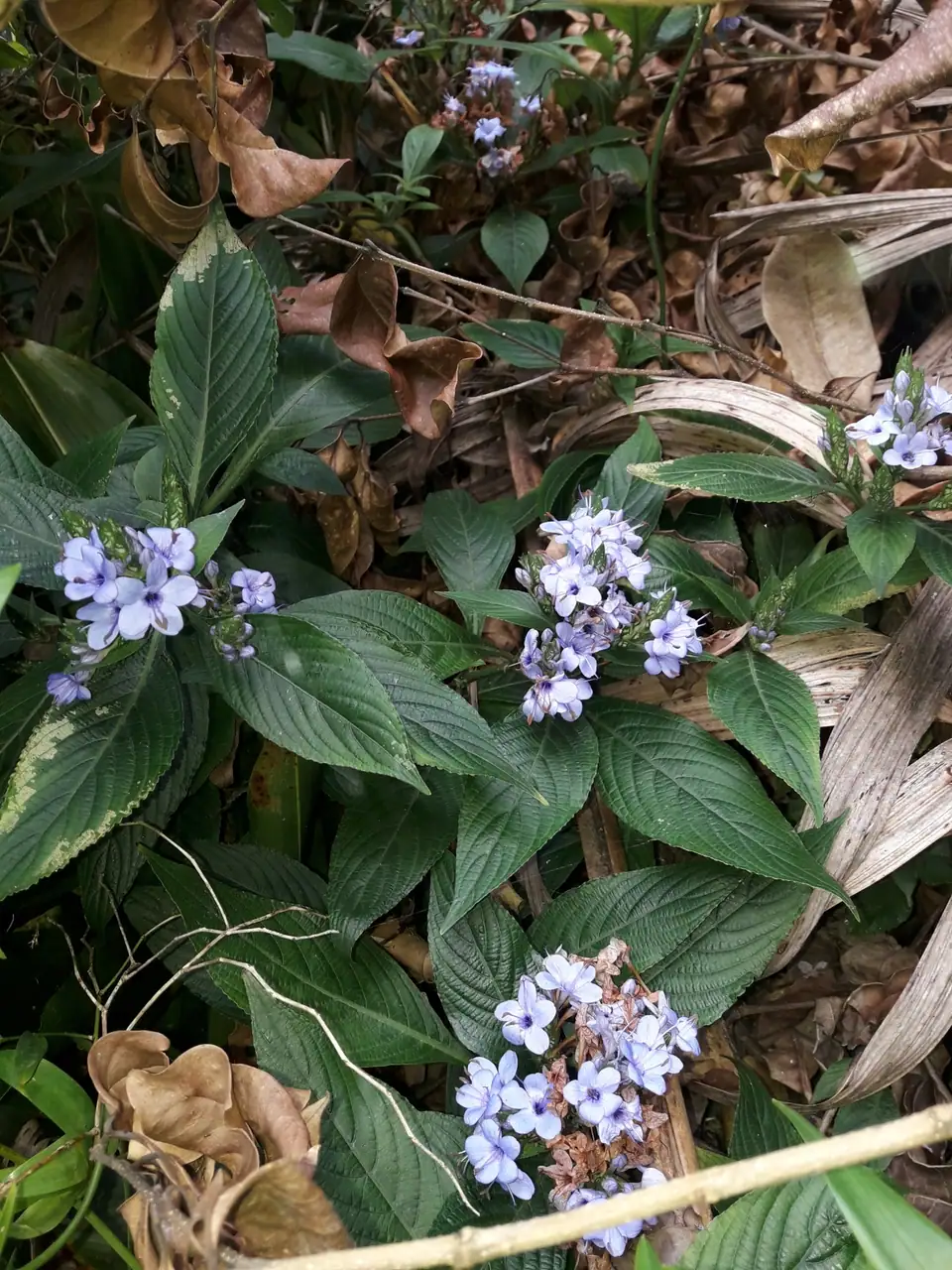
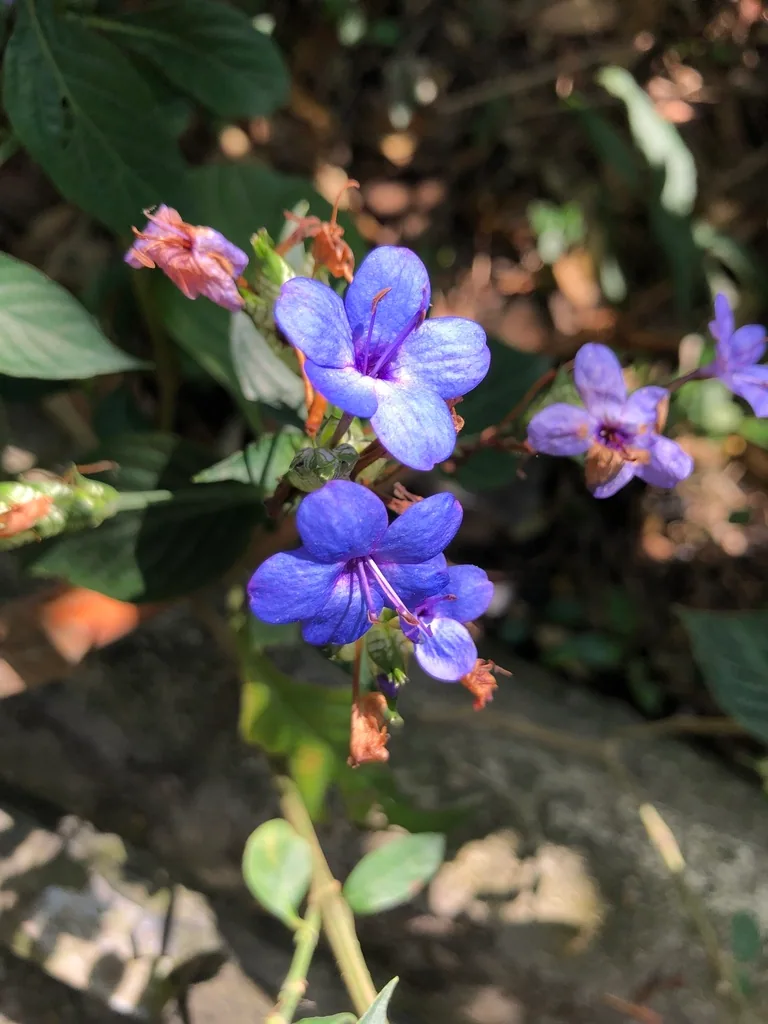

Cómo cultivar y cuidar Blue-sage
Eranthemum pulchellum
Escrito por Emilio Marruso · última revisión
De un vistazo
Esta planta vive a gusto desde el sol pleno hasta la semisombra, aunque prefiere la luz filtrada o la sombra por la tarde. Mantén la tierra húmeda de forma constante y bien drenada, dale mucha humedad ambiental y pódala después de la floración. Crece igual de bien en maceta o en interior, y puedes sacar plantas nuevas de esquejes de tallo o de raíz.
- Sol
Sol pleno o semisombra; mejor con luz filtrada o sombra por la tarde
Qué dicen las fuentes (4)
Luz: Pleno sol a semisombra; se prefiere luz filtrada o sombra por la tarde
It grows well in the area where it receives filtered sunlight or semi-shade. Remove spent flowers to induce more blooming.
— NParks | Eranthemum pulchellum [1] Light needs: Full sun to part shade. - Salt tolerance: Low
— Blue Sage – Port St. Lucie Botanical Gardens [2] Soil moisture levels should remain consistent. It does best with some afternoon shade.
— Blue Sage – Port St. Lucie Botanical Gardens [2] Heat Tolerance: Likes hot and humid conditions Sun Exposure: Light shade to full sun
— Blue Sage (Eranthemum pulchellum) [4] - Riego
Mantén la tierra siempre húmeda; le encanta la humedad ambiental alta
Qué dicen las fuentes (5)
Riego: Mantén el suelo uniformemente húmedo; riego moderado
Watering Needs: Keep soil evenly moist. Requires high humidity. Prefers a slighly acidic, well drained soil.
— Blue Sage (Eranthemum pulchellum) [4] Moisture: Soil should remain moist. Tolerant of high humidity.
— Blue Sage – Port St. Lucie Botanical Gardens [2] | Water Preference | Moderate Water | Plant Growth Rate | Fast
— NParks | Eranthemum pulchellum [1] Notas sobre el riego: Le gusta la alta humedad; tolerancia moderada a la sequía; necesita suelo bien drenado
Keep soil evenly moist. Requires high humidity. Prefers a slighly acidic, well drained soil.
— Blue Sage (Eranthemum pulchellum) [4] Tolerant of high humidity. - Drought tolerance: Moderate
— Blue Sage – Port St. Lucie Botanical Gardens [2] - Frío
Aguanta inviernos de hasta 1,7 °C (35 °F)
Delicada: necesita invernadero sin heladas · USDA 10b · RHS H2 · Z10
Qué dicen las fuentes (4)
- Suelo
Suelo bien drenado, pH hasta 7,0
Qué dicen las fuentes (3)
Notas sobre el riego: Le gusta la alta humedad; tolerancia moderada a la sequía; necesita suelo bien drenado
Keep soil evenly moist. Requires high humidity. Prefers a slighly acidic, well drained soil.
— Blue Sage (Eranthemum pulchellum) [4] Tolerant of high humidity. - Drought tolerance: Moderate
— Blue Sage – Port St. Lucie Botanical Gardens [2] pH del suelo, máximo: 7.0
Soil/pH/Texture: Prefers rich, well-drained soil with an acidic pH below 7.0.
— Blue Sage – Port St. Lucie Botanical Gardens [2] - Distancia
60–90 cm entre plantas
Qué dicen las fuentes (1)
Distancia de plantación: 60-90 cm [24–35 in]
Softwood cuttings are prepared from stems that can still bend and move and just about to harden. | Planting Distance | 60 cm to 90 cm
— NParks | Eranthemum pulchellum [1] - Poda
Pódala después de la floración
Qué dicen las fuentes (3)
Poda: Después de la floración
Will produce more blooms and remain compact if plant is severely cut back after flowering.
— NParks | Eranthemum pulchellum [1] It should be cut back after flowering to keep it compact and encourage more blooming.
— Blue Sage – Port St. Lucie Botanical Gardens [2] Culture: Prune short after it finishes blooming. List of All the Plants
— Blue Sage (Eranthemum pulchellum) [4] - Plagas
Vigila las cochinillas, el cotonet y los nematodos de las raíces
- Multiplicación
Multiplícala con esquejes de tallo tierno o esquejes de raíz
Qué dicen las fuentes (2)
- Maceta
Crece también en maceta y en interior
Qué dicen las fuentes (4)
En maceta: Sí
This plant is ideal as a specimen plant or grown in containers on garden patios.
— NParks | Eranthemum pulchellum [1] In colder climates, it can be grown in a container and brought indoors during the winter or kept in a greenhouse.
— Blue Sage – Port St. Lucie Botanical Gardens [2] En interior: Sí
Propagation: Root cuttings, or stem cuttings of new spring growth Often grown as house plant.
— Blue Sage (Eranthemum pulchellum) [4] In colder climates, it can be grown in a container and brought indoors during the winter or kept in a greenhouse.
— Blue Sage – Port St. Lucie Botanical Gardens [2]
Resumen
Eranthemum pulchellum (salvia azul) es un arbusto de hoja perenne de rápido crecimiento originario del sur de Asia, con espigas de flores azules en invierno. [1][4] Prefiere suelo fértil, húmedo, bien drenado y ligeramente ácido, y sol filtrado o semisombra. [1] Si lo podas con fuerza después de la floración, se mantiene compacto y aumenta la floración. [1]
Citado en inglés, como en la fuente.
Cuidados
Las medidas entre corchetes son nuestra conversión al otro sistema de unidades; el texto citado no cambia.
Riego
Riego
Mantén el suelo uniformemente húmedo; riego moderado
Qué dicen las fuentes (3)
Watering Needs: Keep soil evenly moist. Requires high humidity. Prefers a slighly acidic, well drained soil.Moisture: Soil should remain moist. Tolerant of high humidity.| Water Preference
| Moderate Water
| Plant Growth Rate
| FastNotas sobre el riego
Le gusta la alta humedad; tolerancia moderada a la sequía; necesita suelo bien drenado
Luz
Pleno sol a semisombra; se prefiere luz filtrada o sombra por la tarde
Qué dicen las fuentes (4)
It grows well in the area where it receives filtered sunlight or semi-shade. Remove spent flowers to induce more blooming.Light needs: Full sun to part shade.
- Salt tolerance: LowSoil moisture levels should remain consistent. It does best with some afternoon shade.Heat Tolerance: Likes hot and humid conditions
Sun Exposure: Light shade to full sunClima y frío
Rusticidad, zona más fría
10b [mínima invernal de 1,7 a 4,4 °C (de 35 a 40 °F)]
Rusticidad, zona más cálida
11 [mínima invernal de 4,4 a 10 °C (de 40 a 50 °F)]
Suelo
7.0
Qué dicen las fuentes (1)
Soil/pH/Texture: Prefers rich, well-drained soil with an acidic pH below 7.0.Dónde cultivarla
En interior
Sí
Qué dicen las fuentes (2)
Propagation: Root cuttings, or stem cuttings of new spring growth
Often grown as house plant.In colder climates, it can be grown in a container and brought indoors during the winter or kept in a greenhouse.En maceta
Sí
Qué dicen las fuentes (2)
This plant is ideal as a specimen plant or grown in containers on garden patios.In colder climates, it can be grown in a container and brought indoors during the winter or kept in a greenhouse.Distancia de plantación
60-90 cm [24–35 in]
Qué dicen las fuentes (1)
Softwood cuttings are prepared from stems that can still bend and move and just about to harden.
| Planting Distance
| 60 cm to 90 cmPropagación
Problemas
Cochinilla, cariños y nematodos
Remedios
Las fuentes consultadas no dan remedios para esta planta.
Calendario
Poda
Después de la floración
Qué dicen las fuentes (3)
Will produce more blooms and remain compact if plant is severely cut back after flowering.It should be cut back after flowering to keep it compact and encourage more blooming.Culture:
Prune short after it finishes blooming.
List of All the PlantsMeses tal como los dan las fuentes, en su mayoría de Estados Unidos (hemisferio norte). En el hemisferio sur se desplazan unos seis meses.
Valores orientativos
Valores de una fuente secundaria, no comprobados palabra por palabra como el resto de esta página. Úselos como punto de partida.
- Ciclo de vida
- PerenneValor orientativo, adáptalo a tu clima · Fuente secundaria
- Altura adulta
- 61-152.4 cm (2-5 pies)Valor orientativo, adáptalo a tu clima · Fuente secundaria
- Horas de sol
- 6-8 horasValor orientativo, adáptalo a tu clima · Fuente secundaria
- Resiste la sequía
- SíValor orientativo, adáptalo a tu clima · Fuente secundaria
- Nivel de cuidado
- ModeradoValor orientativo, adáptalo a tu clima · Fuente secundaria
- Crecimiento
- BajoValor orientativo, adáptalo a tu clima · Fuente secundaria
Plantas similares
- Abeto de Vancuver Abies grandis
- Abraham Trachystemon orientalis
- Bananero de Etiopía Ensete ventricosum
- Acacia longifolia Acacia longifolia
- Acanthus hungaricus Acanthus hungaricus
- Achlys triphylla Achlys triphylla
- Acónito común Aconitum napellus
- Palma de aguja Yucca flaccida
Fuentes
Cada valor anterior se cita de estos documentos. Los enlaces llevan al editor original.
- NParks | Eranthemum pulchellum · nparks.gov.sg, consultado
- Blue Sage – Port St. Lucie Botanical Gardens · pslbg.org, consultado
- Eranthemum pulchellum可愛花 Blue Eranthemum · digarb.hku.hk, consultado
- Blue Sage (Eranthemum pulchellum) · desert-tropicals.com, consultado
Escrito por Emilio Marruso · última revisión