
How to Grow and Care for Blue-sage
Eranthemum pulchellum
Written by Emilio Marruso · last checked
At a glance
This plant is happy anywhere from full sun to partial shade, though it likes filtered light or afternoon shade best. Keep its soil evenly moist and well drained, give it high humidity, and trim it after flowering. It grows just as well in a pot or indoors, and you can start new plants from stem or root cuttings.
- Sun
Full sun to partial shade; best with filtered light or afternoon shade
What the sources say (4)
Light: Full sun to partial shade; filtered light or afternoon shade preferred
It grows well in the area where it receives filtered sunlight or semi-shade. Remove spent flowers to induce more blooming.
— NParks | Eranthemum pulchellum [1] Light needs: Full sun to part shade. - Salt tolerance: Low
— Blue Sage – Port St. Lucie Botanical Gardens [2] Soil moisture levels should remain consistent. It does best with some afternoon shade.
— Blue Sage – Port St. Lucie Botanical Gardens [2] Heat Tolerance: Likes hot and humid conditions Sun Exposure: Light shade to full sun
— Blue Sage (Eranthemum pulchellum) [4] - Water
Keep the soil evenly moist; it loves high humidity
What the sources say (5)
Watering: Keep the soil evenly moist; moderate water
Watering Needs: Keep soil evenly moist. Requires high humidity. Prefers a slighly acidic, well drained soil.
— Blue Sage (Eranthemum pulchellum) [4] Moisture: Soil should remain moist. Tolerant of high humidity.
— Blue Sage – Port St. Lucie Botanical Gardens [2] | Water Preference | Moderate Water | Plant Growth Rate | Fast
— NParks | Eranthemum pulchellum [1] Watering notes: Likes high humidity; moderate drought tolerance; needs well-drained soil
Keep soil evenly moist. Requires high humidity. Prefers a slighly acidic, well drained soil.
— Blue Sage (Eranthemum pulchellum) [4] Tolerant of high humidity. - Drought tolerance: Moderate
— Blue Sage – Port St. Lucie Botanical Gardens [2] - Cold
Survives winters down to 35 °F (1.7 °C)
Tender: needs a frost-free greenhouse · USDA 10b · RHS H2 · Z10
What the sources say (4)
- Soil
Well-drained soil, pH up to 7.0
What the sources say (3)
Watering notes: Likes high humidity; moderate drought tolerance; needs well-drained soil
Keep soil evenly moist. Requires high humidity. Prefers a slighly acidic, well drained soil.
— Blue Sage (Eranthemum pulchellum) [4] Tolerant of high humidity. - Drought tolerance: Moderate
— Blue Sage – Port St. Lucie Botanical Gardens [2] Soil pH, maximum: 7.0
Soil/pH/Texture: Prefers rich, well-drained soil with an acidic pH below 7.0.
— Blue Sage – Port St. Lucie Botanical Gardens [2] - Spacing
2–3 ft between plants
What the sources say (1)
Spacing: 60-90 cm [24–35 in]
Softwood cuttings are prepared from stems that can still bend and move and just about to harden. | Planting Distance | 60 cm to 90 cm
— NParks | Eranthemum pulchellum [1] - Pruning
Prune after flowering
What the sources say (3)
Pruning: After flowering
Will produce more blooms and remain compact if plant is severely cut back after flowering.
— NParks | Eranthemum pulchellum [1] It should be cut back after flowering to keep it compact and encourage more blooming.
— Blue Sage – Port St. Lucie Botanical Gardens [2] Culture: Prune short after it finishes blooming. List of All the Plants
— Blue Sage (Eranthemum pulchellum) [4] - Pests
Watch for scale, mealybugs and root-feeding worms called nematodes
- Propagation
Start new plants from soft stem cuttings or root cuttings
- Containers
Grows in containers and indoors too
What the sources say (4)
In containers: Yes
This plant is ideal as a specimen plant or grown in containers on garden patios.
— NParks | Eranthemum pulchellum [1] In colder climates, it can be grown in a container and brought indoors during the winter or kept in a greenhouse.
— Blue Sage – Port St. Lucie Botanical Gardens [2] Indoors: Yes
Propagation: Root cuttings, or stem cuttings of new spring growth Often grown as house plant.
— Blue Sage (Eranthemum pulchellum) [4] In colder climates, it can be grown in a container and brought indoors during the winter or kept in a greenhouse.
— Blue Sage – Port St. Lucie Botanical Gardens [2]
Overview
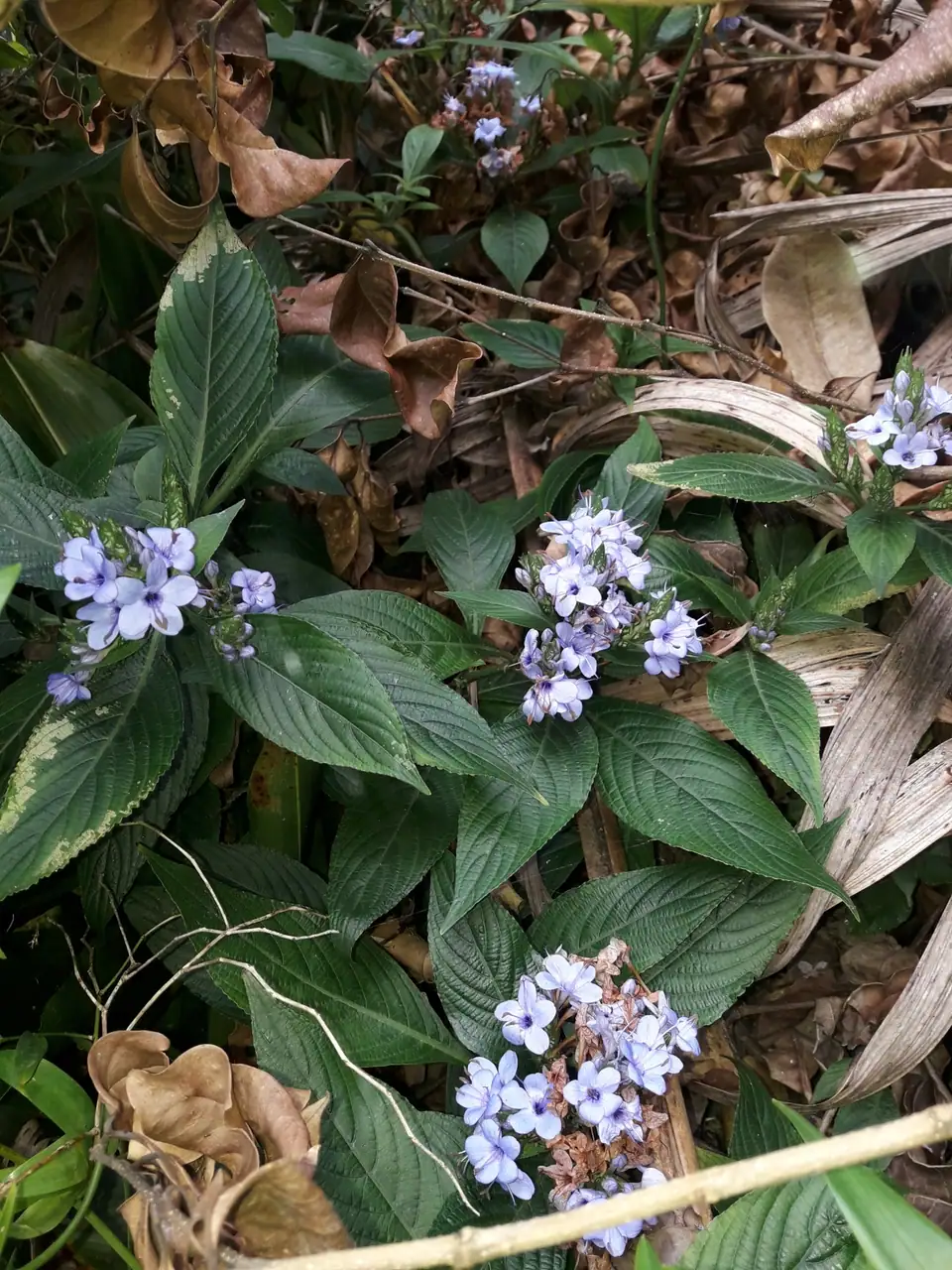
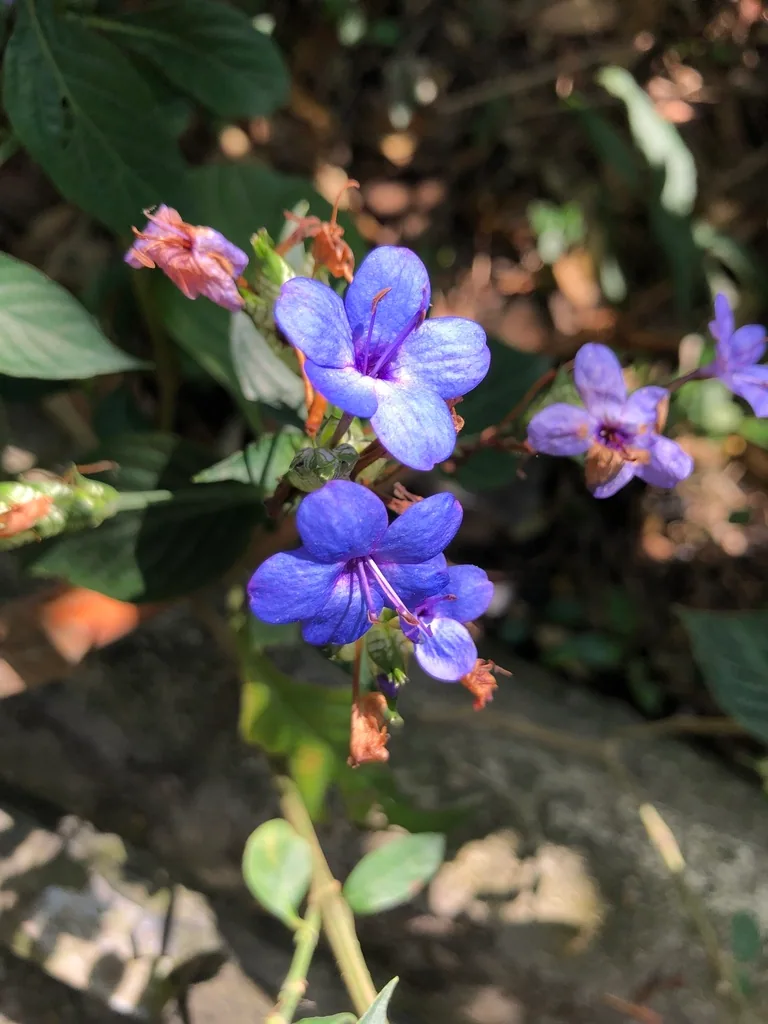
Eranthemum pulchellum (blue sage) is a fast-growing evergreen shrub from South Asia with spikes of blue flowers in winter. [1][4] It prefers fertile, moist, well-drained, slightly acidic soil and filtered sun or semi-shade. [1] Cutting it back hard after flowering keeps it compact and increases blooming. [1]
Blue-sage care
Measurements in square brackets are our conversion into the other unit system; the quoted text is unchanged.
How to water Blue-sage
Watering
Keep the soil evenly moist; moderate water
What the sources say (3)
Watering Needs: Keep soil evenly moist. Requires high humidity. Prefers a slighly acidic, well drained soil.Moisture: Soil should remain moist. Tolerant of high humidity.| Water Preference
| Moderate Water
| Plant Growth Rate
| FastWatering notes
Likes high humidity; moderate drought tolerance; needs well-drained soil
How much light Blue-sage needs
Full sun to partial shade; filtered light or afternoon shade preferred
What the sources say (4)
It grows well in the area where it receives filtered sunlight or semi-shade. Remove spent flowers to induce more blooming.Light needs: Full sun to part shade.
- Salt tolerance: LowSoil moisture levels should remain consistent. It does best with some afternoon shade.Heat Tolerance: Likes hot and humid conditions
Sun Exposure: Light shade to full sunHow much cold Blue-sage can take
Hardiness, coldest zone
10b [winter low 1.7 to 4.4 °C (35 to 40 °F)]
Best soil for Blue-sage
7.0
What the sources say (1)
Soil/pH/Texture: Prefers rich, well-drained soil with an acidic pH below 7.0.Where to grow Blue-sage
Indoors
Yes
What the sources say (2)
Propagation: Root cuttings, or stem cuttings of new spring growth
Often grown as house plant.In colder climates, it can be grown in a container and brought indoors during the winter or kept in a greenhouse.In containers
Yes
What the sources say (2)
This plant is ideal as a specimen plant or grown in containers on garden patios.In colder climates, it can be grown in a container and brought indoors during the winter or kept in a greenhouse.Spacing
60-90 cm [24–35 in]
What the sources say (1)
Softwood cuttings are prepared from stems that can still bend and move and just about to harden.
| Planting Distance
| 60 cm to 90 cmHow to propagate Blue-sage
Blue-sage pests and problems
Scale, mealybugs and nematodes
Remedies
The sources we checked give no remedies for this plant.
Calendar
Pruning
After flowering
What the sources say (3)
Will produce more blooms and remain compact if plant is severely cut back after flowering.It should be cut back after flowering to keep it compact and encourage more blooming.Culture:
Prune short after it finishes blooming.
List of All the PlantsMonths as given by the sources, which are mostly from the United States (northern hemisphere). In the southern hemisphere they shift by about six months.
Indicative values
Values from a secondary source, not checked word for word like the rest of this page. Use them as a starting point.
- Life cycle
- PerennialIndicative value, adapt it to your climate · Secondary source
- Mature height
- 61-152.4 cm (2-5 ft)Indicative value, adapt it to your climate · Secondary source
- Hours of sun
- 6-8 hoursIndicative value, adapt it to your climate · Secondary source
- Drought tolerant
- yesIndicative value, adapt it to your climate · Secondary source
- Care level
- ModerateIndicative value, adapt it to your climate · Secondary source
- Growth rate
- LowIndicative value, adapt it to your climate · Secondary source
Similar plants
- Abies grandis Abies grandis
- Abraham Trachystemon orientalis
- Abyssinian banana Ensete ventricosum
- Acacia longifolia Acacia longifolia
- Acanthus hungaricus Acanthus hungaricus
- Achlys triphylla Achlys triphylla
- Aconite Aconitum napellus
- Adam's Needle Yucca flaccida
Sources
Every value above is quoted from these documents. Links lead to the original publisher.
- NParks | Eranthemum pulchellum · nparks.gov.sg, consulted
- Blue Sage – Port St. Lucie Botanical Gardens · pslbg.org, consulted
- Eranthemum pulchellum可愛花 Blue Eranthemum · digarb.hku.hk, consulted
- Blue Sage (Eranthemum pulchellum) · desert-tropicals.com, consulted
Written by Emilio Marruso · last checked