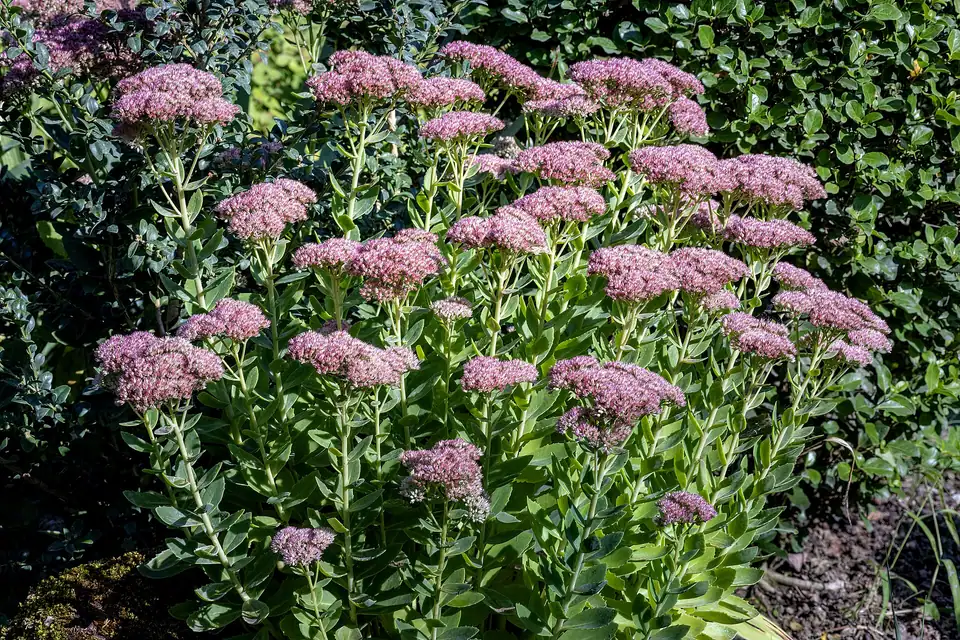


Cómo cultivar y cuidar Hierba callera
Hylotelephium telephium
Escrito por Emilio Marruso · última revisión
De un vistazo
La hierba callera es una vivaz resistente y agradecida para un rincón soleado. Sus raíces almacenan agua, así que aguanta bien las rachas secas, y en la mayoría de los suelos de jardín apenas necesita abono. Incluso puede brotar de una sola hoja: de una planta pronto tendrás muchas, en el jardín o en maceta.
- Sol
Sol pleno
Qué dicen las fuentes (1)
Luz: Pleno sol
Stonecrop prefers full sun and medium to dry, sandy, or shallow-rocky soil with a neutral to alkaline pH.
— Hylotelephium telephium (Life-everlasting, Live-forever, Livelong, Orphan John, Orpine, Stonecrop) | North Carolina Extension Gardener Plant Toolbox [1] - Riego
Prefiere tierra entre algo húmeda y seca; sus raíces guardan agua para las rachas secas
Qué dicen las fuentes (1)
Riego: Suelo medio a seco; las raíces pivotantes almacenan agua para sobrevivir períodos secos
Stonecrop prefers full sun and medium to dry, sandy, or shallow-rocky soil with a neutral to alkaline pH. They form white, carrot-shaped tap roots, which store water to help the plant survive during dry spells.
— Hylotelephium telephium (Life-everlasting, Live-forever, Livelong, Orphan John, Orpine, Stonecrop) | North Carolina Extension Gardener Plant Toolbox [1] - Frío
Aguanta inviernos de hasta −40 °C (−40 °F)
Muy rústica · USDA 3a · RHS H7 · Z3
Qué dicen las fuentes (2)
Rusticidad, zona más fría: 3a [mínima invernal de −40 a −37,2 °C (de −40 a −35 °F)]
USDA Plant Hardiness Zone: 3a, 3b, 4a, 4b, 5a, 5b, 6a, 6b, 7a, 7b, 8a, 8b, 9a, 9b
— Hylotelephium telephium (Life-everlasting, Live-forever, Livelong, Orphan John, Orpine, Stonecrop) | North Carolina Extension Gardener Plant Toolbox [1] Rusticidad, zona más cálida: 9b [mínima invernal de −3,9 a −1,1 °C (de 25 a 30 °F)]
USDA Plant Hardiness Zone: 3a, 3b, 4a, 4b, 5a, 5b, 6a, 6b, 7a, 7b, 8a, 8b, 9a, 9b
— Hylotelephium telephium (Life-everlasting, Live-forever, Livelong, Orphan John, Orpine, Stonecrop) | North Carolina Extension Gardener Plant Toolbox [1] - Abonado
Poco o ningún abono; el exceso de nitrógeno la vuelve blanda, enfermiza y con pocas flores
Qué dicen las fuentes (3)
Frecuencia: Poco o ningún abono necesario en la mayoría de los suelos de jardín
Your hylotelephiums will need little or no feeding in most garden soils.
— [4] Evitar: Demasiado fertilizante, especialmente nitrógeno
Your hylotelephiums will need little or no feeding in most garden soils. Too much plant food, particularly nitrogen (which is in most plant fertilisers), will lead to lush floppy growth that can be disease prone and flower poorly.
— [4] Signos de exceso: Crecimiento exuberante y flácido, propenso a enfermedades y con floración deficiente
Your hylotelephiums will need little or no feeding in most garden soils. Too much plant food, particularly nitrogen (which is in most plant fertilisers), will lead to lush floppy growth that can be disease prone and flower poorly.
— [4] - Plagas
Babosas, pulgón, cochinillas, cochinilla algodonosa y gorgojos; puede sufrir podredumbre del cuello y de la raíz
Qué dicen las fuentes (2)
Plagas: babosas, cochinillas, cochinillas harinosas, nematodos, pulgones, gorgojos
Insects, Diseases, and Other Plant Problems: Slugs, scale, mealy bugs, nematodes, aphids, and weevils may be seen. May develop fungal and bacterial crown rot and root rot.
— Hylotelephium telephium (Life-everlasting, Live-forever, Livelong, Orphan John, Orpine, Stonecrop) | North Carolina Extension Gardener Plant Toolbox [1] Enfermedades: pudrición fúngica de la corona, pudrición bacteriana de la corona, pudrición de la raíz
Slugs, scale, mealy bugs, nematodes, aphids, and weevils may be seen. May develop fungal and bacterial crown rot and root rot. Deer sometimes browse the foliage.
— Hylotelephium telephium (Life-everlasting, Live-forever, Livelong, Orphan John, Orpine, Stonecrop) | North Carolina Extension Gardener Plant Toolbox [1] - Atención
Los ciervos a veces se comen las hojas
- Tamaño
61–76 cm de alto y 46–61 cm de ancho
Qué dicen las fuentes (2)
Altura adulta: 61-76 cm (2 a 2.5 pies)
Propagate stonecrop by division in the spring or stem cutting in the summer. It can regenerate from a single leaf. It is a low-maintenance plant that grows 2 to 2.5 feet tall 1.5 to 2 feet wide.
— Hylotelephium telephium (Life-everlasting, Live-forever, Livelong, Orphan John, Orpine, Stonecrop) | North Carolina Extension Gardener Plant Toolbox [1] Anchura adulta: 46-61 cm (1.5 a 2 pies)
Propagate stonecrop by division in the spring or stem cutting in the summer. It can regenerate from a single leaf. It is a low-maintenance plant that grows 2 to 2.5 feet tall 1.5 to 2 feet wide.
— Hylotelephium telephium (Life-everlasting, Live-forever, Livelong, Orphan John, Orpine, Stonecrop) | North Carolina Extension Gardener Plant Toolbox [1] - Multiplicación
Divide la mata en primavera o haz esquejes de tallo en verano; hasta una sola hoja puede brotar
Qué dicen las fuentes (1)
Propagación: División en primavera; esqueje de tallo en verano; puede regenerarse a partir de una sola hoja
Propagate stonecrop by division in the spring or stem cutting in the summer. It can regenerate from a single leaf.
— Hylotelephium telephium (Life-everlasting, Live-forever, Livelong, Orphan John, Orpine, Stonecrop) | North Carolina Extension Gardener Plant Toolbox [1] - Maceta
Crece también en maceta
Qué dicen las fuentes (1)
En maceta: Sí
It can be sited in a meadow or grown in a container.
— Hylotelephium telephium (Life-everlasting, Live-forever, Livelong, Orphan John, Orpine, Stonecrop) | North Carolina Extension Gardener Plant Toolbox [1]
Resumen
El sedum o telefio es una suculenta herbácea perenne de la familia Crassulaceae, nativa de Europa, Rusia y el norte de China. [1] Prefiere pleno sol y suelo medio a seco, arenoso o rocoso poco profundo. [1] Se propaga por división en primavera o por esquejes de tallo en verano. [1]
Citado en inglés, como en la fuente.
Esta ficha está incompleta: las fuentes consultadas aún no cubren todos los campos.
Aún no cubierto por nuestras fuentes: Poda
Cuidados
Riego
Suelo medio a seco; las raíces pivotantes almacenan agua para sobrevivir períodos secos
Qué dicen las fuentes (1)
Stonecrop prefers full sun and medium to dry, sandy, or shallow-rocky soil with a neutral to alkaline pH. They form white, carrot-shaped tap roots, which store water to help the plant survive during dry spells.Luz
Pleno sol
Qué dicen las fuentes (1)
Stonecrop prefers full sun and medium to dry, sandy, or shallow-rocky soil with a neutral to alkaline pH.Clima y frío
Rusticidad, zona más fría
3a [mínima invernal de −40 a −37,2 °C (de −40 a −35 °F)]
Qué dicen las fuentes (1)
USDA Plant Hardiness Zone:
3a, 3b, 4a, 4b, 5a, 5b, 6a, 6b, 7a, 7b, 8a, 8b, 9a, 9bRusticidad, zona más cálida
9b [mínima invernal de −3,9 a −1,1 °C (de 25 a 30 °F)]
Qué dicen las fuentes (1)
USDA Plant Hardiness Zone:
3a, 3b, 4a, 4b, 5a, 5b, 6a, 6b, 7a, 7b, 8a, 8b, 9a, 9bSuelo
pH del suelo, mínimo
En revisión: nuestro segundo control cuestionó este valor.
pH del suelo, máximo
Las fuentes dan valores distintos según la región, la zona o las condiciones de cultivo.
Lo que dice cada fuente
Según NC State Extension (H. telephium): (sin máximo: lista alcalino >8.0 y neutro 6.0-8.0)
Según NC State Extension (genus Hylotelephium): 8.0
Qué dicen las fuentes (2)
Según NC State Extension (H. telephium): Soil Texture:
Sand
Shallow Rocky
Soil pH:
Alkaline (>8.0)
Neutral (6.0-8.0)Según NC State Extension (genus Hylotelephium): Soil pH:
Neutral (6.0-8.0)Dónde cultivarla
Sí
Qué dicen las fuentes (1)
It can be sited in a meadow or grown in a container.Propagación
División en primavera; esqueje de tallo en verano; puede regenerarse a partir de una sola hoja
Qué dicen las fuentes (1)
Propagate stonecrop by division in the spring or stem cutting in the summer. It can regenerate from a single leaf.Cultivo
La planta
Ciclo de vida
perenne
Qué dicen las fuentes (1)
Stonecrop or Orpine is a succulent, herbaceous perennial with an erect and clumping habit. It is in the stonecrop family (Crassulaceae) and is native to Europe, Russia, and northern China.Familia
Crassulaceae
Qué dicen las fuentes (1)
Stonecrop or Orpine is a succulent, herbaceous perennial with an erect and clumping habit. It is in the stonecrop family (Crassulaceae) and is native to Europe, Russia, and northern China.Altura adulta
61-76 cm (2 a 2.5 pies)
Qué dicen las fuentes (1)
Propagate stonecrop by division in the spring or stem cutting in the summer. It can regenerate from a single leaf. It is a low-maintenance plant that grows 2 to 2.5 feet tall 1.5 to 2 feet wide.Anchura adulta
46-61 cm (1.5 a 2 pies)
Qué dicen las fuentes (1)
Propagate stonecrop by division in the spring or stem cutting in the summer. It can regenerate from a single leaf. It is a low-maintenance plant that grows 2 to 2.5 feet tall 1.5 to 2 feet wide.Plagas y enfermedades
Plagas
babosas, cochinillas, cochinillas harinosas, nematodos, pulgones, gorgojos
Qué dicen las fuentes (1)
Insects, Diseases, and Other Plant Problems: Slugs, scale, mealy bugs, nematodes, aphids, and weevils may be seen. May develop fungal and bacterial crown rot and root rot.Enfermedades
pudrición fúngica de la corona, pudrición bacteriana de la corona, pudrición de la raíz
Qué dicen las fuentes (1)
Slugs, scale, mealy bugs, nematodes, aphids, and weevils may be seen. May develop fungal and bacterial crown rot and root rot. Deer sometimes browse the foliage.Abonado
Frecuencia
Poco o ningún abono necesario en la mayoría de los suelos de jardín
Qué dicen las fuentes (1)
Your hylotelephiums will need little or no feeding in most garden soils.Evitar
Demasiado fertilizante, especialmente nitrógeno
Qué dicen las fuentes (1)
Your hylotelephiums will need little or no feeding in most garden soils. Too much plant food, particularly nitrogen (which is in most plant fertilisers), will lead to lush floppy growth that can be disease prone and flower poorly.Signos de exceso
Crecimiento exuberante y flácido, propenso a enfermedades y con floración deficiente
Qué dicen las fuentes (1)
Your hylotelephiums will need little or no feeding in most garden soils. Too much plant food, particularly nitrogen (which is in most plant fertilisers), will lead to lush floppy growth that can be disease prone and flower poorly.Problemas
Plagas y pudriciones
Síntoma: Pueden verse babosas, cochinillas, chinches harinosas, nematodos, pulgones y gorgojos; puede desarrollarse pudrición de la corona y pudrición de la raíz, tanto fúngica como bacteriana.
Qué hacer: No se proporciona manejo en la fuente.
Qué dicen las fuentes (1)
Slugs, scale, mealy bugs, nematodes, aphids, and weevils may be seen. May develop fungal and bacterial crown rot and root rot.
— Hylotelephium telephium (Life-everlasting, Live-forever, Livelong, Orphan John, Orpine, Stonecrop) | North Carolina Extension Gardener Plant Toolbox [1] Ramoneo por ciervos
Síntoma: A veces los ciervos ramonean el follaje.
Qué hacer: No se proporciona manejo en la fuente.
Qué dicen las fuentes (1)
May develop fungal and bacterial crown rot and root rot. Deer sometimes browse the foliage.
— Hylotelephium telephium (Life-everlasting, Live-forever, Livelong, Orphan John, Orpine, Stonecrop) | North Carolina Extension Gardener Plant Toolbox [1]
Remedios
Cada remedio indica qué dicen las fuentes oficiales; los remedios tradicionales sin fuente oficial aparecen marcados. Los perjudiciales están para que sepas evitarlos.
Cuidar la planta
pulgones
chorro de agua potente Funciona
Cómo: Desaloja los pulgones con un chorro de agua fuerte de la manguera.
You can dislodge the aphids with a forceful stream of water from the hose if need be.
— ask.extension.org [5] Qué dicen las pruebas You can dislodge the aphids with a forceful stream of water from the hose if need be.
— ask.extension.org [5] jabón insecticida Funciona
Cómo: Rocía los grupos de pulgones con jabón insecticida cada 2 o 3 días durante 2 semanas.
If this doesn't solve the problem, spray the clusters of aphids with insecticidal soap every 2 to 3 days for 2 weeks.
— gardening.yardener.com [6] Qué dicen las pruebas For example, insecticidal soap is a safe, effective organic insecticide with minimal environmental impact.
— extension.psu.edu [7]
babosas
trampa de cerveza No verificado
Remedio tradicional, no verificado por una fuente oficial.
Cómo: Atrápalos en un plato con cerveza como cebo; coloca las trampas al primer signo de agujeros en las hojas.
pudrición de la corona
Elimina las plantas y el suelo infectados. No verificado
Remedio tradicional, no verificado por una fuente oficial.
Cómo: Retira las plantas infectadas y el suelo que las rodea y deséchalos en la basura.
Calendario
Poda
No figura en las fuentes consultadas.
Meses tal como los dan las fuentes, en su mayoría de Estados Unidos (hemisferio norte). En el hemisferio sur se desplazan unos seis meses.
Valores orientativos
Valores de una fuente secundaria, no comprobados palabra por palabra como el resto de esta página. Úselos como punto de partida.
- Resiste la sequía
- SíValor orientativo, adáptalo a tu clima · Fuente secundaria
- Crecimiento
- BajoValor orientativo, adáptalo a tu clima · Fuente secundaria
- Poda
- Marzo, abrilValor orientativo, adáptalo a tu clima · Fuente secundaria
Plantas similares
- Allegheny Stonecrop Hylotelephium telephioides
- Evergreen Orpine Hylotelephium anacampseros
- Stonecrop Hylotelephium cauticola
- Stonecrop Hylotelephium sieboldii
- Stonecrop Hylotelephium spectabile
- Carpet Sedum Sedum lineare
- Copper Rose Echeveria multicaulis
- Graptopétalo Graptopetalum paraguayense
Fuentes
Cada valor anterior se cita de estos documentos. Los enlaces llevan al editor original.
- Hylotelephium telephium (Life-everlasting, Live-forever, Livelong, Orphan John, Orpine, Stonecrop) | North Carolina Extension Gardener Plant Toolbox · plants.ces.ncsu.edu, consultado
- Hylotelephium (Live-forever, Orpine, Sedum, Stonecrop) | North Carolina Extension Gardener Plant Toolbox · plants.ces.ncsu.edu, consultado
- Life-everlasting - Hylotelephium telephium | North Carolina Extension Gardener Plant Toolbox · plants.ces.ncsu.edu, consultado
- rhs.org.uk · rhs.org.uk
- ask.extension.org · ask.extension.org
- gardening.yardener.com · gardening.yardener.com
- extension.psu.edu · extension.psu.edu
Escrito por Emilio Marruso · última revisión