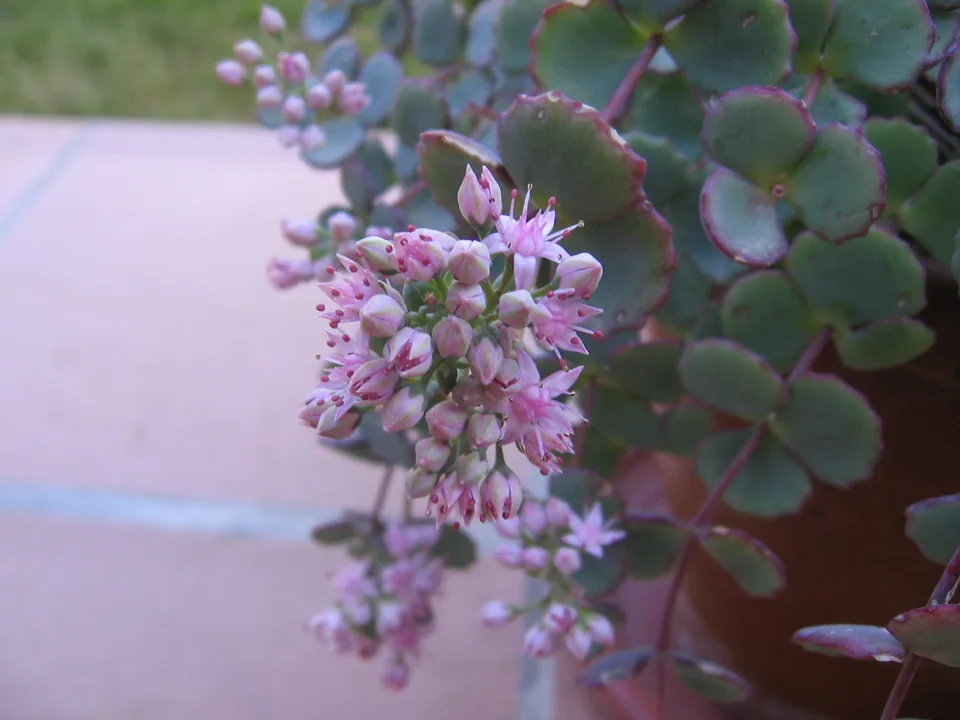

Cómo cultivar y cuidar Stonecrop
Hylotelephium sieboldii
Escrito por Emilio Marruso · última revisión
Tóxica para: Personas · Por qué
De un vistazo
Esta vivaz baja y resistente forma una mata compacta de solo 15–23 cm de alto, ideal para el borde de un arriate o una maceta. Le gusta el sol pleno o la semisombra, aguanta bien la sequía y casi no necesita abono. Dale una tierra que drene muy bien, riégala con moderación y te acompañará año tras año.
- Sol
Sol pleno o semisombra
Qué dicen las fuentes (1)
Luz: Pleno sol a semisombra
It grows best in full sun to partial shade and in loam or sandy soil with very good drainage and a neutral or alkaline pH.
— Hylotelephium sieboldii (Japanese Stonecrop, October Daphne Stonecrop, October Plant, October Stonecrop, Showy Stonecrop, Siebold's Sedum, Siebold's Stonecrop, Stonecrop) | North Carolina Extension Gardener Plant Toolbox [1] - Riego
Aguanta bien la sequía; el exceso de agua pudre las raíces
Qué dicen las fuentes (3)
Riego: Buena tolerancia a la sequía; en contenedores, deja que el suelo se seque antes de regar
It has good drought tolerance, making it suitable for xeriscaping. When grown in a container, allow the soil to dry out before watering.
— Hylotelephium sieboldii (Japanese Stonecrop, October Daphne Stonecrop, October Plant, October Stonecrop, Showy Stonecrop, Siebold's Sedum, Siebold's Stonecrop, Stonecrop) | North Carolina Extension Gardener Plant Toolbox [1] Notas sobre el riego: El riego excesivo o los sitios húmedos pueden provocar pudrición de raíces y corona; necesita muy buen drenaje
Slugs, snails, aphids, mealybugs, and some scale insects can visit this plant. Overwatering or wet sites can lead to root and crown rot.
— Hylotelephium sieboldii (Japanese Stonecrop, October Daphne Stonecrop, October Plant, October Stonecrop, Showy Stonecrop, Siebold's Sedum, Siebold's Stonecrop, Stonecrop) | North Carolina Extension Gardener Plant Toolbox [1] in loam or sandy soil with very good drainage and a neutral or alkaline pH.
— Hylotelephium sieboldii (Japanese Stonecrop, October Daphne Stonecrop, October Plant, October Stonecrop, Showy Stonecrop, Siebold's Sedum, Siebold's Stonecrop, Stonecrop) | North Carolina Extension Gardener Plant Toolbox [1] - Frío
Aguanta inviernos de hasta −40 °C (−40 °F)
Muy rústica · USDA 3a · RHS H7 · Z3
Qué dicen las fuentes (2)
Rusticidad, zona más fría: 3a [mínima invernal de −40 a −37,2 °C (de −40 a −35 °F)]
USDA Plant Hardiness Zone: 3a, 3b, 4a, 4b, 5a, 5b, 6a, 6b, 7a, 7b, 8a, 8b, 9a, 9b
— Hylotelephium sieboldii (Japanese Stonecrop, October Daphne Stonecrop, October Plant, October Stonecrop, Showy Stonecrop, Siebold's Sedum, Siebold's Stonecrop, Stonecrop) | North Carolina Extension Gardener Plant Toolbox [1] Rusticidad, zona más cálida: 9b [mínima invernal de −3,9 a −1,1 °C (de 25 a 30 °F)]
USDA Plant Hardiness Zone: 3a, 3b, 4a, 4b, 5a, 5b, 6a, 6b, 7a, 7b, 8a, 8b, 9a, 9b
— Hylotelephium sieboldii (Japanese Stonecrop, October Daphne Stonecrop, October Plant, October Stonecrop, Showy Stonecrop, Siebold's Sedum, Siebold's Stonecrop, Stonecrop) | North Carolina Extension Gardener Plant Toolbox [1] - Suelo
Necesita una tierra con muy buen drenaje; evita los sitios encharcados
Qué dicen las fuentes (2)
Notas sobre el riego: El riego excesivo o los sitios húmedos pueden provocar pudrición de raíces y corona; necesita muy buen drenaje
Slugs, snails, aphids, mealybugs, and some scale insects can visit this plant. Overwatering or wet sites can lead to root and crown rot.
— Hylotelephium sieboldii (Japanese Stonecrop, October Daphne Stonecrop, October Plant, October Stonecrop, Showy Stonecrop, Siebold's Sedum, Siebold's Stonecrop, Stonecrop) | North Carolina Extension Gardener Plant Toolbox [1] in loam or sandy soil with very good drainage and a neutral or alkaline pH.
— Hylotelephium sieboldii (Japanese Stonecrop, October Daphne Stonecrop, October Plant, October Stonecrop, Showy Stonecrop, Siebold's Sedum, Siebold's Stonecrop, Stonecrop) | North Carolina Extension Gardener Plant Toolbox [1] - Abonado
Poco o ningún abono; con demasiado nitrógeno crece flácida y florece poco
Qué dicen las fuentes (3)
Frecuencia: Poco o ningún abono necesario en la mayoría de los suelos de jardín
Your hylotelephiums will need little or no feeding in most garden soils.
— [7] Evitar: Demasiado fertilizante, especialmente nitrógeno
Your hylotelephiums will need little or no feeding in most garden soils. Too much plant food, particularly nitrogen (which is in most plant fertilisers), will lead to lush floppy growth that can be disease prone and flower poorly.
— [7] Signos de exceso: Crecimiento exuberante y flácido, propenso a enfermedades y con floración deficiente
Your hylotelephiums will need little or no feeding in most garden soils. Too much plant food, particularly nitrogen (which is in most plant fertilisers), will lead to lush floppy growth that can be disease prone and flower poorly.
— [7] - Plagas
Babosas, caracoles, pulgones, cochinillas algodonosas y cochinillas; podredumbre de raíz y cuello si hay humedad
Qué dicen las fuentes (2)
Plagas: babosas, caracoles, pulgones, cochinillas harinosas, cochinillas
Slugs, snails, aphids, mealybugs, and some scale insects can visit this plant.
— Hylotelephium sieboldii (Japanese Stonecrop, October Daphne Stonecrop, October Plant, October Stonecrop, Showy Stonecrop, Siebold's Sedum, Siebold's Stonecrop, Stonecrop) | North Carolina Extension Gardener Plant Toolbox [1] Enfermedades: pudrición de raíz, pudrición de corona
Overwatering or wet sites can lead to root and crown rot.
— Hylotelephium sieboldii (Japanese Stonecrop, October Daphne Stonecrop, October Plant, October Stonecrop, Showy Stonecrop, Siebold's Sedum, Siebold's Stonecrop, Stonecrop) | North Carolina Extension Gardener Plant Toolbox [1] - Atención
Con demasiada sombra crece débil y se tumba
- Tamaño
15–23 cm de alto y 30–46 cm de ancho
Qué dicen las fuentes (2)
Altura adulta: 15.24-22.86 cm (6-9 pulgadas)
It grows 6 to 9 inches tall and 1 to 1.5 feet wide.
— Hylotelephium sieboldii (Japanese Stonecrop, October Daphne Stonecrop, October Plant, October Stonecrop, Showy Stonecrop, Siebold's Sedum, Siebold's Stonecrop, Stonecrop) | North Carolina Extension Gardener Plant Toolbox [1] Anchura adulta: 30.48-45.72 cm (1-1.5 pies)
It grows 6 to 9 inches tall and 1 to 1.5 feet wide.
— Hylotelephium sieboldii (Japanese Stonecrop, October Daphne Stonecrop, October Plant, October Stonecrop, Showy Stonecrop, Siebold's Sedum, Siebold's Stonecrop, Stonecrop) | North Carolina Extension Gardener Plant Toolbox [1] - Multiplicación
Por división, semilla o esquejes de tallo
Qué dicen las fuentes (1)
Propagación: División, semilla, esqueje de tallo
Life Cycle: Perennial Recommended Propagation Strategy: Division Seed Stem Cutting
— Hylotelephium sieboldii (Japanese Stonecrop, October Daphne Stonecrop, October Plant, October Stonecrop, Showy Stonecrop, Siebold's Sedum, Siebold's Stonecrop, Stonecrop) | North Carolina Extension Gardener Plant Toolbox [1] - Maceta
Crece bien en maceta; deja que la tierra se seque antes de regar
Qué dicen las fuentes (2)
En maceta: Sí
When grown in a container, allow the soil to dry out before watering. Repot in spring.
— Hylotelephium sieboldii (Japanese Stonecrop, October Daphne Stonecrop, October Plant, October Stonecrop, Showy Stonecrop, Siebold's Sedum, Siebold's Stonecrop, Stonecrop) | North Carolina Extension Gardener Plant Toolbox [1] Riego: Buena tolerancia a la sequía; en contenedores, deja que el suelo se seque antes de regar
It has good drought tolerance, making it suitable for xeriscaping. When grown in a container, allow the soil to dry out before watering.
— Hylotelephium sieboldii (Japanese Stonecrop, October Daphne Stonecrop, October Plant, October Stonecrop, Showy Stonecrop, Siebold's Sedum, Siebold's Stonecrop, Stonecrop) | North Carolina Extension Gardener Plant Toolbox [1] - Seguridad
Es tóxica para las personas
Resumen
Hylotelephium sieboldii es una cubierta vegetal perenne suculenta originaria de Japón. [1] Crece mejor a pleno sol o semisombra con muy buen drenaje y tiene buena tolerancia a la sequía. [1] La planta está catalogada como de características de veneno de baja severidad. [1]
Citado en inglés, como en la fuente.
Esta ficha está incompleta: las fuentes consultadas aún no cubren todos los campos.
Aún no cubierto por nuestras fuentes: Poda
Cuidados
Riego
Riego
Buena tolerancia a la sequía; en contenedores, deja que el suelo se seque antes de regar
Qué dicen las fuentes (1)
It has good drought tolerance, making it suitable for xeriscaping. When grown in a container, allow the soil to dry out before watering.Notas sobre el riego
El riego excesivo o los sitios húmedos pueden provocar pudrición de raíces y corona; necesita muy buen drenaje
Qué dicen las fuentes (2)
Slugs, snails, aphids, mealybugs, and some scale insects can visit this plant. Overwatering or wet sites can lead to root and crown rot.in loam or sandy soil with very good drainage and a neutral or alkaline pH.Luz
Pleno sol a semisombra
Qué dicen las fuentes (1)
It grows best in full sun to partial shade and in loam or sandy soil with very good drainage and a neutral or alkaline pH.Clima y frío
Rusticidad, zona más fría
3a [mínima invernal de −40 a −37,2 °C (de −40 a −35 °F)]
Qué dicen las fuentes (1)
USDA Plant Hardiness Zone:
3a, 3b, 4a, 4b, 5a, 5b, 6a, 6b, 7a, 7b, 8a, 8b, 9a, 9bRusticidad, zona más cálida
9b [mínima invernal de −3,9 a −1,1 °C (de 25 a 30 °F)]
Qué dicen las fuentes (1)
USDA Plant Hardiness Zone:
3a, 3b, 4a, 4b, 5a, 5b, 6a, 6b, 7a, 7b, 8a, 8b, 9a, 9bDónde cultivarla
Sí
Qué dicen las fuentes (1)
When grown in a container, allow the soil to dry out before watering. Repot in spring.Propagación
División, semilla, esqueje de tallo
Qué dicen las fuentes (1)
Life Cycle:
Perennial
Recommended Propagation Strategy:
Division
Seed
Stem CuttingCultivo
La planta
Ciclo de vida
perenne
Qué dicen las fuentes (1)
Japanese stonecrop is a succulent, perennial groundcover that is native to Japan, where it can be found growing along rocky outcrops and cliffs. It is a member of the stonecrop family (Crassulaceae).Familia
Crassulaceae
Qué dicen las fuentes (1)
Japanese stonecrop is a succulent, perennial groundcover that is native to Japan, where it can be found growing along rocky outcrops and cliffs. It is a member of the stonecrop family (Crassulaceae).Altura adulta
15.24-22.86 cm (6-9 pulgadas)
Qué dicen las fuentes (1)
It grows 6 to 9 inches tall and 1 to 1.5 feet wide.Anchura adulta
30.48-45.72 cm (1-1.5 pies)
Qué dicen las fuentes (1)
It grows 6 to 9 inches tall and 1 to 1.5 feet wide.Plagas y enfermedades
Plagas
babosas, caracoles, pulgones, cochinillas harinosas, cochinillas
Qué dicen las fuentes (1)
Slugs, snails, aphids, mealybugs, and some scale insects can visit this plant.Enfermedades
pudrición de raíz, pudrición de corona
Qué dicen las fuentes (1)
Overwatering or wet sites can lead to root and crown rot.Abonado
Frecuencia
Poco o ningún abono necesario en la mayoría de los suelos de jardín
Qué dicen las fuentes (1)
Your hylotelephiums will need little or no feeding in most garden soils.Evitar
Demasiado fertilizante, especialmente nitrógeno
Qué dicen las fuentes (1)
Your hylotelephiums will need little or no feeding in most garden soils. Too much plant food, particularly nitrogen (which is in most plant fertilisers), will lead to lush floppy growth that can be disease prone and flower poorly.Signos de exceso
Crecimiento exuberante y flácido, propenso a enfermedades y con floración deficiente
Qué dicen las fuentes (1)
Your hylotelephiums will need little or no feeding in most garden soils. Too much plant food, particularly nitrogen (which is in most plant fertilisers), will lead to lush floppy growth that can be disease prone and flower poorly.Problemas
Pudrición de raíces y corona
Síntoma: El riego excesivo o los sitios húmedos pueden provocar pudrición de raíces y corona.
Qué dicen las fuentes (1)
Slugs, snails, aphids, mealybugs, and some scale insects can visit this plant. Overwatering or wet sites can lead to root and crown rot.
— Hylotelephium sieboldii (Japanese Stonecrop, October Daphne Stonecrop, October Plant, October Stonecrop, Showy Stonecrop, Siebold's Sedum, Siebold's Stonecrop, Stonecrop) | North Carolina Extension Gardener Plant Toolbox [1] Babosas, caracoles, pulgones, cochinillas harinosas y cochinillas
Síntoma: Estas plagas pueden visitar la planta.
Qué dicen las fuentes (1)
Slugs, snails, aphids, mealybugs, and some scale insects can visit this plant.
— Hylotelephium sieboldii (Japanese Stonecrop, October Daphne Stonecrop, October Plant, October Stonecrop, Showy Stonecrop, Siebold's Sedum, Siebold's Stonecrop, Stonecrop) | North Carolina Extension Gardener Plant Toolbox [1] Crecimiento débil en sombra
Síntoma: Demasiada sombra dará como resultado un crecimiento débil y flácido de la planta.
Qué dicen las fuentes (1)
Too much shade will result in weak, floppy plant growth. It has good drought tolerance, making it suitable for xeriscaping.
— Hylotelephium sieboldii (Japanese Stonecrop, October Daphne Stonecrop, October Plant, October Stonecrop, Showy Stonecrop, Siebold's Sedum, Siebold's Stonecrop, Stonecrop) | North Carolina Extension Gardener Plant Toolbox [1]
Remedios
Las fuentes consultadas no dan remedios para esta planta.
Toxicidad
Según la fuente, citada textualmente. No es un consejo médico ni veterinario: si una persona o un animal pudo haber ingerido esta planta, contacta con un centro de toxicología o con un veterinario.
Resistance To Challenges: Drought Dry Soil Poor Soil Rabbits Problems: Poisonous to Humans
[1]- Partes venenosas
Poison Part: Bark Flowers Fruits Leaves Roots Sap/Juice Seeds Stems
[1]- Principio tóxico
Poison Toxic Principle: Alkaloids sedine, sedamine, and others.
[1]- Síntomas
Poison Symptoms: Unknown, but possibly gastrointestinal symptoms. Poison Toxic Principle:
[1]- Gravedad
Poison Severity: Low Poison Symptoms: Unknown, but possibly gastrointestinal symptoms.
[1]
Calendario
Poda
No figura en las fuentes consultadas.
Meses tal como los dan las fuentes, en su mayoría de Estados Unidos (hemisferio norte). En el hemisferio sur se desplazan unos seis meses.
Comestibilidad
Según la fuente, citada textualmente. No comas una planta basándote solo en esta página: los errores de identificación pueden ser peligrosos.
when very young and tender, the stems and leaves can be eaten raw. Later, until they flower, they may be briefly cooked.
[1]
Valores orientativos
Valores de una fuente secundaria, no comprobados palabra por palabra como el resto de esta página. Úselos como punto de partida.
- Resiste la sequía
- SíValor orientativo, adáptalo a tu clima · Fuente secundaria
- pH del suelo
- 6-7.5Valor orientativo, adáptalo a tu clima · Fuente secundaria
- Nivel de cuidado
- MedioValor orientativo, adáptalo a tu clima · Fuente secundaria
- Crecimiento
- BajoValor orientativo, adáptalo a tu clima · Fuente secundaria
- Poda
- Octubre, FebreroValor orientativo, adáptalo a tu clima · Fuente secundaria
Plantas similares
- Allegheny Stonecrop Hylotelephium telephioides
- Evergreen Orpine Hylotelephium anacampseros
- Stonecrop Hylotelephium cauticola
- Stonecrop Hylotelephium spectabile
- Hierba callera Hylotelephium telephium
- Carpet Sedum Sedum lineare
- Chandelier Plant Kalanchoe delagoensis
- Copper Rose Echeveria multicaulis
Fuentes
Cada valor anterior se cita de estos documentos. Los enlaces llevan al editor original.
- Hylotelephium sieboldii (Japanese Stonecrop, October Daphne Stonecrop, October Plant, October Stonecrop, Showy Stonecrop, Siebold's Sedum, Siebold's Stonecrop, Stonecrop) | North Carolina Extension Gardener Plant Toolbox · plants.ces.ncsu.edu, consultado
- Siebold's Sedum - Hylotelephium sieboldii | North Carolina Extension Gardener Plant Toolbox · plants.ces.ncsu.edu, consultado
- Japanese Stonecrop - Hylotelephium sieboldii | North Carolina Extension Gardener Plant Toolbox · plants.ces.ncsu.edu, consultado
- Hylotelephium (Live-forever, Orpine, Sedum, Stonecrop) | North Carolina Extension Gardener Plant Toolbox · plants.ces.ncsu.edu, consultado
- October Daphne Stonecrop - Hylotelephium sieboldii | North Carolina Extension Gardener Plant Toolbox · plants.ces.ncsu.edu, consultado
- Orpine - Hylotelephium | North Carolina Extension Gardener Plant Toolbox · plants.ces.ncsu.edu, consultado
- rhs.org.uk · rhs.org.uk
Escrito por Emilio Marruso · última revisión