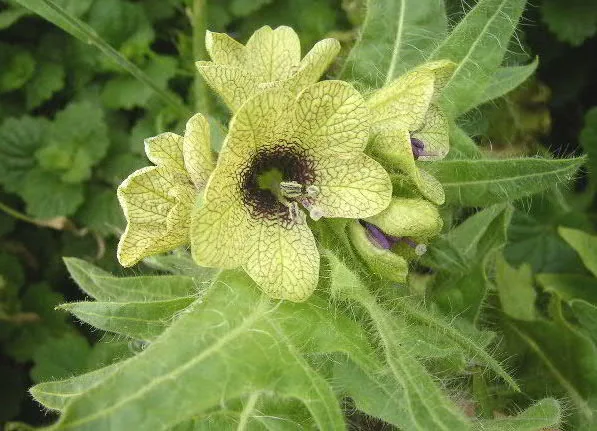


Cómo cultivar y cuidar Beleño negro
Hyoscyamus niger
Escrito por Emilio Marruso · última revisión
Tóxica para: Gatos, Perros, Caballos, Ganado, Animales, Personas · Por qué
De un vistazo
El beleño negro es una planta anual o bienal de la familia del tomate que crece hasta 91 cm y prospera donde muchas otras no pueden, de la sombra densa a la semisombra. Dale un suelo con buen drenaje y empieza desde semilla. Trátala con respeto: todas sus partes son muy tóxicas, irrita la piel y se resiembra sola, así que usa siempre guantes.
- Sol
De sombra densa a semisombra
Qué dicen las fuentes (1)
Luz: Sombra profunda a semisombra
Light: Deep shade (Less than 2 hours to no direct sunlight) Partial Shade (Direct sunlight only part of the day, 2-6 hours)
— Hyoscyamus niger (Black Henbane, Henbane, Hog's Bean, Stinking Nightshade, Witches Herb) | North Carolina Extension Gardener Plant Toolbox [1] - Riego
No tolera el suelo encharcado
Qué dicen las fuentes (2)
Notas sobre el riego: Intolerante a suelos húmedos; buen drenaje
#poisonous root #poisonous leaves #wet soils intolerant #poisonous if ingested
— Hyoscyamus niger (Black Henbane, Henbane, Hog's Bean, Stinking Nightshade, Witches Herb) | North Carolina Extension Gardener Plant Toolbox [1] Soil Drainage: Good Drainage Available Space To Plant:
— Hyoscyamus niger (Black Henbane, Henbane, Hog's Bean, Stinking Nightshade, Witches Herb) | North Carolina Extension Gardener Plant Toolbox [1] - Frío
Aguanta inviernos de hasta −34,4 °C (−30 °F)
Muy rústica · USDA 4a · RHS H7 · Z4
Qué dicen las fuentes (2)
Rusticidad, zona más fría: 4a [mínima invernal de −34,4 a −31,7 °C (de −30 a −25 °F)]
4a, 4b, 5a, 5b, 6a, 6b, 7a, 7b, 8a, 8b
— Hyoscyamus niger (Black Henbane, Henbane, Hog's Bean, Stinking Nightshade, Witches Herb) | North Carolina Extension Gardener Plant Toolbox [1] Rusticidad, zona más cálida: 8b [mínima invernal de −9,4 a −6,7 °C (de 15 a 20 °F)]
4a, 4b, 5a, 5b, 6a, 6b, 7a, 7b, 8a, 8b
— Hyoscyamus niger (Black Henbane, Henbane, Hog's Bean, Stinking Nightshade, Witches Herb) | North Carolina Extension Gardener Plant Toolbox [1] - Suelo
Necesita un suelo con buen drenaje
Qué dicen las fuentes (2)
Notas sobre el riego: Intolerante a suelos húmedos; buen drenaje
#poisonous root #poisonous leaves #wet soils intolerant #poisonous if ingested
— Hyoscyamus niger (Black Henbane, Henbane, Hog's Bean, Stinking Nightshade, Witches Herb) | North Carolina Extension Gardener Plant Toolbox [1] Soil Drainage: Good Drainage Available Space To Plant:
— Hyoscyamus niger (Black Henbane, Henbane, Hog's Bean, Stinking Nightshade, Witches Herb) | North Carolina Extension Gardener Plant Toolbox [1] - Atención
Invasora: se resiembra y la semilla dura años; arranca las plantas con la raíz y mételas en bolsas
- Tamaño
Hasta 91 cm de alto
Qué dicen las fuentes (1)
Altura adulta: hasta 91 cm (3 pies)
It can reach heights of up to 3 feet.
— Black Henbane | USU [2] - Multiplicación
Se multiplica por semilla
Qué dicen las fuentes (2)
Propagación: Semilla
Recommended Propagation Strategy: Seed Country Or Region Of Origin: Southern and Central Europe and Eurasia
— Hyoscyamus niger (Black Henbane, Henbane, Hog's Bean, Stinking Nightshade, Witches Herb) | North Carolina Extension Gardener Plant Toolbox [1] It spreads by seed and flowers from May to September.
— Black Henbane | USU [2] - Seguridad
Todas sus partes son muy tóxicas y pueden matar si se comen; irrita la piel, usa guantes
Resumen
El beleño negro es una hierba anual o bienal erecta de la familia de las solanáceas, introducida en los Estados Unidos para su cultivo como hierba medicinal. [1] Todas las partes de la planta se consideran altamente tóxicas y la planta es venenosa para todo el ganado y los seres humanos, incluso en dosis bajas. [2] Se propaga por auto-siembra, y sus semillas pueden permanecer viables durante muchos años. [1]
Citado en inglés, como en la fuente.
Esta ficha está incompleta: las fuentes consultadas aún no cubren todos los campos.
Aún no cubierto por nuestras fuentes: Riego, Poda
Cuidados
Riego
Riego
No figura en las fuentes consultadas.
Notas sobre el riego
Intolerante a suelos húmedos; buen drenaje
Qué dicen las fuentes (2)
#poisonous root #poisonous leaves #wet soils intolerant #poisonous if ingestedSoil Drainage:
Good Drainage
Available Space To Plant:Luz
Sombra profunda a semisombra
Qué dicen las fuentes (1)
Light:
Deep shade (Less than 2 hours to no direct sunlight)
Partial Shade (Direct sunlight only part of the day, 2-6 hours)Clima y frío
Rusticidad, zona más fría
4a [mínima invernal de −34,4 a −31,7 °C (de −30 a −25 °F)]
Qué dicen las fuentes (1)
4a, 4b, 5a, 5b, 6a, 6b, 7a, 7b, 8a, 8bRusticidad, zona más cálida
8b [mínima invernal de −9,4 a −6,7 °C (de 15 a 20 °F)]
Qué dicen las fuentes (1)
4a, 4b, 5a, 5b, 6a, 6b, 7a, 7b, 8a, 8bPropagación
Semilla
Qué dicen las fuentes (2)
Recommended Propagation Strategy:
Seed
Country Or Region Of Origin:
Southern and Central Europe and EurasiaIt spreads by seed and flowers from May to September.Cultivo
La planta
Ciclo de vida
anual o bienal
Qué dicen las fuentes (1)
Black Henbane is an erect annual or biennial herb with coarse, hairy stems.Familia
Solanáceas
Qué dicen las fuentes (1)
Species:
niger
Family:
Solanaceae
Uses (Ethnobotany):
Considered a weedy plant.Altura adulta
hasta 91 cm (3 pies)
Qué dicen las fuentes (1)
It can reach heights of up to 3 feet.Problemas
Maleza que se resiembra sola
Síntoma: Planta invasiva que se propaga por auto-siembra; la semilla puede permanecer viable durante muchos años; maleza común de pastizales, cercas, bordes de caminos y áreas baldías.
Qué hacer: Arranca o desentierra las plantas, quitando la raíz principal, y embolsa las plantas retiradas para contener las semillas; usa guantes.
Qué dicen las fuentes (3)
Control can be accomplished by pulling or digging up the plants, ensuring to remove the taproot.
— Hyoscyamus niger (Black Henbane, Henbane, Hog's Bean, Stinking Nightshade, Witches Herb) | North Carolina Extension Gardener Plant Toolbox [1] Place plants removed in bags to contain the spread of seeds from mature fruits.
— Hyoscyamus niger (Black Henbane, Henbane, Hog's Bean, Stinking Nightshade, Witches Herb) | North Carolina Extension Gardener Plant Toolbox [1] Black henbane has become a common weed of pastures, fence rows, roadsides, and waste areas.
— Black Henbane | USU [2] Irritación de la piel al manipularla
Síntoma: La exposición de la piel a la planta puede causar erupción cutánea.
Qué hacer: Usa guantes al manipularla.
Qué dicen las fuentes (1)
When handling the plant, be sure to wear gloves, as exposure to the skin may cause a rash.
— Hyoscyamus niger (Black Henbane, Henbane, Hog's Bean, Stinking Nightshade, Witches Herb) | North Carolina Extension Gardener Plant Toolbox [1]
Remedios
Cada remedio indica qué dicen las fuentes oficiales; los remedios tradicionales sin fuente oficial aparecen marcados. Los perjudiciales están para que sepas evitarlos.
Cómo eliminarla
autosiembra invasiva
Arranca o desentierra las plantas. Funciona
When handling the plant, be sure to wear gloves, as exposure to the skin may cause a rash.
— Hyoscyamus niger (Black Henbane, Henbane, Hog's Bean, Stinking Nightshade, Witches Herb) | North Carolina Extension Gardener Plant Toolbox [1] Symptoms of poisoning include: Salivation, headache, nausea, vomiting, diarrhea, rapid pulse, convulsions, and coma. It can cause skin irritation if it is touched with bare skin.
— Black Henbane | USU [2] Cómo: Arranca o desentierra las plantas, quitando la raíz principal, y coloca las plantas extraídas en bolsas para contener la dispersión de las semillas de los frutos maduros.
Control can be accomplished by pulling or digging up the plants, ensuring to remove the taproot. Place plants removed in bags to contain the spread of seeds from mature fruits.
— Hyoscyamus niger (Black Henbane, Henbane, Hog's Bean, Stinking Nightshade, Witches Herb) | North Carolina Extension Gardener Plant Toolbox [1] Qué dicen las pruebas Control can be accomplished by pulling or digging up the plants, ensuring to remove the taproot.
— Hyoscyamus niger (Black Henbane, Henbane, Hog's Bean, Stinking Nightshade, Witches Herb) | North Carolina Extension Gardener Plant Toolbox [1]
Venenosa para los animales
Según la fuente, citada textualmente. No es un consejo médico ni veterinario: si una persona o un animal pudo haber ingerido esta planta, contacta con un centro de toxicología o con un veterinario.
Animales
It is poisonous to all livestock and humans, even at low doses.
[2]The genus name is derived from the words hog and bean, that refer to the severe toxicity that the plants seeds are to the swine population. Animals tend to avoid this plant due to its foul odor and taste.
[1]- Partes venenosas
that refer to the severe toxicity that the plants seeds are to the swine population
[1]
Problems: Poisonous to Humans Problem for Cats Problem for Children Problem for Dogs Problem for Horses
[1]
Personas
Symptoms: Salivation, headache, nausea, vomiting, diarrhea, rapid pulse, convulsions, coma
[1]All plant parts of black henbane are considered highly toxic because of alkaloids hyoscymine and scopolamine, and can be fatal if eaten. It is poisonous to all livestock and humans, even at low doses.
[2]It can cause skin irritation if it is touched with bare skin.
[2]
Calendario
Poda
No figura en las fuentes consultadas.
Meses tal como los dan las fuentes, en su mayoría de Estados Unidos (hemisferio norte). En el hemisferio sur se desplazan unos seis meses.
Plantas similares
- Belladona Atropa belladonna
- Dulcamara Solanum dulcamara
- Alquequenje Alkekengi officinarum
- Brazilian nightshade Solanum seaforthianum
- Brunfelsia Brunfelsia pauciflora
- Clammy Ground Cherry Physalis heterophylla
- Downy Thorn-Apple Datura innoxia
- Tabaco silvestre Nicotiana sylvestris
Fuentes
Cada valor anterior se cita de estos documentos. Los enlaces llevan al editor original.
- Hyoscyamus niger (Black Henbane, Henbane, Hog's Bean, Stinking Nightshade, Witches Herb) | North Carolina Extension Gardener Plant Toolbox · plants.ces.ncsu.edu, consultado
- Black Henbane | USU · extension.usu.edu, consultado
- Henbane - Hyoscyamus niger | North Carolina Extension Gardener Plant Toolbox · plants.ces.ncsu.edu, consultado
- Stinking Nightshade - Hyoscyamus niger | North Carolina Extension Gardener Plant Toolbox · plants.ces.ncsu.edu, consultado
Escrito por Emilio Marruso · última revisión