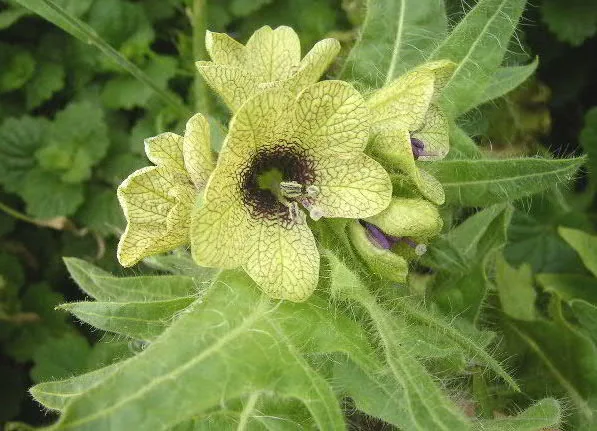


How to Grow and Care for Henbane
Hyoscyamus niger
Written by Emilio Marruso · last checked
Toxic to: Cats, Dogs, Horses, Livestock, Animals, People · Why
At a glance
Black henbane is an unusual annual or biennial from the nightshade family that grows up to 3 feet tall and thrives where many plants struggle, from deep shade to partial shade. Give it well-drained soil and start it from seed. Handle it with care: every part is highly toxic, it can irritate the skin, and it self-seeds freely, so always wear gloves.
- Sun
Deep shade to partial shade
What the sources say (1)
Light: Deep shade to partial shade
Light: Deep shade (Less than 2 hours to no direct sunlight) Partial Shade (Direct sunlight only part of the day, 2-6 hours)
— Hyoscyamus niger (Black Henbane, Henbane, Hog's Bean, Stinking Nightshade, Witches Herb) | North Carolina Extension Gardener Plant Toolbox [1] - Water
Does not tolerate wet soil
What the sources say (2)
Watering notes: Intolerant of wet soils; good drainage
#poisonous root #poisonous leaves #wet soils intolerant #poisonous if ingested
— Hyoscyamus niger (Black Henbane, Henbane, Hog's Bean, Stinking Nightshade, Witches Herb) | North Carolina Extension Gardener Plant Toolbox [1] Soil Drainage: Good Drainage Available Space To Plant:
— Hyoscyamus niger (Black Henbane, Henbane, Hog's Bean, Stinking Nightshade, Witches Herb) | North Carolina Extension Gardener Plant Toolbox [1] - Cold
Survives winters down to −30 °F (−34.4 °C)
Very hardy · USDA 4a · RHS H7 · Z4
What the sources say (2)
Hardiness, coldest zone: 4a [winter low −34.4 to −31.7 °C (−30 to −25 °F)]
4a, 4b, 5a, 5b, 6a, 6b, 7a, 7b, 8a, 8b
— Hyoscyamus niger (Black Henbane, Henbane, Hog's Bean, Stinking Nightshade, Witches Herb) | North Carolina Extension Gardener Plant Toolbox [1] Hardiness, warmest zone: 8b [winter low −9.4 to −6.7 °C (15 to 20 °F)]
4a, 4b, 5a, 5b, 6a, 6b, 7a, 7b, 8a, 8b
— Hyoscyamus niger (Black Henbane, Henbane, Hog's Bean, Stinking Nightshade, Witches Herb) | North Carolina Extension Gardener Plant Toolbox [1] - Soil
Needs soil that drains well
What the sources say (2)
Watering notes: Intolerant of wet soils; good drainage
#poisonous root #poisonous leaves #wet soils intolerant #poisonous if ingested
— Hyoscyamus niger (Black Henbane, Henbane, Hog's Bean, Stinking Nightshade, Witches Herb) | North Carolina Extension Gardener Plant Toolbox [1] Soil Drainage: Good Drainage Available Space To Plant:
— Hyoscyamus niger (Black Henbane, Henbane, Hog's Bean, Stinking Nightshade, Witches Herb) | North Carolina Extension Gardener Plant Toolbox [1] - Watch out
Invasive: self-seeds and seeds last for years; pull plants with the root and bag them
- Size
Up to 3 ft tall
What the sources say (1)
Mature height: up to 91 cm (3 ft)
It can reach heights of up to 3 feet.
— Black Henbane | USU [2] - Propagation
Grows from seed
What the sources say (2)
Propagation: Seed
Recommended Propagation Strategy: Seed Country Or Region Of Origin: Southern and Central Europe and Eurasia
— Hyoscyamus niger (Black Henbane, Henbane, Hog's Bean, Stinking Nightshade, Witches Herb) | North Carolina Extension Gardener Plant Toolbox [1] It spreads by seed and flowers from May to September.
— Black Henbane | USU [2] - Safety
Every part is highly toxic and can kill if eaten; it irritates skin, so wear gloves
Overview
Black henbane is an erect annual or biennial herb of the nightshade family, introduced to the United States for cultivation as a medicinal herb. [1] All plant parts are considered highly toxic and the plant is poisonous to all livestock and humans, even at low doses. [2] It spreads by self-seeding, and its seed can remain viable for many years. [1]
This record is incomplete: the sources we read do not cover every field yet.
Not yet covered by our sources: Watering, Pruning
Henbane care
How to water Henbane
Watering
Not stated in the sources we read.
Watering notes
Intolerant of wet soils; good drainage
What the sources say (2)
#poisonous root #poisonous leaves #wet soils intolerant #poisonous if ingestedSoil Drainage:
Good Drainage
Available Space To Plant:How much light Henbane needs
Deep shade to partial shade
What the sources say (1)
Light:
Deep shade (Less than 2 hours to no direct sunlight)
Partial Shade (Direct sunlight only part of the day, 2-6 hours)How much cold Henbane can take
Hardiness, coldest zone
4a [winter low −34.4 to −31.7 °C (−30 to −25 °F)]
What the sources say (1)
4a, 4b, 5a, 5b, 6a, 6b, 7a, 7b, 8a, 8bHardiness, warmest zone
8b [winter low −9.4 to −6.7 °C (15 to 20 °F)]
What the sources say (1)
4a, 4b, 5a, 5b, 6a, 6b, 7a, 7b, 8a, 8bHow to propagate Henbane
Seed
What the sources say (2)
Recommended Propagation Strategy:
Seed
Country Or Region Of Origin:
Southern and Central Europe and EurasiaIt spreads by seed and flowers from May to September.How to grow Henbane
The plant
Life cycle
annual or biennial
What the sources say (1)
Black Henbane is an erect annual or biennial herb with coarse, hairy stems.Family
Solanaceae
What the sources say (1)
Species:
niger
Family:
Solanaceae
Uses (Ethnobotany):
Considered a weedy plant.Mature height
up to 91 cm (3 ft)
What the sources say (1)
It can reach heights of up to 3 feet.Henbane pests and problems
Weedy self-seeding
Symptom: Invasive plant that spreads by self-seeding; seed can remain viable for many years; common weed of pastures, fence rows, roadsides and waste areas.
What to do: Pull or dig up plants, removing the taproot, and bag removed plants to contain seeds; wear gloves.
What the sources say (3)
Control can be accomplished by pulling or digging up the plants, ensuring to remove the taproot.
— Hyoscyamus niger (Black Henbane, Henbane, Hog's Bean, Stinking Nightshade, Witches Herb) | North Carolina Extension Gardener Plant Toolbox [1] Place plants removed in bags to contain the spread of seeds from mature fruits.
— Hyoscyamus niger (Black Henbane, Henbane, Hog's Bean, Stinking Nightshade, Witches Herb) | North Carolina Extension Gardener Plant Toolbox [1] Black henbane has become a common weed of pastures, fence rows, roadsides, and waste areas.
— Black Henbane | USU [2] Skin irritation when handled
Symptom: Exposure of skin to the plant may cause a rash.
What to do: Wear gloves when handling.
What the sources say (1)
When handling the plant, be sure to wear gloves, as exposure to the skin may cause a rash.
— Hyoscyamus niger (Black Henbane, Henbane, Hog's Bean, Stinking Nightshade, Witches Herb) | North Carolina Extension Gardener Plant Toolbox [1]
Remedies
Each remedy shows what official sources say about it; traditional remedies without an official source are marked as such. Harmful ones are listed so you know to avoid them.
Getting rid of it
weedy self-seeding
pulling or digging up the plants Works
When handling the plant, be sure to wear gloves, as exposure to the skin may cause a rash.
— Hyoscyamus niger (Black Henbane, Henbane, Hog's Bean, Stinking Nightshade, Witches Herb) | North Carolina Extension Gardener Plant Toolbox [1] Symptoms of poisoning include: Salivation, headache, nausea, vomiting, diarrhea, rapid pulse, convulsions, and coma. It can cause skin irritation if it is touched with bare skin.
— Black Henbane | USU [2] How: pull or dig up the plants, removing the taproot, and place the removed plants in bags to contain the spread of seeds from mature fruits
Control can be accomplished by pulling or digging up the plants, ensuring to remove the taproot. Place plants removed in bags to contain the spread of seeds from mature fruits.
— Hyoscyamus niger (Black Henbane, Henbane, Hog's Bean, Stinking Nightshade, Witches Herb) | North Carolina Extension Gardener Plant Toolbox [1] What the evidence says Control can be accomplished by pulling or digging up the plants, ensuring to remove the taproot.
— Hyoscyamus niger (Black Henbane, Henbane, Hog's Bean, Stinking Nightshade, Witches Herb) | North Carolina Extension Gardener Plant Toolbox [1]
Is Henbane toxic to pets?
Reported by the source, quoted verbatim. This is not medical or veterinary advice: if a person or an animal may have eaten this plant, contact a poison control centre or a veterinarian.
Animals
It is poisonous to all livestock and humans, even at low doses.
[2]The genus name is derived from the words hog and bean, that refer to the severe toxicity that the plants seeds are to the swine population. Animals tend to avoid this plant due to its foul odor and taste.
[1]- Poisonous parts
that refer to the severe toxicity that the plants seeds are to the swine population
[1]
Problems: Poisonous to Humans Problem for Cats Problem for Children Problem for Dogs Problem for Horses
[1]
People
Symptoms: Salivation, headache, nausea, vomiting, diarrhea, rapid pulse, convulsions, coma
[1]All plant parts of black henbane are considered highly toxic because of alkaloids hyoscymine and scopolamine, and can be fatal if eaten. It is poisonous to all livestock and humans, even at low doses.
[2]It can cause skin irritation if it is touched with bare skin.
[2]
Calendar
Pruning
Not stated in the sources we read.
Months as given by the sources, which are mostly from the United States (northern hemisphere). In the southern hemisphere they shift by about six months.
Similar plants
- Belladonna Atropa belladonna
- Bittersweet Solanum dulcamara
- Bladder cherry Alkekengi officinarum
- Brazilian nightshade Solanum seaforthianum
- Brunfelsia Brunfelsia pauciflora
- Clammy Ground Cherry Physalis heterophylla
- Downy Thorn-Apple Datura innoxia
- Flowering Tobacco Nicotiana sylvestris
Sources
Every value above is quoted from these documents. Links lead to the original publisher.
- Hyoscyamus niger (Black Henbane, Henbane, Hog's Bean, Stinking Nightshade, Witches Herb) | North Carolina Extension Gardener Plant Toolbox · plants.ces.ncsu.edu, consulted
- Black Henbane | USU · extension.usu.edu, consulted
- Henbane - Hyoscyamus niger | North Carolina Extension Gardener Plant Toolbox · plants.ces.ncsu.edu, consulted
- Stinking Nightshade - Hyoscyamus niger | North Carolina Extension Gardener Plant Toolbox · plants.ces.ncsu.edu, consulted
Written by Emilio Marruso · last checked