
Cómo cultivar y cuidar Alerce de Gmelin
Larix gmelinii
Escrito por Emilio Marruso · última revisión
De un vistazo
Este alerce resistente pide poco: un rincón soleado y una tierra que se mantenga húmeda pero drene bien. Puedes cultivarlo a partir de semillas sembradas a finales de invierno y plantar después las plántulas en invierno, o a principios del verano siguiente si pasaron su primer invierno en cajonera fría. Dale sol y humedad constante, y disfruta viéndolo crecer.
- Sol
Sol pleno; tolera algo de sombra ligera, pero no la sombra total
Qué dicen las fuentes (1)
Luz: Pleno sol; tolera algo de semisombra pero no sombra total.
Missouri Botanical Garden reports that this species grows best in moist, acidic, well-drained soils in full sun. It tolerates some light shade, but is intolerant of full shade, dry soils and most city pollutants.
— Conifer Database - gmelinii [5] - Riego
Mantén la tierra húmeda; no tolera el suelo seco
Qué dicen las fuentes (1)
Riego: Suelo húmedo y bien drenado; intolerante a suelos secos
Missouri Botanical Garden reports that this species grows best in moist, acidic, well-drained soils in full sun. It tolerates some light shade, but is intolerant of full shade, dry soils and most city pollutants.
— Conifer Database - gmelinii [5] - Frío
Aguanta inviernos de hasta −51,1 °C (−60 °F)
Muy rústica · USDA 1 · RHS H7 · Z1
Qué dicen las fuentes (1)
Rusticidad, zona más fría: 1 [mínima invernal de −51,1 a −45,6 °C (de −60 a −50 °F)]
Hardy to Zone 1 (cold hardiness limit below -45.6
— Larix gmelinii (Лиственница Гмелина) description - The Gymnosperm Database [1] - Suelo
Suelo húmedo y con buen drenaje; no tolera el encharcamiento
Qué dicen las fuentes (2)
Riego: Suelo húmedo y bien drenado; intolerante a suelos secos
Missouri Botanical Garden reports that this species grows best in moist, acidic, well-drained soils in full sun. It tolerates some light shade, but is intolerant of full shade, dry soils and most city pollutants.
— Conifer Database - gmelinii [5] Notas sobre el riego: Intolerante a suelos con mal drenaje.
Plants are intolerant of badly drained soils, but they tolerate acid and infertile soils
— Larix gmelinii - Useful Temperate Plants [4] - Plantación
Planta en invierno, o a principios del verano siguiente si las plántulas invernaron en cajonera fría
Qué dicen las fuentes (4)
Plantación: Invierno, o principios del verano del año siguiente (plántulas en semillero frío).
Plántulas cultivadas en un semillero al aire libre durante un par de años.: Grow on the seedlings in the seedbed for a couple of years until they are ready to go into their permanent positions then plant them out during the winter.
— Larix gmelinii - Useful Temperate Plants [4] Las plántulas se cultivan en el invernadero frío durante su primer invierno.: Otherwise grow them on in the cold frame for their first winter and plant them out in early summer of the following year.
— Larix gmelinii - Useful Temperate Plants [4] plant them out during the winter
— Larix gmelinii - Useful Temperate Plants [4] grow them on in the cold frame for their first winter and plant them out in early summer of the following year
— Larix gmelinii - Useful Temperate Plants [4] - Multiplicación
Se multiplica por semilla
Qué dicen las fuentes (1)
Propagación: Semilla
Seed - sow late winter in pots in a cold frame. One months cold stratification helps germination
— Larix gmelinii - Useful Temperate Plants [4] - Siembra
Siembra a finales de invierno
Qué dicen las fuentes (1)
Siembra: Finales del invierno
Seed - sow late winter in pots in a cold frame. One months cold stratification helps germination
— Larix gmelinii - Useful Temperate Plants [4]
Resumen
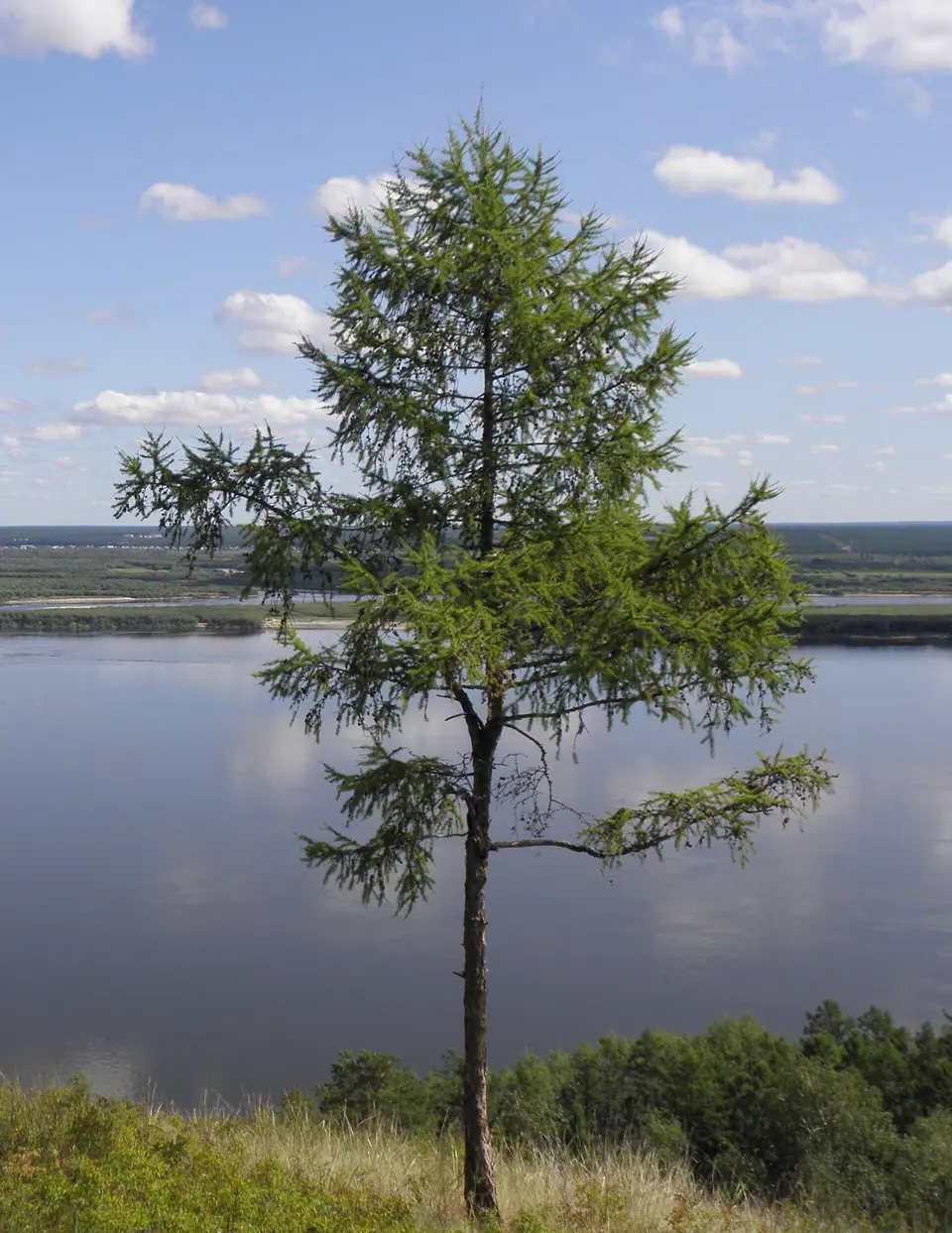
El alerce dahuriano es una conífera caducifolia originaria del este de Siberia, noreste de Mongolia, noreste de China y Corea. [1] Crece como un árbol de hasta 35 m [114,8 ft] de altura con ramas largas que se extienden horizontalmente. [1] Crece mejor a pleno sol en suelo húmedo y bien drenado, y se adapta mejor a climas continentales fríos que a climas oceánicos suaves. [5][3]
Citado en inglés, como en la fuente.
Esta ficha está incompleta: las fuentes consultadas aún no cubren todos los campos.
Aún no cubierto por nuestras fuentes: Rusticidad, zona más cálida, Poda
Cuidados
Las medidas entre corchetes son nuestra conversión al otro sistema de unidades; el texto citado no cambia.
Riego
Riego
Suelo húmedo y bien drenado; intolerante a suelos secos
Qué dicen las fuentes (1)
Missouri Botanical Garden reports that this species grows best in moist, acidic, well-drained soils in full sun. It tolerates some light shade, but is intolerant of full shade, dry soils and most city pollutants.Notas sobre el riego
Intolerante a suelos con mal drenaje.
Qué dicen las fuentes (1)
Plants are intolerant of badly drained soils, but they tolerate acid and infertile soilsLuz
Pleno sol; tolera algo de semisombra pero no sombra total.
Qué dicen las fuentes (1)
Missouri Botanical Garden reports that this species grows best in moist, acidic, well-drained soils in full sun. It tolerates some light shade, but is intolerant of full shade, dry soils and most city pollutants.Clima y frío
Rusticidad, zona más fría
1 [mínima invernal de −51,1 a −45,6 °C (de −60 a −50 °F)]
Qué dicen las fuentes (1)
Hardy to Zone 1 (cold hardiness limit below -45.6Rusticidad, zona más cálida
No figura en las fuentes consultadas.
Propagación
Semilla
Qué dicen las fuentes (1)
Seed - sow late winter in pots in a cold frame. One months cold stratification helps germinationRemedios
Cada remedio indica qué dicen las fuentes oficiales; los remedios tradicionales sin fuente oficial aparecen marcados. Los perjudiciales están para que sepas evitarlos.
Cuidar la planta
quema de agujas
Rastrilla y desecha las agujas caídas. Fuente oficial, sin prueba independiente
Cómo: Rastrilla y desecha las agujas caídas para reducir la posibilidad de infección en la temporada siguiente, y mantén el vigor de los árboles con agua adecuada durante los períodos secos.
Rake and dispose of fallen needles to reduce the chance of infection in the following season, and maintain vigor of the trees with adequate water during dry periods
— portal.ct.gov [8]
adiélgido lanudo del alerce
aplicación de aceite hortícola en dormancia Funciona
Read and follow all label instructions for safety and proper use.
— umass.edu [9] Cómo: una aplicación de aceite hortícola inactivo en primavera
This adelgid can be controlled on ornamental trees with a dormant horticultural oil spray in the spring
— portal.ct.gov [8] Qué dicen las pruebas This adelgid can be controlled on ornamental trees with a dormant horticultural oil spray in the spring
— portal.ct.gov [8]
Calendario
Siembra
Finales del invierno
Qué dicen las fuentes (1)
Seed - sow late winter in pots in a cold frame. One months cold stratification helps germinationPlantación
Invierno, o principios del verano del año siguiente (plántulas en semillero frío).
Lo que dice cada fuente
Plántulas cultivadas en un semillero al aire libre durante un par de años.: Invierno
Las plántulas se cultivan en el invernadero frío durante su primer invierno.: Principios del verano del año siguiente.
Qué dicen las fuentes (4)
Plántulas cultivadas en un semillero al aire libre durante un par de años.: Grow on the seedlings in the seedbed for a couple of years until they are ready to go into their permanent positions then plant them out during the winter.Las plántulas se cultivan en el invernadero frío durante su primer invierno.: Otherwise grow them on in the cold frame for their first winter and plant them out in early summer of the following year.plant them out during the wintergrow them on in the cold frame for their first winter and plant them out in early summer of the following yearPoda
No figura en las fuentes consultadas.
Meses tal como los dan las fuentes, en su mayoría de Estados Unidos (hemisferio norte). En el hemisferio sur se desplazan unos seis meses.
Valores orientativos
Valores de una fuente secundaria, no comprobados palabra por palabra como el resto de esta página. Úselos como punto de partida.
- Ciclo de vida
- PerenneValor orientativo, adáptalo a tu clima · Fuente secundaria
- Altura adulta
- 1219.2-2743.2 cm (40-90 pies)Valor orientativo, adáptalo a tu clima · Fuente secundaria
- Horas de sol
- 6-8 horasValor orientativo, adáptalo a tu clima · Fuente secundaria
- pH del suelo
- 5-6.5Valor orientativo, adáptalo a tu clima · Fuente secundaria
- Nivel de cuidado
- MedioValor orientativo, adáptalo a tu clima · Fuente secundaria
- Crecimiento
- ModeradoValor orientativo, adáptalo a tu clima · Fuente secundaria
- Poda
- Febrero, marzo, abrilValor orientativo, adáptalo a tu clima · Fuente secundaria
Plantas similares
- Alerce europeo Larix decidua
- Alerce japonés Larix kaempferi
- Alerce tamarack Larix laricina
- Alerce americano occidental Larix occidentalis
- Abeto de Vancuver Abies grandis
- Abraham Trachystemon orientalis
- Bananero de Etiopía Ensete ventricosum
- Acacia longifolia Acacia longifolia
Fuentes
Cada valor anterior se cita de estos documentos. Los enlaces llevan al editor original.
- Larix gmelinii (Лиственница Гмелина) description - The Gymnosperm Database · mail.conifers.org, consultado
- Larix gmelinii var. gmelinii - Dahurian larch | Arboretum Mustila · mustila.fi, consultado
- Larix gmelinii - Trees and Shrubs Online · treesandshrubsonline.org, consultado
- Larix gmelinii - Useful Temperate Plants · temperate.theferns.info, consultado
- Conifer Database - gmelinii · conifersociety.org, consultado
- Species Records | Boone County Arboretum · bcarboretum.org, consultado
- AgroAtlas - Relatives - Larix dahurica Turcz. - Dahurian Larch. · agroatlas.ru, consultado
- portal.ct.gov · portal.ct.gov
- umass.edu · umass.edu
Escrito por Emilio Marruso · última revisión