
How to Grow and Care for Dahurian Larch
Larix gmelinii
Written by Emilio Marruso · last checked
At a glance
This tough larch asks for little: a sunny spot and soil that stays moist but drains well. You can grow it from seed sown in late winter, then plant the young seedlings out in winter, or in early summer of the following year if they spent their first winter in a cold frame. Give it sun and steady moisture, and watch it grow.
- Sun
Full sun; takes some light shade, but not full shade
What the sources say (1)
Light: Full sun; tolerates some light shade but not full shade
Missouri Botanical Garden reports that this species grows best in moist, acidic, well-drained soils in full sun. It tolerates some light shade, but is intolerant of full shade, dry soils and most city pollutants.
— Conifer Database - gmelinii [5] - Water
Keep the soil moist; it does not like dry soil
What the sources say (1)
Watering: Moist, well-drained soil; intolerant of dry soils
Missouri Botanical Garden reports that this species grows best in moist, acidic, well-drained soils in full sun. It tolerates some light shade, but is intolerant of full shade, dry soils and most city pollutants.
— Conifer Database - gmelinii [5] - Cold
Survives winters down to −60 °F (−51.1 °C)
Very hardy · USDA 1 · RHS H7 · Z1
What the sources say (1)
Hardiness, coldest zone: 1 [winter low −51.1 to −45.6 °C (−60 to −50 °F)]
Hardy to Zone 1 (cold hardiness limit below -45.6
— Larix gmelinii (Лиственница Гмелина) description - The Gymnosperm Database [1] - Soil
Moist soil that drains well; soggy soil harms it
What the sources say (2)
Watering: Moist, well-drained soil; intolerant of dry soils
Missouri Botanical Garden reports that this species grows best in moist, acidic, well-drained soils in full sun. It tolerates some light shade, but is intolerant of full shade, dry soils and most city pollutants.
— Conifer Database - gmelinii [5] Watering notes: Intolerant of badly drained soils
Plants are intolerant of badly drained soils, but they tolerate acid and infertile soils
— Larix gmelinii - Useful Temperate Plants [4] - Planting
Plant in winter, or early the next summer if seedlings spent the winter in a cold frame
What the sources say (4)
Planting: Winter, or early summer of the following year (cold-frame seedlings)
seedlings grown on in an outdoor seedbed for a couple of years: Grow on the seedlings in the seedbed for a couple of years until they are ready to go into their permanent positions then plant them out during the winter.
— Larix gmelinii - Useful Temperate Plants [4] seedlings grown on in the cold frame for their first winter: Otherwise grow them on in the cold frame for their first winter and plant them out in early summer of the following year.
— Larix gmelinii - Useful Temperate Plants [4] plant them out during the winter
— Larix gmelinii - Useful Temperate Plants [4] grow them on in the cold frame for their first winter and plant them out in early summer of the following year
— Larix gmelinii - Useful Temperate Plants [4] - Propagation
Grows from seed
What the sources say (1)
Propagation: Seed
Seed - sow late winter in pots in a cold frame. One months cold stratification helps germination
— Larix gmelinii - Useful Temperate Plants [4] - Sowing
Sow in late winter
What the sources say (1)
Sowing: Late winter
Seed - sow late winter in pots in a cold frame. One months cold stratification helps germination
— Larix gmelinii - Useful Temperate Plants [4]
Overview
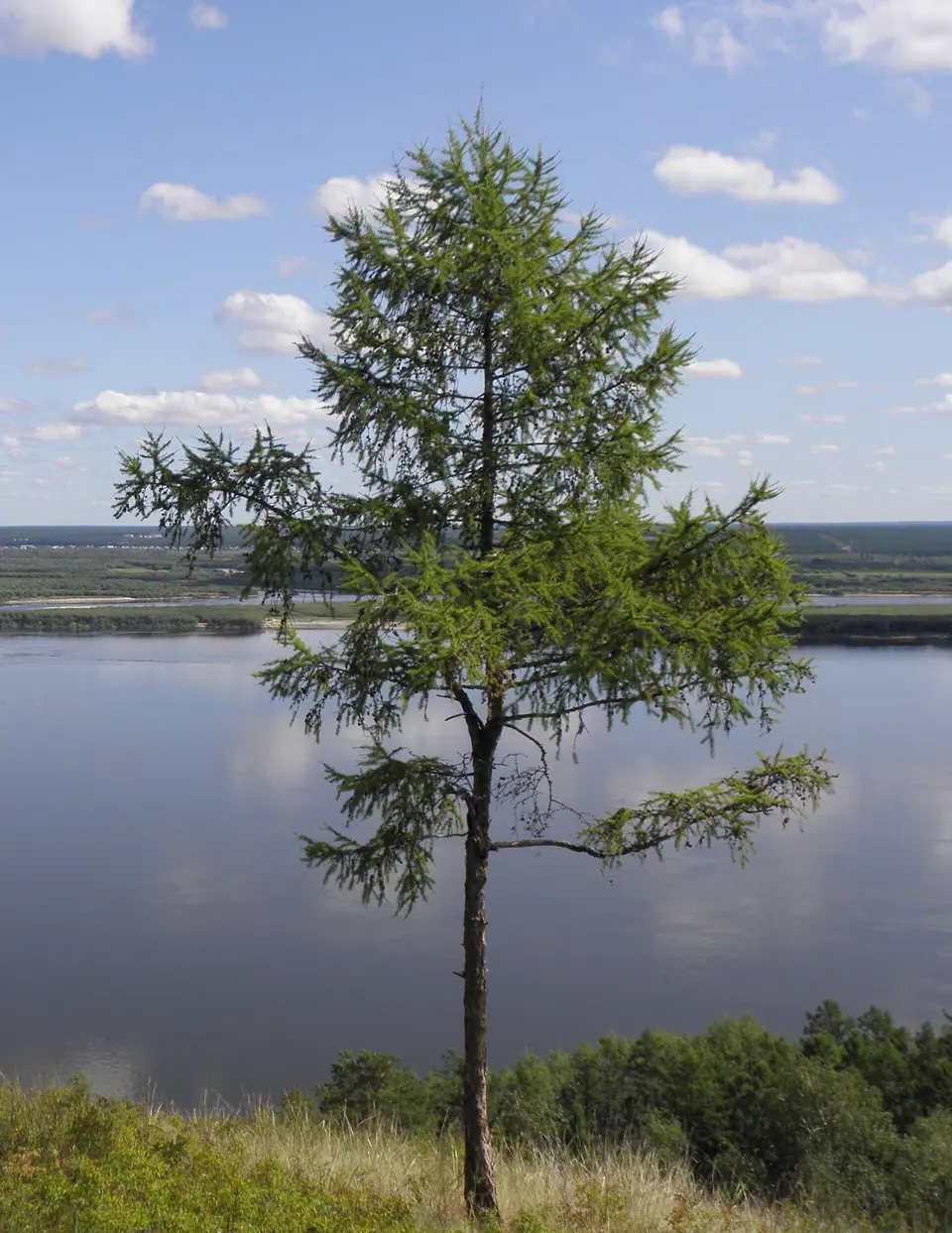
Dahurian larch is a deciduous conifer native to eastern Siberia, NE Mongolia, NE China and Korea. [1] It grows as a tree up to 35 m [114.8 ft] tall with long, horizontally spreading branches. [1] It grows best in full sun on moist, well-drained soil and suits cold continental climates better than mild oceanic ones. [5][3]
This record is incomplete: the sources we read do not cover every field yet.
Not yet covered by our sources: Hardiness, warmest zone, Pruning
Dahurian Larch care
Measurements in square brackets are our conversion into the other unit system; the quoted text is unchanged.
How to water Dahurian Larch
Watering
Moist, well-drained soil; intolerant of dry soils
What the sources say (1)
Missouri Botanical Garden reports that this species grows best in moist, acidic, well-drained soils in full sun. It tolerates some light shade, but is intolerant of full shade, dry soils and most city pollutants.Watering notes
Intolerant of badly drained soils
What the sources say (1)
Plants are intolerant of badly drained soils, but they tolerate acid and infertile soilsHow much light Dahurian Larch needs
Full sun; tolerates some light shade but not full shade
What the sources say (1)
Missouri Botanical Garden reports that this species grows best in moist, acidic, well-drained soils in full sun. It tolerates some light shade, but is intolerant of full shade, dry soils and most city pollutants.How much cold Dahurian Larch can take
Hardiness, coldest zone
1 [winter low −51.1 to −45.6 °C (−60 to −50 °F)]
What the sources say (1)
Hardy to Zone 1 (cold hardiness limit below -45.6Hardiness, warmest zone
Not stated in the sources we read.
How to propagate Dahurian Larch
Seed
What the sources say (1)
Seed - sow late winter in pots in a cold frame. One months cold stratification helps germinationRemedies
Each remedy shows what official sources say about it; traditional remedies without an official source are marked as such. Harmful ones are listed so you know to avoid them.
Treating the plant
needle cast
raking and disposing of fallen needles Official source, not independently tested
How: Rake and dispose of fallen needles to reduce the chance of infection in the following season, and maintain vigor of the trees with adequate water during dry periods
Rake and dispose of fallen needles to reduce the chance of infection in the following season, and maintain vigor of the trees with adequate water during dry periods
— portal.ct.gov [8]
larch woolly adelgid
dormant horticultural oil spray Works
Read and follow all label instructions for safety and proper use.
— umass.edu [9] How: a dormant horticultural oil spray in the spring
This adelgid can be controlled on ornamental trees with a dormant horticultural oil spray in the spring
— portal.ct.gov [8] What the evidence says This adelgid can be controlled on ornamental trees with a dormant horticultural oil spray in the spring
— portal.ct.gov [8]
Calendar
Sowing
Late winter
What the sources say (1)
Seed - sow late winter in pots in a cold frame. One months cold stratification helps germinationPlanting
Winter, or early summer of the following year (cold-frame seedlings)
What each source says
seedlings grown on in an outdoor seedbed for a couple of years: Winter
seedlings grown on in the cold frame for their first winter: Early summer of the following year
What the sources say (4)
seedlings grown on in an outdoor seedbed for a couple of years: Grow on the seedlings in the seedbed for a couple of years until they are ready to go into their permanent positions then plant them out during the winter.seedlings grown on in the cold frame for their first winter: Otherwise grow them on in the cold frame for their first winter and plant them out in early summer of the following year.plant them out during the wintergrow them on in the cold frame for their first winter and plant them out in early summer of the following yearPruning
Not stated in the sources we read.
Months as given by the sources, which are mostly from the United States (northern hemisphere). In the southern hemisphere they shift by about six months.
Indicative values
Values from a secondary source, not checked word for word like the rest of this page. Use them as a starting point.
- Life cycle
- PerennialIndicative value, adapt it to your climate · Secondary source
- Mature height
- 1219.2-2743.2 cm (40-90 ft)Indicative value, adapt it to your climate · Secondary source
- Hours of sun
- 6-8 hoursIndicative value, adapt it to your climate · Secondary source
- Soil pH
- 5-6.5Indicative value, adapt it to your climate · Secondary source
- Care level
- MediumIndicative value, adapt it to your climate · Secondary source
- Growth rate
- ModerateIndicative value, adapt it to your climate · Secondary source
- Pruning
- February, March, AprilIndicative value, adapt it to your climate · Secondary source
Similar plants
- European Larch Larix decidua
- Japanese Larch Larix kaempferi
- Tamarack Larix laricina
- Western larch Larix occidentalis
- Abies grandis Abies grandis
- Abraham Trachystemon orientalis
- Abyssinian banana Ensete ventricosum
- Acacia longifolia Acacia longifolia
Sources
Every value above is quoted from these documents. Links lead to the original publisher.
- Larix gmelinii (Лиственница Гмелина) description - The Gymnosperm Database · mail.conifers.org, consulted
- Larix gmelinii var. gmelinii - Dahurian larch | Arboretum Mustila · mustila.fi, consulted
- Larix gmelinii - Trees and Shrubs Online · treesandshrubsonline.org, consulted
- Larix gmelinii - Useful Temperate Plants · temperate.theferns.info, consulted
- Conifer Database - gmelinii · conifersociety.org, consulted
- Species Records | Boone County Arboretum · bcarboretum.org, consulted
- AgroAtlas - Relatives - Larix dahurica Turcz. - Dahurian Larch. · agroatlas.ru, consulted
- portal.ct.gov · portal.ct.gov
- umass.edu · umass.edu
Written by Emilio Marruso · last checked