
How to Grow and Care for Tamarack
Larix laricina
Written by Emilio Marruso · last checked
At a glance
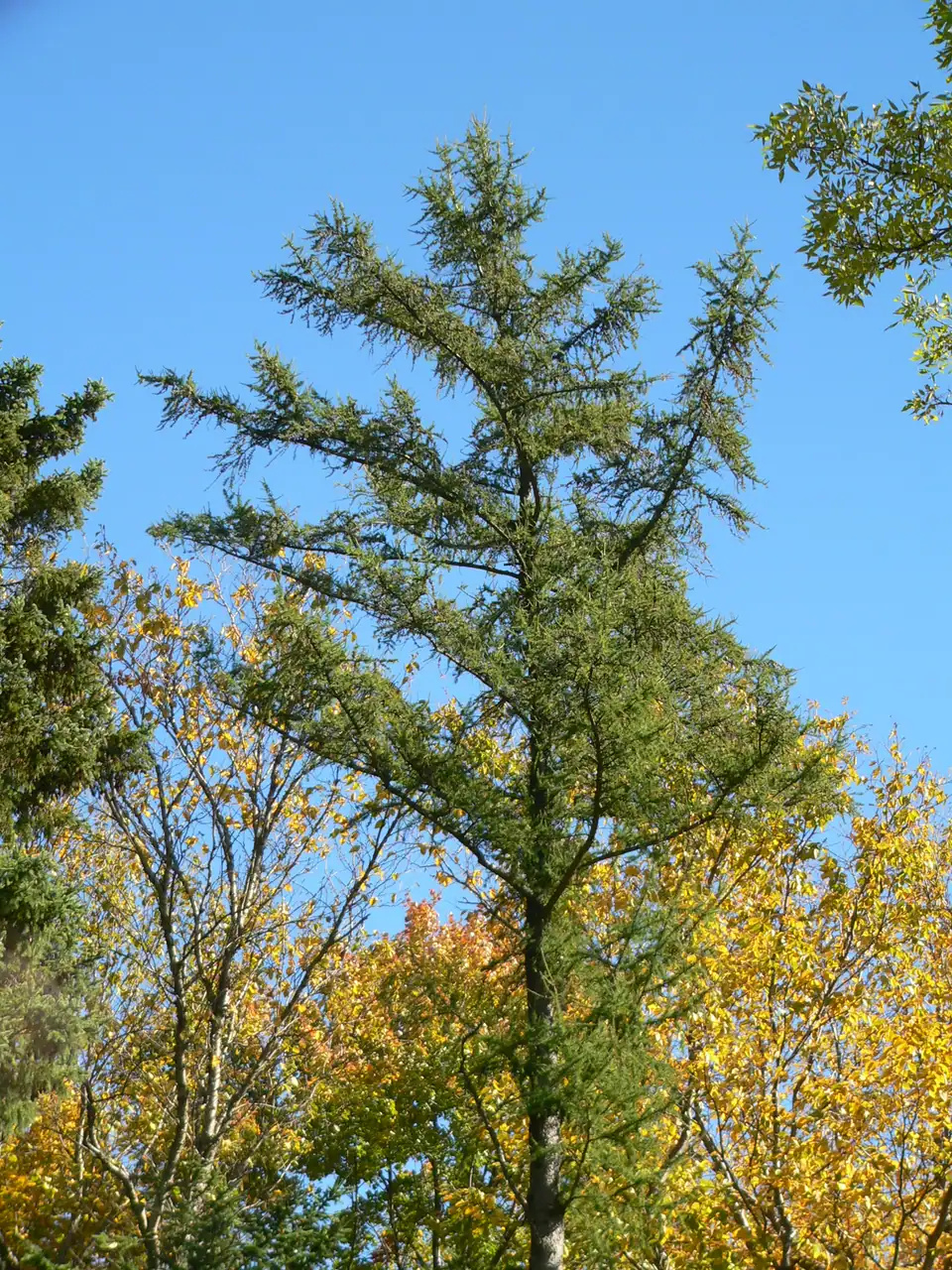
This larch grows into a grand tree, 40–80 ft tall and 15–30 ft wide, a striking choice for a big, open spot. It loves full sun but also tolerates light shade, and it is happy where the soil stays moist; even wet ground suits it just fine. Give it steady moisture and never let it dry out.
- Sun
Full sun; also tolerates light shade
What the sources say (2)
- Water
Keep the soil moist; wet soil is fine, but it can't stand dry soil
What the sources say (2)
- Pests
Watch for larch casebearers, woolly aphids and sawflies
What the sources say (1)
Pests: larch case-bearer, woolly aphid, sawfly
larch case-bearer, woolly aphid, sawfly are pest problem
— Plant Database [3] - Size
40–80 ft tall and 15–30 ft wide
What the sources say (2)
Mature height: 1219-2438 cm (40-80 ft)
Tamarack are medium to large trees that typically grow 40-80 feet tall with a pyramidal shape.
— Tamarack (Larix laricina) | The UFOR Nursery & Lab [1] Mature width: 457-914 cm (15-30 ft)
Ultimate Height: 40-80 feet Ultimate Spread: 15-30 feet
— Larix laricina (Eastern Larch) – Purdue Arboretum Explorer [4] - Propagation
Grows from seed
What the sources say (1)
Propagation: Seed
Propagation - by seeds
— Plant Database [3]
Overview
Tamarack is a cold-hardy native deciduous conifer of northern North America that grows in swamps, bogs and moist uplands. [1][2] It prefers full sun and moist, acidic, well-drained soil, and is not tolerant of dry soils or full shade. [1][3]
This record is incomplete: the sources we read do not cover every field yet.
Not yet covered by our sources: Pruning
Tamarack care
How to water Tamarack
Moist soil; tolerant of wet soils; not tolerant of dry soils
How much light Tamarack needs
Full sun; tolerates light shade
How much cold Tamarack can take
Hardiness, coldest zone
The sources give different values depending on region, zone or growing conditions.
What each source says
According to University of Minnesota: 2 [winter low −45.6 to −40 °C (−50 to −40 °F)]
According to UConn Plant Database: 1 [winter low −51.1 to −45.6 °C (−60 to −50 °F)]
According to Oregon State University: 1 [winter low −51.1 to −45.6 °C (−60 to −50 °F)]
According to Purdue Arboretum: 2 [winter low −45.6 to −40 °C (−50 to −40 °F)]
What the sources say (4)
According to University of Minnesota: Tamarack survives in USDA Hardiness Zones 2-5.According to UConn Plant Database: native to northern North America, from northern United States into
Canada and Arctic Circle
- Zone 1According to Oregon State University: Hardy to USDA Zone 1According to Purdue Arboretum: Hardiness:
- USDA Zone 2Hardiness, warmest zone
5 [winter low −28.9 to −23.3 °C (−20 to −10 °F)]
What the sources say (2)
Tamarack survives in USDA Hardiness Zones 2-5.This tree does best in cool climates and does not grow from zones 6 and higher due to too high of temperatures.How to propagate Tamarack
Seed
What the sources say (1)
Propagation
- by seedsHow to grow Tamarack
The plant
Family
Pinaceae
What the sources say (1)
Pronunciation:
LAR-iks lar-i-SI-na
Family:
Pinaceae
Genus:
Larix
Type:
ConiferMature height
1219-2438 cm (40-80 ft)
What the sources say (1)
Tamarack are medium to large trees that typically grow 40-80 feet tall with a pyramidal shape.Mature width
457-914 cm (15-30 ft)
What the sources say (1)
Ultimate Height:
40-80 feet
Ultimate Spread:
15-30 feetPests and diseases
Pests
larch case-bearer, woolly aphid, sawfly
What the sources say (1)
larch case-bearer, woolly aphid, sawfly are pest problemTamarack pests and problems
Larch sawfly, larch case-bearer and woolly aphid
Symptom: Listed among the liabilities of the species as pest problems.
What to do: Not stated in the sources.
What the sources say (1)
larch case-bearer, woolly aphid, sawfly are pest problem
— Plant Database [3]
Remedies
Each remedy shows what official sources say about it; traditional remedies without an official source are marked as such. Harmful ones are listed so you know to avoid them.
Treating the plant
needle cast
raking and disposing of fallen needles Partly works
How: Rake and dispose of fallen needles to reduce the chance of infection in the following season.
Rake and dispose of fallen needles to reduce the chance of infection in the following season, and maintain vigor of the trees with adequate water during dry periods and fertilization in the spring.
— portal.ct.gov [8] What the evidence says Rake and dispose of fallen needles to reduce the chance of infection in the following season
— portal.ct.gov [8]
woolly adelgid
dormant horticultural oil spray Works
Consult the labels for dosage rates and safety precautions.
— portal.ct.gov [8] How: Spray dormant horticultural oil in the spring on ornamental trees.
This adelgid can be controlled on ornamental trees with a dormant horticultural oil spray in the spring
— portal.ct.gov [8] What the evidence says This adelgid can be controlled on ornamental trees with a dormant horticultural oil spray in the spring
— portal.ct.gov [8]
meria needle cast
thinning crowded trees Partly works
How: Thinning tightly grouped trees can improve airflow and boost vigor.
Thinning tightly grouped trees can improve airflow and boost vigor, which may minimize the effects of the disease.
— umass.edu [9] What the evidence says Thinning tightly grouped trees can improve airflow and boost vigor, which may minimize the effects of the disease.
— umass.edu [9]
Calendar
Pruning
Not stated in the sources we read.
Months as given by the sources, which are mostly from the United States (northern hemisphere). In the southern hemisphere they shift by about six months.
Indicative values
Values from a secondary source, not checked word for word like the rest of this page. Use them as a starting point.
- Life cycle
- PerennialIndicative value, adapt it to your climate · Secondary source
- Hours of sun
- 4-8 hoursIndicative value, adapt it to your climate · Secondary source
- Drought tolerant
- yesIndicative value, adapt it to your climate · Secondary source
- Soil
- Sandy Loamy Clay Humus RockyIndicative value, adapt it to your climate · Secondary source
- Soil pH
- 5-6.5Indicative value, adapt it to your climate · Secondary source
- Care level
- MediumIndicative value, adapt it to your climate · Secondary source
- Growth rate
- ModerateIndicative value, adapt it to your climate · Secondary source
- Pruning
- FebruaryIndicative value, adapt it to your climate · Secondary source
Similar plants
- European Larch Larix decidua
- Japanese Larch Larix kaempferi
- Western larch Larix occidentalis
- Dahurian Larch Larix gmelinii
- Abies grandis Abies grandis
- Aleppo Pine Pinus halepensis
- Alpine Fir Abies lasiocarpa
- Armand Pine Pinus armandi
Sources
Every value above is quoted from these documents. Links lead to the original publisher.
- Tamarack (Larix laricina) | The UFOR Nursery & Lab · trees.umn.edu, consulted
- Tamarack (Larix laricina) | Minnesota DNR · dnr.state.mn.us, consulted
- Plant Database · plantdatabase.uconn.edu, consulted
- Larix laricina (Eastern Larch) – Purdue Arboretum Explorer · arboretum.purdue.edu, consulted
- Larix laricina | Landscape Plants | Oregon State University · landscapeplants.oregonstate.edu, consulted
- Larix laricina (Tamarack): Minnesota Wildflowers · minnesotawildflowers.info, consulted
- Larix laricina (tamarack) description - The Gymnosperm Database · conifers.org, consulted
- portal.ct.gov · portal.ct.gov
- umass.edu · umass.edu
Written by Emilio Marruso · last checked