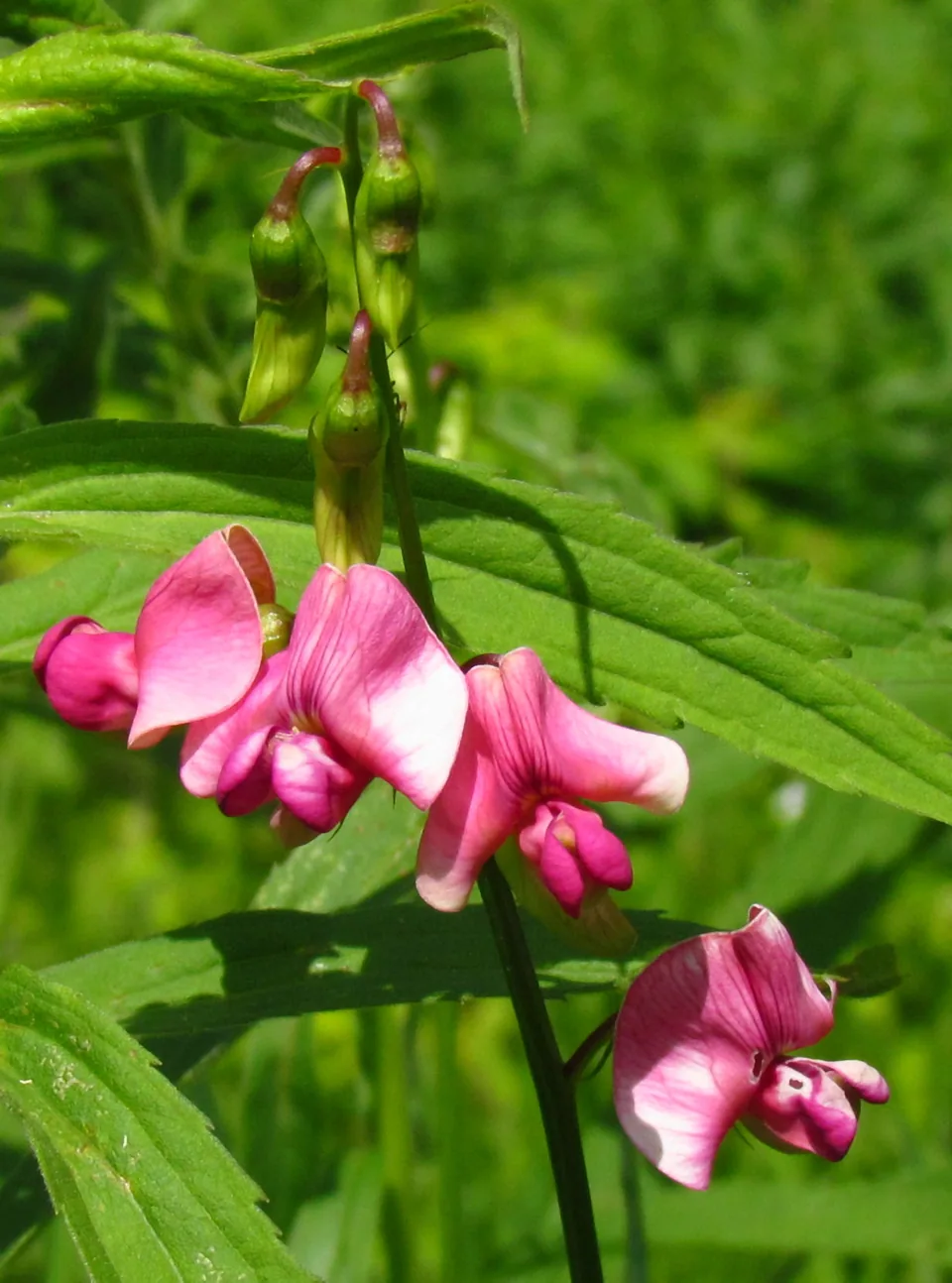

Cómo cultivar y cuidar Tuberous pea
Lathyrus tuberosus
Escrito por Emilio Marruso · última revisión
De un vistazo
Esta trepadora perenne esconde un regalo bajo tierra: pequeños tubérculos que puedes comer crudos o cocinados. Al horno son dulces y harinosos, con un sabor que recuerda al boniato. Dale semisombra en un rincón cálido, siémbrala en primavera y verás cómo trepa hasta 1,2 m de altura.
- Sol
Semisombra en un lugar cálido
Qué dicen las fuentes (2)
- Plantación
Trasplanta en verano las plántulas criadas en maceta
Qué dicen las fuentes (1)
Plantación: Verano (plántulas cultivadas en macetas)
When they are large enough to handle, prick the seedlings out into individual pots and plant them out in the summer.
— Earthnut Pea (Lathyrus tuberosus) — Practical Plants [6] - Cosecha
Come los tubérculos crudos o cocinados; al horno son dulces, con un sabor parecido al boniato
- Plagas
Las babosas pueden devorar la planta; las larvas del gorgojo del guisante se comen las semillas
Qué dicen las fuentes (1)
Plagas: larvas del gorgojo del guisante (Bruchus affinis), que se alimentan de las semillas
are considered to be pests. L. tuberosus serves as a host for the larvae, which feed on the seeds of their host plant (12).
— Lathyrus tuberosus | CLIMBERS [3] - Atención
Se extiende: salen tallos nuevos a cierta distancia de la planta madre
Qué dicen las fuentes (1)
Sistema radicular: Rizomas delgados y ramificados que producen pequeños tubérculos engrosados
L. tuberosus is a climbing, perennial, herbaceous vine with small, thickened tubers along the thin, branched rhizomes.
— Lathyrus tuberosus | CLIMBERS [3] - Tamaño
Trepa hasta 1,2 m de alto
Qué dicen las fuentes (1)
Altura adulta: hasta 120 cm (1,2 m), trepadora
Plant Height: L. tuberosus can climb up to 1.2m in height (4). Subspecies/varieties recognized (5) : None found.
— Lathyrus tuberosus | CLIMBERS [3] - Multiplicación
Por semilla o dividiendo los tubérculos
Qué dicen las fuentes (2)
Propagación: Semilla; división de tubérculos
Pre-soak the seed for 24 hours in warm water and then sow in early spring in a cold frame [8] .
— Earthnut Pea (Lathyrus tuberosus) — Practical Plants [6] Division of the tubers when the plant is dormant in spring or autumn.
— Earthnut Pea (Lathyrus tuberosus) — Practical Plants [6] - Siembra
Siembra a principios de primavera en cajonera fría, o a mediados de primavera en su sitio definitivo
Qué dicen las fuentes (2)
Siembra: Principios de primavera en un invernadero frío; mediados de primavera en el lugar definitivo
Pre-soak the seed for 24 hours in warm water and then sow in early spring in a cold frame [8] .
— Earthnut Pea (Lathyrus tuberosus) — Practical Plants [6] If you have sufficient seed, then it can also be sown in situ in mid spring [8] .
— Earthnut Pea (Lathyrus tuberosus) — Practical Plants [6]
Resumen
El guisante de tierra es una legumbre trepadora perenne con pequeños tubérculos comestibles, originaria de Europa y Asia occidental. [3] Prefiere suelos cálidos, ligeramente alcalinos, aireados y algo de sombra, y puede extenderse hasta convertirse en maleza en los campos de cereales. [3][7] Los tubérculos se comen crudos o cocidos, pero los rendimientos son bajos. [5]
Citado en inglés, como en la fuente.
Esta ficha está incompleta: las fuentes consultadas aún no cubren todos los campos.
Aún no cubierto por nuestras fuentes: Riego, Cosecha, Distancia de plantación
Cuidados
Riego
No figura en las fuentes consultadas.
Luz
Semisombra, posición cálida
Dónde cultivarla
No figura en las fuentes consultadas.
Propagación
Semilla; división de tubérculos
Qué dicen las fuentes (2)
Pre-soak the seed for 24 hours in warm water and then sow in early spring in a cold frame [8] .Division of the tubers when the plant is dormant in spring or autumn.Cultivo
La planta
Ciclo de vida
perenne
Qué dicen las fuentes (1)
L. tuberosus is a climbing, perennial, herbaceous vine with small, thickened tubers along the thin, branched rhizomes.Familia
Fabáceas
Qué dicen las fuentes (1)
Family : Fabaceae, the Pea Family Common Names : Tuberous vetchling, earthnut pea, tuberous sweet peaAltura adulta
hasta 120 cm (1,2 m), trepadora
Qué dicen las fuentes (1)
Plant Height: L. tuberosus can climb up to 1.2m in height (4). Subspecies/varieties recognized (5) : None found.Plagas y enfermedades
Plagas
larvas del gorgojo del guisante (Bruchus affinis), que se alimentan de las semillas
Qué dicen las fuentes (1)
are considered to be pests. L. tuberosus serves as a host for the larvae, which feed on the seeds of their host plant (12).Raíces
Sistema radicular
Rizomas delgados y ramificados que producen pequeños tubérculos engrosados
Qué dicen las fuentes (1)
L. tuberosus is a climbing, perennial, herbaceous vine with small, thickened tubers along the thin, branched rhizomes.Problemas
Babosas
Síntoma: Las plantas son consumidas y destruidas
Qué dicen las fuentes (1)
Slugs are inordinately fond of this plant and will totally destroy it given a chance[K].
— Earthnut Pea (Lathyrus tuberosus) — Practical Plants [6] Dispersión
Síntoma: Los tallos nuevos emergen a cierta distancia de la planta madre
Qué dicen las fuentes (1)
It tends to be slightly invasive [6] with new stems emerging at some distance from the parent plant [9] .
— Earthnut Pea (Lathyrus tuberosus) — Practical Plants [6]
Remedios
Cada remedio indica qué dicen las fuentes oficiales; los remedios tradicionales sin fuente oficial aparecen marcados. Los perjudiciales están para que sepas evitarlos.
Cómo eliminarla
propagación invasiva
cultivo de rastrojo y arado profundo No verificado
Remedio tradicional, no verificado por una fuente oficial.
Ordinary cultivation only serves to spread it by breaking the rootstocks and scattering the tubers.
— chestofbooks.com [8] Cómo: En cultivos de cereales, las medidas de control son el rastrojo y el arado profundo.
Corta de forma persistente y luego ara en otoño. No verificado
Remedio tradicional, no verificado por una fuente oficial.
Ordinary cultivation only serves to spread it by breaking the rootstocks and scattering the tubers.
— chestofbooks.com [8] Cómo: Evita la formación de semillas y revisa los portainjertos con cortes cercanos y persistentes durante toda la temporada de crecimiento; luego ara a fines del otoño y la primavera siguiente pon el terreno a un cultivo escardado y bien labrado, sin permitir crecimiento de hojas. Puede ser necesaria una segunda temporada.
Calendario
Siembra
Principios de primavera en un invernadero frío; mediados de primavera en el lugar definitivo
Qué dicen las fuentes (2)
Pre-soak the seed for 24 hours in warm water and then sow in early spring in a cold frame [8] .If you have sufficient seed, then it can also be sown in situ in mid spring [8] .Plantación
Verano (plántulas cultivadas en macetas)
Qué dicen las fuentes (1)
When they are large enough to handle, prick the seedlings out into individual pots and plant them out in the summer.Cosecha
No figura en las fuentes consultadas.
Meses tal como los dan las fuentes, en su mayoría de Estados Unidos (hemisferio norte). En el hemisferio sur se desplazan unos seis meses.
Comestibilidad
Según la fuente, citada textualmente. No comas una planta basándote solo en esta página: los errores de identificación pueden ser peligrosos.
Root - cooked or raw [7] [10] [11] [12] [2] . Sweet and starchy, it is delicious when baked with a flavour that is somewhat like a sweet potato[183, K].
[6]No reported medicinal uses of Lathyrus tuberosus were found, but the root is edible and may be eaten raw or cooked
[3]The starch-rich root tubers can be eaten raw or cooked. They used to be cultivated for fattening pigs or as a nutritious food.
[5]
Plantas similares
- Guija de hoja estrecha Lathyrus sylvestris
- Garden pea Lathyrus oleraceus
- Chorreque Lathyrus odoratus
- Albejana Lathyrus latifolius
- Lathyrus pratensis Lathyrus pratensis
- Almorta Lathyrus sativus
- Almorta de monte Lathyrus cicera
- Spring pea Lathyrus vernus
Fuentes
Cada valor anterior se cita de estos documentos. Los enlaces llevan al editor original.
- Lathyrus tuberosus L. · infoflora.ch, consultado
- Lathyrus tuberosus - Useful Temperate Plants · temperate.theferns.info, consultado
- Lathyrus tuberosus | CLIMBERS · climbers.lsa.umich.edu, consultado
- AgroAtlas - Weeds - Lathyrus tuberosus L. - Pea Tuber · agroatlas.ru, consultado
- · naturblick.museumfuernaturkunde.berlin, consultado
- Earthnut Pea (Lathyrus tuberosus) — Practical Plants · practicalplants.org, consultado
- Lathyrus tuberosus (tuber vetchling): Go Botany · gobotany.nativeplanttrust.org, consultado
- chestofbooks.com · chestofbooks.com
Escrito por Emilio Marruso · última revisión