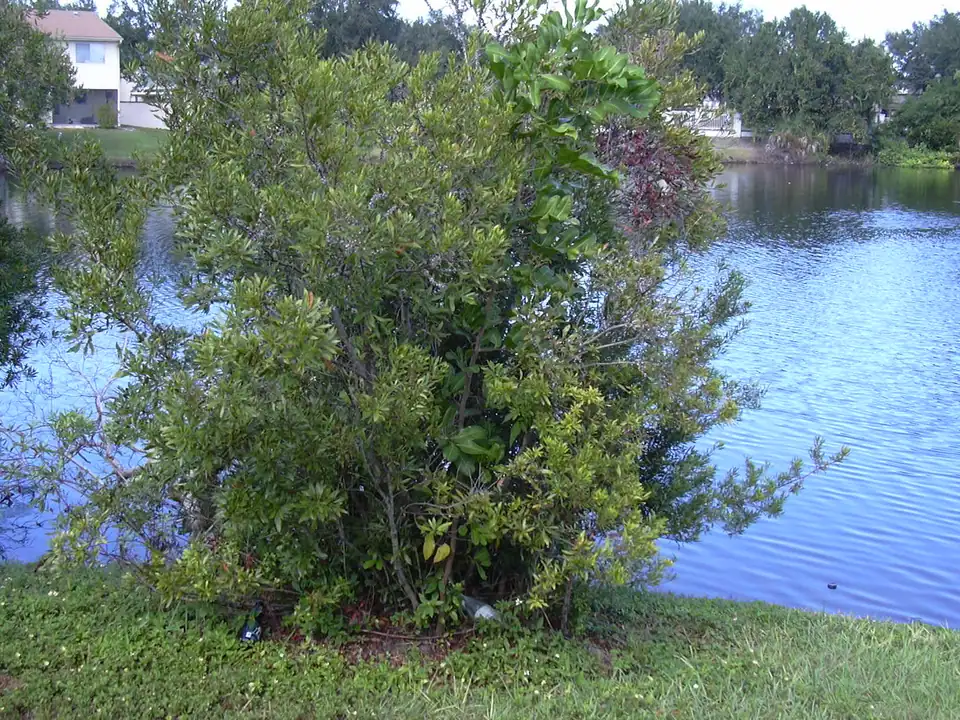
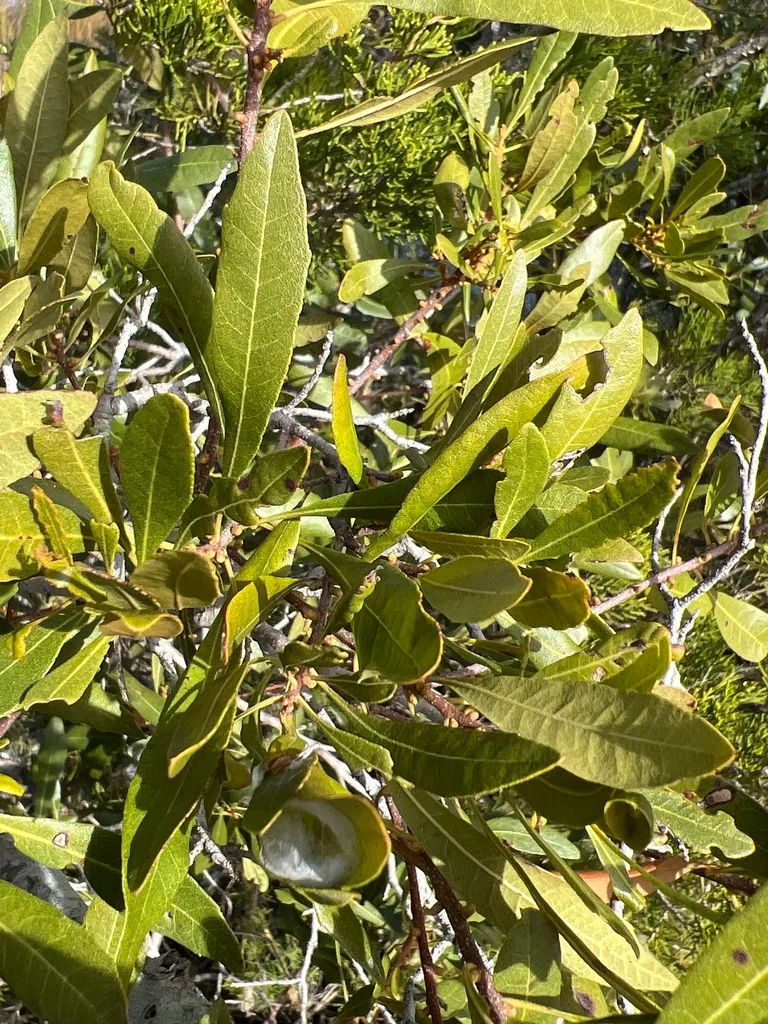

Cómo cultivar y cuidar Wax Myrtle
Morella cerifera
Escrito por Emilio Marruso · última revisión
De un vistazo
El mirto de cera es una planta resistente y agradecida: crece a pleno sol o en semisombra y, una vez establecida, aguanta tanto la sequía como el encharcamiento. Tolera incluso suelos muy ácidos, hasta pH 3,7, y no tiene plagas graves. Plántala en primavera u otoño, mantén la tierra húmeda al principio y deja que arraigue.
- Sol
De pleno sol a semisombra
Qué dicen las fuentes (2)
Luz: Semisombra a pleno sol
Common waxmyrtle should be planted in partial shade to full sun.
— Waxmyrtle | Home & Garden Information Center [3] Zone: 7 (6b) to 11 Moisture: Moist to dry pH Range: 3.7 to 6.5 Light: Partial shade to full sun
— Southern Waxmyrtle (Myrica cerifera) | VCE Publications | Virginia Tech [4] - Riego
Mantén la tierra húmeda hasta que arraigue; después aguanta sequía y encharcamiento
Qué dicen las fuentes (4)
Riego: Suelos húmedos a secos; tolerante a la sequía y a las inundaciones una vez establecida
Zone: 7 (6b) to 11 Moisture: Moist to dry pH Range: 3.7 to 6.5 Light: Partial shade to full sun
— Southern Waxmyrtle (Myrica cerifera) | VCE Publications | Virginia Tech [4] both drought- and flood-tolerant once established.
— Lady Bird Johnson Wildflower Center - The University of Texas at Austin [5] Notas sobre el riego: Requiere humedad constante para establecerse; debe regarse al plantar si hay condiciones de sequía
Requires constant moisture to get established, but both drought- and flood-tolerant once established.
— Lady Bird Johnson Wildflower Center - The University of Texas at Austin [5] should be initially irrigated if drought conditions are present.
— SGEB-75-15 [2] - Suelo
Le gusta el suelo ácido, incluso hasta pH 3,7; en suelo calizo las hojas amarillean
Qué dicen las fuentes (2)
pH del suelo, mínimo: 3.7
Zone: 7 (6b) to 11 Moisture: Moist to dry pH Range: 3.7 to 6.5 Light: Partial shade to full sun
— Southern Waxmyrtle (Myrica cerifera) | VCE Publications | Virginia Tech [4] Signos de carencia: Amarillamiento del tejido foliar entre las nervaduras (clorosis férrica), en suelos con pH alto
Iron chlorosis (yellowing of the leaf tissue between the veins) is a problem in high pH soils.
— Waxmyrtle | Home & Garden Information Center [3] - Plantación
Planta en primavera u otoño; riega al plantar si hace tiempo seco
Qué dicen las fuentes (4)
Plantación: Primavera u otoño
Restauración de dunas en el Panhandle de Florida: Plants should be placed at low spots of interdunal swales during the spring
— SGEB-75-15 [2] When to plant: transplant in spring or fall
— Information On Growing Wax Myrtle Trees | Gardening Know How [7] Notas sobre el riego: Requiere humedad constante para establecerse; debe regarse al plantar si hay condiciones de sequía
Requires constant moisture to get established, but both drought- and flood-tolerant once established.
— Lady Bird Johnson Wildflower Center - The University of Texas at Austin [5] should be initially irrigated if drought conditions are present.
— SGEB-75-15 [2] - Abonado
Hojas amarillas entre los nervios indican falta de hierro: analiza el suelo y baja el pH
Qué dicen las fuentes (2)
Microelementos: Hierro: la clorosis es un problema en suelos con pH alto
Iron chlorosis (yellowing of the leaf tissue between the veins) is a problem in high pH soils.
— Waxmyrtle | Home & Garden Information Center [3] Iron chlorosis is a problem in high pH soils.
— Southern Waxmyrtle (Myrica cerifera) | VCE Publications | Virginia Tech [4] - Plagas
Sin plagas graves
Qué dicen las fuentes (1)
Plagas: ninguna grave
Insects, Diseases and Other Plant Problems: No serious insect or disease problems.
— Myrica cerifera (Bayberry, Candleberry, Dwarf Bayberry, Dwarf Wax-myrtle, Eastern Bayberry, Southern Bayberry, Southern Waxmyrtle, Southern Wax Myrtle, Tallow Shrub, Waxmyrtle, Wax Myrtle) | North Carolina Extension Gardener Plant Toolbox [1] - Multiplicación
Por semilla, por esquejes de tallo en verano o de raíz a principios de invierno
Qué dicen las fuentes (3)
Propagación: Semilla (capa cerosa removida; 40 a 90 días de estratificación fría y húmeda); esquejes de madera blanda o semidura en verano; esquejes de raíz a principios del invierno
Seed require a cool, moist stratification period of 40 to 90 days.
— SGEB-75-15 [2] Wax myrtle will root from softwood or semi-hardwood cuttings taken in summer.
— Lady Bird Johnson Wildflower Center - The University of Texas at Austin [5] Root cuttings, 2-3 in. long., can be made in early winter.
— Lady Bird Johnson Wildflower Center - The University of Texas at Austin [5] - Siembra
Quita la cera a las semillas y siémbralas fuera en otoño, o tenlas antes 40–90 días en frío y humedad
Qué dicen las fuentes (4)
Siembra: Otoño, al aire libre (o con estratificación)
Sow seed outdoors in the fall or stratify.
— Lady Bird Johnson Wildflower Center - The University of Texas at Austin [5] Propagación: Semilla (capa cerosa removida; 40 a 90 días de estratificación fría y húmeda); esquejes de madera blanda o semidura en verano; esquejes de raíz a principios del invierno
Seed require a cool, moist stratification period of 40 to 90 days.
— SGEB-75-15 [2] Wax myrtle will root from softwood or semi-hardwood cuttings taken in summer.
— Lady Bird Johnson Wildflower Center - The University of Texas at Austin [5] Root cuttings, 2-3 in. long., can be made in early winter.
— Lady Bird Johnson Wildflower Center - The University of Texas at Austin [5]
Resumen
El arrayán es un arbusto o árbol pequeño de hoja perenne de rápido crecimiento del sureste de los Estados Unidos, cultivado como pantalla o árbol pequeño. [3] Tolera la sequía, la arena, el sol y el rocío salino, y las plantas son masculinas o femeninas, y solo las femeninas producen bayas. [3]
Citado en inglés, como en la fuente.
Esta ficha está incompleta: las fuentes consultadas aún no cubren todos los campos.
Aún no cubierto por nuestras fuentes: Poda
Cuidados
Riego
Riego
Suelos húmedos a secos; tolerante a la sequía y a las inundaciones una vez establecida
Qué dicen las fuentes (2)
Zone: 7 (6b) to 11
Moisture: Moist to dry
pH Range: 3.7 to 6.5
Light: Partial shade to full sunboth drought- and flood-tolerant once established.Notas sobre el riego
Requiere humedad constante para establecerse; debe regarse al plantar si hay condiciones de sequía
Luz
Semisombra a pleno sol
Qué dicen las fuentes (2)
Common waxmyrtle should be planted in partial shade to full sun.Zone: 7 (6b) to 11
Moisture: Moist to dry
pH Range: 3.7 to 6.5
Light: Partial shade to full sunClima y frío
Rusticidad, zona más fría
Las fuentes dan valores distintos según la región, la zona o las condiciones de cultivo.
Lo que dice cada fuente
Según NC State Extension: 7a [mínima invernal de −17,8 a −15 °C (de 0 a 5 °F)]
Según Virginia Cooperative Extension: 6b [mínima invernal de −20,6 a −17,8 °C (de −5 a 0 °F)]
Según Clemson HGIC: 7 [mínima invernal de −17,8 a −12,2 °C (de 0 a 10 °F)]
Qué dicen las fuentes (3)
Según NC State Extension: USDA Plant Hardiness Zone:
7a, 7b, 8a, 8b, 9a, 9b, 10a, 10b, 11a, 11bSegún Virginia Cooperative Extension: Zone: 7 (6b) to 11
Moisture: Moist to dry
pH Range: 3.7 to 6.5
Light: Partial shade to full sunSegún Clemson HGIC: Common waxmyrtle grows well in USDA zones 7 to 10.Rusticidad, zona más cálida
Las fuentes dan valores distintos según la región, la zona o las condiciones de cultivo.
Lo que dice cada fuente
Según NC State Extension: 11b [mínima invernal de 7,2 a 10 °C (de 45 a 50 °F)]
Según Virginia Cooperative Extension: 11 [mínima invernal de 4,4 a 10 °C (de 40 a 50 °F)]
Según Clemson HGIC: 10 [mínima invernal de −1,1 a 4,4 °C (de 30 a 40 °F)]
Qué dicen las fuentes (3)
Según NC State Extension: USDA Plant Hardiness Zone:
7a, 7b, 8a, 8b, 9a, 9b, 10a, 10b, 11a, 11bSegún Virginia Cooperative Extension: Zone: 7 (6b) to 11
Moisture: Moist to dry
pH Range: 3.7 to 6.5
Light: Partial shade to full sunSegún Clemson HGIC: Common waxmyrtle grows well in USDA zones 7 to 10.Suelo
pH del suelo, mínimo
3.7
Qué dicen las fuentes (1)
Zone: 7 (6b) to 11
Moisture: Moist to dry
pH Range: 3.7 to 6.5
Light: Partial shade to full sunpH del suelo, máximo
Las fuentes dan valores distintos según la región, la zona o las condiciones de cultivo.
Lo que dice cada fuente
Según Virginia Cooperative Extension: 6.5
Según NC State Extension: 6.0
Qué dicen las fuentes (2)
Según Virginia Cooperative Extension: Zone: 7 (6b) to 11
Moisture: Moist to dry
pH Range: 3.7 to 6.5
Light: Partial shade to full sunSegún NC State Extension: Soil pH:
Acid (<6.0)Propagación
Semilla (capa cerosa removida; 40 a 90 días de estratificación fría y húmeda); esquejes de madera blanda o semidura en verano; esquejes de raíz a principios del invierno
Qué dicen las fuentes (3)
Seed require a cool, moist stratification period of 40 to 90 days.Wax myrtle will root from softwood or semi-hardwood cuttings taken in summer.Root cuttings, 2-3 in. long., can be made in early winter.Cultivo
La planta
Familia
Myricaceae
Qué dicen las fuentes (1)
Wax myrtle is a broadleaf evergreen shrub or tree in the bayberry family (Myricaceae) that may grow 20 to 25 feet tall and 8 to 10 feet wide, but usually is much shorter.Plagas y enfermedades
Plagas
ninguna grave
Qué dicen las fuentes (1)
Insects, Diseases and Other Plant Problems: No serious insect or disease problems.Abonado
Microelementos
Hierro: la clorosis es un problema en suelos con pH alto
Signos de carencia
Amarillamiento del tejido foliar entre las nervaduras (clorosis férrica), en suelos con pH alto
Qué dicen las fuentes (1)
Iron chlorosis (yellowing of the leaf tissue between the veins) is a problem in high pH soils.Problemas
Clorosis férrica
Síntoma: Amarillamiento del tejido foliar entre las venas
Qué hacer: Ocurre en suelos con pH alto; prueba el suelo y ajusta el pH si es demasiado alto.
Remedios
Cada remedio indica qué dicen las fuentes oficiales; los remedios tradicionales sin fuente oficial aparecen marcados. Los perjudiciales están para que sepas evitarlos.
Cuidar la planta
marchitez por veta vascular
eliminación e incineración de plantas infectadas Fuente oficial, sin prueba independiente
Cómo: Las plantas diagnosticadas con VSD deben eliminarse e incinerarse para prevenir la posible propagación a plantas del paisaje u otro material de vivero.
Plants diagnosed with VSD should be removed and incinerated to prevent possible spread to landscape plants or other nursery stock.
— pubs.ext.vt.edu [8] Poda las ramas infectadas Fuente oficial, sin prueba independiente
Cómo: La fuente dice que eliminar la enfermedad mediante poda es poco probable que funcione.
It is unlikely that a vascular disease such as VSD can be pruned-out or eradicated from the plant.
— pubs.ext.vt.edu [8]
Cómo eliminarla
arrayán de cera en pastizales
triturado con rodillos Funciona en parte
Cómo: Antes del uso de herbicidas, se utilizaba el triturado con rodillos u otro método para el control del arrayán de cera.
Prior to the use of herbicides, roller-chopping or some other method was used for wax myrtle control.
— ask.ifas.ufl.edu [9] Qué dicen las pruebas Wax myrtle plants grow at least 2 inches every 30 days; therefore, chopping will result in temporary control, but plants can be at least 12 inches tall six months after treatment.
— ask.ifas.ufl.edu [9]
arrayán en pastizales
quema controlada Funciona en parte
In pastures (especially bahiagrass), however, fuel is typically insufficient to carry the fire into the wax myrtle canopy, particularly in late winter.
— ask.ifas.ufl.edu [9] Cómo: La quema de los pastizales cada dos o tres años frenó el crecimiento del arrayán.
Research conducted in the late 1970s showed that burning rangeland every two to three years provided excellent suppression of wax myrtle growth.
— ask.ifas.ufl.edu [9] Qué dicen las pruebas Research conducted in the late 1970s showed that burning rangeland every two to three years provided excellent suppression of wax myrtle growth.
— ask.ifas.ufl.edu [9]
Calendario
Siembra
Otoño, al aire libre (o con estratificación)
Qué dicen las fuentes (1)
Sow seed outdoors in the fall or stratify.Plantación
Primavera u otoño
Lo que dice cada fuente
Restauración de dunas en el Panhandle de Florida: Primavera
Poda
No figura en las fuentes consultadas.
Meses tal como los dan las fuentes, en su mayoría de Estados Unidos (hemisferio norte). En el hemisferio sur se desplazan unos seis meses.
Valores orientativos
Valores de una fuente secundaria, no comprobados palabra por palabra como el resto de esta página. Úselos como punto de partida.
- Ciclo de vida
- PerenneValor orientativo, adáptalo a tu clima · Fuente secundaria
- Altura adulta
- 304.8-457.2 cm (10-15 pies)Valor orientativo, adáptalo a tu clima · Fuente secundaria
- Horas de sol
- 6-8 horasValor orientativo, adáptalo a tu clima · Fuente secundaria
- Nivel de cuidado
- MedioValor orientativo, adáptalo a tu clima · Fuente secundaria
- Crecimiento
- AltaValor orientativo, adáptalo a tu clima · Fuente secundaria
- Poda
- Febrero, Febrero, Marzo, Junio, Julio, Junio, Julio, Febrero, Junio, JulioValor orientativo, adáptalo a tu clima · Fuente secundaria
Plantas similares
- Bayberry Myrica pensylvanica
- Sweet Fern Comptonia peregrina
- Abeto de Vancuver Abies grandis
- Abraham Trachystemon orientalis
- Bananero de Etiopía Ensete ventricosum
- Acacia longifolia Acacia longifolia
- Acanthus hungaricus Acanthus hungaricus
- Achlys triphylla Achlys triphylla
Fuentes
Cada valor anterior se cita de estos documentos. Los enlaces llevan al editor original.
- Myrica cerifera (Bayberry, Candleberry, Dwarf Bayberry, Dwarf Wax-myrtle, Eastern Bayberry, Southern Bayberry, Southern Waxmyrtle, Southern Wax Myrtle, Tallow Shrub, Waxmyrtle, Wax Myrtle) | North Carolina Extension Gardener Plant Toolbox · plants.ces.ncsu.edu, consultado
- SGEB-75-15 · edis.ifas.ufl.edu, consultado
- Waxmyrtle | Home & Garden Information Center · hgic.clemson.edu, consultado
- Southern Waxmyrtle (Myrica cerifera) | VCE Publications | Virginia Tech · pubs.ext.vt.edu, consultado
- Lady Bird Johnson Wildflower Center - The University of Texas at Austin · wildflower.org, consultado
- Southern Wax Myrtle | Duke Gardens · gardens.duke.edu, consultado
- Information On Growing Wax Myrtle Trees | Gardening Know How · gardeningknowhow.com, consultado
- pubs.ext.vt.edu · pubs.ext.vt.edu
- ask.ifas.ufl.edu · ask.ifas.ufl.edu
Escrito por Emilio Marruso · última revisión