
Cómo cultivar y cuidar Morera negra
Morus nigra
Escrito por Emilio Marruso · última revisión
De un vistazo
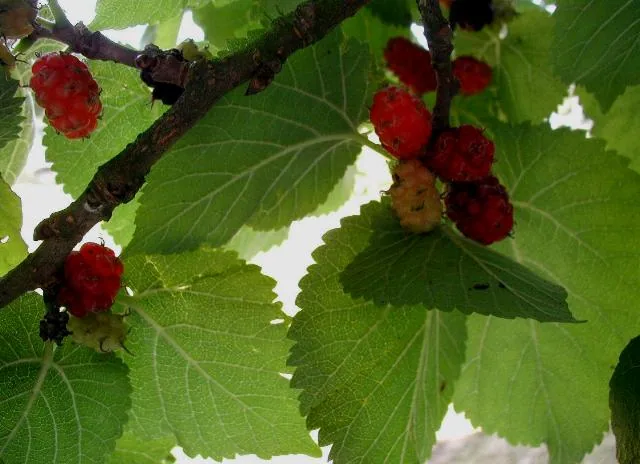
La morera negra es un árbol generoso para un rincón soleado y resguardado. Un solo ejemplar basta para una buena cosecha en agosto y septiembre, con moras deliciosas para comer crudas o convertir en mermelada aromática. Ten paciencia: tarda 8 años en dar fruto, pero una vez asentada apenas necesita poda y solo pide agua en las sequías largas.
- Sol
Lugar soleado y resguardado
Qué dicen las fuentes (1)
Luz: Posición soleada y resguardada.
Choose a sunny, sheltered planting spot, where the tree will have plenty of room to develop its wide shape
— How to grow mulberries | RHS Guide [2] - Riego
Riega los árboles jóvenes en épocas secas los primeros años; después, solo en sequías largas
Qué dicen las fuentes (1)
Riego: Riega los árboles recién plantados durante los períodos secos los primeros años; después, no hace falta riego de rutina, salvo en sequías prolongadas o en suelos muy permeables.
Water newly-planted mulberry trees during dry spells for the first few years. After that, they shouldn't need routine watering, except during prolonged dry spells or where they are grown in very free-draining soil.
— How to grow mulberries | RHS Guide [2] - Plantación
Planta en reposo, de otoño a primavera; mejor en primavera, cuando la tierra se calienta
Qué dicen las fuentes (1)
Plantación: De otoño a primavera, mientras está en reposo; mejor en primavera, cuando el suelo se calienta.
and container-grown trees are best planted while dormant, from autumn to spring, but should settle in best in spring as the soil is warming up.
— How to grow mulberries | RHS Guide [2] - Abonado
Normalmente nada si acolchas; abona a principios de primavera solo si la cosecha es pobre
Qué dicen las fuentes (4)
Cuándo: A principios de primavera, solo si las cosechas son pobres o el árbol muestra deficiencia de nutrientes
en contenedores: Mulberries in containers benefit from regular feeding. Either apply a balanced or high-potassium organic liquid fertiliser fortnightly through the growing season
— How to grow mulberries | RHS Guide [2] Mulberry trees growing in regularly mulched soil shouldn't need any additional feeding. However, if harvests are especially poor or your tree is showing signs of nutrient deficiency, apply an organic granular fertiliser to the soil in early spring.
— How to grow mulberries | RHS Guide [2] Frecuencia: Por lo general, ninguna en suelo con mantillo regular; fertiliza solo cuando las cosechas son pobres o aparece deficiencia
en contenedores: Mulberries in containers benefit from regular feeding. Either apply a balanced or high-potassium organic liquid fertiliser fortnightly through the growing season
— How to grow mulberries | RHS Guide [2] Mulberry trees growing in regularly mulched soil shouldn't need any additional feeding. However, if harvests are especially poor or your tree is showing signs of nutrient deficiency, apply an organic granular fertiliser to the soil in early spring.
— How to grow mulberries | RHS Guide [2] - Poda
Poda solo en reposo, de la caída de la hoja a mediados de invierno, o sangra mucha savia
Qué dicen las fuentes (4)
Cuándo podar: Durante el reposo, entre la caída de las hojas en otoño y mediados del invierno, porque los moreros pierden mucha savia si se podan en otras épocas; los árboles establecidos de crecimiento libre necesitan muy poca poda.
espaldera: shorten the new side-shoots that sprout from branches to three or four leaves, to produce short fruiting spurs. Do this in late summer, just as growth is slowing down.
— How to grow mulberries | RHS Guide [2] Pruning is best done while the tree is dormant, between leaf fall in autumn and mid-winter, as mulberries bleed a lot of sap
— How to grow mulberries | RHS Guide [2] Established free-standing mulberries need very little pruning and can be left to develop a naturally wide shape, often rather crooked as they age.
— How to grow mulberries | RHS Guide [2] Poda: Mientras está en reposo, entre la caída de las hojas en otoño y mediados de invierno.
Pruning is best done while the tree is dormant, between leaf fall in autumn and mid-winter, as mulberries bleed a lot of sap
— How to grow mulberries | RHS Guide [2] - Cosecha
Agosto y septiembre; coge las moras maduras con guantes o sacude las ramas sobre una sábana
Qué dicen las fuentes (2)
Cosecha: Agosto y septiembre.
The main harvesting season is August and September. Pick the fruits on the lower branches individually when ripe, wearing gloves if you want to avoid staining your hands.
— How to grow mulberries | RHS Guide [2] Cómo cosechar: Recoge los frutos maduros de las ramas bajas uno a uno, usando guantes para evitar manchas; para árboles grandes, sacude las ramas sobre una lona extendida en el suelo.
Pick the fruits on the lower branches individually when ripe, wearing gloves if you want to avoid staining your hands. The easiest way to gather fruit from large trees is by shaking the branches over a sheet spread on the ground.
— How to grow mulberries | RHS Guide [2] - Polinización
Autofértil: basta un solo árbol para una buena cosecha
Qué dicen las fuentes (2)
Cuajado: Autofértil: produce fruto con su propio polen
Mulberry trees are self-fertile, so you only need one to produce a good crop.
— How to grow mulberries | RHS Guide [2] Qué necesita: Un solo árbol es suficiente para una buena cosecha.
Mulberry trees are self-fertile, so you only need one to produce a good crop.
— How to grow mulberries | RHS Guide [2] - Plagas
Pájaros; mancha foliar, mancha coral y oídio
Qué dicen las fuentes (4)
Plagas: pájaros
Birds will help themselves to the berries too, but will hopefully leave plenty, hidden among the leaves, for you to enjoy.
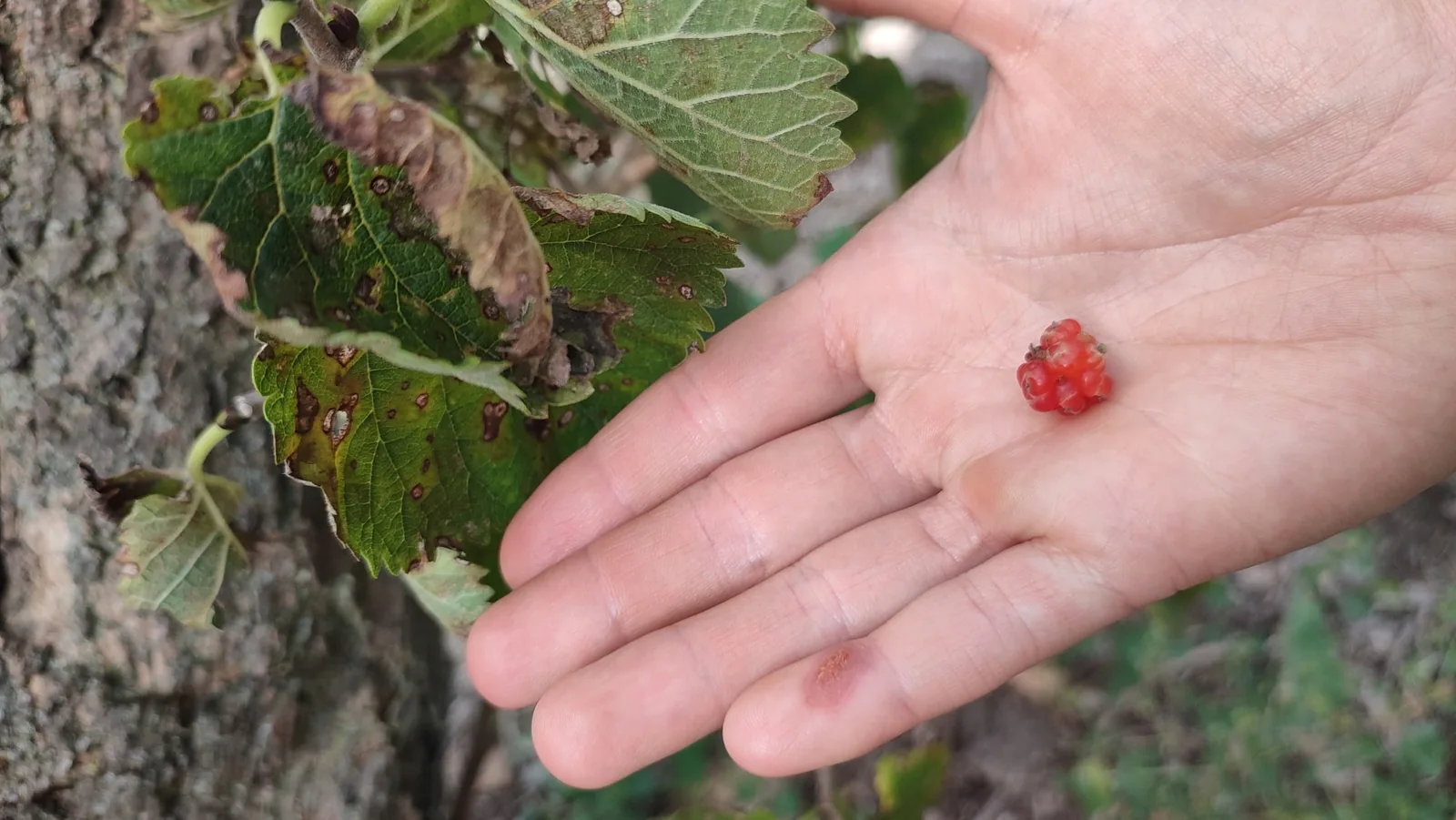
— How to grow mulberries | RHS Guide [2] Enfermedades: mancha foliar fúngica, cancro de coral, oídio
Mulberry trees bear attractive leaves and tasty fruit but can be affected by a number of diseases, such as fungal leaf spot.
— How to grow mulberries | RHS Guide [2] Coral spot is a fungal disease of woody plants causing branches to die back.
— How to grow mulberries | RHS Guide [2] Powdery mildews are a group of related fungi which attack a wide range of plants, causing a white, dusty coating on leaves, stems and flowers.
— How to grow mulberries | RHS Guide [2] - Atención
Ten paciencia: los primeros frutos llegan a los 8 años
Qué dicen las fuentes (1)
Años hasta el primer fruto: alrededor de 8 años
Black mulberry trees can be slow to start fruiting, taking around eight years, but are well worth the wait, and its varieties often fruit more quickly.
— How to grow mulberries | RHS Guide [2] - Tamaño
10–15 m de alto y hasta 10 m de ancho
Qué dicen las fuentes (2)
Altura adulta: 1000-1500 cm (10-15 m)
The species typically grows to a height of 10–15 metres, with a crown diameter of up to 10 metres, forming a dense canopy that provides both shade and ornamental value in urban and rural landscapes
— Morus nigra - EUFORGEN European forest genetic resources programme [1] Anchura adulta: hasta 1000 cm (10 m, diámetro de copa)
The species typically grows to a height of 10–15 metres, with a crown diameter of up to 10 metres, forming a dense canopy that provides both shade and ornamental value in urban and rural landscapes
— Morus nigra - EUFORGEN European forest genetic resources programme [1] - Multiplicación
Esquejes leñosos, de mediados de otoño a finales de invierno
Qué dicen las fuentes (2)
Propagación: Esquejes de madera dura tomados entre mediados de otoño y finales de invierno.
To make new mulberry trees from an existing one, take hardwood cuttings
— How to grow mulberries | RHS Guide [2] between mid-autumn and late winter. Root these either into pots of peat-free cuttings
— How to grow mulberries | RHS Guide [2] - Maceta
Crece en maceta; mantenla húmeda y abona cada dos semanas durante el crecimiento
Qué dicen las fuentes (5)
En maceta: Sí
Compact mulberry trees are suitable for growing in large containers, ideally 50cm (20in) wide and deep, or larger.
— How to grow mulberries | RHS Guide [2] Notas sobre el riego: Los árboles cultivados en contenedor necesitan un suministro constante de humedad durante la temporada de crecimiento; riega por la mañana temprano o por la tarde.
Mulberry trees in containers need a steady supply of moisture throughout the growing season
— How to grow mulberries | RHS Guide [2] Try to water early in the morning or in the evening to limit moisture loss from evaporation, ideally using stored rainwater.
— How to grow mulberries | RHS Guide [2] Frecuencia: Por lo general, ninguna en suelo con mantillo regular; fertiliza solo cuando las cosechas son pobres o aparece deficiencia
en contenedores: Mulberries in containers benefit from regular feeding. Either apply a balanced or high-potassium organic liquid fertiliser fortnightly through the growing season
— How to grow mulberries | RHS Guide [2] Mulberry trees growing in regularly mulched soil shouldn't need any additional feeding. However, if harvests are especially poor or your tree is showing signs of nutrient deficiency, apply an organic granular fertiliser to the soil in early spring.
— How to grow mulberries | RHS Guide [2]
Resumen
La mora negra es un árbol frutal de hoja caduca y larga vida que crece grande y se puede plantar como pieza central del jardín o contra una pared cálida. [2][1] Los árboles recién plantados necesitan agua en los períodos secos durante los primeros años, y la poda se realiza mientras el árbol está en reposo porque sangra savia. [2]
Citado en inglés, como en la fuente.
Esta ficha está incompleta: las fuentes consultadas aún no cubren todos los campos.
Aún no cubierto por nuestras fuentes: Distancia de plantación
Cuidados
Riego
Riego
Riega los árboles recién plantados durante los períodos secos los primeros años; después, no hace falta riego de rutina, salvo en sequías prolongadas o en suelos muy permeables.
Qué dicen las fuentes (1)
Water newly-planted mulberry trees during dry spells for the first few years. After that, they shouldn't need routine watering, except during prolonged dry spells or where they are grown in very free-draining soil.Notas sobre el riego
Los árboles cultivados en contenedor necesitan un suministro constante de humedad durante la temporada de crecimiento; riega por la mañana temprano o por la tarde.
Qué dicen las fuentes (2)
Mulberry trees in containers need a steady supply of moisture throughout the growing seasonTry to water early in the morning or in the evening to limit moisture loss from evaporation, ideally using stored rainwater.Luz
Posición soleada y resguardada.
Qué dicen las fuentes (1)
Choose a sunny, sheltered planting spot, where the tree will have plenty of room to develop its wide shapeDónde cultivarla
En maceta
Sí
Qué dicen las fuentes (1)
Compact mulberry trees are suitable for growing in large containers, ideally 50cm (20in) wide and deep, or larger.Distancia de plantación
No figura en las fuentes consultadas.
Propagación
Esquejes de madera dura tomados entre mediados de otoño y finales de invierno.
Cultivo
La planta
Familia
Moraceae
Qué dicen las fuentes (1)
Black mulberry ( Morus nigra ) is a long-lived deciduous fruit tree belonging to the Moraceae family.Altura adulta
1000-1500 cm (10-15 m)
Qué dicen las fuentes (1)
The species typically grows to a height of 10–15 metres, with a crown diameter of up to 10 metres, forming a dense canopy that provides both shade and ornamental value in urban and rural landscapesAnchura adulta
hasta 1000 cm (10 m, diámetro de copa)
Qué dicen las fuentes (1)
The species typically grows to a height of 10–15 metres, with a crown diameter of up to 10 metres, forming a dense canopy that provides both shade and ornamental value in urban and rural landscapesAños hasta el primer fruto
alrededor de 8 años
Qué dicen las fuentes (1)
Black mulberry trees can be slow to start fruiting, taking around eight years, but are well worth the wait, and its varieties often fruit more quickly.Cosecha y conservación
Cómo cosechar
Recoge los frutos maduros de las ramas bajas uno a uno, usando guantes para evitar manchas; para árboles grandes, sacude las ramas sobre una lona extendida en el suelo.
Qué dicen las fuentes (1)
Pick the fruits on the lower branches individually when ripe, wearing gloves if you want to avoid staining your hands. The easiest way to gather fruit from large trees is by shaking the branches over a sheet spread on the ground.Plagas y enfermedades
Plagas
pájaros
Qué dicen las fuentes (1)
Birds will help themselves to the berries too, but will hopefully leave plenty, hidden among the leaves, for you to enjoy.Enfermedades
mancha foliar fúngica, cancro de coral, oídio
Qué dicen las fuentes (3)
Mulberry trees bear attractive leaves and tasty fruit but can be affected by a number of diseases, such as fungal leaf spot.Coral spot is a fungal disease of woody plants causing branches to die back.Powdery mildews are a group of related fungi which attack a wide range of plants, causing a white, dusty coating on leaves, stems and flowers.Abonado
Cuándo
A principios de primavera, solo si las cosechas son pobres o el árbol muestra deficiencia de nutrientes
Lo que dice cada fuente
en contenedores: Durante la temporada de crecimiento
Qué dicen las fuentes (2)
en contenedores: Mulberries in containers benefit from regular feeding. Either apply a balanced or high-potassium organic liquid fertiliser fortnightly through the growing seasonMulberry trees growing in regularly mulched soil shouldn't need any additional feeding. However, if harvests are especially poor or your tree is showing signs of nutrient deficiency, apply an organic granular fertiliser to the soil in early spring.Frecuencia
Por lo general, ninguna en suelo con mantillo regular; fertiliza solo cuando las cosechas son pobres o aparece deficiencia
Lo que dice cada fuente
en contenedores: Cada dos semanas durante la temporada de crecimiento
Qué dicen las fuentes (2)
en contenedores: Mulberries in containers benefit from regular feeding. Either apply a balanced or high-potassium organic liquid fertiliser fortnightly through the growing seasonMulberry trees growing in regularly mulched soil shouldn't need any additional feeding. However, if harvests are especially poor or your tree is showing signs of nutrient deficiency, apply an organic granular fertiliser to the soil in early spring.Abonos naturales
Compost de jardín o estiércol bien descompuesto en el hoyo de plantación en suelos pobres; fertilizante granular orgánico cuando sea necesario
Lo que dice cada fuente
en contenedores: Fertilizante líquido orgánico equilibrado o con alto contenido de potasio
Qué dicen las fuentes (3)
en contenedores: Mulberries in containers benefit from regular feeding. Either apply a balanced or high-potassium organic liquid fertiliser fortnightly through the growing seasonIf your soil is poor, add a bucketful of garden compost or well-rotted manure to the soil you remove from your planting hole, and use this to backfill after planting.Mulberry trees growing in regularly mulched soil shouldn't need any additional feeding. However, if harvests are especially poor or your tree is showing signs of nutrient deficiency, apply an organic granular fertiliser to the soil in early spring.Polinización
Cuajado
Autofértil: produce fruto con su propio polen
Qué dicen las fuentes (1)
Mulberry trees are self-fertile, so you only need one to produce a good crop.Qué necesita
Un solo árbol es suficiente para una buena cosecha.
Qué dicen las fuentes (1)
Mulberry trees are self-fertile, so you only need one to produce a good crop.Poda
Cuándo podar
Durante el reposo, entre la caída de las hojas en otoño y mediados del invierno, porque los moreros pierden mucha savia si se podan en otras épocas; los árboles establecidos de crecimiento libre necesitan muy poca poda.
Lo que dice cada fuente
espaldera: A fines del verano, acorta los brotes laterales nuevos a tres o cuatro hojas para producir espuelas frutales cortas.
Qué dicen las fuentes (3)
espaldera: shorten the new side-shoots that sprout from branches to three or four leaves, to produce short fruiting spurs. Do this in late summer, just as growth is slowing down.Pruning is best done while the tree is dormant, between leaf fall in autumn and mid-winter, as mulberries bleed a lot of sapEstablished free-standing mulberries need very little pruning and can be left to develop a naturally wide shape, often rather crooked as they age.Frío invernal
Horas de frío
400–450 horas entre 0 y 7,2 °C [32–45 °F]
Lo que dice cada fuente
coltura «Mulberry»: 400–450 horas
Qué dicen las fuentes (3)
coltura «Mulberry»: Mulberry Chill hours: 400 to 450 The mulberry tree that is most commonly seen in the San Francisco Bay Area is fruitless white mulberry (Morus alba).Mulberry Chill hours: 400 to 450 The mulberry tree that is most commonly seen in the San Francisco Bay Area is fruitless white mulberry (Morus alba).Chill hours are accumulated from November through February when temperatures are between 32° and 45°F.Problemas
Mancha de coral
Síntoma: Las ramas se mueren y se secan.
Qué dicen las fuentes (1)
Coral spot is a fungal disease of woody plants causing branches to die back.
— How to grow mulberries | RHS Guide [2]
Remedios
Cada remedio indica qué dicen las fuentes oficiales; los remedios tradicionales sin fuente oficial aparecen marcados. Los perjudiciales están para que sepas evitarlos.
Cuidar la planta
mancha foliar del moral
Recoge y desecha las hojas caídas. Fuente oficial, sin prueba independiente
Homemade products are not recommended as they are unregulated and usually untested.
— rhs.org.uk [4] Cómo: Recoge las hojas que caigan prematuramente de un árbol afectado y deséchalas quemándolas, enterrándolas o en compostaje, junto con todas las demás hojas cuando caigan en otoño.
Ensure that any leaves falling prematurely from an affected tree are collected and disposed of (by burning, burial or consigning to the council green waste
— rhs.org.uk [4]
mancha bacteriana de la hoja
Corta y quema los brotes afectados Fuente oficial, sin prueba independiente
Cómo: Corta los brotes afectados y quémalos; recoge y desecha las hojas caídas.
Oozing bacterial slime may be visible in wet weather causing dieback of the shoots. The affected shoots should be cut out and burned.
— rhs.org.uk [4]
Calendario
De otoño a primavera, mientras está en reposo; mejor en primavera, cuando el suelo se calienta.
Qué dicen las fuentes (1)
and container-grown trees are best planted while dormant, from autumn to spring, but should settle in best in spring as the soil is warming up.Agosto y septiembre.
Qué dicen las fuentes (1)
The main harvesting season is August and September. Pick the fruits on the lower branches individually when ripe, wearing gloves if you want to avoid staining your hands.Mientras está en reposo, entre la caída de las hojas en otoño y mediados de invierno.
Qué dicen las fuentes (1)
Pruning is best done while the tree is dormant, between leaf fall in autumn and mid-winter, as mulberries bleed a lot of sapMeses tal como los dan las fuentes, en su mayoría de Estados Unidos (hemisferio norte). En el hemisferio sur se desplazan unos seis meses.
Comestibilidad
Según la fuente, citada textualmente. No comas una planta basándote solo en esta página: los errores de identificación pueden ser peligrosos.
Mulberries are delicious eaten raw, or can be turned into aromatic jam
[2]
Plantas similares
- Mora roja Morus rubra
- Morera blanca Morus alba
- Baniano Ficus benghalensis
- Buen pan Artocarpus altilis
- Creeping Fig Ficus pumila
- Pipal Ficus religiosa
- Higuera Ficus carica
- Laurel de Indias Ficus microcarpa
Fuentes
Cada valor anterior se cita de estos documentos. Los enlaces llevan al editor original.
- Morus nigra - EUFORGEN European forest genetic resources programme · euforgen.org, consultado
- How to grow mulberries | RHS Guide · rhs.org.uk, consultado
- escholarship.org · escholarship.org
- rhs.org.uk · rhs.org.uk
Escrito por Emilio Marruso · última revisión