
Cómo cultivar y cuidar Gandul
Myoporum laetum
Escrito por Emilio Marruso · última revisión
Tóxica para: Ganado vacuno, Ganado, Personas · Por qué
De un vistazo
El mioporo es una planta resistente y amante del sol que aguanta muy bien la sequía; por eso se aprecia tanto como ornamental. Dale sol pleno y un suelo con buen drenaje, y puede alcanzar hasta 8 m de altura. Puedes obtener nuevas plantas por semilla o por esquejes semileñosos, y a cambio apenas te pide poda.
- Sol
Sol pleno
Qué dicen las fuentes (1)
Luz: Pleno sol
(1) Sun Exposure: Full Sun (2) It cannot grow in the shade.
— Myoporum laetum risk assessment [8] - Riego
Aguanta bien la sequía: necesita poco riego
Qué dicen las fuentes (2)
Riego: Tolerante a la sequía.
In areas with water available, it grows rapidly into large, dense stands. It is surprisingly drought tolerant.
— IPCW Plant Report – California Invasive Plant Council [1] Sequía: La myoporum es resistente a la sequía, lo que hace que el género sea deseable para la plantación ornamental.
The drought hardiness of Myoporum , and the fact that the plants are generally so pest free, has made members of this genus desirable for ornamental planting.
— Myoporum Thrips | Center for Invasive Species Research [2] - Suelo
Necesita un suelo con buen drenaje
Qué dicen las fuentes (1)
Notas sobre el riego: Requiere suelo bien drenado
medium (loamy) and heavy (clay) soils, requires well-drained soil and can grow in nutritionally poor soil.
— Myoporum laetum risk assessment [8] - Poda
Poda poco: una poda excesiva puede debilitarla o incluso matarla
Qué dicen las fuentes (1)
Poda drástica: Evita la poda excesiva: puede estresar o incluso matar a los árboles y arbustos de myoporum.
Be aware that excessive pruning can stress, or even kill, both large and small Myoporum trees and shrubs.
— Myoporum Thrips / Home and Landscape / UC Statewide IPM Program (UC IPM) [4] - Plagas
El trips del mioporo deforma y enrolla las hojas nuevas; corta, embolsa y tira los brotes dañados
Qué dicen las fuentes (1)
Plagas: trips de la myoporum (Klambothrips myopori)
In California, myoporum thrips has only been observed on two species of Myoporum: M. laetum, which is a shrub or small tree
— Myoporum Thrips / Home and Landscape / UC Statewide IPM Program (UC IPM) [4] - Tamaño
Hasta 8 m de alto
Qué dicen las fuentes (1)
Altura adulta: hasta 800 cm (8 m)
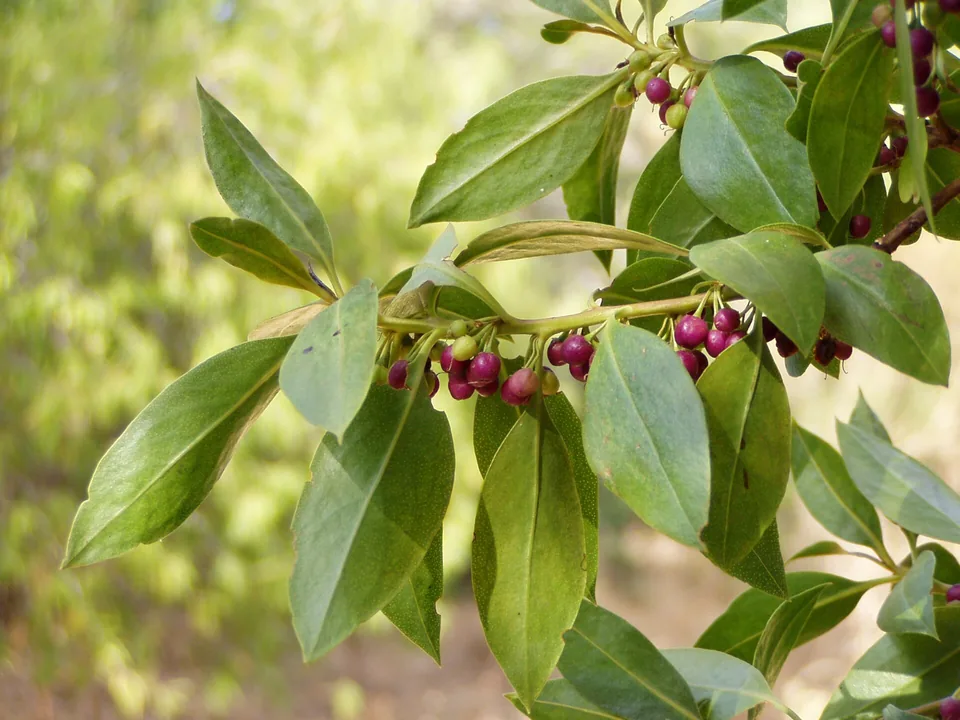
Arbusto o pequeño árbol de hasta 8 m. de altura que se mantiene verde todo el año.
— Myoporum laetum G. Forst. - Herbari Virtual del Mediterrani Occidental [6] - Multiplicación
Por semilla o por esquejes semileñosos
Qué dicen las fuentes (2)
Propagación: Semilla; esquejes de madera semidura.
Propagation technique Easily grown from fresh seed and semi-hardwood cuttings
— Myoporum laetum • New Zealand Plant Conservation Network [3] It will grow best in good soil, but also copes with drier sites. Propagation is from seed or by cuttings.
— Myoporum laetum - Trees and Shrubs Online [5] - Seguridad
Hojas y frutos son tóxicos y pueden matar al ganado; toda la planta daña el hígado: no comas sus frutos
Resumen
Myoporum laetum (ngaio) es un arbusto o árbol pequeño siempreverde nativo de Nueva Zelanda, cultivado como ornamental de paisaje con flores blancas con manchas púrpuras. [7] Es principalmente una planta costera, útil para plantaciones junto al mar, pantallas y setos, y se ha vuelto invasiva en California. [5][1] Sus hojas y frutos son tóxicos para el ganado y pueden ser mortales. [1]
Citado en inglés, como en la fuente.
Esta ficha está incompleta: las fuentes consultadas aún no cubren todos los campos.
Aún no cubierto por nuestras fuentes: Poda
Cuidados
Riego
Riego
Tolerante a la sequía.
Qué dicen las fuentes (1)
In areas with water available, it grows rapidly into large, dense stands. It is surprisingly drought tolerant.Notas sobre el riego
Requiere suelo bien drenado
Qué dicen las fuentes (1)
medium (loamy) and heavy (clay)
soils, requires well-drained soil and can grow in nutritionally poor soil.Luz
Pleno sol
Qué dicen las fuentes (1)
(1) Sun Exposure: Full Sun (2) It cannot grow in the shade.Clima y frío
Rusticidad, zona más fría
Las fuentes dan valores distintos según la región, la zona o las condiciones de cultivo.
Lo que dice cada fuente
Según Trees and Shrubs Online: 9-10 [mínima invernal de −6,7 a 4,4 °C (de 20 a 40 °F)]
Según PIER risk assessment: 11 [mínima invernal de 4,4 a 10 °C (de 40 a 50 °F)]
Qué dicen las fuentes (2)
Según Trees and Shrubs Online: Habitat  Coastal regions down to the high-tide line USDA Hardiness Zone  9-10Según PIER risk assessment: (1) Hardiness: USDA Zone 11: above 4.5 �C (40 Rusticidad, zona más cálida
Las fuentes dan valores distintos según la región, la zona o las condiciones de cultivo.
Lo que dice cada fuente
Según Trees and Shrubs Online: 9-10 [mínima invernal de −6,7 a 4,4 °C (de 20 a 40 °F)]
Según PIER risk assessment: 11 [mínima invernal de 4,4 a 10 °C (de 40 a 50 °F)]
Qué dicen las fuentes (2)
Según Trees and Shrubs Online: Habitat  Coastal regions down to the high-tide line USDA Hardiness Zone  9-10Según PIER risk assessment: (1) Hardiness: USDA Zone 11: above 4.5 �C (40 Propagación
Semilla; esquejes de madera semidura.
Qué dicen las fuentes (2)
Propagation technique
Easily grown from fresh seed and semi-hardwood cuttingsIt will grow best in good soil, but also copes with drier sites. Propagation is from seed or by cuttings.Cultivo
La planta
Familia
Myoporaceae
Qué dicen las fuentes (1)
Família: MYOPORACEAE Género: Myoporum Sinònims: Myoporum tenuifolium G. Forst.Altura adulta
hasta 800 cm (8 m)
Qué dicen las fuentes (1)
Arbusto o pequeño árbol de hasta 8 m. de altura que se mantiene verde todo el año.Plagas y enfermedades
Plagas
trips de la myoporum (Klambothrips myopori)
Qué dicen las fuentes (1)
In California, myoporum thrips has only been observed on two species of Myoporum: M. laetum, which is a shrub or small treeCalor y sequía
Sequía
La myoporum es resistente a la sequía, lo que hace que el género sea deseable para la plantación ornamental.
Qué dicen las fuentes (1)
The drought hardiness of Myoporum , and the fact that the plants are generally so pest free, has made members of this genus desirable for ornamental planting.Poda
Poda drástica
Evita la poda excesiva: puede estresar o incluso matar a los árboles y arbustos de myoporum.
Qué dicen las fuentes (1)
Be aware that excessive pruning can stress, or even kill, both large and small Myoporum trees and shrubs.Problemas
Trips de la mioporo (Klambothrips myopori).
Síntoma: Distorsión similar a agallas en las hojas nuevas, enrollamiento de las hojas y crecimiento terminal severamente atrofiado; el daño persistente puede matar plantas establecidas.
Qué hacer: Evita plantar especies susceptibles; poda, embolsa y desecha los brotes infestados; insecticidas sistémicos donde las infestaciones sean graves.
Qué dicen las fuentes (2)
Myoporum plants damaged by this thrips are characterized by gall-like distortion of new leaves. Terminal growth can be severely stunted
— Myoporum Thrips / Home and Landscape / UC Statewide IPM Program (UC IPM) [4] On affected plants, infested terminal shoots may be pruned, bagged, and disposed of.
— Myoporum Thrips / Home and Landscape / UC Statewide IPM Program (UC IPM) [4]
Remedios
Cada remedio indica qué dicen las fuentes oficiales; los remedios tradicionales sin fuente oficial aparecen marcados. Los perjudiciales están para que sepas evitarlos.
Cuidar la planta
trips de la myoporum
poda y elimina en bolsas los brotes afectados Funciona
Be aware that excessive pruning can stress, or even kill, both large and small Myoporum trees and shrubs.
— ipm.ucanr.edu [9] Cómo: Los brotes terminales infestados se podan, se embolsan y se eliminan; las plantas moribundas o muertas se eliminan de la misma manera para evitar que la plaga se propague a otras plantas.
On affected plants, infested terminal shoots may be pruned, bagged, and disposed of.
— ipm.ucanr.edu [9] Qué dicen las pruebas On affected plants, infested terminal shoots may be pruned, bagged, and disposed of. Dying or dead plants should be disposed of in the same manner to prevent spread of the pest to other plants.
— ipm.ucanr.edu [9] jabón insecticida o spray de aceite hortícola No demostrado
Cómo: Los rociados de contacto con aceites y jabones, que controlan otros trips, no llegan a este trips protegido dentro del crecimiento terminal retorcido.
it cannot be successfully managed with the reduced-risk and organic contact insecticides such as oils, soaps, and spinosad that control other species of thrips
— ipm.ucanr.edu [9] Qué dicen las pruebas Because this thrips mostly lives protected within twisted terminal growth, it cannot be successfully managed with the reduced-risk and organic contact insecticides such as oils, soaps, and spinosad that control other species of thrips.
— ipm.ucanr.edu [9]
Cómo eliminarla
myoporum laetum
arranca las plántulas Funciona
If the root remains in the ground the plant will resprout with vigor.
— IPCW Plant Report – California Invasive Plant Council [1] Cómo: Arranca las plántulas cuando el suelo esté húmedo y la planta sea pequeña; las plántulas tienen raíces pivotantes largas y fuertes. Es necesario eliminar las plántulas cada año donde haya muchas fuentes de semillas.
Seedlings can be pulled, but they have long, strong taproots, and pulling must be done when the soil is moist and the plant is small.
— IPCW Plant Report – California Invasive Plant Council [1] Qué dicen las pruebas To control weeds without using manufactured herbicides, the best option is to pull, remove or interfere with weed growth.
— extension.usu.edu [10]
Venenosa para los animales
Según la fuente, citada textualmente. No es un consejo médico ni veterinario: si una persona o un animal pudo haber ingerido esta planta, contacta con un centro de toxicología o con un veterinario.
Animales
myoporum is removed. Leaves and fruits are toxic and may be fatal to livestock.
[1]- Partes venenosas
fruit is less toxic than the leaves, and toxin is released with leaf fall
[1]- Principio tóxico
The toxin (ngaione) is a furanoid sesquiterpene ketone that constitutes 70 to 80
[1]- Síntomas
Ngaio tree foliage contains toxic chemical compounds that can cause fatal liver damage in livestock
[7]
Ngaio deaths are most common in cattle (in 1945, 73 cattle died on Banks Peninsula)
[8]
Personas
Plant needs to be ingested to manifest toxicity. No evidence of poisoning in humans.
[8]
Calendario
Poda
No figura en las fuentes consultadas.
Meses tal como los dan las fuentes, en su mayoría de Estados Unidos (hemisferio norte). En el hemisferio sur se desplazan unos seis meses.
Comestibilidad
Según la fuente, citada textualmente. No comas una planta basándote solo en esta página: los errores de identificación pueden ser peligrosos.
The reddish-purple fruits are recorded as being eaten but caution should be taken as all parts of this plant are now known to contain a liver toxin.
[8]
Plantas similares
- Myoporum insulare Myoporum insulare
- Abeto de Vancuver Abies grandis
- Abraham Trachystemon orientalis
- Bananero de Etiopía Ensete ventricosum
- Acacia longifolia Acacia longifolia
- Acanthus hungaricus Acanthus hungaricus
- Acónito común Aconitum napellus
- Palma de aguja Yucca flaccida
Fuentes
Cada valor anterior se cita de estos documentos. Los enlaces llevan al editor original.
- IPCW Plant Report – California Invasive Plant Council · cal-ipc.org, consultado
- Myoporum Thrips | Center for Invasive Species Research · cisr.ucr.edu, consultado
- Myoporum laetum • New Zealand Plant Conservation Network · nzpcn.org.nz, consultado
- Myoporum Thrips / Home and Landscape / UC Statewide IPM Program (UC IPM) · ipm.ucanr.edu, consultado
- Myoporum laetum - Trees and Shrubs Online · treesandshrubsonline.org, consultado
- Myoporum laetum G. Forst. - Herbari Virtual del Mediterrani Occidental · herbarivirtual.uib.es, consultado
- Myoporum laetum Profile – California Invasive Plant Council · cal-ipc.org, consultado
- Myoporum laetum risk assessment · hear.org, consultado
- ipm.ucanr.edu · ipm.ucanr.edu
- extension.usu.edu · extension.usu.edu
Escrito por Emilio Marruso · última revisión