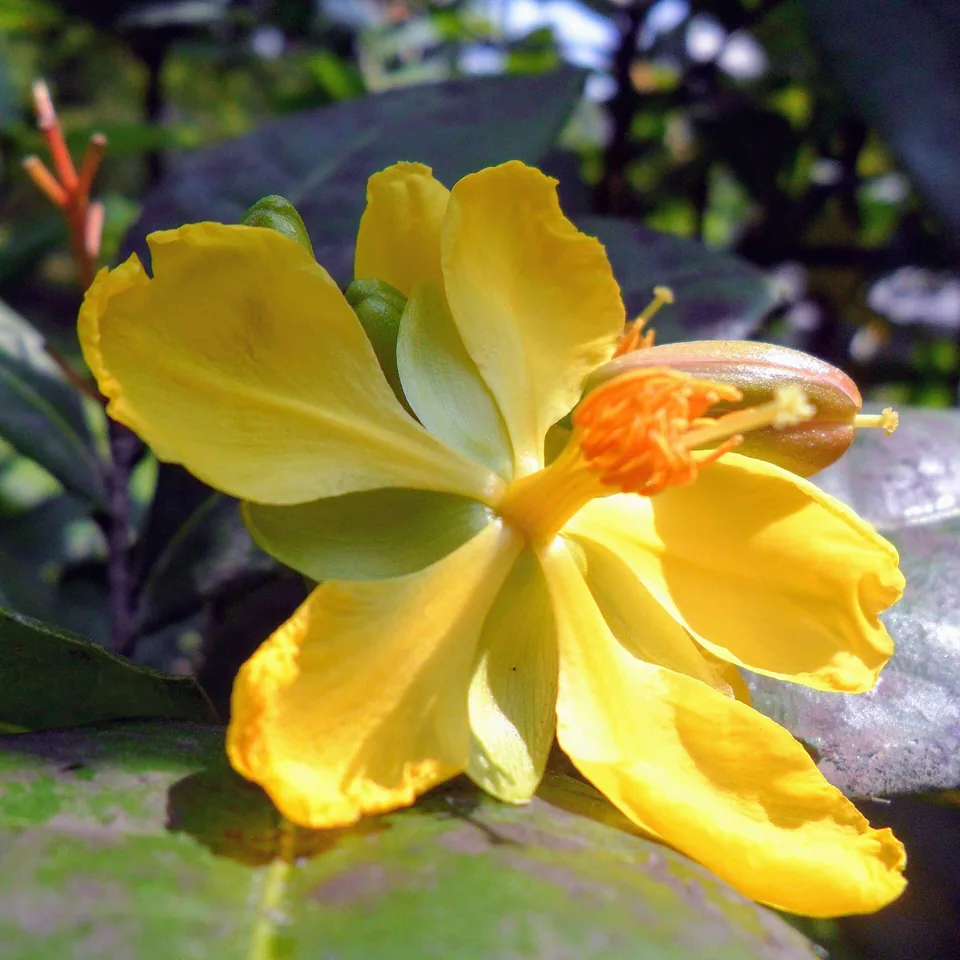
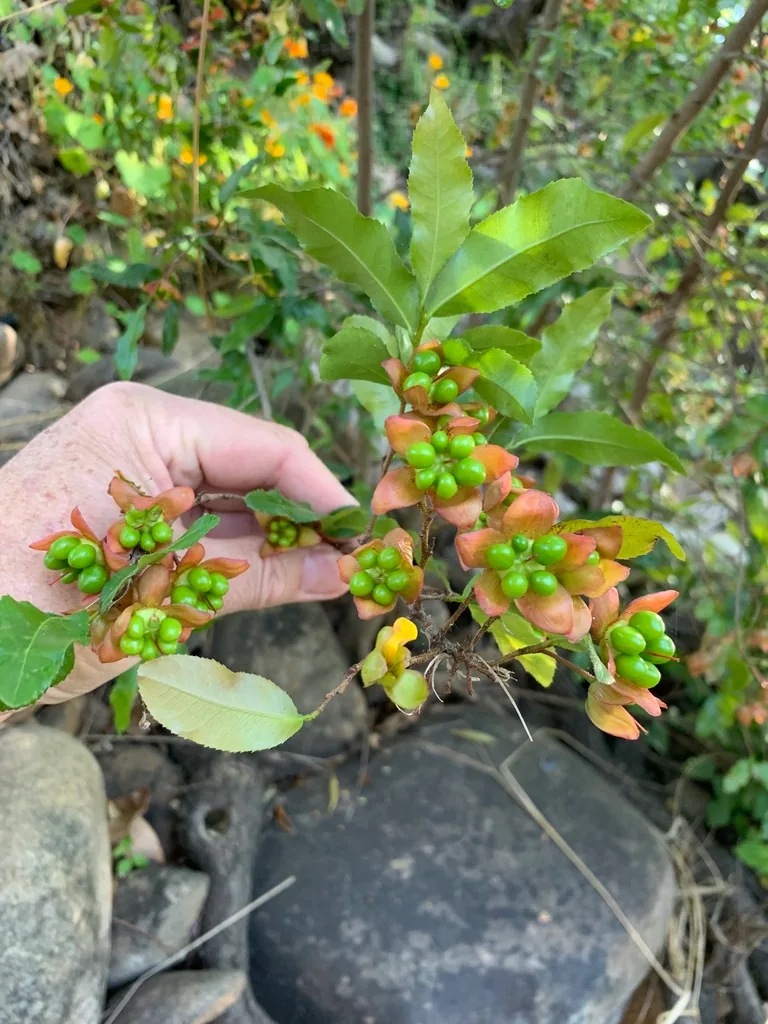

Cómo cultivar y cuidar Mickey Mouse plant
Ochna serrulata
Escrito por Emilio Marruso · última revisión
Tóxica para: Animales, Personas · Por qué
De un vistazo
Esta planta se conforma con poco: crece a pleno sol o en semisombra, y también en maceta. Riégala cuando los primeros 2,5 cm de tierra estén secos, dale abundante compost con un acolchado y, una vez asentada, aguanta cierta sequía. Plántala en primavera, pódala después de la fructificación y disfruta de una planta que pide muy poco.
- Sol
Pleno sol o semisombra
Qué dicen las fuentes (2)
- Riego
Riega cuando los primeros 2,5 cm de tierra estén secos; húmeda, nunca encharcada, y más en sequías largas
Qué dicen las fuentes (2)
Riego: Riega cuando la capa superior de tierra esté seca al tacto, manteniendo la tierra húmeda pero no encharcada.
Water Mickey Mouse plants when the top inch of soil feels dry, ensuring the soil remains moist but not waterlogged.
— How to Grow and Care for Mickey Mouse Plants | Gardener’s Path [1] Notas sobre el riego: Moderadamente tolerante a la sequía una vez establecida, pero se beneficia de riegos regulares durante períodos secos prolongados.
Once established, O. serrulata exhibits moderate drought tolerance but benefits from regular watering during prolonged dry periods.
— How to Grow and Care for Mickey Mouse Plants | Gardener’s Path [1] - Frío
Aguanta inviernos de hasta −6,7 °C (20 °F)
Rústica en inviernos normales · USDA 9 · RHS H4 · Z9
Qué dicen las fuentes (2)
Rusticidad, zona más fría: 9 [mínima invernal de −6,7 a −1,1 °C (de 20 a 30 °F)]
Hardiness (USDA Zone): 9-11
— How to Grow and Care for Mickey Mouse Plants | Gardener’s Path [1] Rusticidad, zona más cálida: 11 [mínima invernal de 4,4 a 10 °C (de 40 a 50 °F)]
Hardiness (USDA Zone): 9-11
— How to Grow and Care for Mickey Mouse Plants | Gardener’s Path [1] - Suelo
Suelo ligeramente ácido, pH 5,5–6,5
Qué dicen las fuentes (2)
pH del suelo, mínimo: 5.5
A slightly acidic to neutral pH between 5.5 and 6.5 is ideal.
— How to Grow and Care for Mickey Mouse Plants | Gardener’s Path [1] pH del suelo, máximo: 6.5
A slightly acidic to neutral pH between 5.5 and 6.5 is ideal.
— How to Grow and Care for Mickey Mouse Plants | Gardener’s Path [1] - Distancia
0,9–1,2 m entre plantas
Qué dicen las fuentes (1)
Distancia de plantación: 91.4-121.9 cm (3-4 pies)
make attractive informal hedges when multiple are planted together, spaced three to four feet apart.
— How to Grow and Care for Mickey Mouse Plants | Gardener’s Path [1] - Plantación
Planta en primavera; en climas cálidos sin heladas, desde finales de invierno a principios de primavera
Qué dicen las fuentes (2)
Plantación: Primavera
regiones cálidas y sin heladas: In warm, frost-free regions, late winter to early spring is ideal.
— How to Grow and Care for Mickey Mouse Plants | Gardener’s Path [1] you can transplant it to the landscape in spring. In warm, frost-free regions, late winter to early spring is ideal.
— How to Grow and Care for Mickey Mouse Plants | Gardener’s Path [1] - Abonado
Abundante compost, con un acolchado encima
Qué dicen las fuentes (1)
Abonos naturales: Abundante compost, con un acolchado
This beautiful shrub does best when given good garden soil with plenty of compost and mulch and watered regularly, but it can tolerate occasional periods of drought.
— [7] - Poda
Poda después de la fructificación
Qué dicen las fuentes (2)
Poda: Después de la fructificación
Prune after fruiting to shape the specimen into a compact, multi-branching shrub or single-trunked small tree.
— How to Grow and Care for Mickey Mouse Plants | Gardener’s Path [1] An occasional pruning after fruiting keeps Mickey Mouse plant neat and shapely.
— Mickey Mouse Plant Care - How To Grow Mickey Mouse Plants | Gardening Know How [2] - Plagas
Cochinillas, cochinilla algodonosa y trips amarillean las hojas; trátalos con aceite de neem
- Multiplicación
Por semillas o esquejes semileñosos
Qué dicen las fuentes (2)
- Maceta
Crece también en maceta
Qué dicen las fuentes (1)
En maceta: Sí
The plant does well in rock gardens and is easily grown in containers.
— Mickey Mouse Plant Care - How To Grow Mickey Mouse Plants | Gardening Know How [2] - Seguridad
Tóxica para personas y mascotas si se ingiere
Resumen
La planta de Mickey Mouse es un arbusto semiperennifolio originario de Sudáfrica, cultivado como ejemplar ornamental o seto informal. [1] Se ha vuelto invasiva en partes de Australia, Nueva Zelanda y Hawái, y está incluida en el Acuerdo Nacional de Plantas Plaga de Nueva Zelanda. [1][3] Se informa que es tóxica para las personas y las mascotas si se ingiere. [1]
Citado en inglés, como en la fuente.
Cuidados
Riego
Riego
Riega cuando la capa superior de tierra esté seca al tacto, manteniendo la tierra húmeda pero no encharcada.
Qué dicen las fuentes (1)
Water Mickey Mouse plants when the top inch of soil feels dry, ensuring the soil remains moist but not waterlogged.Notas sobre el riego
Moderadamente tolerante a la sequía una vez establecida, pero se beneficia de riegos regulares durante períodos secos prolongados.
Qué dicen las fuentes (1)
Once established, O. serrulata exhibits moderate drought tolerance but benefits from regular watering during prolonged dry periods.Luz
Pleno sol a semisombra
Clima y frío
Rusticidad, zona más fría
9 [mínima invernal de −6,7 a −1,1 °C (de 20 a 30 °F)]
Qué dicen las fuentes (1)
Hardiness (USDA Zone): 9-11Rusticidad, zona más cálida
11 [mínima invernal de 4,4 a 10 °C (de 40 a 50 °F)]
Qué dicen las fuentes (1)
Hardiness (USDA Zone): 9-11Suelo
pH del suelo, mínimo
5.5
Qué dicen las fuentes (1)
A slightly acidic to neutral pH between 5.5 and 6.5 is ideal.pH del suelo, máximo
6.5
Qué dicen las fuentes (1)
A slightly acidic to neutral pH between 5.5 and 6.5 is ideal.Dónde cultivarla
En maceta
Sí
Qué dicen las fuentes (1)
The plant does well in rock gardens and is easily grown in containers.Distancia de plantación
91.4-121.9 cm (3-4 pies)
Qué dicen las fuentes (1)
make attractive informal hedges when multiple are planted together, spaced three to four feet apart.Propagación
Semillas y esquejes de tallo (esquejes semimaduros)
Cultivo
Abonado
Abonos naturales
Abundante compost, con un acolchado
Qué dicen las fuentes (1)
This beautiful shrub does best when given good garden soil with plenty of compost and mulch and watered regularly, but it can tolerate occasional periods of drought.Problemas
Cochinillas, escamas y trips
Síntoma: Hojas amarillentas, crecimiento atrofiado y deterioro general
Qué hacer: Mantén la tierra constantemente húmeda pero no empapada y trata los brotes con aceite de neem orgánico.
Qué dicen las fuentes (3)
Scale , mealybugs , and thrips are sapsucking insects that favor hot, dry conditions.
— How to Grow and Care for Mickey Mouse Plants | Gardener’s Path [1] These insects feed on plant juices and can cause yellowing leaves, stunted growth, and overall decline.
— How to Grow and Care for Mickey Mouse Plants | Gardener’s Path [1] Keep the soil consistently moist but not soggy to help discourage infestations, and treat outbreaks with organic neem oil.
— How to Grow and Care for Mickey Mouse Plants | Gardener’s Path [1]
Remedios
Cada remedio indica qué dicen las fuentes oficiales; los remedios tradicionales sin fuente oficial aparecen marcados. Los perjudiciales están para que sepas evitarlos.
Primeros auxilios
Primeros auxilios: no sustituyen al médico
ingestión de parte de la planta
Retira los trozos de la planta de la boca, con sorbos de agua o leche. Fuente oficial, sin prueba independiente
Give them a few sips of water or milk. - Call the poison center at 1-800-222-1222.
— nnepc.org [8] Cómo: Saca todos los trozos de la planta de la boca de la persona y da algunos sorbos de agua o leche.
Take all pieces of the plant out of the person’s mouth. - Give them a few sips of water or milk.
— nnepc.org [8]
Cuidar la planta
cochinillas, pulgones y trips
aceite de neem Funciona en parte
Despite these being biological pesticides, it is important to read the directions on the label and wear safety equipment.
— extension.illinois.edu [10] Cómo: Trata los brotes con aceite de neem orgánico.
Keep the soil consistently moist but not soggy to help discourage infestations, and treat outbreaks with organic neem oil.
— How to Grow and Care for Mickey Mouse Plants | Gardener’s Path [1] Qué dicen las pruebas However, neem oil is not effective against every insect and disease, and often must be frequently reapplied to reach the desired outcome.
— extension.unh.edu [9]
Cómo eliminarla
arbusto invasor
Desentierra las plantas pequeñas Funciona en parte
Do not try to pull out plants as they will break off where the root kinks and the plant will regrow.
— weeds.dpi.nsw.gov.au [11] Cómo: Desentierra plantas pequeñas y plántulas de menos de 20 cm de altura, eliminando la mayor cantidad posible de raíces.
Dig out small plants and seedlings (under 20 cm tall) if the soil is sandy or soft enough. Remove as much of the roots as possible.
— weeds.dpi.nsw.gov.au [11] Qué dicen las pruebas Dig out small plants and seedlings (under 20 cm tall) if the soil is sandy or soft enough. Remove as much of the roots as possible.
— weeds.dpi.nsw.gov.au [11]
Venenosa para los animales
Según la fuente, citada textualmente. No es un consejo médico ni veterinario: si una persona o un animal pudo haber ingerido esta planta, contacta con un centro de toxicología o con un veterinario.
Calendario
Plantación
Primavera
Lo que dice cada fuente
regiones cálidas y sin heladas: De finales de invierno a principios de primavera
Qué dicen las fuentes (2)
regiones cálidas y sin heladas: In warm, frost-free regions, late winter to early spring is ideal.you can transplant it to the landscape in spring. In warm, frost-free regions, late winter to early spring is ideal.Poda
Después de la fructificación
Qué dicen las fuentes (2)
Prune after fruiting to shape the specimen into a compact, multi-branching shrub or single-trunked small tree.An occasional pruning after fruiting keeps Mickey Mouse plant neat and shapely.Meses tal como los dan las fuentes, en su mayoría de Estados Unidos (hemisferio norte). En el hemisferio sur se desplazan unos seis meses.
Valores orientativos
Valores de una fuente secundaria, no comprobados palabra por palabra como el resto de esta página. Úselos como punto de partida.
- Ciclo de vida
- PerenneValor orientativo, adáptalo a tu clima · Fuente secundaria
- Altura adulta
- 121.9-243.8 cm (4-8 pies)Valor orientativo, adáptalo a tu clima · Fuente secundaria
- Resiste la sequía
- SíValor orientativo, adáptalo a tu clima · Fuente secundaria
- Crecimiento
- AltaValor orientativo, adáptalo a tu clima · Fuente secundaria
Plantas similares
- Abeto de Vancuver Abies grandis
- Abraham Trachystemon orientalis
- Bananero de Etiopía Ensete ventricosum
- Acacia longifolia Acacia longifolia
- Acanthus hungaricus Acanthus hungaricus
- Achlys triphylla Achlys triphylla
- Acónito común Aconitum napellus
- Palma de aguja Yucca flaccida
Fuentes
Cada valor anterior se cita de estos documentos. Los enlaces llevan al editor original.
- How to Grow and Care for Mickey Mouse Plants | Gardener’s Path · gardenerspath.com, consultado
- Mickey Mouse Plant Care - How To Grow Mickey Mouse Plants | Gardening Know How · gardeningknowhow.com, consultado
- Ochna serrulata • New Zealand Plant Conservation Network · nzpcn.org.nz, consultado
- Mickey Mouse Plant/Ochna | Weeds · weedsbluemountains.org.au, consultado
- Ochna serrulata - Botany Brisbane · botanybrisbane.com, consultado
- Bird's Eye Bush, Mickey Mouse Plant (Ochna serrulata) · desert-tropicals.com, consultado
- pza.sanbi.org · pza.sanbi.org
- nnepc.org · nnepc.org
- extension.unh.edu · extension.unh.edu
- extension.illinois.edu · extension.illinois.edu
- weeds.dpi.nsw.gov.au · weeds.dpi.nsw.gov.au
Escrito por Emilio Marruso · última revisión