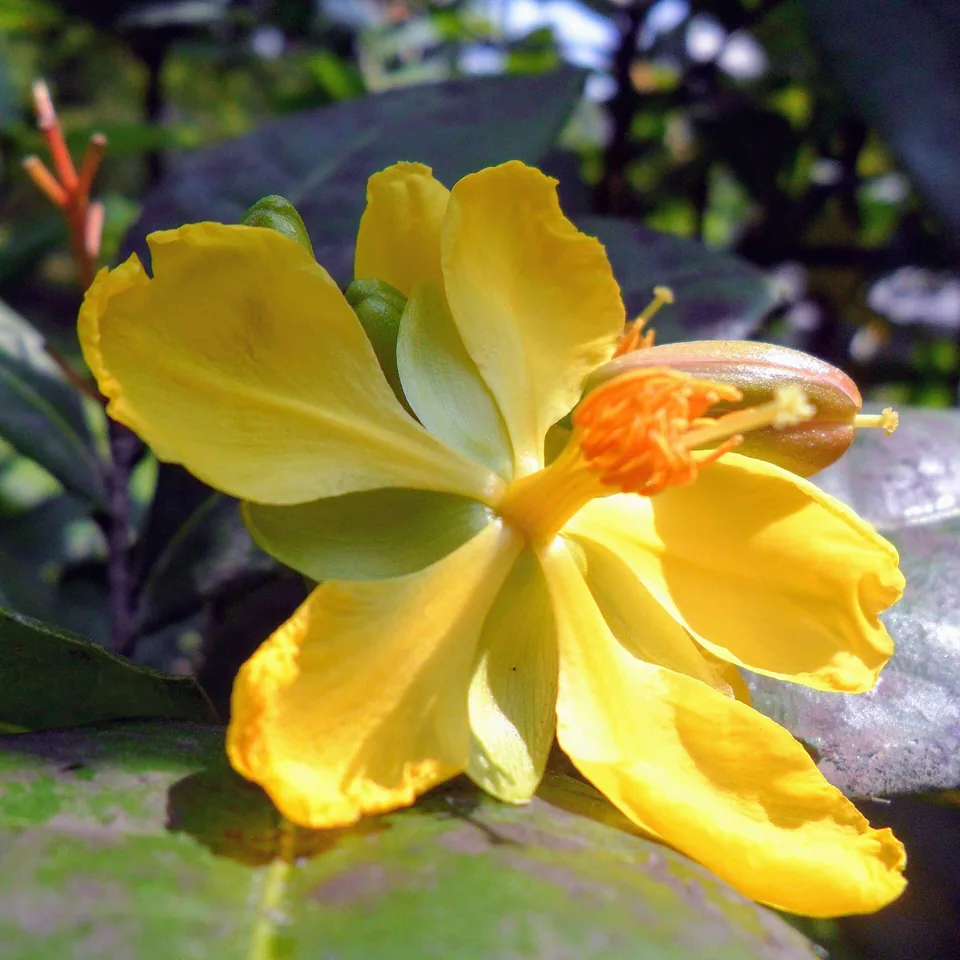
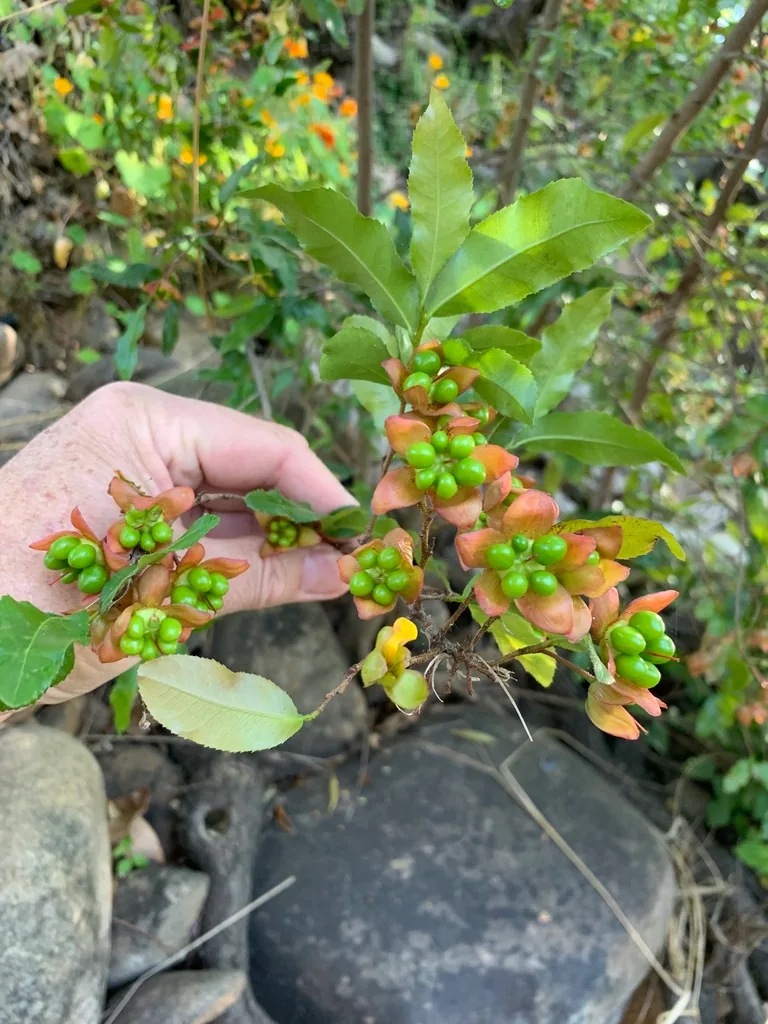

How to Grow and Care for Mickey Mouse plant
Ochna serrulata
Written by Emilio Marruso · last checked
Toxic to: Animals, People · Why
At a glance
This plant is easy to please: it grows in full sun or partial shade, and in containers too. Water when the top inch of soil feels dry, give it plenty of compost with a mulch, and once established it handles some drought. Plant it in spring, prune it after fruiting, and enjoy a plant that asks for very little.
- Sun
Full sun to partial shade
What the sources say (2)
Light: Full sun to partial shade
Choose a location with full sun to partial shade.
— How to Grow and Care for Mickey Mouse Plants | Gardener’s Path [1] Mickey Mouse plant tolerates either full sunlight or partial shade .
— Mickey Mouse Plant Care - How To Grow Mickey Mouse Plants | Gardening Know How [2] - Water
Water when the top inch of soil is dry; moist, never soggy, and more in long dry spells
What the sources say (2)
Watering: Water when the top inch of soil feels dry, keeping the soil moist but not waterlogged
Water Mickey Mouse plants when the top inch of soil feels dry, ensuring the soil remains moist but not waterlogged.
— How to Grow and Care for Mickey Mouse Plants | Gardener’s Path [1] Watering notes: Moderately drought tolerant once established, but benefits from regular watering during prolonged dry periods
Once established, O. serrulata exhibits moderate drought tolerance but benefits from regular watering during prolonged dry periods.
— How to Grow and Care for Mickey Mouse Plants | Gardener’s Path [1] - Cold
Survives winters down to 20 °F (−6.7 °C)
Hardy in average winters · USDA 9 · RHS H4 · Z9
What the sources say (2)
Hardiness, coldest zone: 9 [winter low −6.7 to −1.1 °C (20 to 30 °F)]
Hardiness (USDA Zone): 9-11
— How to Grow and Care for Mickey Mouse Plants | Gardener’s Path [1] Hardiness, warmest zone: 11 [winter low 4.4 to 10 °C (40 to 50 °F)]
Hardiness (USDA Zone): 9-11
— How to Grow and Care for Mickey Mouse Plants | Gardener’s Path [1] - Soil
Slightly acidic soil, pH 5.5–6.5
What the sources say (2)
Soil pH, minimum: 5.5
A slightly acidic to neutral pH between 5.5 and 6.5 is ideal.
— How to Grow and Care for Mickey Mouse Plants | Gardener’s Path [1] Soil pH, maximum: 6.5
A slightly acidic to neutral pH between 5.5 and 6.5 is ideal.
— How to Grow and Care for Mickey Mouse Plants | Gardener’s Path [1] - Spacing
3–4 ft between plants
What the sources say (1)
Spacing: 91.4-121.9 cm (3-4 ft)
make attractive informal hedges when multiple are planted together, spaced three to four feet apart.
— How to Grow and Care for Mickey Mouse Plants | Gardener’s Path [1] - Planting
Plant in spring; in warm, frost-free climates, from late winter to early spring
What the sources say (2)
Planting: Spring
warm, frost-free regions: In warm, frost-free regions, late winter to early spring is ideal.
— How to Grow and Care for Mickey Mouse Plants | Gardener’s Path [1] you can transplant it to the landscape in spring. In warm, frost-free regions, late winter to early spring is ideal.
— How to Grow and Care for Mickey Mouse Plants | Gardener’s Path [1] - Feeding
Plenty of compost, with a mulch on top
What the sources say (1)
Natural fertilizers: Plenty of compost, with a mulch
This beautiful shrub does best when given good garden soil with plenty of compost and mulch and watered regularly, but it can tolerate occasional periods of drought.
— [7] - Pruning
Prune after fruiting
What the sources say (2)
Pruning: After fruiting
Prune after fruiting to shape the specimen into a compact, multi-branching shrub or single-trunked small tree.
— How to Grow and Care for Mickey Mouse Plants | Gardener’s Path [1] An occasional pruning after fruiting keeps Mickey Mouse plant neat and shapely.
— Mickey Mouse Plant Care - How To Grow Mickey Mouse Plants | Gardening Know How [2] - Pests
Scale, mealybugs and thrips yellow the leaves; treat them with neem oil
- Propagation
From seeds or semi-ripe stem cuttings
What the sources say (2)
- Containers
Grows in containers too
What the sources say (1)
In containers: Yes
The plant does well in rock gardens and is easily grown in containers.
— Mickey Mouse Plant Care - How To Grow Mickey Mouse Plants | Gardening Know How [2] - Safety
Toxic to people and pets if eaten
Overview
Mickey Mouse plant is a semi-evergreen shrub native to South Africa, grown as an ornamental specimen or informal hedge. [1] It has become invasive in parts of Australia, New Zealand and Hawai'i, and is listed in the New Zealand National Pest Plant Accord. [1][3] It is reported to be toxic to people and pets if ingested. [1]
Mickey Mouse plant care
How to water Mickey Mouse plant
Watering
Water when the top inch of soil feels dry, keeping the soil moist but not waterlogged
What the sources say (1)
Water Mickey Mouse plants when the top inch of soil feels dry, ensuring the soil remains moist but not waterlogged.Watering notes
Moderately drought tolerant once established, but benefits from regular watering during prolonged dry periods
What the sources say (1)
Once established, O. serrulata exhibits moderate drought tolerance but benefits from regular watering during prolonged dry periods.How much light Mickey Mouse plant needs
Full sun to partial shade
How much cold Mickey Mouse plant can take
Hardiness, coldest zone
9 [winter low −6.7 to −1.1 °C (20 to 30 °F)]
What the sources say (1)
Hardiness (USDA Zone): 9-11Hardiness, warmest zone
11 [winter low 4.4 to 10 °C (40 to 50 °F)]
What the sources say (1)
Hardiness (USDA Zone): 9-11Best soil for Mickey Mouse plant
Soil pH, minimum
5.5
What the sources say (1)
A slightly acidic to neutral pH between 5.5 and 6.5 is ideal.Soil pH, maximum
6.5
What the sources say (1)
A slightly acidic to neutral pH between 5.5 and 6.5 is ideal.Where to grow Mickey Mouse plant
In containers
Yes
What the sources say (1)
The plant does well in rock gardens and is easily grown in containers.Spacing
91.4-121.9 cm (3-4 ft)
What the sources say (1)
make attractive informal hedges when multiple are planted together, spaced three to four feet apart.How to propagate Mickey Mouse plant
How to grow Mickey Mouse plant
Fertilizing
Natural fertilizers
Plenty of compost, with a mulch
What the sources say (1)
This beautiful shrub does best when given good garden soil with plenty of compost and mulch and watered regularly, but it can tolerate occasional periods of drought.Mickey Mouse plant pests and problems
Scale, mealybugs and thrips
Symptom: Yellowing leaves, stunted growth and overall decline
What to do: Keep the soil consistently moist but not soggy and treat outbreaks with organic neem oil
What the sources say (3)
Scale , mealybugs , and thrips are sapsucking insects that favor hot, dry conditions.
— How to Grow and Care for Mickey Mouse Plants | Gardener’s Path [1] These insects feed on plant juices and can cause yellowing leaves, stunted growth, and overall decline.
— How to Grow and Care for Mickey Mouse Plants | Gardener’s Path [1] Keep the soil consistently moist but not soggy to help discourage infestations, and treat outbreaks with organic neem oil.
— How to Grow and Care for Mickey Mouse Plants | Gardener’s Path [1]
Remedies
Each remedy shows what official sources say about it; traditional remedies without an official source are marked as such. Harmful ones are listed so you know to avoid them.
First aid
First aid: not a substitute for a doctor
swallowing part of the plant
remove plant pieces from the mouth, sips of water or milk Official source, not independently tested
Give them a few sips of water or milk. - Call the poison center at 1-800-222-1222.
— nnepc.org [8] How: Take all pieces of the plant out of the person’s mouth and give a few sips of water or milk.
Take all pieces of the plant out of the person’s mouth. - Give them a few sips of water or milk.
— nnepc.org [8]
Treating the plant
scale, mealybugs and thrips
neem oil Partly works
Despite these being biological pesticides, it is important to read the directions on the label and wear safety equipment.
— extension.illinois.edu [10] How: Treat outbreaks with organic neem oil.
Keep the soil consistently moist but not soggy to help discourage infestations, and treat outbreaks with organic neem oil.
— How to Grow and Care for Mickey Mouse Plants | Gardener’s Path [1] What the evidence says However, neem oil is not effective against every insect and disease, and often must be frequently reapplied to reach the desired outcome.
— extension.unh.edu [9]
Getting rid of it
invasive shrub
digging out small plants Partly works
Do not try to pull out plants as they will break off where the root kinks and the plant will regrow.
— weeds.dpi.nsw.gov.au [11] How: Dig out small plants and seedlings under 20 cm tall, removing as much of the roots as possible.
Dig out small plants and seedlings (under 20 cm tall) if the soil is sandy or soft enough. Remove as much of the roots as possible.
— weeds.dpi.nsw.gov.au [11] What the evidence says Dig out small plants and seedlings (under 20 cm tall) if the soil is sandy or soft enough. Remove as much of the roots as possible.
— weeds.dpi.nsw.gov.au [11]
Is Mickey Mouse plant toxic to pets?
Reported by the source, quoted verbatim. This is not medical or veterinary advice: if a person or an animal may have eaten this plant, contact a poison control centre or a veterinarian.
Calendar
Planting
Spring
What each source says
warm, frost-free regions: Late winter to early spring
What the sources say (2)
warm, frost-free regions: In warm, frost-free regions, late winter to early spring is ideal.you can transplant it to the landscape in spring. In warm, frost-free regions, late winter to early spring is ideal.Pruning
After fruiting
What the sources say (2)
Prune after fruiting to shape the specimen into a compact, multi-branching shrub or single-trunked small tree.An occasional pruning after fruiting keeps Mickey Mouse plant neat and shapely.Months as given by the sources, which are mostly from the United States (northern hemisphere). In the southern hemisphere they shift by about six months.
Indicative values
Values from a secondary source, not checked word for word like the rest of this page. Use them as a starting point.
- Life cycle
- PerennialIndicative value, adapt it to your climate · Secondary source
- Mature height
- 121.9-243.8 cm (4-8 ft)Indicative value, adapt it to your climate · Secondary source
- Drought tolerant
- yesIndicative value, adapt it to your climate · Secondary source
- Growth rate
- HighIndicative value, adapt it to your climate · Secondary source
Similar plants
- Abies grandis Abies grandis
- Abraham Trachystemon orientalis
- Abyssinian banana Ensete ventricosum
- Acacia longifolia Acacia longifolia
- Acanthus hungaricus Acanthus hungaricus
- Achlys triphylla Achlys triphylla
- Aconite Aconitum napellus
- Adam's Needle Yucca flaccida
Sources
Every value above is quoted from these documents. Links lead to the original publisher.
- How to Grow and Care for Mickey Mouse Plants | Gardener’s Path · gardenerspath.com, consulted
- Mickey Mouse Plant Care - How To Grow Mickey Mouse Plants | Gardening Know How · gardeningknowhow.com, consulted
- Ochna serrulata • New Zealand Plant Conservation Network · nzpcn.org.nz, consulted
- Mickey Mouse Plant/Ochna | Weeds · weedsbluemountains.org.au, consulted
- Ochna serrulata - Botany Brisbane · botanybrisbane.com, consulted
- Bird's Eye Bush, Mickey Mouse Plant (Ochna serrulata) · desert-tropicals.com, consulted
- pza.sanbi.org · pza.sanbi.org
- nnepc.org · nnepc.org
- extension.unh.edu · extension.unh.edu
- extension.illinois.edu · extension.illinois.edu
- weeds.dpi.nsw.gov.au · weeds.dpi.nsw.gov.au
Written by Emilio Marruso · last checked