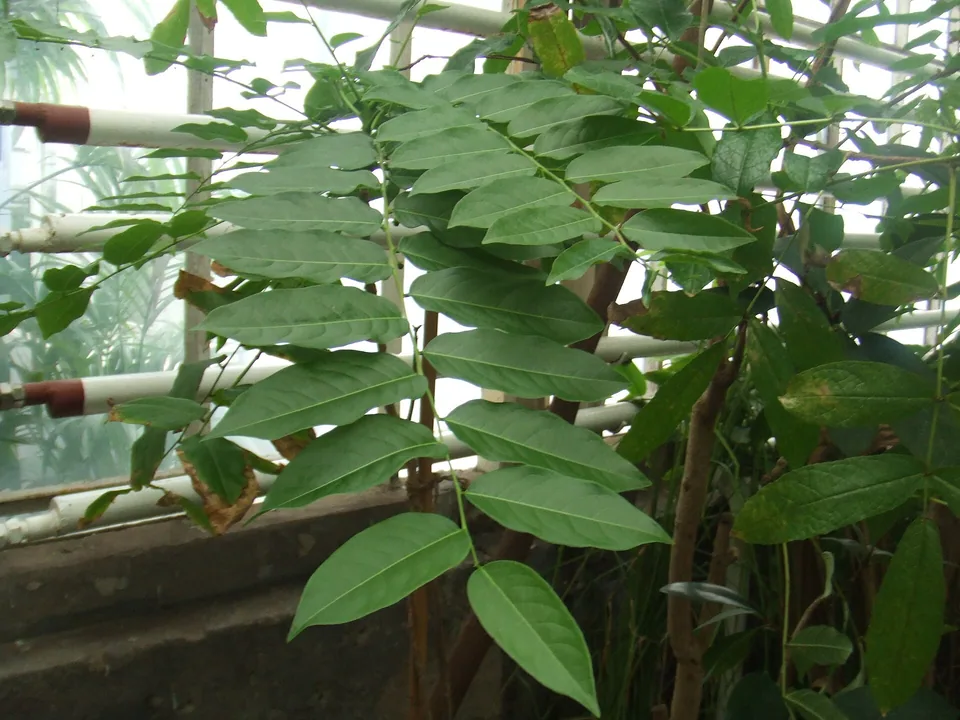
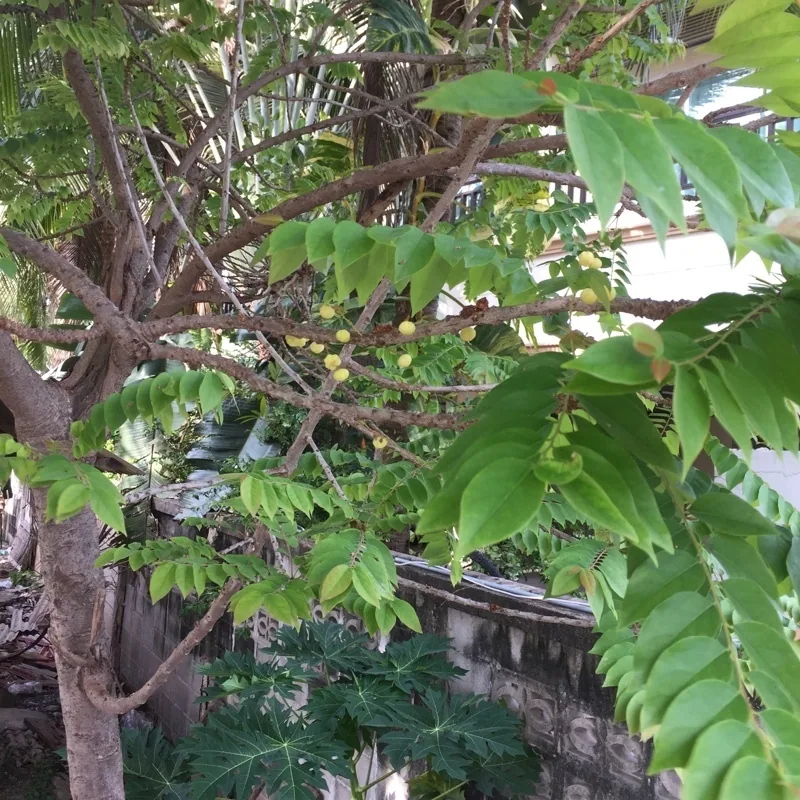

Cómo cultivar y cuidar Grosella estrellada
Phyllanthus acidus
Escrito por Emilio Marruso · última revisión
Tóxica para: Personas · Por qué
De un vistazo
La grosella de Otaheite adora el sol pleno y un sitio húmedo, pero una vez asentada aguanta bien la sequía. Su fruto ácido se come crudo si te gusta su toque astringente, o se convierte en mermeladas, dulces, encurtidos y chutneys, y sus hojas tiernas se cocinan como verdura. Dale mucho espacio: 8 m entre plantas.
- Sol
Sol pleno
Qué dicen las fuentes (1)
Luz: Pleno sol
Light requirement Full sun 2 Soil tolerances Tolerates a variety of soils including very sandy soils
— Otaheite Gooseberry, Phyllanthus acidus [1] - Riego
Le gusta la tierra húmeda; una vez asentada aguanta la sequía
Qué dicen las fuentes (1)
Riego: Prefiere un sitio húmedo; las plantas establecidas toleran la sequía.
Prefers growing in a moist site, though established plants are drought tolerant
— Otaheite Gooseberry, Phyllanthus acidus [1] - Frío
Aguanta inviernos de hasta −1,1 °C (30 °F)
Semirrústica: inviernos suaves o invernadero sin calefacción · USDA 10 · RHS H3 · Z10
Qué dicen las fuentes (2)
Rusticidad, zona más fría: 10 [mínima invernal de −1,1 a 4,4 °C (de 30 a 40 °F)]
Origin Brazil, Colombia 7 USDA hardiness zones 10-12 2 Uses Fruit; ornamental; medicinal properties
— Otaheite Gooseberry, Phyllanthus acidus [1] Rusticidad, zona más cálida: 12 [mínima invernal de 10 a 15,6 °C (de 50 a 60 °F)]
Origin Brazil, Colombia 7 USDA hardiness zones 10-12 2 Uses Fruit; ornamental; medicinal properties
— Otaheite Gooseberry, Phyllanthus acidus [1] - Distancia
8 m entre plantas
Qué dicen las fuentes (2)
- Cosecha
Fruto ácido crudo o en mermeladas y chutneys; hojas tiernas cocinadas como verdura
- Multiplicación
Por semilla, injerto de yema, esquejes verdes o acodo aéreo
Qué dicen las fuentes (2)
Propagación: Semilla; injerto; esquejes de madera verde; acodos aéreos
The tree is generally grown from seed but may also be multiplied by budding, greenwood cuttings, or air-layers.
— Otaheite Gooseberry, Fruits of Warm Climates [3] The tree is generally grown from seed but may also be multiplied by budding, greenwood cuttings, or air-layers.
— Otaheite Gooseberry, Phyllanthus acidus [1] - Seguridad
El jugo de la corteza de la raíz es ligeramente tóxico
Resumen
El grosellero de Otaheite es un pequeño árbol caducifolio que se cultiva en los trópicos por su fruta muy ácida. [2][1] Crece a pleno sol, prefiere un sitio húmedo pero tolera la sequía una vez establecido, y se propaga principalmente por semilla. [1][3]
Citado en inglés, como en la fuente.
Esta ficha está incompleta: las fuentes consultadas aún no cubren todos los campos.
Aún no cubierto por nuestras fuentes: Plantación, Cosecha
Cuidados
Riego
Prefiere un sitio húmedo; las plantas establecidas toleran la sequía.
Qué dicen las fuentes (1)
Prefers growing in a moist site, though established plants are drought tolerantLuz
Pleno sol
Qué dicen las fuentes (1)
Light requirement
Full sun 2
Soil tolerances
Tolerates a variety of soils including very sandy soilsClima y frío
Rusticidad, zona más fría
10 [mínima invernal de −1,1 a 4,4 °C (de 30 a 40 °F)]
Qué dicen las fuentes (1)
Origin
Brazil, Colombia 7
USDA hardiness zones
10-12 2
Uses
Fruit; ornamental; medicinal propertiesRusticidad, zona más cálida
12 [mínima invernal de 10 a 15,6 °C (de 50 a 60 °F)]
Qué dicen las fuentes (1)
Origin
Brazil, Colombia 7
USDA hardiness zones
10-12 2
Uses
Fruit; ornamental; medicinal propertiesDónde cultivarla
800 x 800 cm (26.3 x 26.3 pies)
Lo que dice cada fuente
Indonesia: 800 x 800 cm (26.3 x 26.3 pies)
Propagación
Semilla; injerto; esquejes de madera verde; acodos aéreos
Qué dicen las fuentes (2)
The tree is
generally grown from seed but may also be multiplied by budding,
greenwood cuttings, or air-layers.The tree is generally grown from seed but may also be multiplied by
budding, greenwood cuttings, or air-layers.Remedios
Cada remedio indica qué dicen las fuentes oficiales; los remedios tradicionales sin fuente oficial aparecen marcados. Los perjudiciales están para que sepas evitarlos.
Cuidar la planta
orugas
recolección manual de orugas y poda de puntas infectadas Funciona en parte
Cómo: Recoge las orugas a mano o poda las puntas de las ramas muy infestadas antes de que las orugas se dispersen por el arbusto.
Hand picking the caterpillars or pruning away the tips of heavily infested branches before the caterpillars disperse throughout the shrub can immediately reduce caterpillar numbers and may effectively control the infestation.
— edis.ifas.ufl.edu [9] Qué dicen las pruebas Hand picking the caterpillars or pruning away the tips of heavily infested branches before the caterpillars disperse throughout the shrub can immediately reduce caterpillar numbers and may effectively control the infestation.
— edis.ifas.ufl.edu [9] bacillus thuringiensis Funciona
Be sure to apply products following label directions and choose products that will suppress your target pest without affecting nearby beneficial organisms.
— edis.ifas.ufl.edu [9] Cómo: Una bacteria que ocurre naturalmente y se vende como insecticida, utilizada contra la oruga.
Bacillus thuringiensis , a naturally occurring bacteria commonly sold as an insecticide will effectively control this caterpillar pest.
— edis.ifas.ufl.edu [9] Qué dicen las pruebas Bacillus thuringiensis , a naturally occurring bacteria commonly sold as an insecticide will effectively control this caterpillar pest.
— edis.ifas.ufl.edu [9]
Toxicidad
Según la fuente, citada textualmente. No es un consejo médico ni veterinario: si una persona o un animal pudo haber ingerido esta planta, contacta con un centro de toxicología o con un veterinario.
Known hazard Juice of the root bark is weakly poisonous
[1]- Partes venenosas
Known hazard Juice of the root bark is weakly poisonous
[1]- Principio tóxico
The juice of the root bark, which contains saponin, gallic acid, tannin and a crystalline substance which may be lupeol, has been employed in criminal poisoning.
[3]- Síntomas
The root is drastically purgative and regarded as toxic in Malaya
[3]
Calendario
Plantación
No figura en las fuentes consultadas.
Cosecha
Las fuentes dan valores distintos según la región, la zona o las condiciones de cultivo.
Lo que dice cada fuente
Filipinas: De abril a junio
Caribe: Enero-mayo
Sur de la India: Abril y mayo, y agosto y septiembre
Qué dicen las fuentes (3)
Filipinas: The
peak fruiting season in the Philippines is in April to June.Caribe: Flowering and fruiting is mostly in
January-May in the CaribbeanSur de la India: The tree often bears
two crops a year in South India, the first in April and May, and the
second in August and September.Meses tal como los dan las fuentes, en su mayoría de Estados Unidos (hemisferio norte). En el hemisferio sur se desplazan unos seis meses.
Comestibilidad
Según la fuente, citada textualmente. No comas una planta basándote solo en esta página: los errores de identificación pueden ser peligrosos.
Valores orientativos
Valores de una fuente secundaria, no comprobados palabra por palabra como el resto de esta página. Úselos como punto de partida.
- Ciclo de vida
- PerenneValor orientativo, adáptalo a tu clima · Fuente secundaria
- Altura adulta
- 609.6-914.4 cm (20-30 pies)Valor orientativo, adáptalo a tu clima · Fuente secundaria
- pH del suelo
- 5.5-6.5Valor orientativo, adáptalo a tu clima · Fuente secundaria
- Nivel de cuidado
- MedioValor orientativo, adáptalo a tu clima · Fuente secundaria
- Crecimiento
- BajoValor orientativo, adáptalo a tu clima · Fuente secundaria
- Poda
- Marzo, abril, marzo, abril, mayo, junio, julio, agosto, septiembreValor orientativo, adáptalo a tu clima · Fuente secundaria
Plantas similares
- Phyllanthus fluitans Phyllanthus fluitans
- Chamberbitter Phyllanthus urinaria
- Longstalked Phyllanthus Phyllanthus tenellus
- Abeto de Vancuver Abies grandis
- Abraham Trachystemon orientalis
- Bananero de Etiopía Ensete ventricosum
- Acacia longifolia Acacia longifolia
- Acanthus hungaricus Acanthus hungaricus
Fuentes
Cada valor anterior se cita de estos documentos. Los enlaces llevan al editor original.
- Otaheite Gooseberry, Phyllanthus acidus · growables.org, consultado
- Phyllanthus acidus, Agroforestree Database · growables.org, consultado
- Otaheite Gooseberry, Fruits of Warm Climates · growables.org, consultado
- Phyllanthus acidus, PROSEA Foundation · growables.org, consultado
- Phyllanthus acidus · apps.worldagroforestry.org, consultado
- Phyllanthus acidus - Grosella, Otaheite Gooseberry | ECHOcommunity.org · echocommunity.org, consultado
- Phyllanthus acidus - Leon Levy Native Plant Preserve · levypreserve.org, consultado
- Digital Garden :: UoK · keralauniversity.ac.in, consultado
- edis.ifas.ufl.edu · edis.ifas.ufl.edu
Escrito por Emilio Marruso · última revisión