
Cómo cultivar y cuidar Pino silvestre
Pinus sylvestris
Escrito por Emilio Marruso · última revisión
De un vistazo
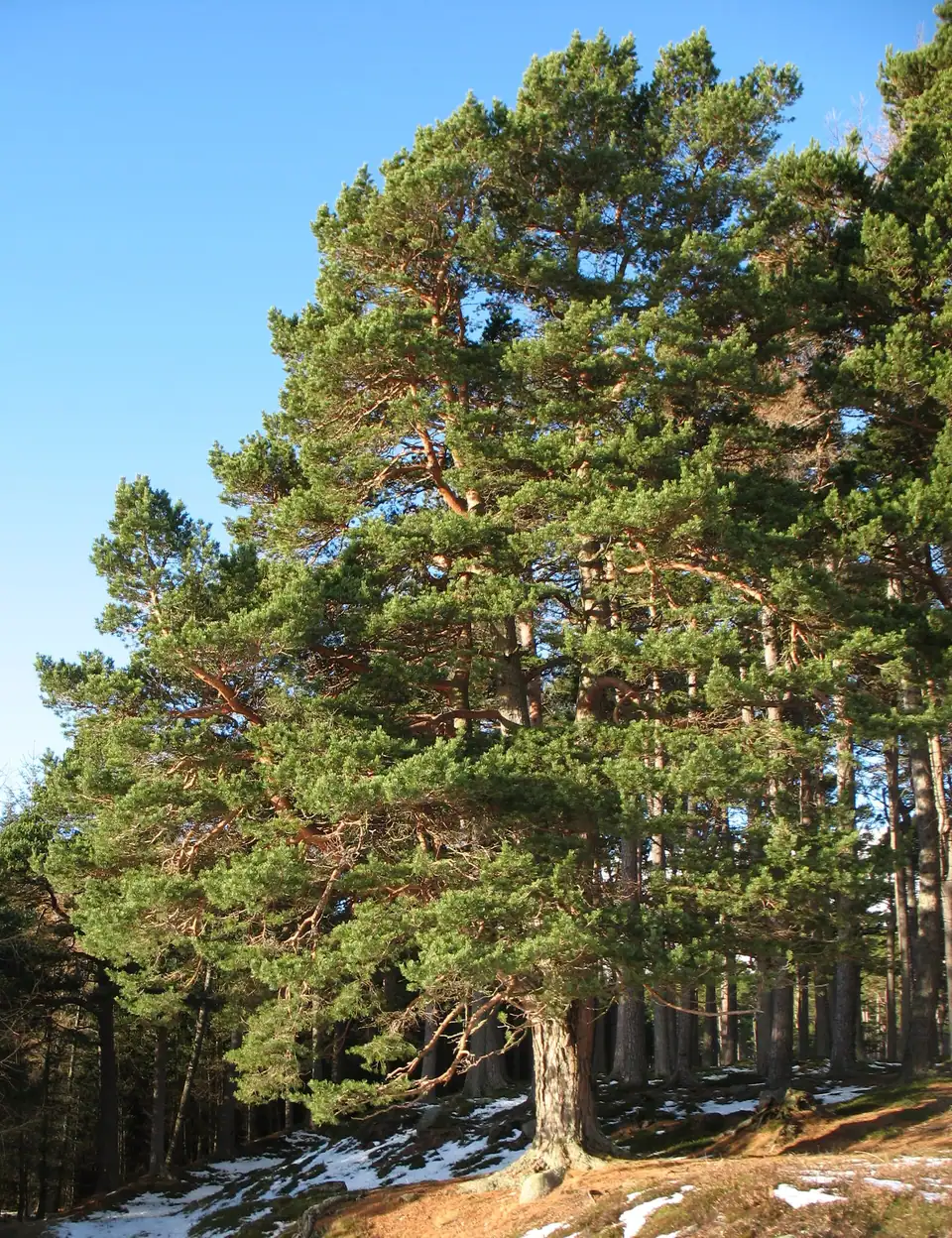
El pino silvestre es un árbol resistente para rincones soleados: dale sol pleno y un suelo de humedad media a algo seco, y aguantará sin problema los terrenos secos. Alcanza 9–18 m de altura y se multiplica por semilla. No te pases con el riego y busca un suelo con pH 6 o menos, porque el exceso de agua o un suelo muy alcalino amarillea las agujas.
- Sol
Sol pleno
Qué dicen las fuentes (2)
Luz: Pleno sol
The best growing conditions include full sun and well-drained, acidic soil. It will tolerate a variety of soil types including poor soils and dry sites.
— Pinus sylvestris (Archangel Redwood, Baltic Redwood, Norway Fir, Scotch Fir, Scotch Pine, Scots Pine) | North Carolina Extension Gardener Plant Toolbox [1] Zone: 3 to 7 (may languish in the higher temperature regions of zone 7) Light: Full sun
— Scotch Pine, Pinus sylvestris | VCE Publications | Virginia Tech [3] - Riego
Suelo de humedad media a algo seco; aguanta la sequía y el exceso de agua amarillea las agujas
Qué dicen las fuentes (3)
Riego: Humedad del suelo promedio a algo seca; tolera sitios secos
Moisture: Average to somewhat dry Soil type: Average to less than ideal pH range: Acid
— Scotch Pine, Pinus sylvestris | VCE Publications | Virginia Tech [3] Full sun; prefers well-drained soils and can tolerate dry sites; acid soil.
— Scots Pine (Pinus sylvestris)-Hort Answers - University of Illinois Extension [2] Notas sobre el riego: El riego excesivo puede causar clorosis (amarillamiento de las agujas)
Fairly disease- and insect-free, though it shows some chlorosis (needle yellowing) when planted on our highest pH (most alkaline) soils and when overwatered.
— Pine, Scotch or Scots | TreeBrowser | USU [5] - Frío
Aguanta inviernos de hasta −45,6 °C (−50 °F)
Muy rústica · USDA 2a · RHS H7 · Z2
Qué dicen las fuentes (2)
Rusticidad, zona más fría: 2a [mínima invernal de −45,6 a −42,8 °C (de −50 a −45 °F)]
2a, 2b, 3a, 3b, 4a, 4b, 5a, 5b, 6a, 6b, 7a, 7b
— Pinus sylvestris (Archangel Redwood, Baltic Redwood, Norway Fir, Scotch Fir, Scotch Pine, Scots Pine) | North Carolina Extension Gardener Plant Toolbox [1] Rusticidad, zona más cálida: 7b [mínima invernal de −15 a −12,2 °C (de 5 a 10 °F)]
2a, 2b, 3a, 3b, 4a, 4b, 5a, 5b, 6a, 6b, 7a, 7b
— Pinus sylvestris (Archangel Redwood, Baltic Redwood, Norway Fir, Scotch Fir, Scotch Pine, Scots Pine) | North Carolina Extension Gardener Plant Toolbox [1] - Suelo
Suelo con pH 6 o menos; en suelos muy alcalinos las agujas amarillean
Qué dicen las fuentes (2)
pH del suelo, máximo: 6.0
Soil pH: Acid (<6.0) Soil Drainage: Good Drainage
— Pinus sylvestris (Archangel Redwood, Baltic Redwood, Norway Fir, Scotch Fir, Scotch Pine, Scots Pine) | North Carolina Extension Gardener Plant Toolbox [1] Signos de carencia: Amarillamiento de las agujas (clorosis) en los suelos más alcalinos, de pH alto
Fairly disease- and insect-free, though it shows some chlorosis (needle yellowing) when planted on our highest pH (most alkaline) soils and when overwatered.
— Pine, Scotch or Scots | TreeBrowser | USU [5] - Plagas
Moscas de sierra, polillas del pino, cochinillas y arañas rojas; seca de los brotes y banda roja
Qué dicen las fuentes (6)
Plagas: nematodo del marchitamiento del pino, mosca sierra, polillas, cochinillas, mosca sierra europea del pino, polilla europea del brote del pino, polilla de la punta del pino de Nantucket, polilla del pino de Zimmerman, chinche de la semilla del pino, arañitas rojas de coníferas, adelgido de la corteza del pino
Possible insect pests include pine wilt nematode, sawflies, moths, and scale.
— Pinus sylvestris (Archangel Redwood, Baltic Redwood, Norway Fir, Scotch Fir, Scotch Pine, Scots Pine) | North Carolina Extension Gardener Plant Toolbox [1] Insect Damage - European Pine Sawfly ( Neodiprion sertifer ) - European Pine Shoot Moth ( Rhyacionia buoliani ) - European Pine Shoot Moth & Nantucket Pine Tip Moth - Nantucket Pine Tip Moth ( Rhyacionia frustrana )
— Scots Pine (Pinus sylvestris)-Hort Answers - University of Illinois Extension [2] Insects that Can Affect Scotch Pine - Zimmerman Pine Moth - Pine Seed Bug - Conifer Spider Mites - Pine Bark Adelgid - European Pine Sawfly
— Scotch Pine | Natural Resources [4] Enfermedades: tizón de la punta por Diplodia (Sphaeropsis), mancha marrón, cancro, fumagina, tizón de las agujas por Dothistroma, pérdida estacional de agujas, marchitamiento del pino
The Scots pine is susceptible to Sphaeropsis (Diplodia) tip blight.
— Pinus sylvestris (Archangel Redwood, Baltic Redwood, Norway Fir, Scotch Fir, Scotch Pine, Scots Pine) | North Carolina Extension Gardener Plant Toolbox [1] Fungal Disease - Brown Spot ( Mycosphaerella dearnessii (Scirrhia acicola) ) - Cankers on Pine ( Botryosphaeria spp. and other canker fungi ) - Diplodia Tip Blight & Canker ( Diplodia pinea (Sphaeropsis sapinea) )
— Scots Pine (Pinus sylvestris)-Hort Answers - University of Illinois Extension [2] Diseases that Can Affect Scotch Pine - Seasonal Needle Loss - Diplodia Tip Blight and Canker - Dothistroma Needle Blight - Pine Wilt - Sooty Mold
— Scotch Pine | Natural Resources [4] - Atención
El nematodo del pino puede ser grave: ya no se recomienda para plantar a largo plazo
- Tamaño
De 9 a 18 m de alto
Qué dicen las fuentes (3)
Altura adulta: 914-1829 cm (30-60 pies)
The Scots pine is a fast-growing, medium-sized evergreen conifer that usually grows to 30 to 60 feet in height and 30 to 40 feet in width.
— Pinus sylvestris (Archangel Redwood, Baltic Redwood, Norway Fir, Scotch Fir, Scotch Pine, Scots Pine) | North Carolina Extension Gardener Plant Toolbox [1] Mature Height 30-60 Feet Size Medium Large Mature Form Pyramidal when young
— Scots Pine (Pinus sylvestris)-Hort Answers - University of Illinois Extension [2] Height: 30-60 feet Width: 20-40 feet Site Requirements: Sandy and well-drained soils.
— Scotch Pine | Natural Resources [4] - Multiplicación
Se multiplica por semilla
Qué dicen las fuentes (1)
Propagación: Semilla
Recommended Propagation Strategy: Seed Country Or Region Of Origin: Northern Europe and Northern Asia
— Pinus sylvestris (Archangel Redwood, Baltic Redwood, Norway Fir, Scotch Fir, Scotch Pine, Scots Pine) | North Carolina Extension Gardener Plant Toolbox [1]
Resumen
El pino silvestre es una conífera perenne de tamaño mediano y crecimiento rápido, nativa del norte de Europa y Asia. [1] Crece mejor a pleno sol y en suelo ácido y bien drenado, y tolera suelos pobres y sitios secos. [1] Es susceptible al tizón de las puntas por Sphaeropsis (Diplodia) y al nematodo del marchitamiento del pino. [1][2]
Citado en inglés, como en la fuente.
Esta ficha está incompleta: las fuentes consultadas aún no cubren todos los campos.
Aún no cubierto por nuestras fuentes: Poda
Cuidados
Riego
Riego
Humedad del suelo promedio a algo seca; tolera sitios secos
Qué dicen las fuentes (2)
Moisture: Average to somewhat dry Soil type: Average to less than ideal pH range: AcidFull sun; prefers well-drained soils and can tolerate dry sites; acid soil.Notas sobre el riego
El riego excesivo puede causar clorosis (amarillamiento de las agujas)
Qué dicen las fuentes (1)
Fairly disease- and insect-free, though it shows some chlorosis (needle yellowing) when planted on our highest pH (most alkaline) soils and when overwatered.Luz
Pleno sol
Qué dicen las fuentes (2)
The best growing conditions include full sun and well-drained, acidic soil. It will tolerate a variety of soil types including poor soils and dry sites.Zone: 3 to 7 (may languish in the higher temperature regions of zone 7)
Light: Full sunClima y frío
Rusticidad, zona más fría
2a [mínima invernal de −45,6 a −42,8 °C (de −50 a −45 °F)]
Qué dicen las fuentes (1)
2a, 2b, 3a, 3b, 4a, 4b, 5a, 5b, 6a, 6b, 7a, 7bRusticidad, zona más cálida
7b [mínima invernal de −15 a −12,2 °C (de 5 a 10 °F)]
Qué dicen las fuentes (1)
2a, 2b, 3a, 3b, 4a, 4b, 5a, 5b, 6a, 6b, 7a, 7bSuelo
6.0
Qué dicen las fuentes (1)
Soil pH:
Acid (<6.0)
Soil Drainage:
Good DrainagePropagación
Semilla
Qué dicen las fuentes (1)
Recommended Propagation Strategy:
Seed
Country Or Region Of Origin:
Northern Europe and Northern AsiaCultivo
La planta
Ciclo de vida
leñoso
Qué dicen las fuentes (1)
Family:
Pinaceae
Uses (Ethnobotany):
This plant is cultivated for windbreaks and commercially grown for Christmas trees. It is an important timber tree in Europe.
Life Cycle:
WoodyFamilia
Pinaceae
Qué dicen las fuentes (1)
It is in the pine family (Pinaceae) and is native to northern Europe and Asia.Altura adulta
914-1829 cm (30-60 pies)
Qué dicen las fuentes (3)
The Scots pine is a fast-growing, medium-sized evergreen conifer that usually grows to 30 to 60 feet in height and 30 to 40 feet in width.Mature Height
30-60 Feet
Size
Medium
Large
Mature Form
Pyramidal when youngHeight: 30-60 feet
Width: 20-40 feet
Site Requirements: Sandy and well-drained soils.Anchura adulta
Las fuentes no coinciden:
The Scots pine is a fast-growing, medium-sized evergreen conifer that usually grows to 30 to 60 feet in height and 30 to 40 feet in width.
[1]Height: 30-60 feet Width: 20-40 feet Site Requirements: Sandy and well-drained soils.
[4]Height: About 50 feet Spread: About 20 to 30 feet Shape: Conical in youth; irregular at maturity
[3]
Plagas y enfermedades
Plagas
nematodo del marchitamiento del pino, mosca sierra, polillas, cochinillas, mosca sierra europea del pino, polilla europea del brote del pino, polilla de la punta del pino de Nantucket, polilla del pino de Zimmerman, chinche de la semilla del pino, arañitas rojas de coníferas, adelgido de la corteza del pino
Qué dicen las fuentes (3)
Possible insect pests include pine wilt nematode, sawflies, moths, and scale.Insect Damage
- European Pine Sawfly ( Neodiprion sertifer )
- European Pine Shoot Moth ( Rhyacionia buoliani )
- European Pine Shoot Moth & Nantucket Pine Tip Moth
- Nantucket Pine Tip Moth ( Rhyacionia frustrana )Insects that Can Affect Scotch Pine
- Zimmerman Pine Moth
- Pine Seed Bug
- Conifer Spider Mites
- Pine Bark Adelgid
- European Pine SawflyEnfermedades
tizón de la punta por Diplodia (Sphaeropsis), mancha marrón, cancro, fumagina, tizón de las agujas por Dothistroma, pérdida estacional de agujas, marchitamiento del pino
Qué dicen las fuentes (3)
The Scots pine is susceptible to Sphaeropsis (Diplodia) tip blight.Fungal Disease
- Brown Spot ( Mycosphaerella dearnessii (Scirrhia acicola) )
- Cankers on Pine ( Botryosphaeria spp. and other canker fungi )
- Diplodia Tip Blight & Canker ( Diplodia pinea (Sphaeropsis sapinea) )Diseases that Can Affect Scotch Pine
- Seasonal Needle Loss
- Diplodia Tip Blight and Canker
- Dothistroma Needle Blight
- Pine Wilt
- Sooty MoldAbonado
Signos de carencia
Amarillamiento de las agujas (clorosis) en los suelos más alcalinos, de pH alto
Qué dicen las fuentes (1)
Fairly disease- and insect-free, though it shows some chlorosis (needle yellowing) when planted on our highest pH (most alkaline) soils and when overwatered.Problemas
Tizón de las puntas por Diplodia (Sphaeropsis)
Síntoma: Susceptibilidad al tizón de las puntas; puede ser bastante grave en esta especie.
Qué hacer: No especificado en la fuente.
Qué dicen las fuentes (2)
The Scots pine is susceptible to Sphaeropsis (Diplodia) tip blight. Possible insect pests include pine wilt nematode, sawflies, moths, and scale.
— Pinus sylvestris (Archangel Redwood, Baltic Redwood, Norway Fir, Scotch Fir, Scotch Pine, Scots Pine) | North Carolina Extension Gardener Plant Toolbox [1] Pine wilt nematode and Diplodia (Sphaeropsis) tip blight (both can be quite serious on this species).
— Scots Pine (Pinus sylvestris)-Hort Answers - University of Illinois Extension [2] Nematodo del marchitamiento del pino
Síntoma: Puede ser bastante grave en esta especie; ya no se recomienda para plantaciones a largo plazo debido a ello.
Qué hacer: No especificado en la fuente.
Qué dicen las fuentes (2)
Pine wilt nematode and Diplodia (Sphaeropsis) tip blight (both can be quite serious on this species).
— Scots Pine (Pinus sylvestris)-Hort Answers - University of Illinois Extension [2] Scotch pine is no longer recommended for long term planting because of Pine Wilt Nematode
— Scotch Pine | Natural Resources [4] Clorosis
Síntoma: Amarillamiento de las agujas en los suelos más alcalinos y cuando se riega en exceso.
Qué hacer: Evita el riego excesivo y los suelos muy alcalinos (como lo sugiere la fuente).
Qué dicen las fuentes (1)
Fairly disease- and insect-free, though it shows some chlorosis (needle yellowing) when planted on our highest pH (most alkaline) soils and when overwatered.
— Pine, Scotch or Scots | TreeBrowser | USU [5]
Remedios
Cada remedio indica qué dicen las fuentes oficiales; los remedios tradicionales sin fuente oficial aparecen marcados. Los perjudiciales están para que sepas evitarlos.
Cuidar la planta
pulgones
chorro fuerte de agua con manguera de jardín No verificado
Remedio tradicional, no verificado por una fuente oficial.
Cómo: Aplica un chorro fuerte de agua con una manguera de jardín sobre el follaje para desprender los pulgones; repite cada dos o tres días.
Calendario
Poda
No figura en las fuentes consultadas.
Meses tal como los dan las fuentes, en su mayoría de Estados Unidos (hemisferio norte). En el hemisferio sur se desplazan unos seis meses.
Valores orientativos
Valores de una fuente secundaria, no comprobados palabra por palabra como el resto de esta página. Úselos como punto de partida.
- Suelo
- Ácido, Bien drenadoValor orientativo, adáptalo a tu clima · Fuente secundaria
- Nivel de cuidado
- MedioValor orientativo, adáptalo a tu clima · Fuente secundaria
- Crecimiento
- ModeradoValor orientativo, adáptalo a tu clima · Fuente secundaria
- Poda
- Febrero, marzo, abrilValor orientativo, adáptalo a tu clima · Fuente secundaria
Plantas similares
- Pino carrasco Pinus halepensis
- Armand Pine Pinus armandi
- Pino salgareño Pinus nigra
- Pino de Colorado Pinus aristata
- Chinese Pine Pinus yunnanensis
- Pino azul del Himalaya Pinus wallichiana
- Pino de Banks Pinus banksiana
- Pino negro japonés Pinus thunbergii
Fuentes
Cada valor anterior se cita de estos documentos. Los enlaces llevan al editor original.
- Pinus sylvestris (Archangel Redwood, Baltic Redwood, Norway Fir, Scotch Fir, Scotch Pine, Scots Pine) | North Carolina Extension Gardener Plant Toolbox · plants.ces.ncsu.edu, consultado
- Scots Pine (Pinus sylvestris)-Hort Answers - University of Illinois Extension · web.extension.illinois.edu, consultado
- Scotch Pine, Pinus sylvestris | VCE Publications | Virginia Tech · pubs.ext.vt.edu, consultado
- Scotch Pine | Natural Resources · naturalresources.extension.iastate.edu, consultado
- Pine, Scotch or Scots | TreeBrowser | USU · extension.usu.edu, consultado
Escrito por Emilio Marruso · última revisión