
How to Grow and Care for Scots Pine
Pinus sylvestris
Written by Emilio Marruso · last checked
At a glance
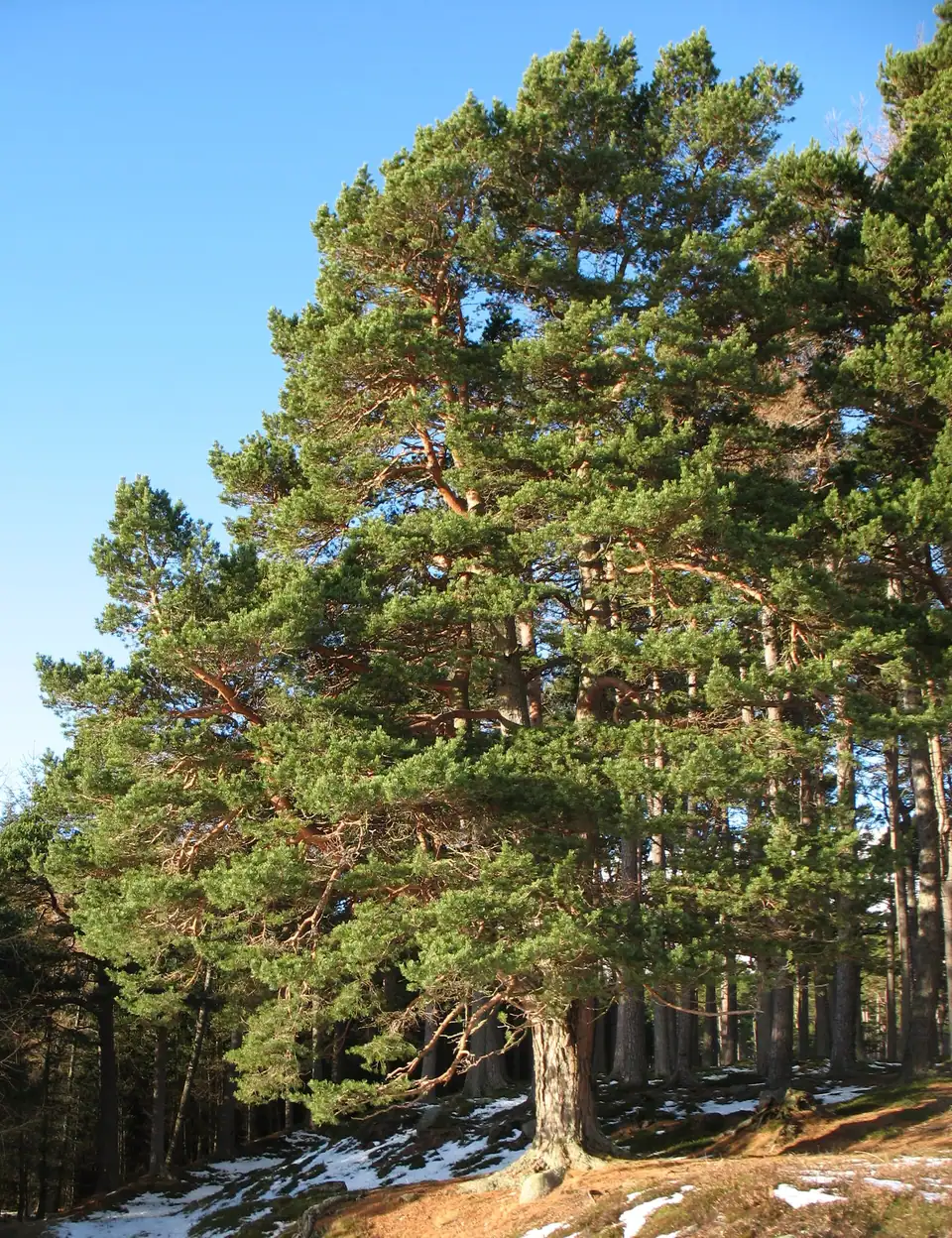
Scots pine is a tough tree for sunny spots: give it full sun and average to somewhat dry soil, and it handles dry sites with ease. It grows 30–60 ft tall and starts from seed. Go easy with the hose and keep the soil at pH 6.0 or lower, because too much water or very alkaline soil turns the needles yellow.
- Sun
Full sun
What the sources say (2)
Light: Full sun
The best growing conditions include full sun and well-drained, acidic soil. It will tolerate a variety of soil types including poor soils and dry sites.
— Pinus sylvestris (Archangel Redwood, Baltic Redwood, Norway Fir, Scotch Fir, Scotch Pine, Scots Pine) | North Carolina Extension Gardener Plant Toolbox [1] Zone: 3 to 7 (may languish in the higher temperature regions of zone 7) Light: Full sun
— Scotch Pine, Pinus sylvestris | VCE Publications | Virginia Tech [3] - Water
Average to somewhat dry soil; it handles dry sites, and too much water yellows the needles
What the sources say (3)
Watering: Average to somewhat dry soil moisture; tolerates dry sites
Moisture: Average to somewhat dry Soil type: Average to less than ideal pH range: Acid
— Scotch Pine, Pinus sylvestris | VCE Publications | Virginia Tech [3] Full sun; prefers well-drained soils and can tolerate dry sites; acid soil.
— Scots Pine (Pinus sylvestris)-Hort Answers - University of Illinois Extension [2] Watering notes: Overwatering can cause chlorosis (needle yellowing)
Fairly disease- and insect-free, though it shows some chlorosis (needle yellowing) when planted on our highest pH (most alkaline) soils and when overwatered.
— Pine, Scotch or Scots | TreeBrowser | USU [5] - Cold
Survives winters down to −50 °F (−45.6 °C)
Very hardy · USDA 2a · RHS H7 · Z2
What the sources say (2)
Hardiness, coldest zone: 2a [winter low −45.6 to −42.8 °C (−50 to −45 °F)]
2a, 2b, 3a, 3b, 4a, 4b, 5a, 5b, 6a, 6b, 7a, 7b
— Pinus sylvestris (Archangel Redwood, Baltic Redwood, Norway Fir, Scotch Fir, Scotch Pine, Scots Pine) | North Carolina Extension Gardener Plant Toolbox [1] Hardiness, warmest zone: 7b [winter low −15 to −12.2 °C (5 to 10 °F)]
2a, 2b, 3a, 3b, 4a, 4b, 5a, 5b, 6a, 6b, 7a, 7b
— Pinus sylvestris (Archangel Redwood, Baltic Redwood, Norway Fir, Scotch Fir, Scotch Pine, Scots Pine) | North Carolina Extension Gardener Plant Toolbox [1] - Soil
Soil with pH 6.0 or lower; very alkaline soil turns the needles yellow
What the sources say (2)
Soil pH, maximum: 6.0
Soil pH: Acid (<6.0) Soil Drainage: Good Drainage
— Pinus sylvestris (Archangel Redwood, Baltic Redwood, Norway Fir, Scotch Fir, Scotch Pine, Scots Pine) | North Carolina Extension Gardener Plant Toolbox [1] Signs of deficiency: Needle yellowing (chlorosis) on the most alkaline, high-pH soils
Fairly disease- and insect-free, though it shows some chlorosis (needle yellowing) when planted on our highest pH (most alkaline) soils and when overwatered.
— Pine, Scotch or Scots | TreeBrowser | USU [5] - Pests
Sawflies, pine moths, scale and spider mites; tip blight and needle blight
What the sources say (6)
Pests: pine wilt nematode, sawflies, moths, scale, European pine sawfly, European pine shoot moth, Nantucket pine tip moth, Zimmerman pine moth, pine seed bug, conifer spider mites, pine bark adelgid
Possible insect pests include pine wilt nematode, sawflies, moths, and scale.
— Pinus sylvestris (Archangel Redwood, Baltic Redwood, Norway Fir, Scotch Fir, Scotch Pine, Scots Pine) | North Carolina Extension Gardener Plant Toolbox [1] Insect Damage - European Pine Sawfly ( Neodiprion sertifer ) - European Pine Shoot Moth ( Rhyacionia buoliani ) - European Pine Shoot Moth & Nantucket Pine Tip Moth - Nantucket Pine Tip Moth ( Rhyacionia frustrana )
— Scots Pine (Pinus sylvestris)-Hort Answers - University of Illinois Extension [2] Insects that Can Affect Scotch Pine - Zimmerman Pine Moth - Pine Seed Bug - Conifer Spider Mites - Pine Bark Adelgid - European Pine Sawfly
— Scotch Pine | Natural Resources [4] Diseases: Diplodia (Sphaeropsis) tip blight, brown spot, canker, sooty mold, Dothistroma needle blight, seasonal needle loss, pine wilt
The Scots pine is susceptible to Sphaeropsis (Diplodia) tip blight.
— Pinus sylvestris (Archangel Redwood, Baltic Redwood, Norway Fir, Scotch Fir, Scotch Pine, Scots Pine) | North Carolina Extension Gardener Plant Toolbox [1] Fungal Disease - Brown Spot ( Mycosphaerella dearnessii (Scirrhia acicola) ) - Cankers on Pine ( Botryosphaeria spp. and other canker fungi ) - Diplodia Tip Blight & Canker ( Diplodia pinea (Sphaeropsis sapinea) )
— Scots Pine (Pinus sylvestris)-Hort Answers - University of Illinois Extension [2] Diseases that Can Affect Scotch Pine - Seasonal Needle Loss - Diplodia Tip Blight and Canker - Dothistroma Needle Blight - Pine Wilt - Sooty Mold
— Scotch Pine | Natural Resources [4] - Watch out
Pine wilt can be serious, so it's no longer recommended for long-term planting
- Size
30–60 ft tall
What the sources say (3)
Mature height: 914-1829 cm (30-60 ft)
The Scots pine is a fast-growing, medium-sized evergreen conifer that usually grows to 30 to 60 feet in height and 30 to 40 feet in width.
— Pinus sylvestris (Archangel Redwood, Baltic Redwood, Norway Fir, Scotch Fir, Scotch Pine, Scots Pine) | North Carolina Extension Gardener Plant Toolbox [1] Mature Height 30-60 Feet Size Medium Large Mature Form Pyramidal when young
— Scots Pine (Pinus sylvestris)-Hort Answers - University of Illinois Extension [2] Height: 30-60 feet Width: 20-40 feet Site Requirements: Sandy and well-drained soils.
— Scotch Pine | Natural Resources [4] - Propagation
Grows from seed
What the sources say (1)
Propagation: Seed
Recommended Propagation Strategy: Seed Country Or Region Of Origin: Northern Europe and Northern Asia
— Pinus sylvestris (Archangel Redwood, Baltic Redwood, Norway Fir, Scotch Fir, Scotch Pine, Scots Pine) | North Carolina Extension Gardener Plant Toolbox [1]
Overview
Scots pine is a fast-growing, medium-sized evergreen conifer native to northern Europe and Asia. [1] It grows best in full sun and well-drained, acidic soil, and tolerates poor soils and dry sites. [1] It is susceptible to Sphaeropsis (Diplodia) tip blight and pine wilt nematode. [1][2]
This record is incomplete: the sources we read do not cover every field yet.
Not yet covered by our sources: Pruning
Scots Pine care
How to water Scots Pine
Watering
Average to somewhat dry soil moisture; tolerates dry sites
What the sources say (2)
Moisture: Average to somewhat dry Soil type: Average to less than ideal pH range: AcidFull sun; prefers well-drained soils and can tolerate dry sites; acid soil.Watering notes
Overwatering can cause chlorosis (needle yellowing)
What the sources say (1)
Fairly disease- and insect-free, though it shows some chlorosis (needle yellowing) when planted on our highest pH (most alkaline) soils and when overwatered.How much light Scots Pine needs
Full sun
What the sources say (2)
The best growing conditions include full sun and well-drained, acidic soil. It will tolerate a variety of soil types including poor soils and dry sites.Zone: 3 to 7 (may languish in the higher temperature regions of zone 7)
Light: Full sunHow much cold Scots Pine can take
Hardiness, coldest zone
2a [winter low −45.6 to −42.8 °C (−50 to −45 °F)]
What the sources say (1)
2a, 2b, 3a, 3b, 4a, 4b, 5a, 5b, 6a, 6b, 7a, 7bHardiness, warmest zone
7b [winter low −15 to −12.2 °C (5 to 10 °F)]
What the sources say (1)
2a, 2b, 3a, 3b, 4a, 4b, 5a, 5b, 6a, 6b, 7a, 7bBest soil for Scots Pine
6.0
What the sources say (1)
Soil pH:
Acid (<6.0)
Soil Drainage:
Good DrainageHow to propagate Scots Pine
Seed
What the sources say (1)
Recommended Propagation Strategy:
Seed
Country Or Region Of Origin:
Northern Europe and Northern AsiaHow to grow Scots Pine
The plant
Life cycle
woody
What the sources say (1)
Family:
Pinaceae
Uses (Ethnobotany):
This plant is cultivated for windbreaks and commercially grown for Christmas trees. It is an important timber tree in Europe.
Life Cycle:
WoodyFamily
Pinaceae
What the sources say (1)
It is in the pine family (Pinaceae) and is native to northern Europe and Asia.Mature height
914-1829 cm (30-60 ft)
What the sources say (3)
The Scots pine is a fast-growing, medium-sized evergreen conifer that usually grows to 30 to 60 feet in height and 30 to 40 feet in width.Mature Height
30-60 Feet
Size
Medium
Large
Mature Form
Pyramidal when youngHeight: 30-60 feet
Width: 20-40 feet
Site Requirements: Sandy and well-drained soils.Mature width
The sources disagree:
The Scots pine is a fast-growing, medium-sized evergreen conifer that usually grows to 30 to 60 feet in height and 30 to 40 feet in width.
[1]Height: 30-60 feet Width: 20-40 feet Site Requirements: Sandy and well-drained soils.
[4]Height: About 50 feet Spread: About 20 to 30 feet Shape: Conical in youth; irregular at maturity
[3]
Pests and diseases
Pests
pine wilt nematode, sawflies, moths, scale, European pine sawfly, European pine shoot moth, Nantucket pine tip moth, Zimmerman pine moth, pine seed bug, conifer spider mites, pine bark adelgid
What the sources say (3)
Possible insect pests include pine wilt nematode, sawflies, moths, and scale.Insect Damage
- European Pine Sawfly ( Neodiprion sertifer )
- European Pine Shoot Moth ( Rhyacionia buoliani )
- European Pine Shoot Moth & Nantucket Pine Tip Moth
- Nantucket Pine Tip Moth ( Rhyacionia frustrana )Insects that Can Affect Scotch Pine
- Zimmerman Pine Moth
- Pine Seed Bug
- Conifer Spider Mites
- Pine Bark Adelgid
- European Pine SawflyDiseases
Diplodia (Sphaeropsis) tip blight, brown spot, canker, sooty mold, Dothistroma needle blight, seasonal needle loss, pine wilt
What the sources say (3)
The Scots pine is susceptible to Sphaeropsis (Diplodia) tip blight.Fungal Disease
- Brown Spot ( Mycosphaerella dearnessii (Scirrhia acicola) )
- Cankers on Pine ( Botryosphaeria spp. and other canker fungi )
- Diplodia Tip Blight & Canker ( Diplodia pinea (Sphaeropsis sapinea) )Diseases that Can Affect Scotch Pine
- Seasonal Needle Loss
- Diplodia Tip Blight and Canker
- Dothistroma Needle Blight
- Pine Wilt
- Sooty MoldFertilizing
Signs of deficiency
Needle yellowing (chlorosis) on the most alkaline, high-pH soils
What the sources say (1)
Fairly disease- and insect-free, though it shows some chlorosis (needle yellowing) when planted on our highest pH (most alkaline) soils and when overwatered.Scots Pine pests and problems
Diplodia (Sphaeropsis) tip blight
Symptom: Susceptibility to tip blight; can be quite serious on this species.
What to do: Not specified in source.
What the sources say (2)
The Scots pine is susceptible to Sphaeropsis (Diplodia) tip blight. Possible insect pests include pine wilt nematode, sawflies, moths, and scale.
— Pinus sylvestris (Archangel Redwood, Baltic Redwood, Norway Fir, Scotch Fir, Scotch Pine, Scots Pine) | North Carolina Extension Gardener Plant Toolbox [1] Pine wilt nematode and Diplodia (Sphaeropsis) tip blight (both can be quite serious on this species).
— Scots Pine (Pinus sylvestris)-Hort Answers - University of Illinois Extension [2] Pine wilt nematode
Symptom: Can be quite serious on this species; no longer recommended for long term planting because of it.
What to do: Not specified in source.
What the sources say (2)
Pine wilt nematode and Diplodia (Sphaeropsis) tip blight (both can be quite serious on this species).
— Scots Pine (Pinus sylvestris)-Hort Answers - University of Illinois Extension [2] Scotch pine is no longer recommended for long term planting because of Pine Wilt Nematode
— Scotch Pine | Natural Resources [4] Chlorosis
Symptom: Needle yellowing on the most alkaline soils and when overwatered.
What to do: Avoid overwatering and highly alkaline soils (as implied by the source).
What the sources say (1)
Fairly disease- and insect-free, though it shows some chlorosis (needle yellowing) when planted on our highest pH (most alkaline) soils and when overwatered.
— Pine, Scotch or Scots | TreeBrowser | USU [5]
Remedies
Each remedy shows what official sources say about it; traditional remedies without an official source are marked as such. Harmful ones are listed so you know to avoid them.
Treating the plant
aphids
hard spray of water from a garden hose Not verified
Traditional remedy, not verified by an official source.
How: Focus a hard spray of water from a garden hose onto the foliage to knock aphids off; repeat every two or three days.
Calendar
Pruning
Not stated in the sources we read.
Months as given by the sources, which are mostly from the United States (northern hemisphere). In the southern hemisphere they shift by about six months.
Indicative values
Values from a secondary source, not checked word for word like the rest of this page. Use them as a starting point.
- Soil
- Acidic, Well-drainedIndicative value, adapt it to your climate · Secondary source
- Care level
- MediumIndicative value, adapt it to your climate · Secondary source
- Growth rate
- ModerateIndicative value, adapt it to your climate · Secondary source
- Pruning
- February, March, AprilIndicative value, adapt it to your climate · Secondary source
Similar plants
- Aleppo Pine Pinus halepensis
- Armand Pine Pinus armandi
- Austrian Pine Pinus nigra
- Bristlecone Pine Pinus aristata
- Chinese Pine Pinus yunnanensis
- Himalayan Pine Pinus wallichiana
- Jack pine Pinus banksiana
- Japanese Black Pine Pinus thunbergii
Sources
Every value above is quoted from these documents. Links lead to the original publisher.
- Pinus sylvestris (Archangel Redwood, Baltic Redwood, Norway Fir, Scotch Fir, Scotch Pine, Scots Pine) | North Carolina Extension Gardener Plant Toolbox · plants.ces.ncsu.edu, consulted
- Scots Pine (Pinus sylvestris)-Hort Answers - University of Illinois Extension · web.extension.illinois.edu, consulted
- Scotch Pine, Pinus sylvestris | VCE Publications | Virginia Tech · pubs.ext.vt.edu, consulted
- Scotch Pine | Natural Resources · naturalresources.extension.iastate.edu, consulted
- Pine, Scotch or Scots | TreeBrowser | USU · extension.usu.edu, consulted
Written by Emilio Marruso · last checked