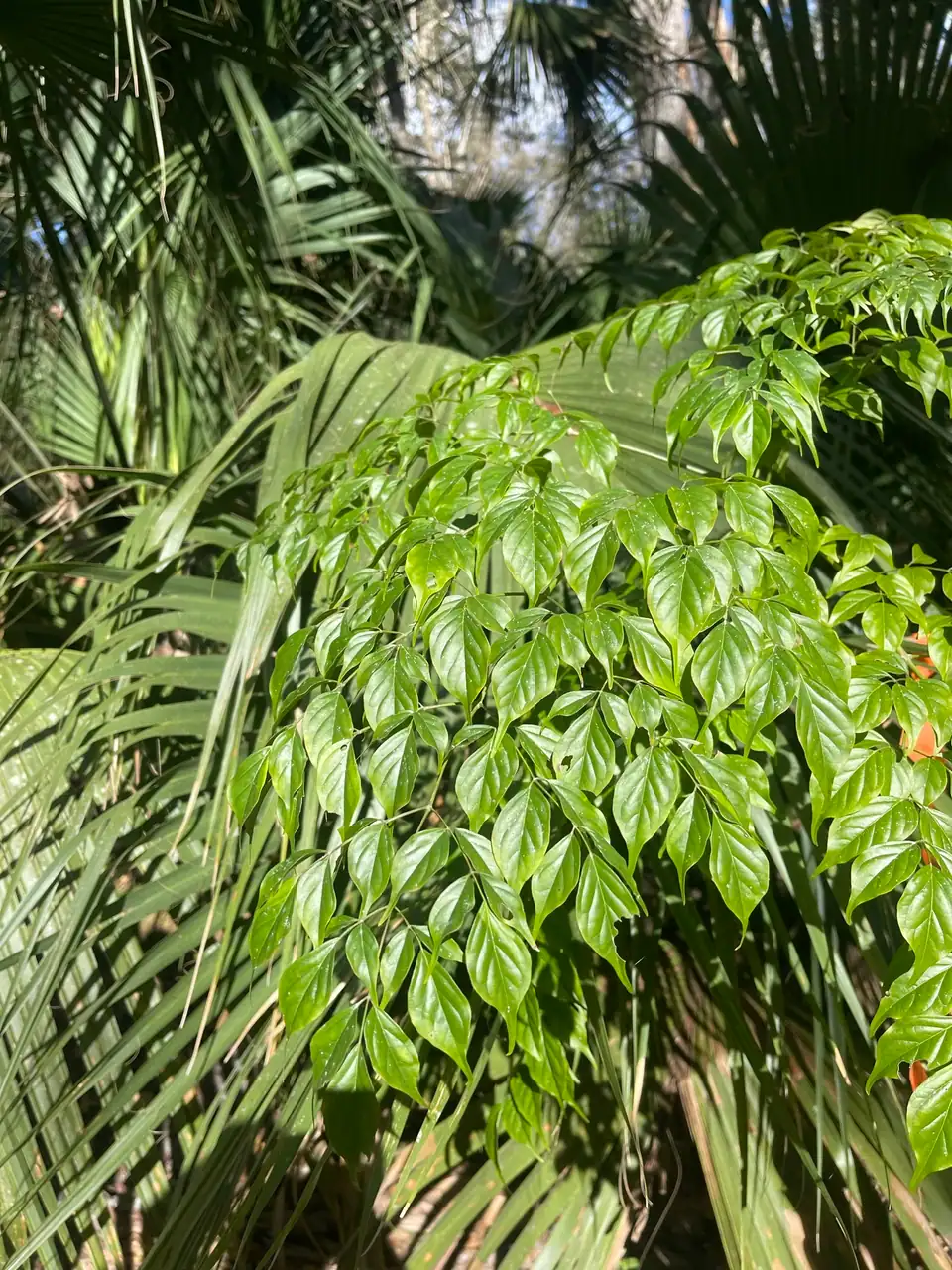
Cómo cultivar y cuidar China doll
Radermachera sinica
Escrito por Emilio Marruso · última revisión
De un vistazo
La Radermachera sinica es una planta que vive a gusto en interior y en maceta. Dale luz brillante e indirecta y riégala solo cuando la superficie de la tierra esté seca al tacto, sin dejarla nunca encharcada. Pódala en primavera o a principios de verano y, cuando quieras más plantas, enraíza unos cuantos esquejes de tallo.
- Sol
Luz brillante e indirecta; al aire libre en climas cálidos, de semisombra a pleno sol
Qué dicen las fuentes (4)
Luz: Luz brillante e indirecta
Según Botanic Gardens of South Australia: Position - Full Sun - Part Shade
— Radermachera sinica [1] Zonas USDA 10 a 12.: The China doll plant is winter hardy to USDA zones 10 to 12, where it grows well in partial shade to full sun.
— China Doll Plant: How To Grow and Care For Rademachera [6] China doll plants need plenty of bright, but indirect, light.
— Information On Growing China Doll Houseplants | Gardening Know How [4] It should receive at least four to five hours of bright, indirect light, whether planted indoors or outdoors.
— China Doll Plant: How To Grow and Care For Rademachera [6] - Riego
Riega cuando la superficie de la tierra esté seca al tacto; nunca la dejes encharcada
Qué dicen las fuentes (3)
Riego: Riega cuando la parte superior del suelo esté seca al tacto.
Water when the soil on the top of the pot is dry to the touch.
— Information On Growing China Doll Houseplants | Gardening Know How [4] Only water when the top of the soil is dry to the touch.
— China Doll Plant: How To Grow and Care For Rademachera [6] Notas sobre el riego: No riegues en exceso: la pudrición de la raíz puede desarrollarse si la planta queda en agua debido a un drenaje deficiente.
Be careful not to overwater the plant, as it does not like this and can develop root rot if left sitting in water due to poor drainage.
— Information On Growing China Doll Houseplants | Gardening Know How [4] - Frío
Aguanta inviernos de hasta −1,1 °C (30 °F)
Semirrústica: inviernos suaves o invernadero sin calefacción · USDA 10 · RHS H3 · Z10
Qué dicen las fuentes (2)
Rusticidad, zona más fría: 10 [mínima invernal de −1,1 a 4,4 °C (de 30 a 40 °F)]
The China doll plant is winter hardy to USDA zones 10 to 12
— China Doll Plant: How To Grow and Care For Rademachera [6] Rusticidad, zona más cálida: 12 [mínima invernal de 10 a 15,6 °C (de 50 a 60 °F)]
The China doll plant is winter hardy to USDA zones 10 to 12
— China Doll Plant: How To Grow and Care For Rademachera [6] - Poda
Pódala en primavera o a principios de verano
Qué dicen las fuentes (1)
Poda: Primavera o principios de verano
Prune the plant in the spring or early summer to prevent leggy growth.
— China Doll Plant: How To Grow and Care For Rademachera [6] - Plagas
Pulgones, moscas blancas y cochinillas algodonosas, sobre todo en interior: quítalos con agua y luego neem
- Atención
Los cambios de luz, riego o maceta le hacen perder hojas: recorta los tallos a la mitad y riega menos
- Multiplicación
Se multiplica por esquejes de tallo
Qué dicen las fuentes (1)
Propagación: Esquejes de tallo
Propagate the plant using stem cuttings taken in the summer.
— China Doll Plant: How To Grow and Care For Rademachera [6] - Maceta
Crece en maceta, también en interior
Qué dicen las fuentes (3)
En maceta: Sí
In colder regions, grow it in a pot and place it in a window getting plenty of sunlight throughout the day.
— China Doll Plant: How To Grow and Care For Rademachera [6]
Resumen
La muñeca china es un árbol originario de China y Taiwán, emparentado con la jacaranda, muy utilizado en interiores como planta de casa. [1] Necesita mucha luz brillante e indirecta y se riega cuando la parte superior del suelo está seca al tacto. [4] Es un árbol de hoja perenne con hojas densas, brillantes y de color verde oscuro. [7]
Citado en inglés, como en la fuente.
Cuidados
Riego
Riego
Riega cuando la parte superior del suelo esté seca al tacto.
Notas sobre el riego
No riegues en exceso: la pudrición de la raíz puede desarrollarse si la planta queda en agua debido a un drenaje deficiente.
Qué dicen las fuentes (1)
Be careful not to overwater the plant, as it does not like this and can develop root rot if left sitting in water due to poor drainage.Luz
Luz brillante e indirecta
Lo que dice cada fuente
Según Botanic Gardens of South Australia: Pleno sol a semisombra
Zonas USDA 10 a 12.: Semisombra a pleno sol
Qué dicen las fuentes (4)
Según Botanic Gardens of South Australia: Position
-
Full Sun
-
Part ShadeZonas USDA 10 a 12.: The China doll plant is winter hardy to USDA zones 10 to 12, where it grows well in partial shade to full sun.China doll plants need plenty of bright, but indirect, light.It should receive at least four to five hours of bright, indirect light, whether planted indoors or outdoors.Clima y frío
Rusticidad, zona más fría
10 [mínima invernal de −1,1 a 4,4 °C (de 30 a 40 °F)]
Qué dicen las fuentes (1)
The China doll plant is winter hardy to USDA zones 10 to 12Rusticidad, zona más cálida
12 [mínima invernal de 10 a 15,6 °C (de 50 a 60 °F)]
Qué dicen las fuentes (1)
The China doll plant is winter hardy to USDA zones 10 to 12Dónde cultivarla
En interior
Sí
En maceta
Sí
Qué dicen las fuentes (1)
In colder regions, grow it in a pot and place it in a window getting plenty of sunlight throughout the day.Propagación
Esquejes de tallo
Qué dicen las fuentes (1)
Propagate the plant using stem cuttings taken in the summer.Problemas
Caída de hojas después de cambios.
Síntoma: Un cambio de luz, agua, temperatura o trasplante provoca una caída masiva de hojas.
Qué hacer: Recorta los tallos restantes a dos tercios o a la mitad y reduce el riego para ayudar a prevenir la pudrición de la raíz.
Qué dicen las fuentes (2)
A change in light, water, temperature, or repotting the plant will cause a massive leaf drop.
— Information On Growing China Doll Houseplants | Gardening Know How [4] The first thing you should do is trim the remaining stems back by two-thirds to one-half.
— Information On Growing China Doll Houseplants | Gardening Know How [4] Áfidos, moscas blancas y cochinillas
Síntoma: Plagas típicas, principalmente en plantas cultivadas en interiores
Qué hacer: Rocíalas con chorros de agua; si persisten, usa un insecticida natural como el neem o el aceite blanco
Qué dicen las fuentes (2)
The typical pests may attack the plant, primarily when grown indoors.
— China Doll Plant: How To Grow and Care For Rademachera [6] First, try spraying them away with blasts of water. If the pests remain, use a natural insecticide for plants like Neem or White oil .
— China Doll Plant: How To Grow and Care For Rademachera [6]
Remedios
Las fuentes consultadas no dan remedios para esta planta.
Calendario
Poda
Primavera o principios de verano
Qué dicen las fuentes (1)
Prune the plant in the spring or early summer to prevent leggy growth.Meses tal como los dan las fuentes, en su mayoría de Estados Unidos (hemisferio norte). En el hemisferio sur se desplazan unos seis meses.
Valores orientativos
Valores de una fuente secundaria, no comprobados palabra por palabra como el resto de esta página. Úselos como punto de partida.
- Ciclo de vida
- PerenneValor orientativo, adáptalo a tu clima · Fuente secundaria
- Altura adulta
- 762-914.4 cm (25-30 pies)Valor orientativo, adáptalo a tu clima · Fuente secundaria
- Horas de sol
- 6-10 horasValor orientativo, adáptalo a tu clima · Fuente secundaria
- Resiste la sequía
- SíValor orientativo, adáptalo a tu clima · Fuente secundaria
- pH del suelo
- 6-6.5Valor orientativo, adáptalo a tu clima · Fuente secundaria
- Nivel de cuidado
- MedioValor orientativo, adáptalo a tu clima · Fuente secundaria
- Crecimiento
- ModeradoValor orientativo, adáptalo a tu clima · Fuente secundaria
Plantas similares
- Hipérico rastrero Hypericum calycinum
- Abeto de Vancuver Abies grandis
- Abraham Trachystemon orientalis
- Bananero de Etiopía Ensete ventricosum
- Acacia longifolia Acacia longifolia
- Acacia plateada Acacia retinodes
- Acanthus hungaricus Acanthus hungaricus
- Achlys triphylla Achlys triphylla
Fuentes
Cada valor anterior se cita de estos documentos. Los enlaces llevan al editor original.
- Radermachera sinica · plantselector.botanicgardens.sa.gov.au, consultado
- Flora of New Zealand | Taxon Profile | Radermachera sinica · nzflora.info, consultado
- Radermachera sinica • New Zealand Plant Conservation Network · nzpcn.org.nz, consultado
- Information On Growing China Doll Houseplants | Gardening Know How · gardeningknowhow.com, consultado
- How to Grow Radermachera - China Doll · harvesttotable.com, consultado
- China Doll Plant: How To Grow and Care For Rademachera · plantcaretoday.com, consultado
- Radermachera sinica - Botany Brisbane · botanybrisbane.com, consultado
Escrito por Emilio Marruso · última revisión