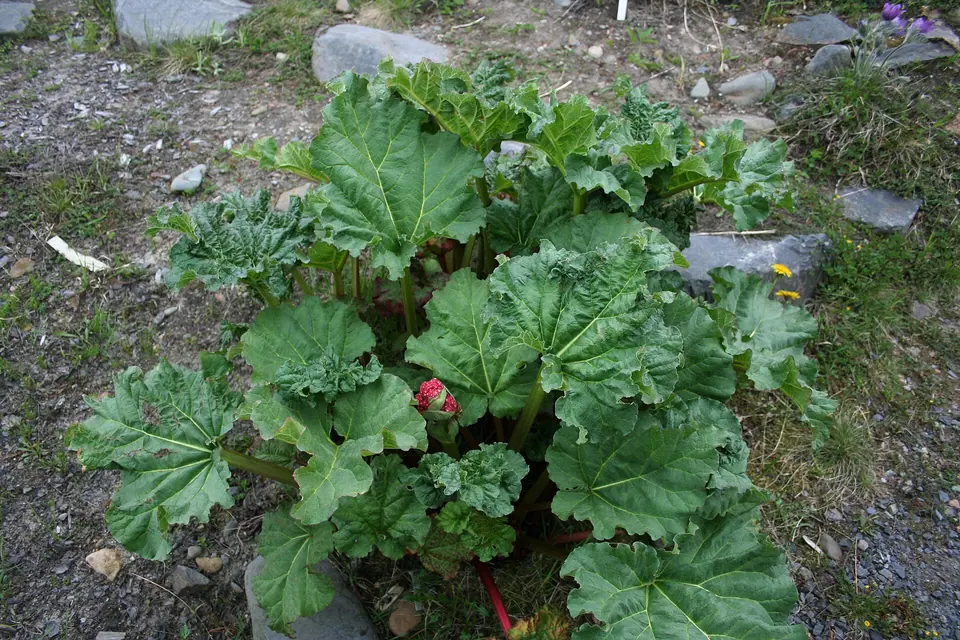
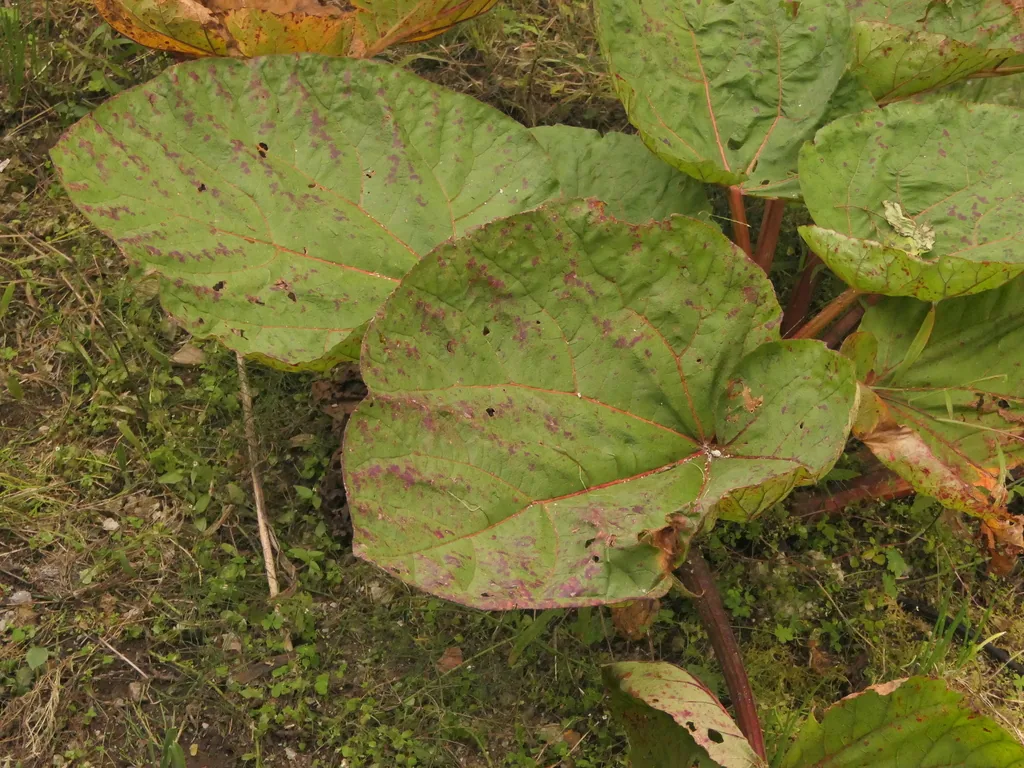

Cómo cultivar y cuidar Rheum australe
Rheum australe
Escrito por Emilio Marruso · última revisión
Tóxica para: Personas · Por qué
De un vistazo
Este ruibarbo tiene unos tallos de hoja de sabor excelente, que recuerda a la manzana: se comen crudos o hervidos con sal y pimienta, o incluso encurtidos. Dale sol pleno o semisombra, un suelo húmedo pero bien drenado y un riego moderado y constante. Siembra las semillas en cajonera fría y trasplanta en primavera, tras su primer invierno.
- Sol
Sol pleno o semisombra
Qué dicen las fuentes (3)
Luz: Pleno sol a semisombra
Himalayan rhubarb will grow well in full sun , but also tolerates partial shade
— Himalayan Rhubarb Information: How To Grow Himalayan Rhubarb Plants | Gardening Know How [5] Light full sun Shade tolerance light shade Water moderate
— Himalayan Rhubarb (Rheum australe) — Practical Plants [2] Humus-rich, porous and well-drained soil and exposed or partially shaded habitat are more suitable for its cultivation
—  [4] - Riego
Riego moderado; no aguanta la sequía
Qué dicen las fuentes (1)
Riego: Riego moderado; no tolera la sequía
Water moderate Hardiness Zone 6+ Soil textures loamy, clay, heavy clay Soil pH acid, neutral, alkaline Drainage well drained Tolerates Nutritionally Poor Soil No Drought intolerant
— Himalayan Rhubarb (Rheum australe) — Practical Plants [2] - Frío
Aguanta inviernos de hasta −23,3 °C (−10 °F)
Muy rústica · USDA 6 · RHS H7 · Z6
Qué dicen las fuentes (1)
Rusticidad, zona más fría: 6 [mínima invernal de −23,3 a −17,8 °C (de −10 a 0 °F)]
Shade tolerance light shade Water moderate Hardiness Zone 6+
— Himalayan Rhubarb (Rheum australe) — Practical Plants [2] - Suelo
Suelo que retenga la humedad pero drene bien
Qué dicen las fuentes (3)
Notas sobre el riego: Suelo que retiene la humedad pero bien drenado
Prefers a deep, fertile, moderately heavy, humus rich, moisture retentive, well-drained soil in sun or semi-shade
— Himalayan Rhubarb (Rheum australe) — Practical Plants [2] It prefers soil that is well-drained and rich in nutrients, but unlike some plants, will tolerate heavy soils rich in clay
— Himalayan Rhubarb Information: How To Grow Himalayan Rhubarb Plants | Gardening Know How [5] Humus-rich, porous and well-drained soil and exposed or partially shaded habitat are more suitable for its cultivation
—  [4] - Distancia
60 cm entre plantas en todas las direcciones
Qué dicen las fuentes (2)
Distancia de plantación: 60 x 60 cm [24 in]
ensayo de cultivo, Rahla (Manali), Himachal Pradesh: The spacing of 60×60 cm resulted in significant increase in estimated underground biomass yield
—  [4] The spacing of 60×60 cm resulted in significant increase in estimated underground biomass yield
—  [4] - Plantación
Trasplanta en primavera, tras el primer invierno de las plántulas
Qué dicen las fuentes (4)
Plantación: Primavera (marzo-abril a menor altitud)
Según Practical Plants: prick the seedlings out into individual pots and grow them on in the greenhouse or cold frame for their first winter, planting them out in the spring.
— Himalayan Rhubarb (Rheum australe) — Practical Plants [2] menor altitud (Garhwal Himalaya): Since the seedlings are transplanted during March–April at lower altitude, best seed sowing time was observed during October just after collecting and drying the seeds
—  [4] prick the seedlings out into individual pots and grow them on in the greenhouse or cold frame for their first winter, planting them out in the spring.
— Himalayan Rhubarb (Rheum australe) — Practical Plants [2] Since the seedlings are transplanted during March–April at lower altitude, best seed sowing time was observed during October just after collecting and drying the seeds
—  [4] - Cosecha
Come los tallos de las hojas crudos, hervidos o encurtidos; saben un poco a manzana
- Multiplicación
Se multiplica por semilla o dividiendo la raíz
Qué dicen las fuentes (2)
Propagación: Semilla, división del portainjerto
Plant propagation is done by seeds and intact or chopped rootstocks
—  [4] Division in early spring or autumn [1] [3] . Divide up the rootstock with a sharp spade or knife, making sure that there is at least one growth bud on each division.
— Himalayan Rhubarb (Rheum australe) — Practical Plants [2] - Siembra
Siembra en otoño en cajonera fría a la sombra, o en primavera en cajonera fría
Qué dicen las fuentes (4)
Siembra: Otoño (octubre), también primavera, en un marco frío
Según Practical Plants: Seed - best sown in autumn in a shaded cold frame [7] . The seed can also be sown in spring in a cold frame.
— Himalayan Rhubarb (Rheum australe) — Practical Plants [2] menor altitud (Garhwal Himalaya): Since the seedlings are transplanted during March–April at lower altitude, best seed sowing time was observed during October just after collecting and drying the seeds
—  [4] Seed - best sown in autumn in a shaded cold frame [7] . The seed can also be sown in spring in a cold frame.
— Himalayan Rhubarb (Rheum australe) — Practical Plants [2] Since the seedlings are transplanted during March–April at lower altitude, best seed sowing time was observed during October just after collecting and drying the seeds
—  [4] - Seguridad
Si tienes gota, artritis o piedras en el riñón, cuidado al comerla: puede empeorarlas
Resumen
Rheum australe produce un grupo basal de hojas grandes y, en verano, tallos florales de hasta 150-200 cm [59–79 in] de altura. [1] Se cultiva principalmente como ornamental, y sus pecíolos se comen. [5][4] La planta, especialmente las láminas de las hojas, contiene compuestos tóxicos. [1]
Citado en inglés, como en la fuente.
Esta ficha está incompleta: las fuentes consultadas aún no cubren todos los campos.
Aún no cubierto por nuestras fuentes: Rusticidad, zona más cálida, Poda
Cuidados
Las medidas entre corchetes son nuestra conversión al otro sistema de unidades; el texto citado no cambia.
Riego
Riego
Riego moderado; no tolera la sequía
Qué dicen las fuentes (1)
Water
moderate
Hardiness
Zone 6+
Soil textures
loamy, clay, heavy clay
Soil pH
acid, neutral, alkaline
Drainage
well drained
Tolerates Nutritionally Poor Soil
No
Drought
intolerantNotas sobre el riego
Suelo que retiene la humedad pero bien drenado
Qué dicen las fuentes (3)
Prefers a deep, fertile, moderately heavy, humus rich, moisture retentive, well-drained soil in sun or semi-shadeIt prefers soil that is well-drained and rich in nutrients, but unlike some plants, will tolerate heavy soils rich in clayHumus-rich, porous and well-drained soil and exposed or partially shaded habitat are more suitable for its cultivationLuz
Pleno sol a semisombra
Qué dicen las fuentes (3)
Himalayan rhubarb will grow well in full sun , but also tolerates partial shadeLight
full sun
Shade tolerance
light shade
Water
moderateHumus-rich, porous and well-drained soil and exposed or partially shaded habitat are more suitable for its cultivationClima y frío
Rusticidad, zona más fría
6 [mínima invernal de −23,3 a −17,8 °C (de −10 a 0 °F)]
Qué dicen las fuentes (1)
Shade tolerance
light shade
Water
moderate
Hardiness
Zone 6+Rusticidad, zona más cálida
No figura en las fuentes consultadas.
Dónde cultivarla
60 x 60 cm [24 in]
Lo que dice cada fuente
ensayo de cultivo, Rahla (Manali), Himachal Pradesh: 60 x 60 cm [24 in]
Propagación
Semilla, división del portainjerto
Qué dicen las fuentes (2)
Plant propagation is done by seeds and intact or chopped rootstocksDivision in early spring or autumn [1] [3] . Divide up the rootstock with a sharp spade or knife, making sure that there is at least one growth bud on each division.Remedios
Cada remedio indica qué dicen las fuentes oficiales; los remedios tradicionales sin fuente oficial aparecen marcados. Los perjudiciales están para que sepas evitarlos.
Primeros auxilios
Primeros auxilios: no sustituyen al médico
planta ingerida
enjuaga la boca del niño Fuente oficial, sin prueba independiente
Call the Poisons Information Centre on 13 11 26 for further information.
— poisonsinfo.nsw.gov.au [6] Cómo: Si la planta fue ingerida, retira los restos y enjuaga la boca del niño.
If the plant was swallowed, remove remaining pieces and wash out child's mouth.
— poisonsinfo.nsw.gov.au [6]
Toxicidad
Según la fuente, citada textualmente. No es un consejo médico ni veterinario: si una persona o un animal pudo haber ingerido esta planta, contacta con un centro de toxicología o con un veterinario.
People with a tendency to rheumatism, arthritis, gout, kidney stones or hyperacidity should take especial caution if including this plant in their diet since it can aggravate their condition
[1]- Partes venenosas
Just remember that only the stalks of rhubarb are edible. The leaves and roots are toxic
[5]- Principio tóxico
The plant, but especially the leaf blades, contains several toxic compounds, particularly anthraquinone glycosides, but also soluble oxalates and calcium oxylate crystals
[1]- Síntomas
At lower doses these can cause abdominal cramps, burning of the mouth and throat, headache, weakness, nausea and vomiting
[1]- Gravedad
In larger, quantities it can lead to coma and death, though generally very large quantities need to be eaten for the plant to be fatal
[1]
Calendario
Otoño (octubre), también primavera, en un marco frío
Lo que dice cada fuente
Según Practical Plants: Otoño en un marco frío con sombra; también primavera en un marco frío
menor altitud (Garhwal Himalaya): Octubre.
Qué dicen las fuentes (4)
Según Practical Plants: Seed - best sown in autumn in a shaded cold frame [7] . The seed can also be sown in spring in a cold frame.menor altitud (Garhwal Himalaya): Since the seedlings are transplanted during March–April at lower altitude, best seed sowing time was observed during October just after collecting and drying the seedsSeed - best sown in autumn in a shaded cold frame [7] . The seed can also be sown in spring in a cold frame.Since the seedlings are transplanted during March–April at lower altitude, best seed sowing time was observed during October just after collecting and drying the seedsPrimavera (marzo-abril a menor altitud)
Lo que dice cada fuente
Según Practical Plants: Primavera, después del primer invierno
menor altitud (Garhwal Himalaya): Marzo-abril
Qué dicen las fuentes (4)
Según Practical Plants: prick the seedlings out into individual pots and grow them on in the greenhouse or cold frame for their first winter, planting them out in the spring.menor altitud (Garhwal Himalaya): Since the seedlings are transplanted during March–April at lower altitude, best seed sowing time was observed during October just after collecting and drying the seedsprick the seedlings out into individual pots and grow them on in the greenhouse or cold frame for their first winter, planting them out in the spring.Since the seedlings are transplanted during March–April at lower altitude, best seed sowing time was observed during October just after collecting and drying the seedsNo figura en las fuentes consultadas.
Meses tal como los dan las fuentes, en su mayoría de Estados Unidos (hemisferio norte). En el hemisferio sur se desplazan unos seis meses.
Comestibilidad
Según la fuente, citada textualmente. No comas una planta basándote solo en esta página: los errores de identificación pueden ser peligrosos.
Leaf stalks are eaten either raw or boiled, sprinkled with salt and pepper
[4]Leaf stem - raw or cooked [8] [2] [5] . An excellent flavour that is something like apples
[2]Leaf stalks are eaten either raw or boiled, sprinkled with salt and pepper. Leaves and flowers are also edible; Rhizomes roots are purgative, astringent, tonic, stomachic and aperient. The petioles are pickled
[4]
Valores orientativos
Valores de una fuente secundaria, no comprobados palabra por palabra como el resto de esta página. Úselos como punto de partida.
- Ciclo de vida
- Perenne herbáceaValor orientativo, adáptalo a tu clima · Fuente secundaria
- Altura adulta
- 121.9-213.4 cm (4-7 pies)Valor orientativo, adáptalo a tu clima · Fuente secundaria
- Horas de sol
- 6-8 horasValor orientativo, adáptalo a tu clima · Fuente secundaria
- Resiste la sequía
- SíValor orientativo, adáptalo a tu clima · Fuente secundaria
- pH del suelo
- 5.5-7Valor orientativo, adáptalo a tu clima · Fuente secundaria
- Nivel de cuidado
- MedioValor orientativo, adáptalo a tu clima · Fuente secundaria
- Crecimiento
- BajoValor orientativo, adáptalo a tu clima · Fuente secundaria
- Poda
- Febrero, marzo, abril, mayoValor orientativo, adáptalo a tu clima · Fuente secundaria
Plantas similares
- Chinese rhubarb Rheum palmatum
- Ruibarbo Rheum rhabarbarum
- Abeto de Vancuver Abies grandis
- Abraham Trachystemon orientalis
- Bananero de Etiopía Ensete ventricosum
- Acacia longifolia Acacia longifolia
- Acanthus hungaricus Acanthus hungaricus
- Achlys triphylla Achlys triphylla
Fuentes
Cada valor anterior se cita de estos documentos. Los enlaces llevan al editor original.
- Rheum australe - Useful Temperate Plants · temperate.theferns.info, consultado
- Himalayan Rhubarb (Rheum australe) — Practical Plants · practicalplants.org, consultado
- Rheum australe (Himalayan rhubarb) · florafinder.org, consultado
-  · ojs.pphouse.org, consultado
- Himalayan Rhubarb Information: How To Grow Himalayan Rhubarb Plants | Gardening Know How · gardeningknowhow.com, consultado
- poisonsinfo.nsw.gov.au · poisonsinfo.nsw.gov.au
Escrito por Emilio Marruso · última revisión