

Cómo cultivar y cuidar Zumaque de Virginia
Rhus typhina
Escrito por Emilio Marruso · última revisión
De un vistazo
El zumaque de Virginia es un arbusto o arbolito resistente y nada exigente: una vez que arraiga, aguanta la sequía y solo necesita riego extra en sequías fuertes. Apenas pide abono, solo un suelo que drene bien. Y de regalo, sus frutos en remojo dan una bebida ácida con sabor a limón. Eso sí, dale espacio, porque se extiende con chupones de raíz y forma colonias.
- Riego
2,5 cm de agua a la semana mientras arraiga; después, solo en sequías fuertes
Qué dicen las fuentes (5)
Riego: Después del período de establecimiento, riego suplementario solo durante períodos de sequía severa; tolerante a la sequía
After the establishment period, provide supplemental irrigation during periods of severe drought.
— Bulletin #2579, Native Trees and Shrubs for Maine Landscapes: Staghorn Sumac (Rhus typhina) - Cooperative Extension Publications - University of Maine Cooperative Extension [3] Tolerant of a wide range of soils except for those that are poorly drained. Generally tolerant of urban conditions and drought.
— Rhus typhina (Staghorn Sumac) | North Carolina Extension Gardener Plant Toolbox [1] Notas sobre el riego: Durante el establecimiento (un año después de plantar por cada pulgada de diámetro del tronco), riega regularmente en la temporada de crecimiento, dando a la zona de raíces 1 pulgada [2,5 cm] de agua por semana; evita suelos con mal drenaje.
Irrigation: During the establishment period, defined as one year after planting for each inch of trunk diameter at planting time, water your trees regularly during the growing season.
— Bulletin #2579, Native Trees and Shrubs for Maine Landscapes: Staghorn Sumac (Rhus typhina) - Cooperative Extension Publications - University of Maine Cooperative Extension [3] Give the root zone of each tree 1 inch of water per week
— Bulletin #2579, Native Trees and Shrubs for Maine Landscapes: Staghorn Sumac (Rhus typhina) - Cooperative Extension Publications - University of Maine Cooperative Extension [3] Tolerant of a wide range of soils except for those that are poorly drained.
— Rhus typhina (Staghorn Sumac) | North Carolina Extension Gardener Plant Toolbox [1] - Frío
Aguanta inviernos de hasta −40 °C (−40 °F)
Muy rústica · USDA 3a · RHS H7 · Z3
Qué dicen las fuentes (7)
Rusticidad, zona más fría: 3a [mínima invernal de −40 a −37,2 °C (de −40 a −35 °F)]
Según NC State Extension: USDA Plant Hardiness Zone: 3a, 3b, 4a, 4b, 5a, 5b, 6a, 6b, 7a, 7b, 8a, 8b, 9a, 9b
— Rhus typhina (Staghorn Sumac) | North Carolina Extension Gardener Plant Toolbox [1] Según University of Illinois Extension: Hardiness Zone: | 4 - 8 | Mature
— Staghorn Sumac (Rhus typhina) - Selecting Shrubs for Your Home - University of Illinois Extension [2] Maine: Hardiness: USDA zone 3a Drawing by Margery Read
— Bulletin #2579, Native Trees and Shrubs for Maine Landscapes: Staghorn Sumac (Rhus typhina) - Cooperative Extension Publications - University of Maine Cooperative Extension [3] 3a, 3b, 4a, 4b, 5a, 5b, 6a, 6b, 7a, 7b, 8a, 8b, 9a, 9b
— Rhus typhina (Staghorn Sumac) | North Carolina Extension Gardener Plant Toolbox [1] Rusticidad, zona más cálida: 9b [mínima invernal de −3,9 a −1,1 °C (de 25 a 30 °F)]
Según NC State Extension: USDA Plant Hardiness Zone: 3a, 3b, 4a, 4b, 5a, 5b, 6a, 6b, 7a, 7b, 8a, 8b, 9a, 9b
— Rhus typhina (Staghorn Sumac) | North Carolina Extension Gardener Plant Toolbox [1] Según University of Illinois Extension: Hardiness Zone: | 4 - 8 | Mature
— Staghorn Sumac (Rhus typhina) - Selecting Shrubs for Your Home - University of Illinois Extension [2] 3a, 3b, 4a, 4b, 5a, 5b, 6a, 6b, 7a, 7b, 8a, 8b, 9a, 9b
— Rhus typhina (Staghorn Sumac) | North Carolina Extension Gardener Plant Toolbox [1] - Suelo
Suelo bien drenado, pH hasta 6,0
Qué dicen las fuentes (4)
pH del suelo, máximo: 6.0
Soil pH: Acid (<6.0) Soil Drainage: Good Drainage
— Rhus typhina (Staghorn Sumac) | North Carolina Extension Gardener Plant Toolbox [1] Notas sobre el riego: Durante el establecimiento (un año después de plantar por cada pulgada de diámetro del tronco), riega regularmente en la temporada de crecimiento, dando a la zona de raíces 1 pulgada [2,5 cm] de agua por semana; evita suelos con mal drenaje.
Irrigation: During the establishment period, defined as one year after planting for each inch of trunk diameter at planting time, water your trees regularly during the growing season.
— Bulletin #2579, Native Trees and Shrubs for Maine Landscapes: Staghorn Sumac (Rhus typhina) - Cooperative Extension Publications - University of Maine Cooperative Extension [3] Give the root zone of each tree 1 inch of water per week
— Bulletin #2579, Native Trees and Shrubs for Maine Landscapes: Staghorn Sumac (Rhus typhina) - Cooperative Extension Publications - University of Maine Cooperative Extension [3] Tolerant of a wide range of soils except for those that are poorly drained.
— Rhus typhina (Staghorn Sumac) | North Carolina Extension Gardener Plant Toolbox [1] - Abonado
Abona solo si un análisis del suelo lo pide; nada de nitrógeno en la primera temporada
Qué dicen las fuentes (3)
Frecuencia: Solo cuando un análisis del suelo lo indique
Fertilization: Landscape trees and shrubs should not be fertilized unless a soil test indicates a need.
— Bulletin #2579, Native Trees and Shrubs for Maine Landscapes: Staghorn Sumac (Rhus typhina) - Cooperative Extension Publications - University of Maine Cooperative Extension [3] Evitar: Fertilizar sin un análisis del suelo que muestre una necesidad; fertilizante con nitrógeno al plantar o durante la primera temporada de crecimiento
Fertilization: Landscape trees and shrubs should not be fertilized unless a soil test indicates a need.
— Bulletin #2579, Native Trees and Shrubs for Maine Landscapes: Staghorn Sumac (Rhus typhina) - Cooperative Extension Publications - University of Maine Cooperative Extension [3] No nitrogen fertilizer should be added at planting or during the first growing season.
— Bulletin #2579, Native Trees and Shrubs for Maine Landscapes: Staghorn Sumac (Rhus typhina) - Cooperative Extension Publications - University of Maine Cooperative Extension [3] - Cosecha
Pon los frutos en remojo en agua para una bebida ácida con sabor a limón
- Plagas
Puede sufrir verticilosis y pudriciones de la madera
Qué dicen las fuentes (1)
Enfermedades: marchitez por Verticillium, pudriciones y decaimientos de la madera
Fungal Disease - Verticillium Wilt [Shrubs and Trees] ( Verticillium albo-atrum and V. dahliae ) - Wood Rots and Decays ( Many genus and species involved )
— Staghorn Sumac (Rhus typhina) - Selecting Shrubs for Your Home - University of Illinois Extension [2] - Atención
Se extiende con chupones de raíz y forma colonias; difícil de controlar en jardines pequeños
- Multiplicación
Se multiplica por esquejes de tallo
Qué dicen las fuentes (1)
Propagación: Esqueje de tallo
Recommended Propagation Strategy: Stem Cutting Country Or Region Of Origin: Eastern North America
— Rhus typhina (Staghorn Sumac) | North Carolina Extension Gardener Plant Toolbox [1] - Seguridad
No es venenoso para las personas
Resumen
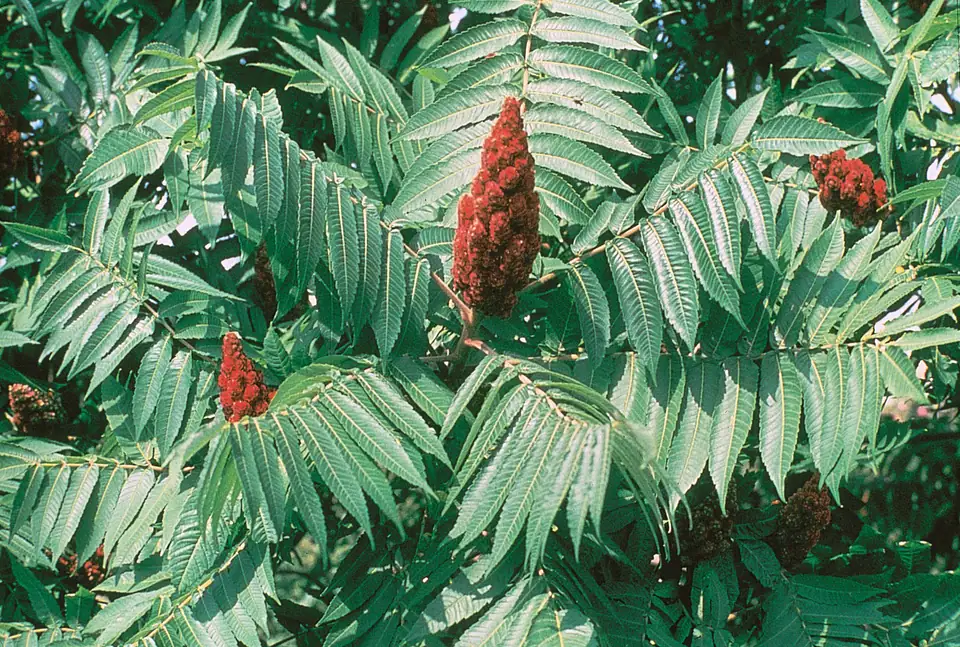
El zumaque de cuerno de ciervo es un arbusto caducifolio nativo o árbol pequeño que forma matorrales mediante autosiembra y retoños de raíz. [1] Tiene hojas compuestas de color verde medio que se vuelven escarlata, amarillo y naranja en otoño, y frutos rojos en las plantas femeninas. [1][2]
Citado en inglés, como en la fuente.
Esta ficha está incompleta: las fuentes consultadas aún no cubren todos los campos.
Aún no cubierto por nuestras fuentes: Poda
Cuidados
Las medidas entre corchetes son nuestra conversión al otro sistema de unidades; el texto citado no cambia.
Riego
Riego
Después del período de establecimiento, riego suplementario solo durante períodos de sequía severa; tolerante a la sequía
Qué dicen las fuentes (2)
After the establishment period, provide supplemental irrigation during periods of severe drought.Tolerant of a wide range of soils except for those that are poorly drained. Generally tolerant of urban conditions and drought.Notas sobre el riego
Durante el establecimiento (un año después de plantar por cada pulgada de diámetro del tronco), riega regularmente en la temporada de crecimiento, dando a la zona de raíces 1 pulgada [2,5 cm] de agua por semana; evita suelos con mal drenaje.
Qué dicen las fuentes (3)
Irrigation: During the establishment period, defined as one year after planting for each inch of trunk diameter at planting time, water your trees regularly during the growing season.Give the root zone of each tree 1 inch of water per weekTolerant of a wide range of soils except for those that are poorly drained.Luz
Las fuentes dan valores distintos según la región, la zona o las condiciones de cultivo.
Lo que dice cada fuente
Según NC State Extension: Pleno sol a semisombra
Según University of Illinois Extension: Pleno sol, sombra total o sol parcial/sombra
Maine: Pleno sol
Qué dicen las fuentes (4)
Según NC State Extension: Easily grown in a wide range of soils as long as they are well-drained, and full sun to part shade.Según University of Illinois Extension: Exposure/ Light Requirements:
Full Shade
Full Sun
Partial Sun/ShadeMaine: Light requirements: full sun
Stress tolerances:
soil compactionEasily grown in a wide range of soils as long as they are well-drained, and full sun to part shade.Clima y frío
Rusticidad, zona más fría
3a [mínima invernal de −40 a −37,2 °C (de −40 a −35 °F)]
Lo que dice cada fuente
Según NC State Extension: 3a [mínima invernal de −40 a −37,2 °C (de −40 a −35 °F)]
Según University of Illinois Extension: 4 [mínima invernal de −34,4 a −28,9 °C (de −30 a −20 °F)]
Maine: 3a [mínima invernal de −40 a −37,2 °C (de −40 a −35 °F)]
Qué dicen las fuentes (4)
Según NC State Extension: USDA Plant Hardiness Zone:
3a, 3b, 4a, 4b, 5a, 5b, 6a, 6b, 7a, 7b, 8a, 8b, 9a, 9bSegún University of Illinois Extension: Hardiness Zone:
|
4 - 8
| MatureMaine: Hardiness: USDA zone 3a
Drawing by Margery Read3a, 3b, 4a, 4b, 5a, 5b, 6a, 6b, 7a, 7b, 8a, 8b, 9a, 9bRusticidad, zona más cálida
9b [mínima invernal de −3,9 a −1,1 °C (de 25 a 30 °F)]
Lo que dice cada fuente
Según NC State Extension: 9b [mínima invernal de −3,9 a −1,1 °C (de 25 a 30 °F)]
Según University of Illinois Extension: 8 [mínima invernal de −12,2 a −6,7 °C (de 10 a 20 °F)]
Qué dicen las fuentes (3)
Según NC State Extension: USDA Plant Hardiness Zone:
3a, 3b, 4a, 4b, 5a, 5b, 6a, 6b, 7a, 7b, 8a, 8b, 9a, 9bSegún University of Illinois Extension: Hardiness Zone:
|
4 - 8
| Mature3a, 3b, 4a, 4b, 5a, 5b, 6a, 6b, 7a, 7b, 8a, 8b, 9a, 9bSuelo
6.0
Qué dicen las fuentes (1)
Soil pH:
Acid (<6.0)
Soil Drainage:
Good DrainagePropagación
Esqueje de tallo
Qué dicen las fuentes (1)
Recommended Propagation Strategy:
Stem Cutting
Country Or Region Of Origin:
Eastern North AmericaCultivo
La planta
Ciclo de vida
leñoso (arbusto o árbol caducifolio)
Qué dicen las fuentes (1)
Life Cycle: Woody Recommended Propagation Strategy: Stem Cutting Country Or Region Of Origin: Eastern North AmericaFamilia
Anacardiaceae
Qué dicen las fuentes (1)
Staghorn sumac is a native deciduous shrub or tree in the Anacardiaceae (cashew) family.Altura adulta
Las fuentes no coinciden:
Lo que dice cada fuente
cultivar 'Tiger Eyes': 182.9-243.8 cm (6-8 pies)
Qué dicen las fuentes (1)
cultivar 'Tiger Eyes': At maturity the plant is only 6-8 feet in height and spread, forming an upright, rounded shrub.Anchura adulta
Las fuentes no coinciden:
Lo que dice cada fuente
cultivar 'Tiger Eyes': 182.9-243.8 cm (6-8 pies)
Qué dicen las fuentes (1)
cultivar 'Tiger Eyes': At maturity the plant is only 6-8 feet in height and spread, forming an upright, rounded shrub.Plagas y enfermedades
Enfermedades
marchitez por Verticillium, pudriciones y decaimientos de la madera
Qué dicen las fuentes (1)
Fungal Disease - Verticillium Wilt [Shrubs and Trees] ( Verticillium albo-atrum and V. dahliae ) - Wood Rots and Decays ( Many genus and species involved )Abonado
Frecuencia
Solo cuando un análisis del suelo lo indique
Qué dicen las fuentes (1)
Fertilization: Landscape trees and shrubs should not be fertilized unless a soil test indicates a need.Evitar
Fertilizar sin un análisis del suelo que muestre una necesidad; fertilizante con nitrógeno al plantar o durante la primera temporada de crecimiento
Qué dicen las fuentes (2)
Fertilization: Landscape trees and shrubs should not be fertilized unless a soil test indicates a need.No nitrogen fertilizer should be added at planting or during the first growing season.Problemas
Retoños de raíz agresivos
Síntoma: Se extiende por retoños de raíz para formar colonias; difícil de manejar en espacios de jardín pequeños.
Qué hacer: Naturalízalo a lo largo del borde del bosque o úsalo donde la siega frecuente o el pavimento controlen su propagación.
Qué dicen las fuentes (2)
Insects, Diseases, and Other Plant Problems: May spread aggressively through root suckers.
— Rhus typhina (Staghorn Sumac) | North Carolina Extension Gardener Plant Toolbox [1] Difficult to manage in small garden spaces, this aggressive shrub or small tree is best naturalized along the woodland edge or otherwise used where frequent mowing or paving will control its spread.
— Bulletin #2579, Native Trees and Shrubs for Maine Landscapes: Staghorn Sumac (Rhus typhina) - Cooperative Extension Publications - University of Maine Cooperative Extension [3]
Remedios
Cada remedio indica qué dicen las fuentes oficiales; los remedios tradicionales sin fuente oficial aparecen marcados. Los perjudiciales están para que sepas evitarlos.
Cuidar la planta
mancha foliar
Elimina las hojas enfermas Funciona
Cómo: Retira las hojas, ramas o residuos enfermos alrededor de los árboles en cuanto los veas.
Removing diseased leaves, limbs or debris from around trees as soon as they are spotted helps reduce the infections.
— weekand.com [5] Qué dicen las pruebas Many insect and disease issues can be solved in the home garden by hand-picking insects or clipping and disposing of diseased plant parts.
— extension.unh.edu [6]
Cómo eliminarla
chupones de raíz
Siega los retoños Funciona
Cómo: Siega los brotes de raíz que rompen la superficie; la siega frecuente o la pavimentación controlan la propagación.
Difficult to manage in small garden spaces, this aggressive shrub or small tree is best naturalized along the woodland edge or otherwise used where frequent mowing or paving will control its spread.
— Bulletin #2579, Native Trees and Shrubs for Maine Landscapes: Staghorn Sumac (Rhus typhina) - Cooperative Extension Publications - University of Maine Cooperative Extension [3] Qué dicen las pruebas Difficult to manage in small garden spaces, this aggressive shrub or small tree is best naturalized along the woodland edge or otherwise used where frequent mowing or paving will control its spread.
— Bulletin #2579, Native Trees and Shrubs for Maine Landscapes: Staghorn Sumac (Rhus typhina) - Cooperative Extension Publications - University of Maine Cooperative Extension [3]
Toxicidad
Según la fuente, citada textualmente. No es un consejo médico ni veterinario: si una persona o un animal pudo haber ingerido esta planta, contacta con un centro de toxicología o con un veterinario.
It is not poisonous though it can be weedy spreading by suckers to form colonies.
[1]
Calendario
Poda
No figura en las fuentes consultadas.
Meses tal como los dan las fuentes, en su mayoría de Estados Unidos (hemisferio norte). En el hemisferio sur se desplazan unos seis meses.
Comestibilidad
Según la fuente, citada textualmente. No comas una planta basándote solo en esta página: los errores de identificación pueden ser peligrosos.
The fruits are soaked in water to make a tart lemony drink
[1]
Valores orientativos
Valores de una fuente secundaria, no comprobados palabra por palabra como el resto de esta página. Úselos como punto de partida.
- Horas de sol
- 6-8 horasValor orientativo, adáptalo a tu clima · Fuente secundaria
- Resiste la sequía
- SíValor orientativo, adáptalo a tu clima · Fuente secundaria
- Suelo
- Arenoso, Franco, RocosoValor orientativo, adáptalo a tu clima · Fuente secundaria
- Nivel de cuidado
- MedioValor orientativo, adáptalo a tu clima · Fuente secundaria
- Crecimiento
- ModeradoValor orientativo, adáptalo a tu clima · Fuente secundaria
- Poda
- Febrero, marzo, abril, agosto, mayo, mayoValor orientativo, adáptalo a tu clima · Fuente secundaria
- Plagas
- Pulgones, adélgidos, muerte regresiva, ácaros, marchitez, resistente a ciervos, resistente a conejos, resistente a la sequíaValor orientativo, adáptalo a tu clima · Fuente secundaria
Plantas similares
- Chinese Sumac Rhus chinensis
- Michaux's Sumac Rhus michauxii
- Rus Rhus coriaria
- Skunkbush Rhus trilobata
- Zumaque de la Carolina Rhus glabra
- Sumac Rhus aromatica
- Winged Sumac Rhus copallinum
- Aguaribay Schinus molle
Fuentes
Cada valor anterior se cita de estos documentos. Los enlaces llevan al editor original.
- Rhus typhina (Staghorn Sumac) | North Carolina Extension Gardener Plant Toolbox · plants.ces.ncsu.edu, consultado
- Staghorn Sumac (Rhus typhina) - Selecting Shrubs for Your Home - University of Illinois Extension · web.extension.illinois.edu, consultado
- Bulletin #2579, Native Trees and Shrubs for Maine Landscapes: Staghorn Sumac (Rhus typhina) - Cooperative Extension Publications - University of Maine Cooperative Extension · extension.umaine.edu, consultado
- 'Tiger Eyes' Staghorn Sumac, Rhus typhina – Wisconsin Horticulture · hort.extension.wisc.edu, consultado
- weekand.com · weekand.com
- extension.unh.edu · extension.unh.edu
Escrito por Emilio Marruso · última revisión