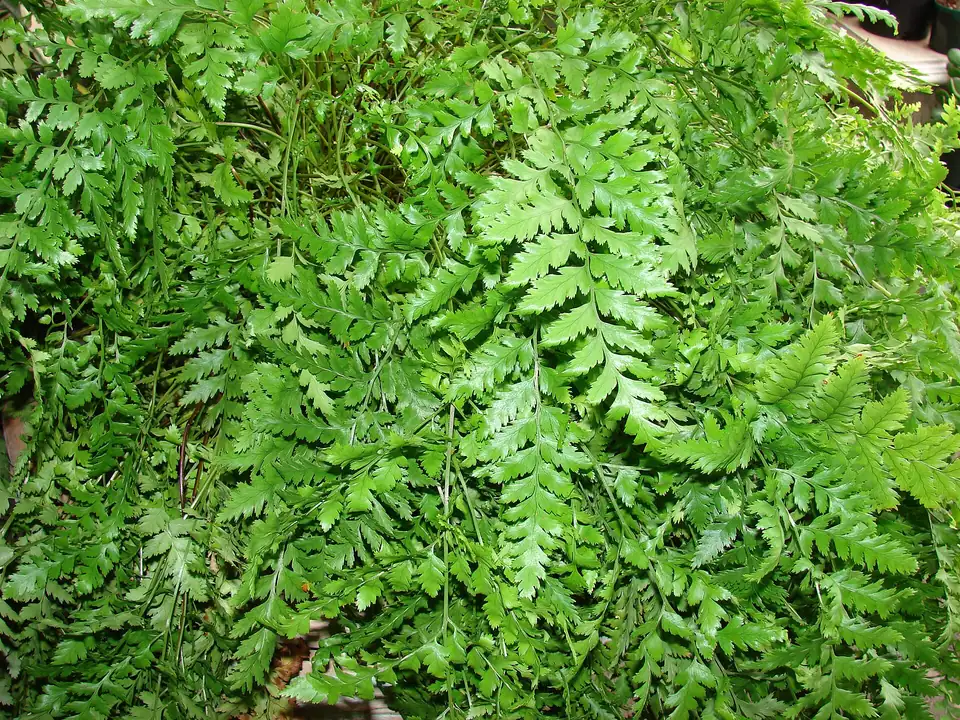
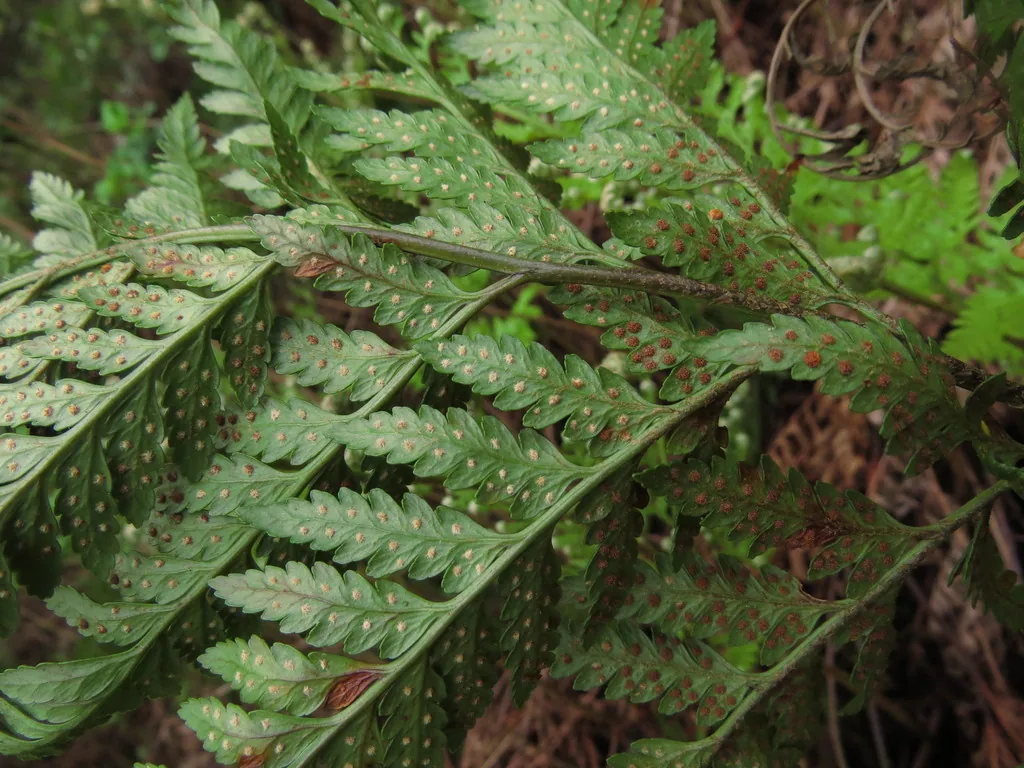

Cómo cultivar y cuidar Helecho de cuero
Rumohra adiantiformis
Escrito por Emilio Marruso · última revisión
De un vistazo
El helecho de cuero es un amante de la sombra: crece feliz en semisombra, sombra cambiante o sombra profunda, y sufre con el sol directo. Riégalo con regularidad mientras crece, dejando que la tierra se seque un poco entre riegos, y vivirá igual de bien en maceta dentro de casa que en el jardín. ¿Quieres más plantas? Divide los rizomas y compártelos.
- Sol
Semisombra o sombra profunda; el sol directo lo daña
Qué dicen las fuentes (1)
Luz: Semisombra, sombra cambiante o profunda (sufre con la luz solar directa)
The fern requires a site with partial, shifting or deep shade, and it will suffer in direct sunlight.
— Leatherleaf Fern Care [4] - Riego
Riega con regularidad mientras crece; deja que la tierra se seque un poco entre riegos
Qué dicen las fuentes (1)
Riego: Riega regularmente durante la temporada de crecimiento, dejando que el suelo se seque ligeramente entre riegos
Water regularly during the growing season in the garden, allowing the soil to slightly dry out between waterings.
— Leatherleaf Fern Care [4] - Frío
Aguanta inviernos de hasta −3,9 °C (25 °F)
Semirrústica: inviernos suaves o invernadero sin calefacción · USDA 9b · RHS H3 · Z9
Qué dicen las fuentes (2)
Rusticidad, zona más fría: 9b [mínima invernal de −3,9 a −1,1 °C (de 25 a 30 °F)]
Leatherleaf is a frost-tender fern hardy in U.S. Department of Agriculture plant hardiness zones 9B to 11
— Leatherleaf Fern Care [4] Rusticidad, zona más cálida: 11 [mínima invernal de 4,4 a 10 °C (de 40 a 50 °F)]
Leatherleaf is a frost-tender fern hardy in U.S. Department of Agriculture plant hardiness zones 9B to 11
— Leatherleaf Fern Care [4] - Distancia
61–91 cm entre plantas
Qué dicen las fuentes (1)
Distancia de plantación: 61-91 cm (24-36 pulgadas)
If planting multiple ferns, provide 24 to 36 inches of space between plants to avoid overcrowding.
— Leatherleaf Fern Care [4] - Plagas
Manchas en las hojas y podredumbre de raíz: riega temprano y dale buen drenaje
Qué dicen las fuentes (4)
Enfermedades: antracnosis (tizón por Colletotrichum), mancha foliar por Cylindrocladium, pudrición de raíces por Pythium, tizón por Rhizoctonia
Anthracnose has been a problem in Costa Rica for the past few years but was not reported in Florida until early this summer.
— Diseases of Leatherleaf Fern and Their Control [1] The fungicides listed for anthracnose are labeled on this fern and can aid in control of Cylindrocladium leaf spot.
— Diseases of Leatherleaf Fern and Their Control [1] Plants are grayish-green or chlorotic in color and may wilt. Roots are brown, mushy and reduced (stunted).
— Diseases of Leatherleaf Fern and Their Control [1] Spots occur all over the plants and are dark-brown to grayish, sometimes covering entire fronds.
— Diseases of Leatherleaf Fern and Their Control [1] - Multiplicación
Consigue plantas nuevas dividiendo los rizomas
Qué dicen las fuentes (1)
Propagación: División de los rizomas
Divide large plants by carefully splitting the rhizomes.
— Leatherleaf Fern Care [4] - Maceta
Crece bien en maceta, también dentro de casa
Qué dicen las fuentes (2)
En maceta: Sí
Choose a container with a hole in the bottom for drainage and soil-less potting mix that is 50 percent peat moss.
— Leatherleaf Fern Care [4] En interior: Sí
Leatherleaf fern may be grown indoors in indirect sunlight , such as a north-facing windowsill, in colder climates.
— Leatherleaf Fern Care [4]
Resumen
El helecho de hoja de cuero es un helecho perenne sensible a las heladas que se cultiva en sombra, como planta de maceta en interiores y comercialmente para follaje cortado. [4][1] Necesita semisombra a sombra profunda y riego regular con algo de secado entre riegos. [4]
Citado en inglés, como en la fuente.
Esta ficha está incompleta: las fuentes consultadas aún no cubren todos los campos.
Aún no cubierto por nuestras fuentes: Poda
Cuidados
Riego
Riega regularmente durante la temporada de crecimiento, dejando que el suelo se seque ligeramente entre riegos
Qué dicen las fuentes (1)
Water regularly during the growing season in the garden, allowing the soil to slightly dry out between waterings.Luz
Semisombra, sombra cambiante o profunda (sufre con la luz solar directa)
Qué dicen las fuentes (1)
The fern requires a site with partial, shifting or deep shade, and it will suffer in direct sunlight.Clima y frío
Rusticidad, zona más fría
9b [mínima invernal de −3,9 a −1,1 °C (de 25 a 30 °F)]
Qué dicen las fuentes (1)
Leatherleaf is a frost-tender fern hardy in U.S. Department of Agriculture plant hardiness zones 9B to 11Rusticidad, zona más cálida
11 [mínima invernal de 4,4 a 10 °C (de 40 a 50 °F)]
Qué dicen las fuentes (1)
Leatherleaf is a frost-tender fern hardy in U.S. Department of Agriculture plant hardiness zones 9B to 11Dónde cultivarla
En interior
Sí
Qué dicen las fuentes (1)
Leatherleaf fern may be grown indoors in indirect sunlight , such as a north-facing windowsill, in colder climates.En maceta
Sí
Qué dicen las fuentes (1)
Choose a container with a hole in the bottom for drainage and soil-less potting mix that is 50 percent peat moss.Distancia de plantación
61-91 cm (24-36 pulgadas)
Qué dicen las fuentes (1)
If planting multiple ferns, provide 24 to 36 inches of space between plants to avoid overcrowding.Propagación
División de los rizomas
Qué dicen las fuentes (1)
Divide large plants by carefully splitting the rhizomes.Cultivo
La planta
Familia
Dryopteridaceae
Qué dicen las fuentes (1)
Family DRYOPTERIDACEAE Genus Rumohra Species Rumohra adiantiformis (G.Forst.)Ching Common Name LEATHERLEAF FERNPlagas y enfermedades
Enfermedades
antracnosis (tizón por Colletotrichum), mancha foliar por Cylindrocladium, pudrición de raíces por Pythium, tizón por Rhizoctonia
Qué dicen las fuentes (4)
Anthracnose has been a problem in Costa Rica for the past few years but was not reported in Florida until early this summer.The fungicides listed for anthracnose are labeled on this fern and can aid in control of Cylindrocladium leaf spot.Plants are grayish-green or chlorotic in color and may wilt. Roots are brown, mushy and reduced (stunted).Spots occur all over the plants and are dark-brown to grayish, sometimes covering entire fronds.Problemas
Mancha foliar por Cylindrocladium
Síntoma: Las manchas van de diminutas a alargadas y su color va del marrón rojizo al marrón grisáceo.
Qué hacer: El riego temprano en el día permite que el follaje se seque rápidamente y puede reducir la propagación de la enfermedad.
Pudrición por Pythium
Síntoma: Las raíces están marrones, blandas y reducidas (atrofiadas).
Qué hacer: Proporciona un buen drenaje para evitar el desarrollo de la pudrición de la raíz por Pythium.
Remedios
Cada remedio indica qué dicen las fuentes oficiales; los remedios tradicionales sin fuente oficial aparecen marcados. Los perjudiciales están para que sepas evitarlos.
Cuidar la planta
cochinilla del helecho
aceite hortícola Funciona
Ferns are notoriously sensitive to pesticides. Whenever treating ferns and other sensitive plants, treat at a time that the pesticide will be dry on the foliage before the plants are exposed to full sunlight.
— content.ces.ncsu.edu [6] Cómo: Dos tratamientos minuciosos con dos semanas de diferencia; aplica el producto en un momento en que esté seco sobre el follaje antes de que las plantas queden expuestas al pleno sol.
When fern scales are encountered, horticultural oils give adequate control without excessive phytotoxicity to ferns. Two thorough treatments two weeks apart should give good control.
— content.ces.ncsu.edu [6] Qué dicen las pruebas When fern scales are encountered, horticultural oils give adequate control without excessive phytotoxicity to ferns. Two thorough treatments two weeks apart should give good control.
— content.ces.ncsu.edu [6]
Calendario
Poda
No figura en las fuentes consultadas.
Meses tal como los dan las fuentes, en su mayoría de Estados Unidos (hemisferio norte). En el hemisferio sur se desplazan unos seis meses.
Valores orientativos
Valores de una fuente secundaria, no comprobados palabra por palabra como el resto de esta página. Úselos como punto de partida.
- Ciclo de vida
- PerenneValor orientativo, adáptalo a tu clima · Fuente secundaria
- Altura adulta
- 30.5-91.4 cm (1-3 pies)Valor orientativo, adáptalo a tu clima · Fuente secundaria
- Horas de sol
- 2-5 horasValor orientativo, adáptalo a tu clima · Fuente secundaria
- pH del suelo
- 5.5-6.5Valor orientativo, adáptalo a tu clima · Fuente secundaria
- Nivel de cuidado
- MedioValor orientativo, adáptalo a tu clima · Fuente secundaria
- Crecimiento
- BajoValor orientativo, adáptalo a tu clima · Fuente secundaria
- Poda
- Abril, marzo, abril, mayo, junio, julio, agosto, septiembreValor orientativo, adáptalo a tu clima · Fuente secundaria
Plantas similares
- Abraham Trachystemon orientalis
- Cempasúchil Tagetes erecta
- Alabama Croton Croton alabamensis
- Grosellero silvestre Ribes alpinum
- Alpine violet Viola labradorica
- Alumroot Heuchera americana
- Tuya del Canadá Thuja occidentalis
- American Cancer-root Conopholis americana
Fuentes
Cada valor anterior se cita de estos documentos. Los enlaces llevan al editor original.
- Diseases of Leatherleaf Fern and Their Control · mrec.ifas.ufl.edu, consultado
- Rumohra adiantiformis - UF/IFAS Assessment - University of Florida, Institute of Food and Agricultural Sciences · assessment.ifas.ufl.edu, consultado
- Rumohra adiantiformis / [Species detail] / Plant Atlas · florida.plantatlas.usf.edu, consultado
- Leatherleaf Fern Care · gardenguides.com, consultado
- Rumohra adiantiformis • New Zealand Plant Conservation Network · nzpcn.org.nz, consultado
- content.ces.ncsu.edu · content.ces.ncsu.edu
Escrito por Emilio Marruso · última revisión