
How to Grow and Care for Iron fern
Rumohra adiantiformis
Written by Emilio Marruso · last checked
At a glance
Leatherleaf fern is a true shade lover: it thrives in partial, shifting or deep shade and suffers in direct sun. Water it regularly while it grows, letting the soil dry slightly between waterings, and it will be just as happy in a pot indoors as in the garden. Want more plants? Simply divide the rhizomes and share them.
- Sun
Partial or deep shade; direct sun hurts it
What the sources say (1)
Light: Partial, shifting or deep shade (suffers in direct sunlight)
The fern requires a site with partial, shifting or deep shade, and it will suffer in direct sunlight.
— Leatherleaf Fern Care [4] - Water
Water regularly while it grows; let the soil dry slightly between waterings
What the sources say (1)
Watering: Water regularly during the growing season, allowing the soil to slightly dry out between waterings
Water regularly during the growing season in the garden, allowing the soil to slightly dry out between waterings.
— Leatherleaf Fern Care [4] - Cold
Survives winters down to 25 °F (−3.9 °C)
Half hardy: mild winters or an unheated greenhouse · USDA 9b · RHS H3 · Z9
What the sources say (2)
Hardiness, coldest zone: 9b [winter low −3.9 to −1.1 °C (25 to 30 °F)]
Leatherleaf is a frost-tender fern hardy in U.S. Department of Agriculture plant hardiness zones 9B to 11
— Leatherleaf Fern Care [4] Hardiness, warmest zone: 11 [winter low 4.4 to 10 °C (40 to 50 °F)]
Leatherleaf is a frost-tender fern hardy in U.S. Department of Agriculture plant hardiness zones 9B to 11
— Leatherleaf Fern Care [4] - Spacing
2–3 ft between plants
What the sources say (1)
Spacing: 61-91 cm (24-36 in)
If planting multiple ferns, provide 24 to 36 inches of space between plants to avoid overcrowding.
— Leatherleaf Fern Care [4] - Pests
Leaf spots and root rot: water early in the day and give it good drainage
What the sources say (4)
Diseases: anthracnose (Colletotrichum blight), Cylindrocladium leaf spot, Pythium root rot, Rhizoctonia aerial blight
Anthracnose has been a problem in Costa Rica for the past few years but was not reported in Florida until early this summer.
— Diseases of Leatherleaf Fern and Their Control [1] The fungicides listed for anthracnose are labeled on this fern and can aid in control of Cylindrocladium leaf spot.
— Diseases of Leatherleaf Fern and Their Control [1] Plants are grayish-green or chlorotic in color and may wilt. Roots are brown, mushy and reduced (stunted).
— Diseases of Leatherleaf Fern and Their Control [1] Spots occur all over the plants and are dark-brown to grayish, sometimes covering entire fronds.
— Diseases of Leatherleaf Fern and Their Control [1] - Propagation
Make new plants by dividing the rhizomes
What the sources say (1)
Propagation: Division of the rhizomes
Divide large plants by carefully splitting the rhizomes.
— Leatherleaf Fern Care [4] - Containers
Grows well in pots, indoors too
What the sources say (2)
In containers: Yes
Choose a container with a hole in the bottom for drainage and soil-less potting mix that is 50 percent peat moss.
— Leatherleaf Fern Care [4] Indoors: Yes
Leatherleaf fern may be grown indoors in indirect sunlight , such as a north-facing windowsill, in colder climates.
— Leatherleaf Fern Care [4]
Overview
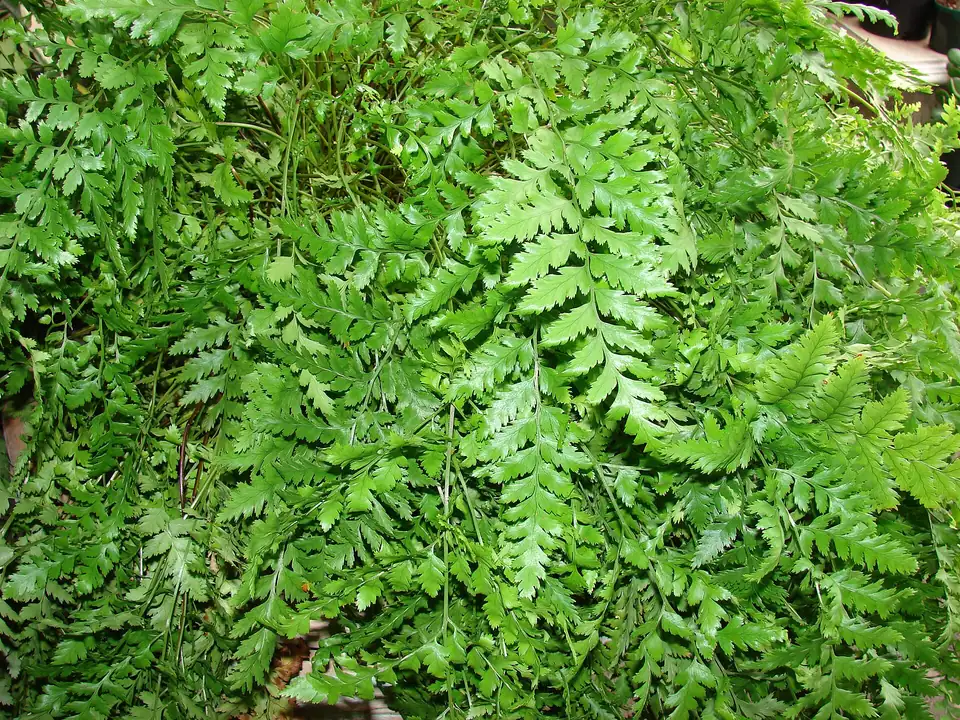
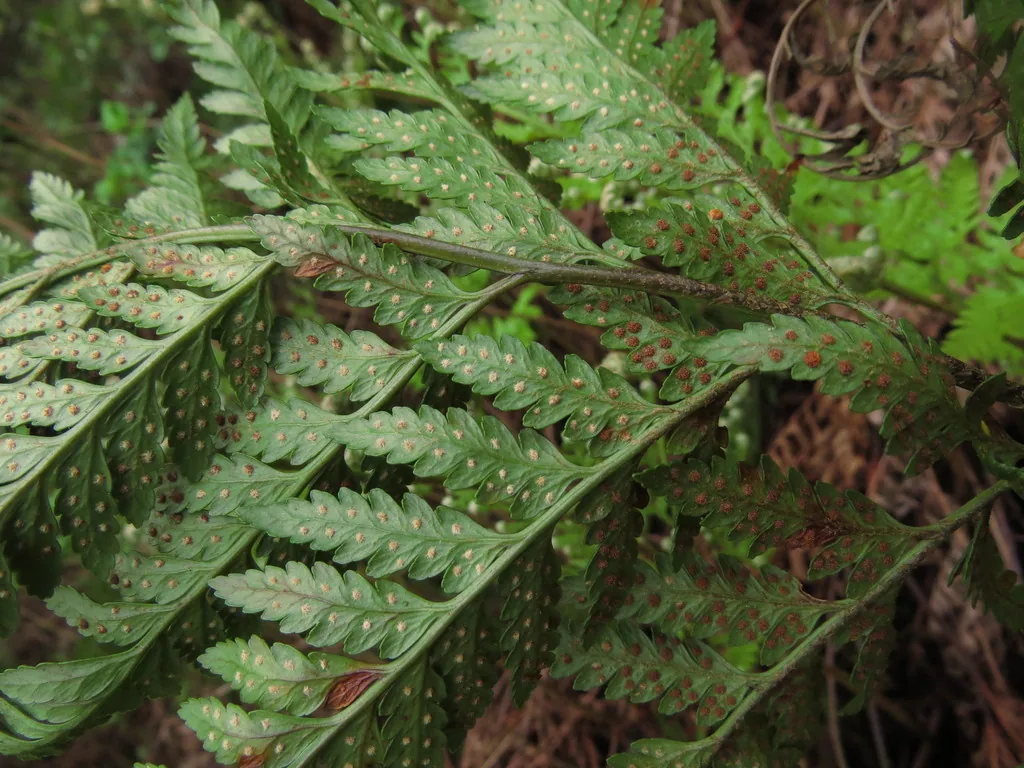
Leatherleaf fern is a frost-tender evergreen fern grown in shade, as a pot plant indoors, and commercially for cut foliage. [4][1] It needs partial to deep shade and regular watering with some drying between waterings. [4]
This record is incomplete: the sources we read do not cover every field yet.
Not yet covered by our sources: Pruning
Iron fern care
How to water Iron fern
Water regularly during the growing season, allowing the soil to slightly dry out between waterings
What the sources say (1)
Water regularly during the growing season in the garden, allowing the soil to slightly dry out between waterings.How much light Iron fern needs
Partial, shifting or deep shade (suffers in direct sunlight)
What the sources say (1)
The fern requires a site with partial, shifting or deep shade, and it will suffer in direct sunlight.How much cold Iron fern can take
Hardiness, coldest zone
9b [winter low −3.9 to −1.1 °C (25 to 30 °F)]
What the sources say (1)
Leatherleaf is a frost-tender fern hardy in U.S. Department of Agriculture plant hardiness zones 9B to 11Hardiness, warmest zone
11 [winter low 4.4 to 10 °C (40 to 50 °F)]
What the sources say (1)
Leatherleaf is a frost-tender fern hardy in U.S. Department of Agriculture plant hardiness zones 9B to 11Where to grow Iron fern
Indoors
Yes
What the sources say (1)
Leatherleaf fern may be grown indoors in indirect sunlight , such as a north-facing windowsill, in colder climates.In containers
Yes
What the sources say (1)
Choose a container with a hole in the bottom for drainage and soil-less potting mix that is 50 percent peat moss.Spacing
61-91 cm (24-36 in)
What the sources say (1)
If planting multiple ferns, provide 24 to 36 inches of space between plants to avoid overcrowding.How to propagate Iron fern
Division of the rhizomes
What the sources say (1)
Divide large plants by carefully splitting the rhizomes.How to grow Iron fern
The plant
Family
Dryopteridaceae
What the sources say (1)
Family DRYOPTERIDACEAE Genus Rumohra Species Rumohra adiantiformis (G.Forst.)Ching Common Name LEATHERLEAF FERNPests and diseases
Diseases
anthracnose (Colletotrichum blight), Cylindrocladium leaf spot, Pythium root rot, Rhizoctonia aerial blight
What the sources say (4)
Anthracnose has been a problem in Costa Rica for the past few years but was not reported in Florida until early this summer.The fungicides listed for anthracnose are labeled on this fern and can aid in control of Cylindrocladium leaf spot.Plants are grayish-green or chlorotic in color and may wilt. Roots are brown, mushy and reduced (stunted).Spots occur all over the plants and are dark-brown to grayish, sometimes covering entire fronds.Iron fern pests and problems
Cylindrocladium leaf spot
Symptom: Spots are pinpoint to inch long and are reddish to grayish brown.
What to do: Irrigation early in the day allows rapid drying of the foliage and can reduce disease spread.
Pythium root rot
Symptom: Roots are brown, mushy and reduced (stunted).
What to do: Provide good drainage to avoid development of Pythium root rot.
Remedies
Each remedy shows what official sources say about it; traditional remedies without an official source are marked as such. Harmful ones are listed so you know to avoid them.
Treating the plant
fern scale
horticultural oil Works
Ferns are notoriously sensitive to pesticides. Whenever treating ferns and other sensitive plants, treat at a time that the pesticide will be dry on the foliage before the plants are exposed to full sunlight.
— content.ces.ncsu.edu [6] How: Two thorough treatments two weeks apart; treat at a time that the product will be dry on the foliage before the plants are exposed to full sunlight.
When fern scales are encountered, horticultural oils give adequate control without excessive phytotoxicity to ferns. Two thorough treatments two weeks apart should give good control.
— content.ces.ncsu.edu [6] What the evidence says When fern scales are encountered, horticultural oils give adequate control without excessive phytotoxicity to ferns. Two thorough treatments two weeks apart should give good control.
— content.ces.ncsu.edu [6]
Calendar
Pruning
Not stated in the sources we read.
Months as given by the sources, which are mostly from the United States (northern hemisphere). In the southern hemisphere they shift by about six months.
Indicative values
Values from a secondary source, not checked word for word like the rest of this page. Use them as a starting point.
- Life cycle
- PerennialIndicative value, adapt it to your climate · Secondary source
- Mature height
- 30.5-91.4 cm (1-3 ft)Indicative value, adapt it to your climate · Secondary source
- Hours of sun
- 2-5 hoursIndicative value, adapt it to your climate · Secondary source
- Soil pH
- 5.5-6.5Indicative value, adapt it to your climate · Secondary source
- Care level
- MediumIndicative value, adapt it to your climate · Secondary source
- Growth rate
- LowIndicative value, adapt it to your climate · Secondary source
- Pruning
- April, March, April, May, June, July, August, SeptemberIndicative value, adapt it to your climate · Secondary source
Similar plants
- Abraham Trachystemon orientalis
- African Marigold Tagetes erecta
- Alabama Croton Croton alabamensis
- Alpine Currant Ribes alpinum
- Alpine violet Viola labradorica
- Alumroot Heuchera americana
- American Arborvitae Thuja occidentalis
- American Cancer-root Conopholis americana
Sources
Every value above is quoted from these documents. Links lead to the original publisher.
- Diseases of Leatherleaf Fern and Their Control · mrec.ifas.ufl.edu, consulted
- Rumohra adiantiformis - UF/IFAS Assessment - University of Florida, Institute of Food and Agricultural Sciences · assessment.ifas.ufl.edu, consulted
- Rumohra adiantiformis / [Species detail] / Plant Atlas · florida.plantatlas.usf.edu, consulted
- Leatherleaf Fern Care · gardenguides.com, consulted
- Rumohra adiantiformis • New Zealand Plant Conservation Network · nzpcn.org.nz, consulted
- content.ces.ncsu.edu · content.ces.ncsu.edu
Written by Emilio Marruso · last checked