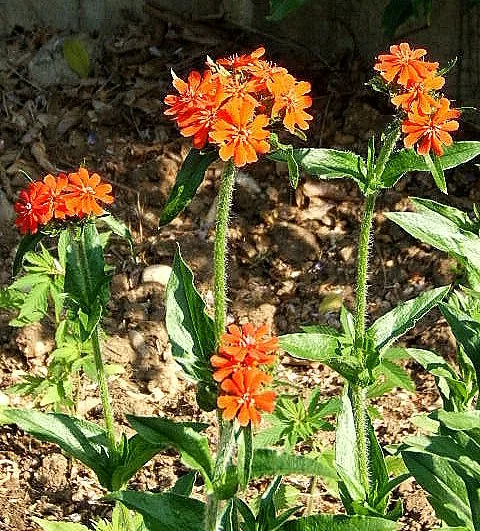
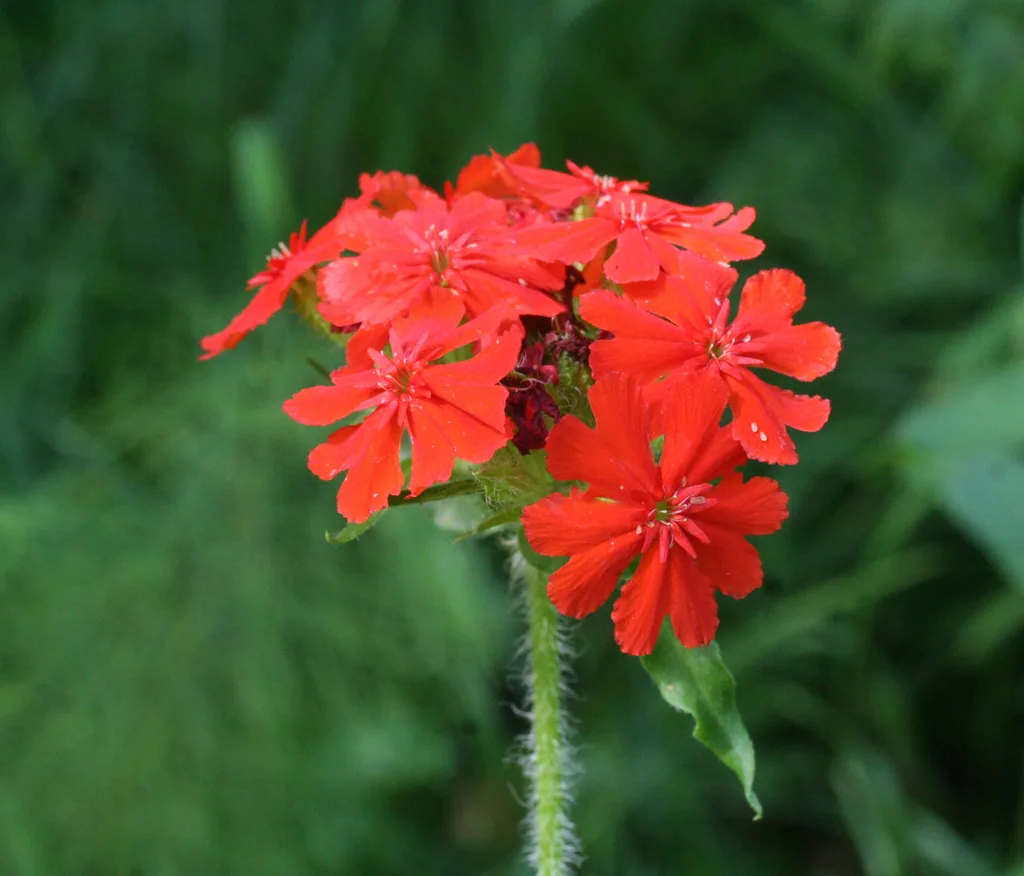

Cómo cultivar y cuidar Maltese Cross
Silene chalcedonica
Escrito por Emilio Marruso · última revisión
Tóxica para: Perros · Por qué
De un vistazo
Esta planta está a gusto a pleno sol o en semisombra, y también crece en maceta. Riega con regularidad las matas recién plantadas durante los primeros meses, dale un suelo bien drenado y quita las flores a medida que se marchitan. Sus tallos alcanzan de 51 cm a 1 m de alto, así que destaca dondequiera que la plantes.
- Sol
Pleno sol o semisombra; en climas cálidos agradece sombra por la tarde
Qué dicen las fuentes (3)
Luz: Pleno sol a semisombra
climas más cálidos: A spot that provides afternoon shade is particularly beneficial in warmer climates.
— How to grow Silene chalcedonica: an expert flower guide | Homes and Gardens [5] Full sun (6 or more hours of direct sunlight a day) Partial Shade (Direct sunlight only part of the day, 2-6 hours)
— Silene chalcedonica (Burning Love, Common Rose Campion, Constantinople Campion, Flower of Bristol, Flower of Constantinople, Jerusalem Cross, Knight's Cross, Maltese Cross, Meadow Campion, None-such, Scarlet Lightning, Scarlet Lychnis, Tears of Christ) | North Carolina Extension Gardener Plant Toolbox [1] Grow Silene chalcedonica in full sun for the best flowers, but the plant can also tolerate part shade.
— How to grow Silene chalcedonica: an expert flower guide | Homes and Gardens [5] - Riego
Riega a menudo las plantas nuevas los primeros meses; acolcha a principios de primavera para conservar la humedad
Qué dicen las fuentes (2)
Notas sobre el riego: Riega los grupos recién plantados regularmente durante los primeros meses; cubre con mantillo a principios de primavera para retener la humedad; necesita un suelo bien drenado.
However, newly-planted clumps need regular watering for the first few months to get established, and, even afterwards, the plants will perform better when watered during dry periods.
— How to grow Silene chalcedonica: an expert flower guide | Homes and Gardens [5] Mulching the plant in early spring will help the soil to retain moisture and suppress weeds.
— How to grow Silene chalcedonica: an expert flower guide | Homes and Gardens [5] - Suelo
Necesita un suelo bien drenado
Qué dicen las fuentes (2)
Notas sobre el riego: Riega los grupos recién plantados regularmente durante los primeros meses; cubre con mantillo a principios de primavera para retener la humedad; necesita un suelo bien drenado.
However, newly-planted clumps need regular watering for the first few months to get established, and, even afterwards, the plants will perform better when watered during dry periods.
— How to grow Silene chalcedonica: an expert flower guide | Homes and Gardens [5] Mulching the plant in early spring will help the soil to retain moisture and suppress weeds.
— How to grow Silene chalcedonica: an expert flower guide | Homes and Gardens [5] - Poda
Quita las flores marchitas; corta los tallos a finales de otoño o a principios de primavera
Qué dicen las fuentes (4)
Poda: Elimina las flores marchitas a medida que se desvanecen; poda después de la floración en verano; corta los tallos a fines de otoño o principios de primavera
Según Homes and Gardens: Tabar Gifford also recommends: 'Cut back the stems in late fall or early spring to prepare for new growth.'
— How to grow Silene chalcedonica: an expert flower guide | Homes and Gardens [5] Según BOKU Wien: empfiehlt es sich, die Pflanze nach Blüte im Sommer etwa eine Handbreit über dem Boden abschneiden.
— Lychnis chalcedonica (Brennende Liebe, scarlet lychnis) [6] Tabar Gifford also recommends: 'Cut back the stems in late fall or early spring to prepare for new growth.'
— How to grow Silene chalcedonica: an expert flower guide | Homes and Gardens [5] empfiehlt es sich, die Pflanze nach Blüte im Sommer etwa eine Handbreit über dem Boden abschneiden.
— Lychnis chalcedonica (Brennende Liebe, scarlet lychnis) [6] - Plagas
Pulgones y babosas
Qué dicen las fuentes (1)
Plagas: pulgones, babosas
Insects, Diseases, and Other Plant Problems: Aphids and slugs are known to feed on the Maltese Cross. The plant is generally disease-free.
— Silene chalcedonica (Burning Love, Common Rose Campion, Constantinople Campion, Flower of Bristol, Flower of Constantinople, Jerusalem Cross, Knight's Cross, Maltese Cross, Meadow Campion, None-such, Scarlet Lightning, Scarlet Lychnis, Tears of Christ) | North Carolina Extension Gardener Plant Toolbox [1] - Atención
El viento y la lluvia fuerte tumban los tallos: ponles tutores; quita las flores para que no se resiembre
- Tamaño
De 51 cm a 1 m de alto y 10–51 cm de ancho
Qué dicen las fuentes (3)
Altura adulta: 50.8-101.6 cm (20-40 pulgadas)
Maltese Cross is an erect deciduous perennial plant that grows about 20 to 40 inches tall.
— Silene chalcedonica (Burning Love, Common Rose Campion, Constantinople Campion, Flower of Bristol, Flower of Constantinople, Jerusalem Cross, Knight's Cross, Maltese Cross, Meadow Campion, None-such, Scarlet Lightning, Scarlet Lychnis, Tears of Christ) | North Carolina Extension Gardener Plant Toolbox [1] Height: 1 ft. 8 in. - 3 ft. 4 in. Width: 0 ft. 4 in. - 1 ft. 8 in.
— Silene chalcedonica (Burning Love, Common Rose Campion, Constantinople Campion, Flower of Bristol, Flower of Constantinople, Jerusalem Cross, Knight's Cross, Maltese Cross, Meadow Campion, None-such, Scarlet Lightning, Scarlet Lychnis, Tears of Christ) | North Carolina Extension Gardener Plant Toolbox [1] Anchura adulta: 10.16-50.8 cm (4 pulg-1 pie 8 pulg)
Height: 1 ft. 8 in. - 3 ft. 4 in. Width: 0 ft. 4 in. - 1 ft. 8 in.
— Silene chalcedonica (Burning Love, Common Rose Campion, Constantinople Campion, Flower of Bristol, Flower of Constantinople, Jerusalem Cross, Knight's Cross, Maltese Cross, Meadow Campion, None-such, Scarlet Lightning, Scarlet Lychnis, Tears of Christ) | North Carolina Extension Gardener Plant Toolbox [1] - Multiplicación
Por semillas, dividiendo las matas o con esquejes basales a principios de primavera
Qué dicen las fuentes (4)
Propagación: Semilla, división de rizomas, esquejes de tallo.
The plant is propagated by seeds, division of its rhizomes, and basal cuttings.
— Silene chalcedonica (Burning Love, Common Rose Campion, Constantinople Campion, Flower of Bristol, Flower of Constantinople, Jerusalem Cross, Knight's Cross, Maltese Cross, Meadow Campion, None-such, Scarlet Lightning, Scarlet Lychnis, Tears of Christ) | North Carolina Extension Gardener Plant Toolbox [1] The ideal time to divide plants is in the fall, while you can also collect seeds from Silene chalcedonica in late summer or fall to sow next year.
— How to grow Silene chalcedonica: an expert flower guide | Homes and Gardens [5] Esquejes: Esquejes basales a principios de primavera.
Propagate by division or basal cuttings in early spring.
— [7] The plant is propagated by seeds, division of its rhizomes, and basal cuttings.
— Silene chalcedonica (Burning Love, Common Rose Campion, Constantinople Campion, Flower of Bristol, Flower of Constantinople, Jerusalem Cross, Knight's Cross, Maltese Cross, Meadow Campion, None-such, Scarlet Lightning, Scarlet Lychnis, Tears of Christ) | North Carolina Extension Gardener Plant Toolbox [1] - Maceta
Crece también en maceta
Qué dicen las fuentes (1)
En maceta: Sí
Silene chalcedonica can grow in pots in a container garden on a deck, patio, or balcony.
— How to grow Silene chalcedonica: an expert flower guide | Homes and Gardens [5] - Seguridad
No es tóxica para los perros, pero si comen mucha puede sentarles mal al estómago
Resumen
La Silene chalcedonica, antes Lychnis chalcedonica, es una perenne erecta con racimos de flores escarlatas en forma de cruz en verano. [1] Prefiere pleno sol, humedad constante y suelo bien drenado, y las plantas altas pueden necesitar entutorado y resguardo del viento. [1] La eliminación de las flores marchitas prolonga la floración, y las flores atraen colibríes, abejas y mariposas. [1]
Citado en inglés, como en la fuente.
Cuidados
Riego
Riego
Las fuentes dan valores distintos según la región, la zona o las condiciones de cultivo.
Lo que dice cada fuente
Según NC State Extension: Humedad constante
Según Homes and Gardens: Tolera la sequía una vez establecida; riega durante los períodos secos.
Qué dicen las fuentes (5)
Según NC State Extension: The Maltese Cross prefers full sun and requires constant moisture and well-drained soil.Según Homes and Gardens: However, newly-planted clumps need regular watering for the first few months to get established, and, even afterwards, the plants will perform better when watered during dry periods.The Maltese Cross prefers full sun and requires constant moisture and well-drained soil.Maltese cross grows best in full sunlight on well-drained soils (eFloras 2008, Kahtz 2008). It requires constant moistureTrockenheit verträgt diese Pflanze nicht gut, weshalb regelmäßige Wassergaben wichtig sind.Notas sobre el riego
Riega los grupos recién plantados regularmente durante los primeros meses; cubre con mantillo a principios de primavera para retener la humedad; necesita un suelo bien drenado.
Qué dicen las fuentes (2)
However, newly-planted clumps need regular watering for the first few months to get established, and, even afterwards, the plants will perform better when watered during dry periods.Mulching the plant in early spring will help the soil to retain moisture and suppress weeds.Luz
Pleno sol a semisombra
Lo que dice cada fuente
climas más cálidos: La sombra de la tarde es beneficiosa
Qué dicen las fuentes (3)
climas más cálidos: A spot that provides afternoon shade is particularly beneficial in warmer climates.Full sun (6 or more hours of direct sunlight a day)
Partial Shade (Direct sunlight only part of the day, 2-6 hours)Grow Silene chalcedonica in full sun for the best flowers, but the plant can also tolerate part shade.Clima y frío
Rusticidad, zona más fría
Las fuentes dan valores distintos según la región, la zona o las condiciones de cultivo.
Lo que dice cada fuente
Según NC State Extension: 3a [mínima invernal de −40 a −37,2 °C (de −40 a −35 °F)]
Según Missouri Botanical Garden: 4 [mínima invernal de −34,4 a −28,9 °C (de −30 a −20 °F)]
Qué dicen las fuentes (2)
Según NC State Extension: USDA Plant Hardiness Zone:
3a, 3b, 4a, 4b, 5a, 5b, 6a, 6b, 7a, 7b, 8a, 8b, 9a, 9bSegún Missouri Botanical Garden: Recommended
for planting in sunny places on well-drained soil. In cultivation
since the XVI century. Z 4.Rusticidad, zona más cálida
9b [mínima invernal de −3,9 a −1,1 °C (de 25 a 30 °F)]
Qué dicen las fuentes (1)
USDA Plant Hardiness Zone:
3a, 3b, 4a, 4b, 5a, 5b, 6a, 6b, 7a, 7b, 8a, 8b, 9a, 9bDónde cultivarla
Sí
Qué dicen las fuentes (1)
Silene chalcedonica can grow in pots in a container garden on a deck, patio, or balcony.Propagación
Semilla, división de rizomas, esquejes de tallo.
Qué dicen las fuentes (2)
The plant is propagated by seeds, division of its rhizomes, and basal cuttings.The ideal time to divide plants is in the fall, while you can also collect seeds from Silene chalcedonica in late summer or fall to sow next year.Cultivo
La planta
Ciclo de vida
bienal o perenne
Qué dicen las fuentes (1)
Life Cycle: Biennial Perennial Recommended Propagation Strategy: Division Seed Stem CuttingFamilia
Cariofiláceas
Qué dicen las fuentes (1)
It is a member of the Caryophyllaceae family that includes carnations and pinks.Altura adulta
50.8-101.6 cm (20-40 pulgadas)
Qué dicen las fuentes (2)
Maltese Cross is an erect deciduous perennial plant that grows about 20 to 40 inches tall.Height: 1 ft. 8 in. - 3 ft. 4 in. Width: 0 ft. 4 in. - 1 ft. 8 in.Anchura adulta
10.16-50.8 cm (4 pulg-1 pie 8 pulg)
Qué dicen las fuentes (1)
Height: 1 ft. 8 in. - 3 ft. 4 in. Width: 0 ft. 4 in. - 1 ft. 8 in.Plagas y enfermedades
Plagas
pulgones, babosas
Qué dicen las fuentes (1)
Insects, Diseases, and Other Plant Problems: Aphids and slugs are known to feed on the Maltese Cross. The plant is generally disease-free.Propagación
Esquejes
Esquejes basales a principios de primavera.
Qué dicen las fuentes (2)
Propagate by division or basal cuttings in early spring.The plant is propagated by seeds, division of its rhizomes, and basal cuttings.Problemas
Pulgones y babosas
Síntoma: Los pulgones y las babosas se alimentan de la planta
Qué dicen las fuentes (1)
Insects, Diseases, and Other Plant Problems: Aphids and slugs are known to feed on the Maltese Cross. The plant is generally disease-free.
— Silene chalcedonica (Burning Love, Common Rose Campion, Constantinople Campion, Flower of Bristol, Flower of Constantinople, Jerusalem Cross, Knight's Cross, Maltese Cross, Meadow Campion, None-such, Scarlet Lightning, Scarlet Lychnis, Tears of Christ) | North Carolina Extension Gardener Plant Toolbox [1] Daño por viento
Síntoma: Los tallos altos se caen por el viento o la lluvia intensa
Qué hacer: Entutora las plantas y elige un lugar resguardado
Qué dicen las fuentes (1)
Tall plant supports prevent the plant from being toppled in winds or heavy rain, especially when it is covered in flowers.
— How to grow Silene chalcedonica: an expert flower guide | Homes and Gardens [5] Resiembra natural
Síntoma: Se resiembra sola por todo el jardín
Qué hacer: Elimina las flores marchitas para evitar que se propague
Qué dicen las fuentes (1)
Silene chalcedonica is known to self-seed around a garden once planted, but it is not officially regarded as an invasive plant .
— How to grow Silene chalcedonica: an expert flower guide | Homes and Gardens [5]
Remedios
Las fuentes consultadas no dan remedios para esta planta.
Venenosa para los animales
Según la fuente, citada textualmente. No es un consejo médico ni veterinario: si una persona o un animal pudo haber ingerido esta planta, contacta con un centro de toxicología o con un veterinario.
Calendario
Poda
Elimina las flores marchitas a medida que se desvanecen; poda después de la floración en verano; corta los tallos a fines de otoño o principios de primavera
Lo que dice cada fuente
Según Homes and Gardens: Finales de otoño o principios de primavera
Según BOKU Wien: Después de la floración en verano, a un palmo del suelo
Qué dicen las fuentes (4)
Según Homes and Gardens: Tabar Gifford also recommends: 'Cut back the stems in late fall or early spring to prepare for new growth.'Según BOKU Wien: empfiehlt es sich, die Pflanze nach Blüte im Sommer etwa eine Handbreit über dem Boden abschneiden.Tabar Gifford also recommends: 'Cut back the stems in late fall or early spring to prepare for new growth.'empfiehlt es sich, die Pflanze nach Blüte im Sommer etwa eine Handbreit über dem Boden abschneiden.Meses tal como los dan las fuentes, en su mayoría de Estados Unidos (hemisferio norte). En el hemisferio sur se desplazan unos seis meses.
Plantas similares
- Fire Pink Silene virginica
- Silene musgo Silene acaulis
- Clavel lanudo Silene coronaria
- Starry Campion Silene stellata
- Wild Pink Silene caroliniana
- Colleja Silene vulgaris
- Silene dioica Silene dioica
- Royal catchfly Silene regia
Fuentes
Cada valor anterior se cita de estos documentos. Los enlaces llevan al editor original.
- Silene chalcedonica (Burning Love, Common Rose Campion, Constantinople Campion, Flower of Bristol, Flower of Constantinople, Jerusalem Cross, Knight's Cross, Maltese Cross, Meadow Campion, None-such, Scarlet Lightning, Scarlet Lychnis, Tears of Christ) | North Carolina Extension Gardener Plant Toolbox · plants.ces.ncsu.edu, consultado
- Last Updated: 2011-01-21 by Timm Nawrocki · accs.uaa.alaska.edu, consultado
- Lychnis chalcedonica (scarlet lychnis): Go Botany · gobotany.nativeplanttrust.org, consultado
- MBG: Research: Russia: Ornamental plants from Russia · mobot.org, consultado
- How to grow Silene chalcedonica: an expert flower guide | Homes and Gardens · homesandgardens.com, consultado
- Lychnis chalcedonica (Brennende Liebe, scarlet lychnis) · boku.ac.at, consultado
- rhs.org.uk · rhs.org.uk
Escrito por Emilio Marruso · última revisión