

Cómo cultivar y cuidar Japanese Tree Lilac
Syringa reticulata
Escrito por Emilio Marruso · última revisión
De un vistazo
Esta lila llega a 4,6–6,1 m de ancho y los barrenadores y las cochinillas la molestan menos que a otras lilas. Dale un suelo húmedo y bien drenado y un abono equilibrado bajo en nitrógeno, y dedicará su energía a los botones florales en vez de a un follaje exuberante. Incluso puedes obtener nuevas plantas de semilla o por esquejes de tallo.
- Riego
Mantén la tierra húmeda pero bien drenada
Qué dicen las fuentes (1)
Riego: Suelo húmedo y bien drenado
Full sun; moist, well drained, slightly acid soil.
— Japanese Tree Lilac (Syringa reticulata)-Hort Answers - University of Illinois Extension [3] - Frío
Aguanta inviernos de hasta −40 °C (−40 °F)
Muy rústica · USDA 3a · RHS H7 · Z3
Qué dicen las fuentes (6)
Rusticidad, zona más fría: 3a [mínima invernal de −40 a −37,2 °C (de −40 a −35 °F)]
Según NC State Extension: USDA Plant Hardiness Zone: 3a, 3b, 4a, 4b, 5a, 5b, 6a, 6b, 7a, 7b
— Syringa reticulata (Giant Tree Lilac, Japanese Tree Lilac) | North Carolina Extension Gardener Plant Toolbox [1] Según University of Illinois Extension: USDA Hardiness Zone 3 - 7
— Japanese Tree Lilac (Syringa reticulata)-Hort Answers - University of Illinois Extension [3] USDA Plant Hardiness Zone: 3a, 3b, 4a, 4b, 5a, 5b, 6a, 6b, 7a, 7b
— Syringa reticulata (Giant Tree Lilac, Japanese Tree Lilac) | North Carolina Extension Gardener Plant Toolbox [1] Rusticidad, zona más cálida: 7b [mínima invernal de −15 a −12,2 °C (de 5 a 10 °F)]
Según NC State Extension: USDA Plant Hardiness Zone: 3a, 3b, 4a, 4b, 5a, 5b, 6a, 6b, 7a, 7b
— Syringa reticulata (Giant Tree Lilac, Japanese Tree Lilac) | North Carolina Extension Gardener Plant Toolbox [1] Según University of Illinois Extension: USDA Hardiness Zone 3 - 7
— Japanese Tree Lilac (Syringa reticulata)-Hort Answers - University of Illinois Extension [3] USDA Plant Hardiness Zone: 3a, 3b, 4a, 4b, 5a, 5b, 6a, 6b, 7a, 7b
— Syringa reticulata (Giant Tree Lilac, Japanese Tree Lilac) | North Carolina Extension Gardener Plant Toolbox [1] - Abonado
Abono equilibrado bajo en nitrógeno, como 5-10-5; no abones el primer año tras plantar
Qué dicen las fuentes (10)
Abonos minerales: Fertilizante equilibrado no demasiado alto en nitrógeno, como 5-10-5; 10-10-10 también es adecuado
fertilize in early spring before growth starts with a balanced fertilizer which is not too high in nitrogen (e.g. 5-10-5 or similar).
— [6] If either nutrient is limited, a complete fertilizer containing nitrogen (N), phospho- rus (P) and potassium (K) can be used. A 5-10-5 or a 10-10-10 fertilizer is a good choice.
— [5] Evitar: Fertilizar en el primer año después de la plantación; sobrefertilizar; fertilizantes con más del 20% de nitrógeno; fertilizantes para césped con alto nitrógeno cerca de la base
Do not fertilize newly planted shrubs or trees the first year after planting as they need to put their energy into establishing a healthy root system
— [5] Be careful not to overfertilize plants or to use fertiliz- ers containing more than 20% nitrogen.
— [5] Lawn fer- tilizers are often high in nitrogen; avoid using them around the base of your lilac.
— [5] Do not fertilize newly planted lilac plants. Beginning the second growing season, fertilize in early spring
— [6] Too much nitrogen may result in green shrubs with few blooms, so make sure to keep clear of your lilac shrubs when fertilizing your lawn.
— [6] Signos de exceso: Crecimiento vegetativo excesivo y follaje verde exuberante a costa de los botones florales; en casos extremos la planta muere
Too much nitrogen can cause excessive vegetative growth at the expense of flower bud development; in extreme cases it can kill the plant.
— [5] Too much nitrogen (N) can lead to lush, green foliage at the expense of flower bud production.
— [5] Too much nitrogen may result in green shrubs with few blooms, so make sure to keep clear of your lilac shrubs when fertilizing your lawn.
— [6] - Plagas
Barrenadores, cochinillas, oídio y moho gris; sufre menos barrenadores y cochinillas que otras lilas
Qué dicen las fuentes (4)
Plagas: perforadores, insectos escama
Borers and scale insects can attack, but this species is less troubled by them than other lilacs.
— Japanese Tree Lilac (Syringa reticulata)-Hort Answers - University of Illinois Extension [3] Enfermedades: tizón bacteriano/cancro, moho gris, mildiu polvoriento, pudriciones y decaimientos de la madera, amarillamiento del fresno
Bacterial Disease - Bacterial Blight/Canker [Shrubs, Trees and Tree Fruit] ( Pseudomonas syringae pv. syringae )
— Japanese Tree Lilac (Syringa reticulata)-Hort Answers - University of Illinois Extension [3] Fungal Disease - Gray Mold [Trees and Shrubs] ( Botrytis cinerea and other species ) - Powdery Mildew [Shrubs and Trees] ( Many genus and species involved ) - Wood Rots and Decays ( Many genus and species involved )
— Japanese Tree Lilac (Syringa reticulata)-Hort Answers - University of Illinois Extension [3] Wood Rots and Decays ( Many genus and species involved ) Phytoplasma Disease - Ash Yellows ( unnamed phytoplasma )
— Japanese Tree Lilac (Syringa reticulata)-Hort Answers - University of Illinois Extension [3] - Tamaño
De 4,6 a 6,1 m de ancho
Qué dicen las fuentes (1)
Anchura adulta: 457-610 cm (15-20 pies)
Dimensions: Height: 25 ft. 0 in. - 30 ft. 0 in. Width: 15 ft. 0 in. - 20 ft. 0 in.
— Syringa reticulata (Giant Tree Lilac, Japanese Tree Lilac) | North Carolina Extension Gardener Plant Toolbox [1] - Multiplicación
De semilla o por esquejes de tallo
Qué dicen las fuentes (1)
Propagación: Semilla, esqueje de tallo
Life Cycle: Woody Recommended Propagation Strategy: Seed Stem Cutting
— Syringa reticulata (Giant Tree Lilac, Japanese Tree Lilac) | North Carolina Extension Gardener Plant Toolbox [1]
Resumen
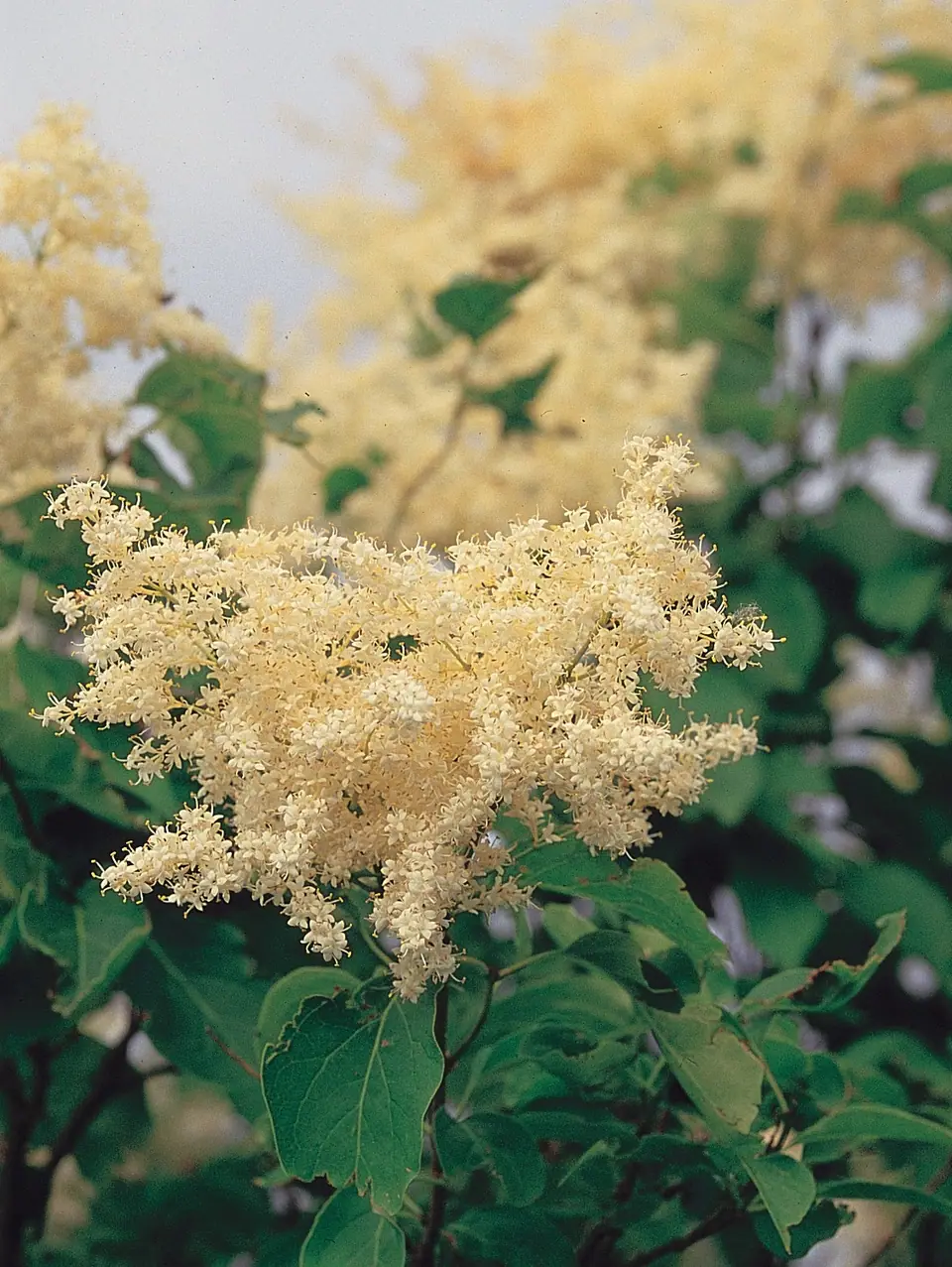
Syringa reticulata es un pequeño árbol caducifolio o arbusto grande con flores cremosas y fragantes en junio, utilizado como árbol de patio, calle o espécimen. [1] Los documentos lo describen como sin problemas serios de insectos o enfermedades. [1]
Citado en inglés, como en la fuente.
Esta ficha está incompleta: las fuentes consultadas aún no cubren todos los campos.
Aún no cubierto por nuestras fuentes: Poda
Cuidados
Riego
Suelo húmedo y bien drenado
Qué dicen las fuentes (1)
Full sun; moist, well drained, slightly acid soil.Luz
Las fuentes dan valores distintos según la región, la zona o las condiciones de cultivo.
Lo que dice cada fuente
Según NC State Extension: Pleno sol; tolera semisombra, pero se requiere pleno sol para una producción prolífica de flores
Según University of Illinois Extension (Hort Answers): Pleno sol
Según University of Illinois Extension (Selecting Trees): Sombra completa, pleno sol, sol/sombra parcial
Qué dicen las fuentes (4)
Según NC State Extension: This tree will tolerate partial shade; however, full sun is required for prolific flower production.Según University of Illinois Extension (Hort Answers): Exposure/Light Requirements
Full SunSegún University of Illinois Extension (Selecting Trees): Exposure/ Light Requirements:
Full Shade
Full Sun
Partial Sun/ShadeThis tree will tolerate partial shade; however, full sun is required for prolific flower production.Clima y frío
Rusticidad, zona más fría
3a [mínima invernal de −40 a −37,2 °C (de −40 a −35 °F)]
Lo que dice cada fuente
Según NC State Extension: 3a [mínima invernal de −40 a −37,2 °C (de −40 a −35 °F)]
Según University of Illinois Extension: 3 [mínima invernal de −40 a −34,4 °C (de −40 a −30 °F)]
Qué dicen las fuentes (3)
Según NC State Extension: USDA Plant Hardiness Zone:
3a, 3b, 4a, 4b, 5a, 5b, 6a, 6b, 7a, 7bSegún University of Illinois Extension: USDA Hardiness Zone
3 - 7USDA Plant Hardiness Zone:
3a, 3b, 4a, 4b, 5a, 5b, 6a, 6b, 7a, 7bRusticidad, zona más cálida
7b [mínima invernal de −15 a −12,2 °C (de 5 a 10 °F)]
Lo que dice cada fuente
Según NC State Extension: 7b [mínima invernal de −15 a −12,2 °C (de 5 a 10 °F)]
Según University of Illinois Extension: 7 [mínima invernal de −17,8 a −12,2 °C (de 0 a 10 °F)]
Qué dicen las fuentes (3)
Según NC State Extension: USDA Plant Hardiness Zone:
3a, 3b, 4a, 4b, 5a, 5b, 6a, 6b, 7a, 7bSegún University of Illinois Extension: USDA Hardiness Zone
3 - 7USDA Plant Hardiness Zone:
3a, 3b, 4a, 4b, 5a, 5b, 6a, 6b, 7a, 7bPropagación
Semilla, esqueje de tallo
Qué dicen las fuentes (1)
Life Cycle:
Woody
Recommended Propagation Strategy:
Seed
Stem CuttingCultivo
La planta
Ciclo de vida
perenne
Qué dicen las fuentes (1)
Whole Plant Traits:
Plant Type:
Perennial
Shrub
Tree
Woody Plant Leaf Characteristics:
DeciduousFamilia
Oleaceae
Qué dicen las fuentes (1)
Japanese tree lilac is a small deciduous tree or large shrub in the olive family (Oleaceae).Altura adulta
Las fuentes no coinciden:
Lo que dice cada fuente
cultivar 'Ivory Silk': 610-914 cm (20-30 ft):
Qué dicen las fuentes (1)
cultivar 'Ivory Silk': 610-914 cm (20-30 ft): 'Ivory Silk' is a beautiful small tree or large shrub which typically grows 20 - 30' tall.Anchura adulta
457-610 cm (15-20 pies)
Qué dicen las fuentes (1)
Dimensions:
Height: 25 ft. 0 in. - 30 ft. 0 in.
Width: 15 ft. 0 in. - 20 ft. 0 in.Plagas y enfermedades
Plagas
perforadores, insectos escama
Qué dicen las fuentes (1)
Borers and scale insects can attack, but this species is less troubled by them than other lilacs.Enfermedades
tizón bacteriano/cancro, moho gris, mildiu polvoriento, pudriciones y decaimientos de la madera, amarillamiento del fresno
Qué dicen las fuentes (3)
Bacterial Disease
- Bacterial Blight/Canker [Shrubs, Trees and Tree Fruit] ( Pseudomonas syringae pv. syringae )Fungal Disease
- Gray Mold [Trees and Shrubs] ( Botrytis cinerea and other species )
- Powdery Mildew [Shrubs and Trees] ( Many genus and species involved )
- Wood Rots and Decays ( Many genus and species involved )Wood Rots and Decays ( Many genus and species involved )
Phytoplasma Disease
- Ash Yellows ( unnamed phytoplasma )Abonado
Cuándo
Abonos minerales
Fertilizante equilibrado no demasiado alto en nitrógeno, como 5-10-5; 10-10-10 también es adecuado
Qué dicen las fuentes (2)
fertilize in early spring before growth starts with a balanced fertilizer which is not too high in nitrogen (e.g. 5-10-5 or similar).If either nutrient is limited, a complete fertilizer containing nitrogen (N), phospho- rus (P) and potassium (K) can be used. A 5-10-5 or a 10-10-10 fertilizer is a good choice.Evitar
Fertilizar en el primer año después de la plantación; sobrefertilizar; fertilizantes con más del 20% de nitrógeno; fertilizantes para césped con alto nitrógeno cerca de la base
Qué dicen las fuentes (5)
Do not fertilize newly planted shrubs or trees the first year after planting as they need to put their energy into establishing a healthy root systemBe careful not to overfertilize plants or to use fertiliz- ers containing more than 20% nitrogen.Lawn fer- tilizers are often high in nitrogen; avoid using them around the base of your lilac.Do not fertilize newly planted lilac plants. Beginning the second growing season, fertilize in early springToo much nitrogen may result in green shrubs with few blooms, so make sure to keep clear of your lilac shrubs when fertilizing your lawn.Signos de exceso
Crecimiento vegetativo excesivo y follaje verde exuberante a costa de los botones florales; en casos extremos la planta muere
Qué dicen las fuentes (3)
Too much nitrogen can cause excessive vegetative growth at the expense of flower bud development; in extreme cases it can kill the plant.Too much nitrogen (N) can lead to lush, green foliage at the expense of flower bud production.Too much nitrogen may result in green shrubs with few blooms, so make sure to keep clear of your lilac shrubs when fertilizing your lawn.Problemas
Barrenadores y cochinillas
Síntoma: Puede atacar, pero la especie es menos afectada por ellos que otras lilas
Qué dicen las fuentes (1)
Borers and scale insects can attack, but this species is less troubled by them than other lilacs.
— Japanese Tree Lilac (Syringa reticulata)-Hort Answers - University of Illinois Extension [3]
Remedios
Cada remedio indica qué dicen las fuentes oficiales; los remedios tradicionales sin fuente oficial aparecen marcados. Los perjudiciales están para que sepas evitarlos.
Cuidar la planta
mildiu polvoriento
bicarbonato de sodio y aceite hortícola en spray Funciona
pretesting any product that you decide to use on a small number of leaves before treating an entire tree or shrub to make sure there are no toxic effects
— hort.extension.wisc.edu [7] Cómo: Bicarbonato de sodio (1½ cucharadas) y un aceite hortícola ligero (a base de parafina) (3 cucharadas) en agua (1 galón).
A combination of baking soda (1½ tablespoons) and a light weight (i.e., paraffin-based) horticultural oil (3 tablespoons) in water (1 gallon) has also been shown to be effective.
— hort.extension.wisc.edu [7] Qué dicen las pruebas A combination of baking soda (1½ tablespoons) and a light weight (i.e., paraffin-based) horticultural oil (3 tablespoons) in water (1 gallon) has also been shown to be effective.
— hort.extension.wisc.edu [7] eliminando los restos de plantas infectadas Fuente oficial, sin prueba independiente
Cómo: Retira y destruye los restos vegetales infectados al final de la temporada de crecimiento.
at the end of the growing season, remove and destroy any infected plant debris as this can serve as a source of spores for the next growing season.
— hort.extension.wisc.edu [7]
barrenador de la lila
poda de la rama infestada Fuente oficial, sin prueba independiente
Cómo: Poda la rama infectada.
Pruning out the infected branch will help with this.
— extension.psu.edu [8]
escama de concha de ostra
poda de las escamas Fuente oficial, sin prueba independiente
Cómo: Poda para eliminar las plagas.
Control these piercing-sucking insects with horticultural oil or by pruning out the pests.
— extension.psu.edu [8]
tizón bacteriano
poda de tallos infectados Fuente oficial, sin prueba independiente
Remember to dip your pruners in an alcohol solution between each cut to avoid spreading the infection.
— extension.psu.edu [8] Cómo: Poda el tallo infectado inmediatamente y destruye todas las partes enfermas de la planta.
Prune the infected stem immediately and destroy all diseased plant parts.
— extension.psu.edu [8]
Calendario
Poda
No figura en las fuentes consultadas.
Meses tal como los dan las fuentes, en su mayoría de Estados Unidos (hemisferio norte). En el hemisferio sur se desplazan unos seis meses.
Valores orientativos
Valores de una fuente secundaria, no comprobados palabra por palabra como el resto de esta página. Úselos como punto de partida.
- Horas de sol
- 6-8 horasValor orientativo, adáptalo a tu clima · Fuente secundaria
- pH del suelo
- 6-7.5Valor orientativo, adáptalo a tu clima · Fuente secundaria
- Nivel de cuidado
- MedioValor orientativo, adáptalo a tu clima · Fuente secundaria
- Crecimiento
- AltaValor orientativo, adáptalo a tu clima · Fuente secundaria
- Poda
- Febrero, marzo, abrilValor orientativo, adáptalo a tu clima · Fuente secundaria
Plantas similares
- Lila común Syringa vulgaris
- Early Lilac Syringa oblata
- Late Lilac Syringa villosa
- Persian lilac Syringa persica
- Amur privet Ligustrum amurense
- Fresno negro Fraxinus nigra
- Fresno azul Fraxinus quadrangulata
- Chinese Fringetree Chionanthus retusus
Fuentes
Cada valor anterior se cita de estos documentos. Los enlaces llevan al editor original.
- Syringa reticulata (Giant Tree Lilac, Japanese Tree Lilac) | North Carolina Extension Gardener Plant Toolbox · plants.ces.ncsu.edu, consultado
- Selecting Trees for Your Home - Japanese Tree Lilac (Syringa reticulata) · web.extension.illinois.edu, consultado
- Japanese Tree Lilac (Syringa reticulata)-Hort Answers - University of Illinois Extension · web.extension.illinois.edu, consultado
- Japanese tree lilac | USU · extension.usu.edu, consultado
- hort.extension.wisc.edu · hort.extension.wisc.edu
- ccenassau.org · ccenassau.org
- hort.extension.wisc.edu · hort.extension.wisc.edu
- extension.psu.edu · extension.psu.edu
Escrito por Emilio Marruso · última revisión