
Cómo cultivar y cuidar Almendro malabar
Terminalia catappa
Escrito por Emilio Marruso · última revisión
De un vistazo
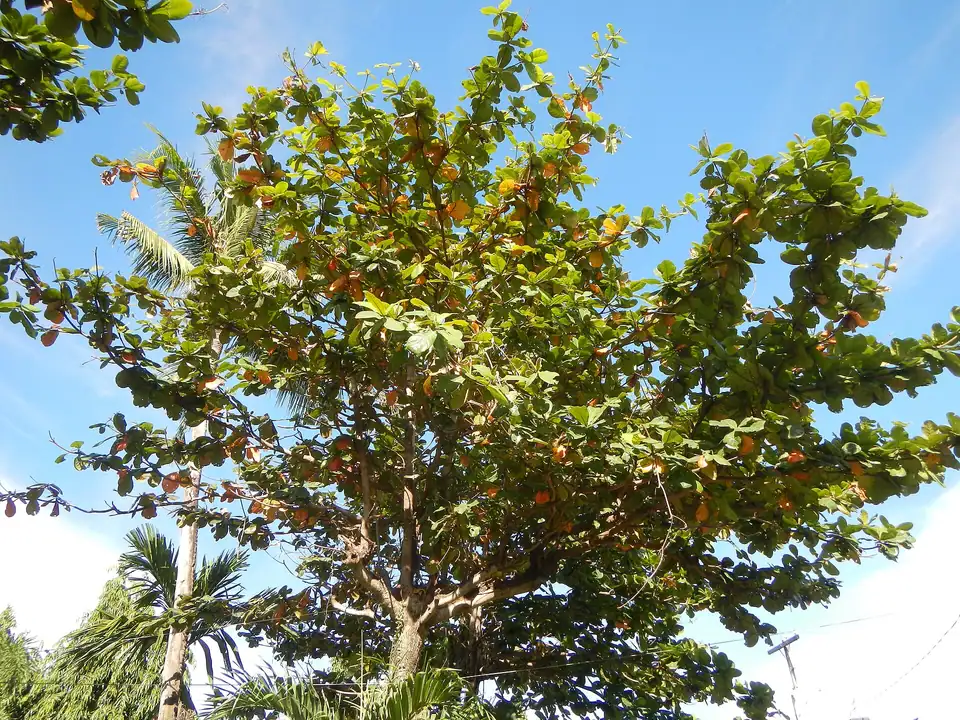
El almendro tropical es un árbol grande y generoso, de 9 a 17 m de alto y de 9 a 15 m de ancho. Le encanta el sol pleno y aguanta el viento, la sal y la sequía, así que es ideal para parques junto al mar y para dar sombra. Dentro de cada fruto esconde una semilla comestible con sabor a almendra, deliciosa cruda o tostada.
- Sol
Sol pleno
Qué dicen las fuentes (2)
Luz: Pleno sol
West Indian-almond should be grown in full sun on any well-drained soil.
— ENH-784/ST626: Terminalia catappa: West Indian-Almond [4] Site the young tree in a full sun location. It accepts almost any soil as long as it well draining.
— Indian Almond Cultivation: Learn How To Grow Tropical Almond Trees | Gardening Know How [7] - Riego
Aguanta bien la sequía; con acolchado crece mejor
Qué dicen las fuentes (3)
Riego: Tolerante a la sequía.
Site the young tree in a full sun location. It accepts almost any soil as long as it well draining. The tree is drought tolerant.
— Indian Almond Cultivation: Learn How To Grow Tropical Almond Trees | Gardening Know How [7] Notas sobre el riego: Bastante tolerante al viento, la sal y la sequía; necesita protección contra temperaturas bajo cero; rinde mejor si se cubre con mantillo y se fertiliza regularmente
Plants are quite tolerant of wind, salt, and drought but do need protection from freezing temperatures.
— ENH-784/ST626: Terminalia catappa: West Indian-Almond [4] Trees perform best if mulched and regularly fertilized. Propagation is by seed.
— ENH-784 [3] - Frío
Aguanta inviernos de hasta 1,7 °C (35 °F)
Delicada: necesita invernadero sin heladas · USDA 10b · RHS H2 · Z10
Qué dicen las fuentes (2)
Rusticidad, zona más fría: 10b [mínima invernal de 1,7 a 4,4 °C (de 35 a 40 °F)]
Family: Combretaceae USDA hardiness zones: 10B through 11 (Figure 2) Origin: native to Asia
— ENH-784 [3] Rusticidad, zona más cálida: 11 [mínima invernal de 4,4 a 10 °C (de 40 a 50 °F)]
Family: Combretaceae USDA hardiness zones: 10B through 11 (Figure 2) Origin: native to Asia
— ENH-784 [3] - Abonado
Abónalo con regularidad para que crezca mejor
Qué dicen las fuentes (3)
Frecuencia: Regularmente
Plants are quite tolerant of wind, salt, and drought but do need protection from freezing temperatures. Trees perform best if mulched and regularly fertilized.
— ENH-784/ST626: Terminalia catappa: West Indian-Almond [4] Notas sobre el riego: Bastante tolerante al viento, la sal y la sequía; necesita protección contra temperaturas bajo cero; rinde mejor si se cubre con mantillo y se fertiliza regularmente
Plants are quite tolerant of wind, salt, and drought but do need protection from freezing temperatures.
— ENH-784/ST626: Terminalia catappa: West Indian-Almond [4] Trees perform best if mulched and regularly fertilized. Propagation is by seed.
— ENH-784 [3] - Cosecha
La semilla del interior del fruto se come cruda o tostada y sabe a almendra
- Plagas
Trips y manchas en las hojas
- Atención
Los frutos caídos manchan coches y aceras y ensucian: plántalo lejos de ellos
- Tamaño
De 9 a 17 m de alto y de 9 a 15 m de ancho
Qué dicen las fuentes (2)
Altura adulta: 914.4-1676.4 cm (30-55 pies)
Description Height: 30 to 55 feet Spread: 30 to 50 feet Crown uniformity: symmetrical Crown shape: pyramidal, spreading
— ENH-784 [3] Anchura adulta: 914.4-1524 cm (30-50 pies)
Description Height: 30 to 55 feet Spread: 30 to 50 feet Crown uniformity: symmetrical Crown shape: pyramidal, spreading
— ENH-784 [3] - Multiplicación
Se multiplica por semilla
Qué dicen las fuentes (1)
Propagación: Semilla
Trees perform best if mulched and regularly fertilized. Propagation is by seed.
— ENH-784 [3]
Resumen
El almendro de las Indias Occidentales es un árbol caducifolio en niveles, adecuado para sombra costera y plantación en parques. [4] Debe cultivarse a pleno sol en suelo bien drenado y tolera viento, sal y sequía, pero no las temperaturas bajo cero. [4] La fruta tiene alto contenido de ácido tánico y causa residuos, que pueden manchar autos y pavimento. [4]
Citado en inglés, como en la fuente.
Esta ficha está incompleta: las fuentes consultadas aún no cubren todos los campos.
Aún no cubierto por nuestras fuentes: Poda
Cuidados
Riego
Riego
Tolerante a la sequía.
Qué dicen las fuentes (1)
Site the young tree in a full sun location. It accepts almost any soil as long as it well draining. The tree is drought tolerant.Notas sobre el riego
Bastante tolerante al viento, la sal y la sequía; necesita protección contra temperaturas bajo cero; rinde mejor si se cubre con mantillo y se fertiliza regularmente
Luz
Pleno sol
Qué dicen las fuentes (2)
West Indian-almond should be grown in full sun on any well-drained soil.Site the young tree in a full sun location. It accepts almost any soil as long as it well draining.Clima y frío
Rusticidad, zona más fría
10b [mínima invernal de 1,7 a 4,4 °C (de 35 a 40 °F)]
Qué dicen las fuentes (1)
Family: Combretaceae USDA hardiness zones: 10B through 11 (Figure 2) Origin: native to AsiaRusticidad, zona más cálida
11 [mínima invernal de 4,4 a 10 °C (de 40 a 50 °F)]
Qué dicen las fuentes (1)
Family: Combretaceae USDA hardiness zones: 10B through 11 (Figure 2) Origin: native to AsiaPropagación
Semilla
Qué dicen las fuentes (1)
Trees perform best if mulched and regularly fertilized. Propagation is by seed.Cultivo
La planta
Familia
Combretáceas
Qué dicen las fuentes (1)
Common name(s): West Indian-almond, sea-almond, tropical-almond, India-almond Family: Combretaceae USDA hardiness zones: 10B through 11Altura adulta
914.4-1676.4 cm (30-55 pies)
Qué dicen las fuentes (1)
Description Height: 30 to 55 feet Spread: 30 to 50 feet Crown uniformity: symmetrical Crown shape: pyramidal, spreadingAnchura adulta
914.4-1524 cm (30-50 pies)
Qué dicen las fuentes (1)
Description Height: 30 to 55 feet Spread: 30 to 50 feet Crown uniformity: symmetrical Crown shape: pyramidal, spreadingPlagas y enfermedades
Plagas
trips
Qué dicen las fuentes (1)
Pests Thrips are a pest of this tree. Diseases Leaf spot disease is a problem with this tree.Enfermedades
mancha foliar
Qué dicen las fuentes (1)
Pests Thrips are a pest of this tree. Diseases Leaf spot disease is a problem with this tree.Abonado
Frecuencia
Regularmente
Qué dicen las fuentes (1)
Plants are quite tolerant of wind, salt, and drought but do need protection from freezing temperatures. Trees perform best if mulched and regularly fertilized.Problemas
Trips y mancha foliar
Síntoma: Los trips son una plaga de este árbol; la enfermedad de la mancha foliar es un problema
Qué dicen las fuentes (1)
Pests Thrips are a pest of this tree. Diseases Leaf spot disease is a problem with this tree.
— ENH-784 [3] Manchas en la fruta y residuos
Síntoma: La fruta con alto contenido de ácido tánico puede manchar autos, pavimento y aceras, y causa residuos
Qué hacer: Ubica el árbol lejos de autos estacionados y aceras; es mejor para parques costeros o zonas de sombra
Qué dicen las fuentes (1)
The fruit is high in tannic acid and this could stain cars, pavement and sidewalks. It also causes significant litter on the ground.
— ENH-784/ST626: Terminalia catappa: West Indian-Almond [4]
Remedios
Las fuentes consultadas no dan remedios para esta planta.
Calendario
Poda
No figura en las fuentes consultadas.
Meses tal como los dan las fuentes, en su mayoría de Estados Unidos (hemisferio norte). En el hemisferio sur se desplazan unos seis meses.
Comestibilidad
Según la fuente, citada textualmente. No comas una planta basándote solo en esta página: los errores de identificación pueden ser peligrosos.
Valores orientativos
Valores de una fuente secundaria, no comprobados palabra por palabra como el resto de esta página. Úselos como punto de partida.
- Ciclo de vida
- PerenneValor orientativo, adáptalo a tu clima · Fuente secundaria
- Horas de sol
- 6-8 horasValor orientativo, adáptalo a tu clima · Fuente secundaria
- Resiste la sequía
- SíValor orientativo, adáptalo a tu clima · Fuente secundaria
- pH del suelo
- 5.5-7.5Valor orientativo, adáptalo a tu clima · Fuente secundaria
- En interior
- SíValor orientativo, adáptalo a tu clima · Fuente secundaria
- Nivel de cuidado
- MedioValor orientativo, adáptalo a tu clima · Fuente secundaria
- Crecimiento
- AltaValor orientativo, adáptalo a tu clima · Fuente secundaria
- Poda
- Febrero, marzo, abril, mayoValor orientativo, adáptalo a tu clima · Fuente secundaria
Plantas similares
- Abeto de Vancuver Abies grandis
- Abraham Trachystemon orientalis
- Bananero de Etiopía Ensete ventricosum
- Acacia longifolia Acacia longifolia
- Acanthus hungaricus Acanthus hungaricus
- Acónito común Aconitum napellus
- Palma de aguja Yucca flaccida
- Adriatic lizard orchid Himantoglossum adriaticum
Fuentes
Cada valor anterior se cita de estos documentos. Los enlaces llevan al editor original.
- Plants of Hawai'i | Bishop Museum · plantsofhawaii.org, consultado
- Terminalia catappa - Leon Levy Native Plant Preserve · levypreserve.org, consultado
- ENH-784 · edis.ifas.ufl.edu, consultado
- ENH-784/ST626: Terminalia catappa: West Indian-Almond · ask.ifas.ufl.edu, consultado
- Terminalia catappa L. Almendra, Indian almond · npn.rngr.net, consultado
- Terminalia catappa · apps.worldagroforestry.org, consultado
- Indian Almond Cultivation: Learn How To Grow Tropical Almond Trees | Gardening Know How · gardeningknowhow.com, consultado
Escrito por Emilio Marruso · última revisión