
Cómo cultivar y cuidar Muérdago blanco
Viscum album
Escrito por Emilio Marruso · última revisión
Tóxica para: Personas · Por qué
De un vistazo
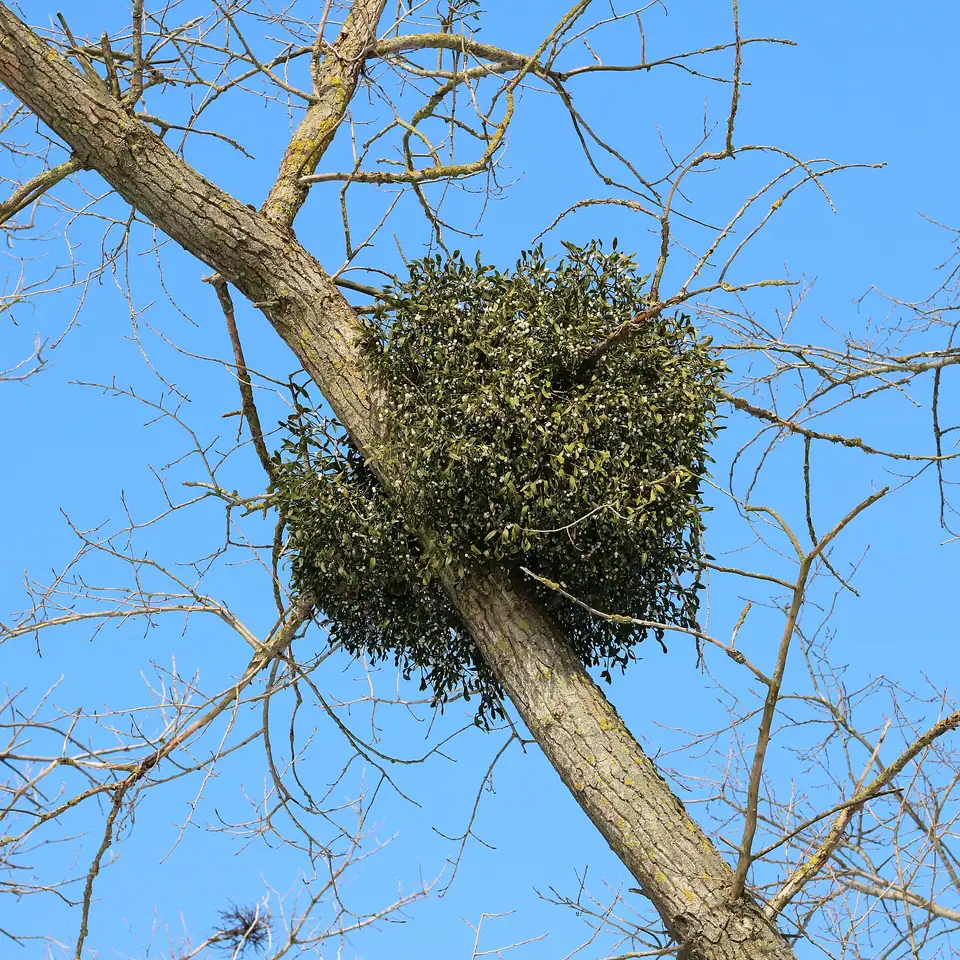
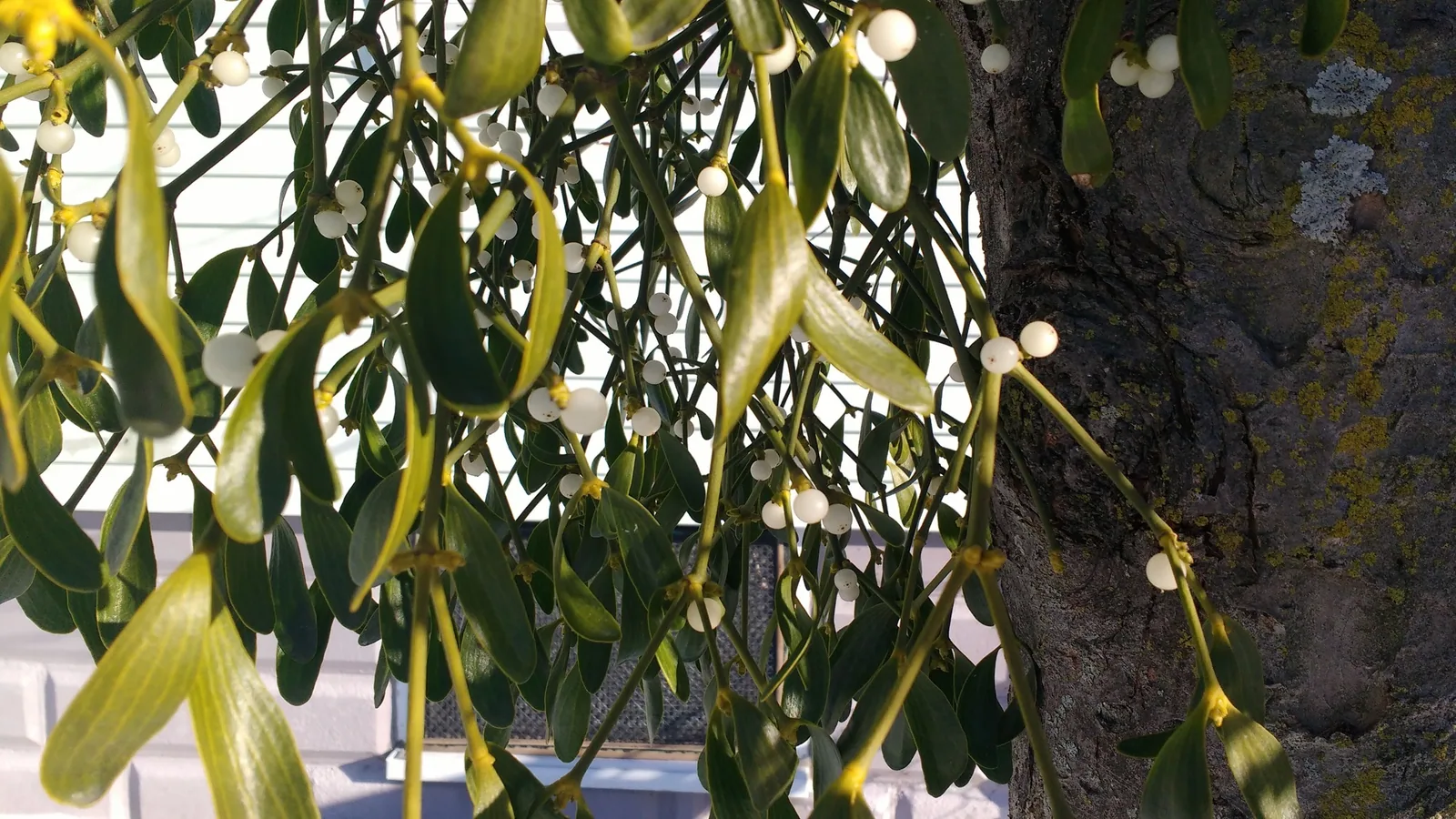
El muérdago es una planta encantadora que vive sobre las ramas de un árbol, feliz a pleno sol o en semisombra. Dale un riego moderado y constante, porque no soporta la sequía. Casi nunca sufre plagas ni enfermedades, y con un poco de cuidado podrás disfrutar de sus flores y bayas. Mantenlo lejos de niños y mascotas, y usa guantes.
- Sol
De pleno sol a semisombra
- Riego
Riego moderado; no soporta la sequía
Qué dicen las fuentes (2)
Riego: Moderado
Water moderate Hardiness Zone 7+ Soil textures sandy, loamy, clay Soil pH acid, neutral, alkaline Tolerates Nutritionally Poor Soil No Drought intolerant
— Mistletoe (Viscum album) — Practical Plants [3] Notas sobre el riego: Intolerante a la sequía
Water moderate Hardiness Zone 7+ Soil textures sandy, loamy, clay Soil pH acid, neutral, alkaline Tolerates Nutritionally Poor Soil No Drought intolerant
— Mistletoe (Viscum album) — Practical Plants [3] - Frío
Aguanta inviernos de hasta −17,8 °C (0 °F)
Rústica en inviernos muy fríos · USDA 7 · RHS H6 · Z7
Qué dicen las fuentes (1)
Rusticidad, zona más fría: 7 [mínima invernal de −17,8 a −12,2 °C (de 0 a 10 °F)]
Water moderate Hardiness Zone 7+ Soil textures sandy, loamy, clay
— Mistletoe (Viscum album) — Practical Plants [3] - Poda
Las plantas ya asentadas se pueden podar bastante fuerte sin problema
- Cosecha
El fruto maduro es comestible, pero con cuidado: toda la planta es algo tóxica
- Polinización
¿Flores pero no bayas? Pon más semillas en las ramas para equilibrar plantas macho y hembra
- Plagas
Casi nunca sufre plagas ni enfermedades
Qué dicen las fuentes (2)
Plagas: no se reportan (generalmente libre de plagas y enfermedades)
Mistletoe is generally free of pests and diseases.
— Mistletoe | RHS Advice [1] Enfermedades: no se reportan (generalmente libre de plagas y enfermedades)
Mistletoe is generally free of pests and diseases.
— Mistletoe | RHS Advice [1] - Atención
Las colonias grandes pueden debilitar mucho al árbol que las sostiene
- Seguridad
Todas sus partes son tóxicas: usa guantes y mantenlo lejos de niños y mascotas
Resumen
El muérdago es un arbusto de hoja perenne semiparasitario que toma agua y nutrientes de su hospedante mientras también realiza la fotosíntesis. [4] Se puede cultivar colocando semillas de bayas maduras en una rama del árbol hospedante, pero el crecimiento es muy lento y la fructificación puede tardar hasta siete años. [1] El manzano es el hospedante más común en el Reino Unido; el tilo, el espino y el álamo también son hospedantes frecuentes. [1]
Citado en inglés, como en la fuente.
Esta ficha está incompleta: las fuentes consultadas aún no cubren todos los campos.
Aún no cubierto por nuestras fuentes: Rusticidad, zona más cálida, Poda
Cuidados
Riego
Riego
Moderado
Qué dicen las fuentes (1)
Water
moderate
Hardiness
Zone 7+
Soil textures
sandy, loamy, clay
Soil pH
acid, neutral, alkaline
Tolerates Nutritionally Poor Soil
No
Drought
intolerantNotas sobre el riego
Intolerante a la sequía
Qué dicen las fuentes (1)
Water
moderate
Hardiness
Zone 7+
Soil textures
sandy, loamy, clay
Soil pH
acid, neutral, alkaline
Tolerates Nutritionally Poor Soil
No
Drought
intolerantLuz
Clima y frío
Rusticidad, zona más fría
7 [mínima invernal de −17,8 a −12,2 °C (de 0 a 10 °F)]
Qué dicen las fuentes (1)
Water
moderate
Hardiness
Zone 7+
Soil textures
sandy, loamy, clayRusticidad, zona más cálida
No figura en las fuentes consultadas.
Propagación
Las fuentes no coinciden:
possible to grow mistletoe yourself by harvesting the seeds from fresh berries in spring, then placing them underneath bark flaps
[5]
Qué dicen las fuentes (2)
Simply wipe the seed onto the underside of the branch, where dew collects naturally.To grow it you need to obtain berries and squash them onto the branches of host trees in late autumn and early winterCultivo
Plagas y enfermedades
Plagas
no se reportan (generalmente libre de plagas y enfermedades)
Qué dicen las fuentes (1)
Mistletoe is generally free of pests and diseases.Enfermedades
no se reportan (generalmente libre de plagas y enfermedades)
Qué dicen las fuentes (1)
Mistletoe is generally free of pests and diseases.Problemas
Árbol hospedante debilitado
Síntoma: Las colonias grandes pueden debilitar significativamente los árboles hospedantes.
Qué hacer: Las plantas establecidas se pueden podar con seguridad bastante al ras.
Flores pero no bayas
Síntoma: El muérdago propagado produce flores pero no bayas.
Qué hacer: Pon más semillas en las ramas para equilibrar la proporción entre plantas masculinas y femeninas.
Qué dicen las fuentes (1)
If your propagated mistletoe produces flowers but no berries it is either a male plant, or a female with no males within insect-pollinating distance. Where this appears to be the case, try putting more seeds on the branches to see if you can even out the balance between male and female plants.
— Mistletoe | RHS Advice [1]
Remedios
Cada remedio indica qué dicen las fuentes oficiales; los remedios tradicionales sin fuente oficial aparecen marcados. Los perjudiciales están para que sepas evitarlos.
Primeros auxilios
Primeros auxilios: no sustituyen al médico
bayas u hojas de muérdago ingeridas
bebe y come algo, luego llama al centro de toxicología Fuente oficial, sin prueba independiente
If you think someone might have swallowed mistletoe, use the web POISON CONTROL online tool to get help right away, or call your poison center at 1-800-222-1222
— poison.org [8] Cómo: El centro de intoxicaciones recomendó dar un refrigerio y algo de beber.
The poison center recommended giving a snack and something to drink
— poison.org [8]
erupción cutánea por tocar el muérdago
Cómo eliminarla
infestación de muérdago
poda de ramas infectadas Funciona
severe heading (topping) that is often used to remove heavy mistletoe infestations weakens a tree
— ipm.ucanr.edu [11] Cómo: Poda las ramas infestadas lo antes posible, cortando al menos un pie por debajo del punto de fijación del muérdago.
as these hosts are pruned regularly, preventing further damage and slowing its spread
— blogs.cdfa.ca.gov [10] Qué dicen las pruebas Mechanical control through pruning tree branches is the most effective method for mistletoe removal.
— ipm.ucanr.edu [11] Si cortas el muérdago cada invierno, no lo erradicas. Funciona en parte
Cómo: Corta las plantas de muérdago al ras del árbol infestado cada invierno.
Simply cutting mistletoe plants out of an infested tree each winter, even without wrapping, is better than doing nothing at all.
— ipm.ucanr.edu [11] Qué dicen las pruebas Simply cutting mistletoe plants out of an infested tree each winter, even without wrapping, is better than doing nothing at all.
— ipm.ucanr.edu [11] envoltura de polietileno negro Funciona en parte
Use twine or tape to secure the plastic to the limb, but do not wrap it too tightly or the branch may be damaged.
— ipm.ucanr.edu [11] Cómo: Corta el muérdago al ras de la rama o el tronco y luego envuelve la zona con unas capas de polietileno negro ancho para excluir la luz.
cutting off the mistletoe flush with the limb or trunk and then wrapping the area with a few layers of wide, black polyethylene to exclude light
— ipm.ucanr.edu [11] Qué dicen las pruebas Nevertheless, it may be necessary to repeat this treatment, especially if the wrapping becomes detached or if the mistletoe does not die.
— ipm.ucanr.edu [11]
Toxicidad
Según la fuente, citada textualmente. No es un consejo médico ni veterinario: si una persona o un animal pudo haber ingerido esta planta, contacta con un centro de toxicología o con un veterinario.
Mistletoe contains toxic compounds, so it’s safest to wear gloves when handling it, and to keep it out of reach of children and pets.
[1]- Partes venenosas
Da die Mistel in allen Teilen, insbesondere den Beeren, giftige Stoffe enthält
[6]
All parts of the plant are poisonous [2] [6] , though the toxicity level is very slight [15] .
[3]
Calendario
Siembra
Las fuentes dan valores distintos según la región, la zona o las condiciones de cultivo.
Lo que dice cada fuente
Según RHS: Febrero a marzo (finales de invierno a principios de primavera)
Según Practical Plants: Finales de otoño y principios de invierno
Según BBC Gardeners World: Primavera
Qué dicen las fuentes (3)
Según RHS: Use mistletoe berries when they’re soft and squishy, typically in late winter to early spring (February to March).Según Practical Plants: To grow it you need to obtain berries and squash them onto the branches of host trees in late autumn and early winterSegún BBC Gardeners World: possible to grow mistletoe yourself by harvesting the seeds from fresh berries in spring, then placing them underneath bark flapsPoda
No figura en las fuentes consultadas.
Meses tal como los dan las fuentes, en su mayoría de Estados Unidos (hemisferio norte). En el hemisferio sur se desplazan unos seis meses.
Comestibilidad
Según la fuente, citada textualmente. No comas una planta basándote solo en esta página: los errores de identificación pueden ser peligrosos.
The ripe fruit is edible [11] . Some caution is advised, see notes above on toxicity[K].
[3]
Plantas similares
- Abeto de Vancuver Abies grandis
- Abraham Trachystemon orientalis
- Bananero de Etiopía Ensete ventricosum
- Acacia longifolia Acacia longifolia
- Acanthus hungaricus Acanthus hungaricus
- Achlys triphylla Achlys triphylla
- Acónito común Aconitum napellus
- Palma de aguja Yucca flaccida
Fuentes
Cada valor anterior se cita de estos documentos. Los enlaces llevan al editor original.
- Mistletoe | RHS Advice · rhs.org.uk, consultado
- Viscum album - Useful Temperate Plants · temperate.theferns.info, consultado
- Mistletoe (Viscum album) — Practical Plants · practicalplants.org, consultado
- Viscum album | mistletoe · rhs.org.uk, consultado
- Mistletoe (Viscum album) | BBC Gardeners World Magazine · gardenersworld.com, consultado
- `Unter dem Mistelzweig´ · archiv.botanischer-garten.fau.de, consultado
- Highlights: 21.12.07 – Botanics Stories · stories.rbge.org.uk, consultado
- poison.org · poison.org
- nnepc.org · nnepc.org
- blogs.cdfa.ca.gov · blogs.cdfa.ca.gov
- ipm.ucanr.edu · ipm.ucanr.edu
Escrito por Emilio Marruso · última revisión