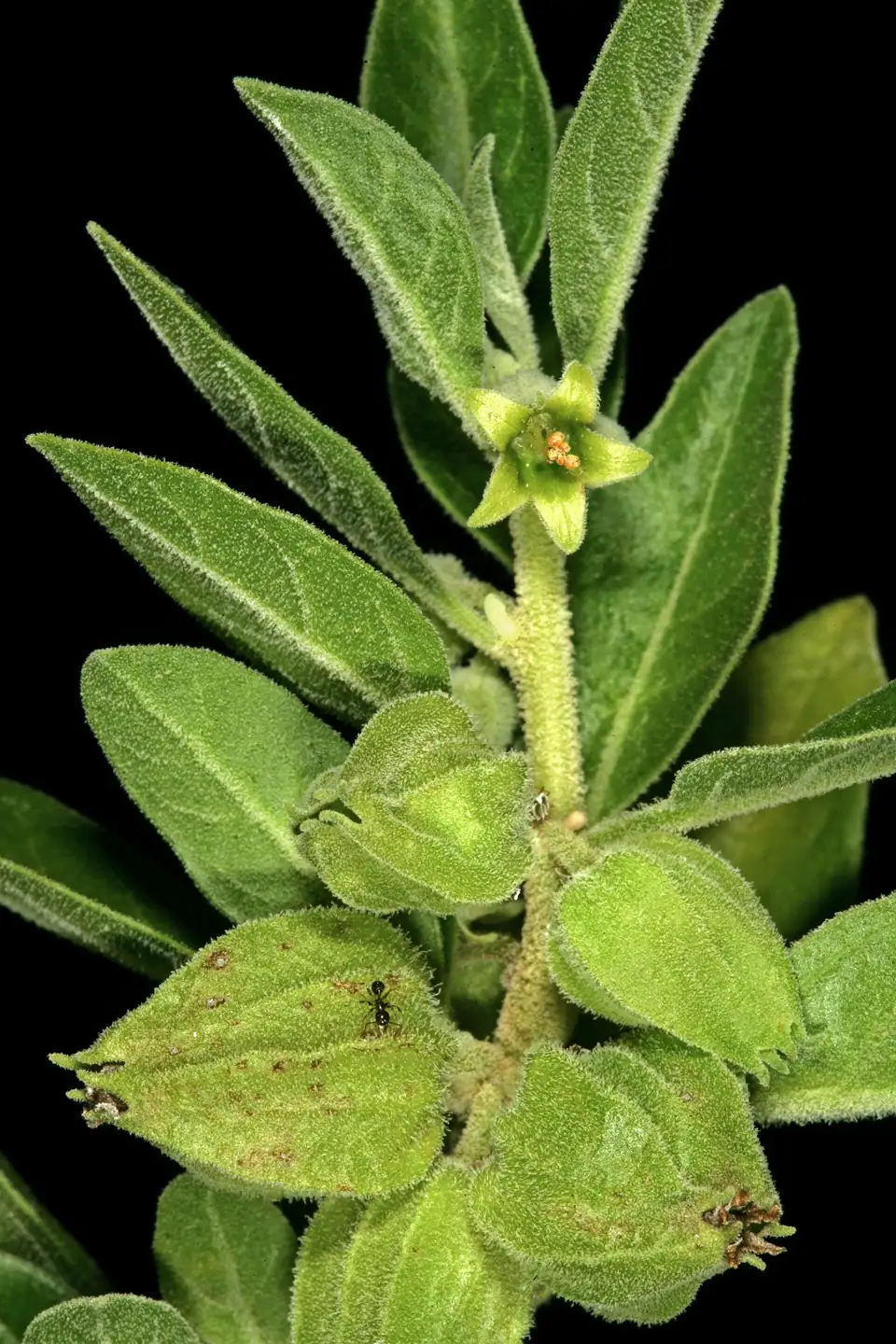


Cómo cultivar y cuidar Bufera
Withania somnifera
Escrito por Emilio Marruso · última revisión
Tóxica para: Personas · Por qué
De un vistazo
Esta perenne amante del sol es fácil de contentar: dale pleno sol, una tierra que drene bien y riego solo cuando el suelo se seque. Siembra las semillas cuando el aire supere los 21 °C. También crece feliz en maceta, y en zonas más frías puedes cultivarla como anual. Sus apreciadas raíces medicinales están listas cuando aparecen flores y frutos.
- Sol
Pleno sol: 6 o más horas de sol directo al día
Qué dicen las fuentes (1)
Luz: Pleno sol (6 o más horas de luz solar directa al día)
Full sun (6 or more hours of direct sunlight a day)
— Withania somnifera (Ashwagandha, Ashwagandha, Vedic, Indian Ginseng, Indian Winter Cherry, Poison Gooseberry, Winter Cherry) | North Carolina Extension Gardener Plant Toolbox [1] - Riego
Riega solo cuando la tierra se seque; necesita buen drenaje
Qué dicen las fuentes (2)
Riego: Riega solo cuando el suelo se seque
Water the plant only when the soil drys out as it does not like wet feet.
— Withania somnifera (Ashwagandha, Ashwagandha, Vedic, Indian Ginseng, Indian Winter Cherry, Poison Gooseberry, Winter Cherry) | North Carolina Extension Gardener Plant Toolbox [1] Notas sobre el riego: No le gustan los pies mojados; buen drenaje
Water the plant only when the soil drys out as it does not like wet feet.
— Withania somnifera (Ashwagandha, Ashwagandha, Vedic, Indian Ginseng, Indian Winter Cherry, Poison Gooseberry, Winter Cherry) | North Carolina Extension Gardener Plant Toolbox [1] - Frío
Aguanta inviernos de hasta −12,2 °C (10 °F)
Rústica en inviernos fríos · USDA 8a · RHS H5 · Z8
Qué dicen las fuentes (2)
Rusticidad, zona más fría: 8a [mínima invernal de −12,2 a −9,4 °C (de 10 a 15 °F)]
8a, 8b, 9a, 9b, 10a, 10b, 11a, 11b, 12a, 12b
— Withania somnifera (Ashwagandha, Ashwagandha, Vedic, Indian Ginseng, Indian Winter Cherry, Poison Gooseberry, Winter Cherry) | North Carolina Extension Gardener Plant Toolbox [1] Rusticidad, zona más cálida: 12b [mínima invernal de 12,8 a 15,6 °C (de 55 a 60 °F)]
8a, 8b, 9a, 9b, 10a, 10b, 11a, 11b, 12a, 12b
— Withania somnifera (Ashwagandha, Ashwagandha, Vedic, Indian Ginseng, Indian Winter Cherry, Poison Gooseberry, Winter Cherry) | North Carolina Extension Gardener Plant Toolbox [1] - Siembra
Siembra las semillas a 2 cm de profundidad cuando el aire supere los 21 °C
Qué dicen las fuentes (2)
Siembra: Siembra la semilla a 2 centímetros [0,8 in] de profundidad una vez que la temperatura del aire supere los 70 grados F [21 °C]
It does well in pots and can be grown from seed planting them 2 centimeters deep once the air temperature is above 70 degrees F.
— Withania somnifera (Ashwagandha, Ashwagandha, Vedic, Indian Ginseng, Indian Winter Cherry, Poison Gooseberry, Winter Cherry) | North Carolina Extension Gardener Plant Toolbox [1] Profundidad de siembra: 2 cm [0,8 in]
It does well in pots and can be grown from seed planting them 2 centimeters deep once the air temperature is above 70 degrees F.
— Withania somnifera (Ashwagandha, Ashwagandha, Vedic, Indian Ginseng, Indian Winter Cherry, Poison Gooseberry, Winter Cherry) | North Carolina Extension Gardener Plant Toolbox [1] - Abonado
Abona con estiércol o humus de lombriz; evita las dosis altas de estiércol y fertilizante
Qué dicen las fuentes (5)
Abonos naturales: Abonos orgánicos, como estiércol de granja o vermicompost: el cultivo responde bien a ellos
producción en campo: It responds well to organic manures and addition of 10 tonnes FYM / 1 tonne vermicompost per hectare is recommended.
— [3] preparación del terreno: The land is well ploughed and pulverized and brought to a fine tilth. 10 to 20 tonnes farm yard manure is applied.
— [3] almácigo: The nursery bed usually raised from ground level is prepared by thorough mixing with compost and sand.
— [3] It responds well to organic manures and addition of 10 tonnes FYM / 1 tonne vermicompost per hectare is recommended.
— [3] Evitar: Dosis altas de estiércol y fertilizante: el cultivo no las necesita
The crop does not require heavy doses of manures and fertilizers.
— [3] - Cosecha
Cosecha las raíces cuando se formen flores y frutos y las hojas empiecen a secarse
Qué dicen las fuentes (2)
Cosecha: Raíces: cuando se forman flores y frutos y las hojas empiezan a secarse
Roots are medicinal, harvest when flowers and fruits form and leaves start to dry out.
— Withania somnifera (Ashwagandha, Ashwagandha, Vedic, Indian Ginseng, Indian Winter Cherry, Poison Gooseberry, Winter Cherry) | North Carolina Extension Gardener Plant Toolbox [1] Cómo cosechar: Cosecha las raíces cuando se formen las flores y los frutos y las hojas comiencen a secarse; para usar los frutos, retira primero las semillas secando los frutos y triturándolos.
Roots are medicinal, harvest when flowers and fruits form and leaves start to dry out. Fruits can also be eaten but remove seeds first, this is best achieved by drying the fruits and crushing them.
— Withania somnifera (Ashwagandha, Ashwagandha, Vedic, Indian Ginseng, Indian Winter Cherry, Poison Gooseberry, Winter Cherry) | North Carolina Extension Gardener Plant Toolbox [1] - Plagas
Vigila la pudrición del tallo y de la raíz
Qué dicen las fuentes (1)
Enfermedades: pudrición del tallo y la raíz
Stem and root rot can effect this plant.
— Withania somnifera (Ashwagandha, Ashwagandha, Vedic, Indian Ginseng, Indian Winter Cherry, Poison Gooseberry, Winter Cherry) | North Carolina Extension Gardener Plant Toolbox [1] - Seguridad
Los frutos son venenosos; puede causar dependencia y restar efecto a los inmunosupresores
Resumen
La ashwagandha es un arbusto o hierba pequeña que se cultiva como anual en zonas más frías que la 8, y como perenne de cobertura del suelo en su hábitat nativo. [1] Se coloca a pleno sol y se riega solo cuando el suelo se seca, ya que no le gustan los pies mojados. [1] La planta se describe como tóxica si se ingiere, y las raíces se usan en la medicina ayurvédica. [1]
Citado en inglés, como en la fuente.
Esta ficha está incompleta: las fuentes consultadas aún no cubren todos los campos.
Aún no cubierto por nuestras fuentes: Poda
Cuidados
Las medidas entre corchetes son nuestra conversión al otro sistema de unidades; el texto citado no cambia.
Riego
Riego
Riega solo cuando el suelo se seque
Qué dicen las fuentes (1)
Water the plant only when the soil drys out as it does not like wet feet.Notas sobre el riego
No le gustan los pies mojados; buen drenaje
Qué dicen las fuentes (1)
Water the plant only when the soil drys out as it does not like wet feet.Luz
Pleno sol (6 o más horas de luz solar directa al día)
Qué dicen las fuentes (1)
Full sun (6 or more hours of direct sunlight a day)Clima y frío
Rusticidad, zona más fría
8a [mínima invernal de −12,2 a −9,4 °C (de 10 a 15 °F)]
Qué dicen las fuentes (1)
8a, 8b, 9a, 9b, 10a, 10b, 11a, 11b, 12a, 12bRusticidad, zona más cálida
12b [mínima invernal de 12,8 a 15,6 °C (de 55 a 60 °F)]
Qué dicen las fuentes (1)
8a, 8b, 9a, 9b, 10a, 10b, 11a, 11b, 12a, 12bDónde cultivarla
Sí
Qué dicen las fuentes (1)
It does well in pots and can be grown from seed planting them 2 centimeters deep once the air temperature is above 70 degrees F.Propagación
Semilla; esqueje de tallo
Qué dicen las fuentes (1)
Life Cycle:
Annual
Perennial
Woody
Recommended Propagation Strategy:
Seed
Stem CuttingCultivo
La planta
Ciclo de vida
perenne (cultivada como anual en zonas más frías que la 8)
Qué dicen las fuentes (1)
Withania somnifera is a small shrub or herb grown as an annual in zones colder than 8 but in its native habitat it grows as a ground covering perennial.Familia
Solanáceas
Qué dicen las fuentes (1)
Attributes: Genus: Withania Species: somnifera Family: Solanaceae Uses (Ethnobotany): An herb used in Ayurvedic medicineSiembra y crecimiento
Profundidad de siembra
2 cm [0,8 in]
Qué dicen las fuentes (1)
It does well in pots and can be grown from seed planting them 2 centimeters deep once the air temperature is above 70 degrees F.Cosecha y conservación
Cómo cosechar
Cosecha las raíces cuando se formen las flores y los frutos y las hojas comiencen a secarse; para usar los frutos, retira primero las semillas secando los frutos y triturándolos.
Qué dicen las fuentes (1)
Roots are medicinal, harvest when flowers and fruits form and leaves start to dry out. Fruits can also be eaten but remove seeds first, this is best achieved by drying the fruits and crushing them.Plagas y enfermedades
Enfermedades
pudrición del tallo y la raíz
Qué dicen las fuentes (1)
Stem and root rot can effect this plant.Abonado
Cuándo
Las fuentes dan valores distintos según la región, la zona o las condiciones de cultivo.
Lo que dice cada fuente
producción en campo: Estiércol incorporado al suelo en la preparación del terreno, antes de hacer los caballones y trasplantar
Qué dicen las fuentes (1)
producción en campo: After the manures are incorporated in the soil, ridges are prepared at 60 cm spacing.Abonos naturales
Abonos orgánicos, como estiércol de granja o vermicompost: el cultivo responde bien a ellos
Lo que dice cada fuente
producción en campo: Estiércol de granja 10 t/ha o vermicompost 1 t/ha
preparación del terreno: Estiércol de granja 10–20 t/ha
almácigo: Compost y arena mezclados a fondo en el bancal
Qué dicen las fuentes (4)
producción en campo: It responds well to organic manures and addition of 10 tonnes FYM / 1 tonne vermicompost per hectare is recommended.preparación del terreno: The land is well ploughed and pulverized and brought to a fine tilth. 10 to 20 tonnes farm yard manure is applied.almácigo: The nursery bed usually raised from ground level is prepared by thorough mixing with compost and sand.It responds well to organic manures and addition of 10 tonnes FYM / 1 tonne vermicompost per hectare is recommended.Abonos minerales
Las fuentes dan valores distintos según la región, la zona o las condiciones de cultivo.
Lo que dice cada fuente
producción en campo: Nitrógeno 15 kg [33,1 lb]/ha y fósforo 15 kg [33,1 lb]/ha, para una mayor producción
Qué dicen las fuentes (1)
producción en campo: Application of 15 kg of Nitrogen and 15 kg of Phosphorous per hectare is beneficial for higher production.Evitar
Dosis altas de estiércol y fertilizante: el cultivo no las necesita
Qué dicen las fuentes (1)
The crop does not require heavy doses of manures and fertilizers.Problemas
Pudrición del tallo y la raíz
Síntoma: La pudrición del tallo y de la raíz puede afectar a la planta.
Qué dicen las fuentes (1)
Stem and root rot can effect this plant.
— Withania somnifera (Ashwagandha, Ashwagandha, Vedic, Indian Ginseng, Indian Winter Cherry, Poison Gooseberry, Winter Cherry) | North Carolina Extension Gardener Plant Toolbox [1]
Remedios
Cada remedio indica qué dicen las fuentes oficiales; los remedios tradicionales sin fuente oficial aparecen marcados. Los perjudiciales están para que sepas evitarlos.
Cómo eliminarla
autosiembra
eliminación de plántulas no deseadas No verificado
Remedio tradicional, no verificado por una fuente oficial.
Cómo: Elimina las plántulas no deseadas donde aparezcan en lugares no previstos.
Toxicidad
Según la fuente, citada textualmente. No es un consejo médico ni veterinario: si una persona o un animal pudo haber ingerido esta planta, contacta con un centro de toxicología o con un veterinario.
Calendario
Siembra
Siembra la semilla a 2 centímetros [0,8 in] de profundidad una vez que la temperatura del aire supere los 70 grados F [21 °C]
Qué dicen las fuentes (1)
It does well in pots and can be grown from seed planting them 2 centimeters deep once the air temperature is above 70 degrees F.Cosecha
Raíces: cuando se forman flores y frutos y las hojas empiezan a secarse
Qué dicen las fuentes (1)
Roots are medicinal, harvest when flowers and fruits form and leaves start to dry out.Poda
No figura en las fuentes consultadas.
Meses tal como los dan las fuentes, en su mayoría de Estados Unidos (hemisferio norte). En el hemisferio sur se desplazan unos seis meses.
Comestibilidad
Según la fuente, citada textualmente. No comas una planta basándote solo en esta página: los errores de identificación pueden ser peligrosos.
Roots are medicinal, harvest when flowers and fruits form and leaves start to dry out. Fruits can also be eaten but remove seeds first, this is best achieved by drying the fruits and crushing them.
[1]
Plantas similares
- Trompetero Brugmansia suaveolens
- Belladona Atropa belladonna
- Dulcamara Solanum dulcamara
- Alquequenje Alkekengi officinarum
- Brazilian nightshade Solanum seaforthianum
- Brunfelsia Brunfelsia pauciflora
- Pimiento morrón Capsicum annuum
- Clammy Ground Cherry Physalis heterophylla
Fuentes
Cada valor anterior se cita de estos documentos. Los enlaces llevan al editor original.
- Withania somnifera (Ashwagandha, Ashwagandha, Vedic, Indian Ginseng, Indian Winter Cherry, Poison Gooseberry, Winter Cherry) | North Carolina Extension Gardener Plant Toolbox · plants.ces.ncsu.edu, consultado
- Ashwagandha - Withania somnifera | North Carolina Extension Gardener Plant Toolbox · plants.ces.ncsu.edu, consultado
- agritech.tnau.ac.in · agritech.tnau.ac.in
Escrito por Emilio Marruso · última revisión