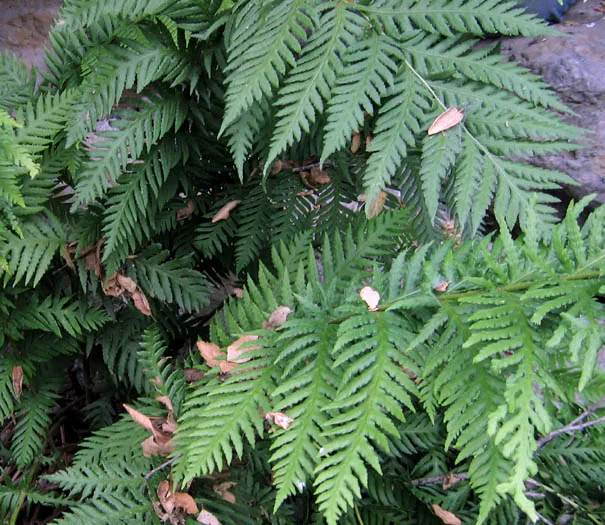

Cómo cultivar y cuidar Giant chain fern
Woodwardia fimbriata
Escrito por Emilio Marruso · última revisión
De un vistazo
Este helecho grande y elegante alcanza 1,2–1,8 m de alto y otro tanto de ancho, y llena de frondas los rincones con sombra. Le gusta la semisombra o la sombra y una tierra húmeda pero nunca encharcada; riégalo con regularidad durante su primer año y se asentará bien. Plántalo en primavera, quita las frondas viejas cada primavera y, en zonas frías, cultívalo en maceta.
- Sol
Semisombra o sombra; a pleno sol solo si le das más agua en verano
Qué dicen las fuentes (3)
Luz: De semisombra a sombra completa; pleno sol solo con humedad adicional en verano
this one prefers full to partial shade conditions with rich, loamy, and acidic soil – preferably on the moist side
— Woodwardia Giant Chain Ferns – Information About Chain Fern Planting | Gardening Know How [4] This fern grows in partial shade, but it can grow in full sun if extra moisture is given during summer.
— Plant Propagation Protocol for Woodwardia fimbriata [2] it performs best in a woodland garden especially next to streams, bogs, springs or ponds, but it can also grow in full sun with adequate summer moisture.
— Giant Chain Fern, Woodwardia fimbriata | Native Plants PNW [7] - Riego
Mantén la tierra húmeda pero no encharcada; no dejes que se seque el primer año
Qué dicen las fuentes (4)
Notas sobre el riego: Establece un programa de riego regular durante al menos un año; no dejes que se seque mientras se establece; mantenlo húmedo pero no empapado; la humedad extra en la sequía del verano permite que crezca con más sol.
We recommend establishing these plants in shade on a regular irrigation schedule for at least a year and using them in a high water-us
— Giant Chain Fern - UC Landscape Plant Irrigation Trials™ [3] It may need some early or mid-spring trimming to tidy it up, removing the older worn-out fronds. Do not let it dry while it is establishing itself.
— Plant Propagation Protocol for Woodwardia fimbriata [2] Mulch with organic materials to retain moisture and reduce competition from weeds. Keep your new fern moist, but not soggy until it is established.
— Woodwardia Giant Chain Ferns – Information About Chain Fern Planting | Gardening Know How [4] If extra moisture is given during our Northwest drought period, this fern can even grow in full sun.
— Woodwardia fimbriata - GIANT CHAIN FERN [5] - Frío
Aguanta inviernos de hasta −12,2 °C (10 °F)
Rústica en inviernos fríos · USDA 8 · RHS H5 · Z8
Qué dicen las fuentes (5)
Rusticidad, zona más fría: 8 [mínima invernal de −12,2 a −6,7 °C (de 10 a 20 °F)]
## Fern Facts Evergreen Hardiness (USDA zones): 8-10 Size: 4' - 8'
— Woodwardia fimbriata | Hardy Fern Foundation [1] Hardiness: Sunset zones: 4-9, 14-24. USDA zones: 8-9. Heat zones: 9-8.
— Woodwardia fimbriata - GIANT CHAIN FERN [5] Rusticidad, zona más cálida:
Según Hardy Fern Foundation: ## Fern Facts Evergreen Hardiness (USDA zones): 8-10 Size: 4' - 8'
— Woodwardia fimbriata | Hardy Fern Foundation [1] Según Rainy Side Gardeners: Hardiness: Sunset zones: 4-9, 14-24. USDA zones: 8-9. Heat zones: 9-8.
— Woodwardia fimbriata - GIANT CHAIN FERN [5] Según Gardening Know How: Hardy to USDA zones 8 to 9, the fern is not tolerant of frost and must be grown in containers brought inside in regions outside their hardiness.
— Woodwardia Giant Chain Ferns – Information About Chain Fern Planting | Gardening Know How [4] - Plantación
Planta en primavera; las divisiones, a principios de primavera
Qué dicen las fuentes (2)
Plantación: Primavera (divisiones, principios de primavera)
Giant chain ferns can also be propagated by division in the early spring.
— Woodwardia Giant Chain Ferns – Information About Chain Fern Planting | Gardening Know How [4] Propagation Methods: Sow spore as soon as ripe. Divide in spring.
— Woodwardia fimbriata - GIANT CHAIN FERN [5] - Poda
De principios a mediados de primavera, corta las frondas secas y estropeadas
Qué dicen las fuentes (2)
Poda: De principios a mediados de primavera (retira los frondes muertos y desgastados)
Pruning Methods: In early spring cut back dead fronds.
— Woodwardia fimbriata - GIANT CHAIN FERN [5] It may need some early or mid-spring trimming to tidy it up, removing the older worn-out fronds. Do not let it dry while it is establishing itself.
— Plant Propagation Protocol for Woodwardia fimbriata [2] - Atención
Con poca agua crece mal: riégalo con regularidad durante al menos un año
Qué dicen las fuentes (4)
Notas sobre el riego: Establece un programa de riego regular durante al menos un año; no dejes que se seque mientras se establece; mantenlo húmedo pero no empapado; la humedad extra en la sequía del verano permite que crezca con más sol.
We recommend establishing these plants in shade on a regular irrigation schedule for at least a year and using them in a high water-us
— Giant Chain Fern - UC Landscape Plant Irrigation Trials™ [3] It may need some early or mid-spring trimming to tidy it up, removing the older worn-out fronds. Do not let it dry while it is establishing itself.
— Plant Propagation Protocol for Woodwardia fimbriata [2] Mulch with organic materials to retain moisture and reduce competition from weeds. Keep your new fern moist, but not soggy until it is established.
— Woodwardia Giant Chain Ferns – Information About Chain Fern Planting | Gardening Know How [4] If extra moisture is given during our Northwest drought period, this fern can even grow in full sun.
— Woodwardia fimbriata - GIANT CHAIN FERN [5] - Tamaño
1,2–1,8 m de alto y 1,2–1,8 m de ancho
Qué dicen las fuentes (2)
Altura adulta: 122–183 cm (4–6 pies)
Reported Height & Width (at maturity): | 4-6' x 4-6'
— Giant Chain Fern - UC Landscape Plant Irrigation Trials™ [3] Anchura adulta: 122–183 cm (4–6 pies)
Reported Height & Width (at maturity): | 4-6' x 4-6'
— Giant Chain Fern - UC Landscape Plant Irrigation Trials™ [3] - Multiplicación
Divide la mata o saca plantas nuevas de las esporas
Qué dicen las fuentes (3)
Propagación: Esporas, división, cultivo de tejidos
Propagation Methods: Sow spore as soon as ripe. Divide in spring.
— Woodwardia fimbriata - GIANT CHAIN FERN [5] For the genus Woodwardia, (not specific to species fimbriata) propagate by spores and division (8). W. fimbriata has been tissue-cultured now (7).
— Plant Propagation Protocol for Woodwardia fimbriata [2] It also may be propagated in the spring by division of the rhizomes–but judicious collection of spores is preferable where this species is rare.
— Giant Chain Fern, Woodwardia fimbriata | Native Plants PNW [7] - Maceta
Crece también en maceta; en zonas frías, mete la maceta en casa
Qué dicen las fuentes (2)
En maceta: Sí
Woodwardias grow well in woodlands or next to streams, moist bogs, springs or ponds and even containers.
— Woodwardia fimbriata - GIANT CHAIN FERN [5] Hardy to USDA zones 8 to 9, the fern is not tolerant of frost and must be grown in containers brought inside in regions outside their hardiness.
— Woodwardia Giant Chain Ferns – Information About Chain Fern Planting | Gardening Know How [4]
Resumen
Woodwardia fimbriata (helecho gigante de cadena) es un helecho perenne grande originario del oeste de Norteamérica, llamado así por sus soros dispuestos como una puntada de cadena. [1] Le gusta la sombra húmeda y los suelos ácidos y no es muy tolerante a las heladas. [1][5] En ensayos de riego, se estableció mejor a la sombra con riego regular. [3]
Citado en inglés, como en la fuente.
Cuidados
Riego
Riego
Las fuentes dan valores distintos según la región, la zona o las condiciones de cultivo.
Lo que dice cada fuente
Ensayos de Riego de Plantas de Paisaje de UC (California, Región 2 de WUCOLS): Riego semanal; necesidades altas de agua
Según Gardening Know How: Lado húmedo; bastante tolerante a la sequía una vez establecida
Qué dicen las fuentes (4)
Ensayos de Riego de Plantas de Paisaje de UC (California, Región 2 de WUCOLS): Not surprisingly, plants performed best in loam soils with full shade and weekly watering.Según Gardening Know How: this one prefers full to partial shade conditions with rich, loamy, and acidic soil – preferably on the moist side, though it’s fairly tolerant of drought once established.Not surprisingly, plants performed best in loam soils with full shade and weekly watering.Size (cm): 122cm-244cm
Height and Spread: Large - Over 3' in height or spread in 5 years
Water Needs: Wet SoilsNotas sobre el riego
Establece un programa de riego regular durante al menos un año; no dejes que se seque mientras se establece; mantenlo húmedo pero no empapado; la humedad extra en la sequía del verano permite que crezca con más sol.
Qué dicen las fuentes (4)
We recommend establishing these plants in shade on a regular irrigation schedule for at least a year and using them in a high water-usIt may need some early or mid-spring trimming to tidy it up, removing the older worn-out fronds. Do not let it dry while it is establishing itself.Mulch with organic materials to retain moisture and reduce competition from weeds. Keep your new fern moist, but not soggy until it is established.If extra moisture is given during our Northwest drought period, this fern can even grow in full sun.Luz
De semisombra a sombra completa; pleno sol solo con humedad adicional en verano
Qué dicen las fuentes (3)
this one prefers full to partial shade conditions with rich, loamy, and acidic soil – preferably on the moist sideThis fern grows in partial shade, but it can grow in full sun if extra moisture is given during summer.it performs best in a woodland garden especially next to streams, bogs, springs or ponds, but it can also grow in full sun with adequate summer moisture.Clima y frío
Rusticidad, zona más fría
8 [mínima invernal de −12,2 a −6,7 °C (de 10 a 20 °F)]
Rusticidad, zona más cálida
Las fuentes dan valores distintos según la región, la zona o las condiciones de cultivo.
Lo que dice cada fuente
Según Hardy Fern Foundation: 8-10 [mínima invernal de −12,2 a 4,4 °C (de 10 a 40 °F)]
Según Rainy Side Gardeners: 8-9 [mínima invernal de −12,2 a −1,1 °C (de 10 a 30 °F)]
Según Gardening Know How: 8-9 [mínima invernal de −12,2 a −1,1 °C (de 10 a 30 °F)]
Qué dicen las fuentes (3)
Según Hardy Fern Foundation: ## Fern Facts
Evergreen
Hardiness (USDA zones): 8-10
Size: 4' - 8'Según Rainy Side Gardeners: Hardiness:
Sunset zones: 4-9, 14-24.
USDA zones: 8-9.
Heat zones: 9-8.Según Gardening Know How: Hardy to USDA zones 8 to 9, the fern is not tolerant of frost and must be grown in containers brought inside in regions outside their hardiness.Dónde cultivarla
Sí
Qué dicen las fuentes (2)
Woodwardias grow well in woodlands or next to streams, moist bogs, springs or ponds and even containers.Hardy to USDA zones 8 to 9, the fern is not tolerant of frost and must be grown in containers brought inside in regions outside their hardiness.Propagación
Esporas, división, cultivo de tejidos
Qué dicen las fuentes (3)
Propagation Methods:
Sow spore as soon as ripe.
Divide in spring.For the genus Woodwardia, (not specific to species fimbriata) propagate by spores and division (8). W. fimbriata has been tissue-cultured now (7).It also may be propagated in the spring by division of the rhizomes–but judicious collection of spores is preferable where this species is rare.Cultivo
La planta
Altura adulta
122–183 cm (4–6 pies)
Qué dicen las fuentes (1)
Reported Height & Width
(at maturity):
| 4-6' x 4-6'Anchura adulta
122–183 cm (4–6 pies)
Qué dicen las fuentes (1)
Reported Height & Width
(at maturity):
| 4-6' x 4-6'Problemas
Sensibilidad a las heladas
Síntoma: No muy tolerante a las heladas
Qué hacer: Cultiva en un bosque o en una zona protegida; en regiones más frías, cultiva en contenedores que se llevan al interior
Qué dicen las fuentes (1)
The giant chain fern is not very frost tolerant, so grow in woodland or protected area.
— Woodwardia fimbriata - GIANT CHAIN FERN [5] Establecimiento deficiente con riego deficitario
Síntoma: Crecimiento con dificultades y peor aspecto con riego escaso
Qué hacer: Establece a la sombra con riego regular durante al menos un año
Qué dicen las fuentes (1)
Foliage appearance, disease resistance, vigor, and the overall appearance were all significantly higher at 80% ETo.
— Giant Chain Fern - UC Landscape Plant Irrigation Trials™ [3]
Remedios
Las fuentes consultadas no dan remedios para esta planta.
Calendario
Siembra
Las fuentes no coinciden:
Collecting spores after a frost or in the spring time yielded the best results, but even then crops may be lean (10).
[2]
Qué dicen las fuentes (2)
Propagation Methods:
Sow spore as soon as ripe.
Divide in spring.The best time to collect spores is in the summer. The spores of the Woodwardia giant chain fern can be found on the underside of the fronds.Plantación
Primavera (divisiones, principios de primavera)
Qué dicen las fuentes (2)
Giant chain ferns can also be propagated by division in the early spring.Propagation Methods:
Sow spore as soon as ripe.
Divide in spring.Poda
De principios a mediados de primavera (retira los frondes muertos y desgastados)
Qué dicen las fuentes (2)
Pruning Methods:
In early spring cut back dead fronds.It may need some early or mid-spring trimming to tidy it up, removing the older worn-out fronds. Do not let it dry while it is establishing itself.Meses tal como los dan las fuentes, en su mayoría de Estados Unidos (hemisferio norte). En el hemisferio sur se desplazan unos seis meses.
Valores orientativos
Valores de una fuente secundaria, no comprobados palabra por palabra como el resto de esta página. Úselos como punto de partida.
- Ciclo de vida
- PerenneValor orientativo, adáptalo a tu clima · Fuente secundaria
- Horas de sol
- 2-5 horasValor orientativo, adáptalo a tu clima · Fuente secundaria
- pH del suelo
- 5.5-6.5Valor orientativo, adáptalo a tu clima · Fuente secundaria
- Nivel de cuidado
- MedioValor orientativo, adáptalo a tu clima · Fuente secundaria
- Crecimiento
- AltaValor orientativo, adáptalo a tu clima · Fuente secundaria
Plantas similares
- Netted chainfern Woodwardia areolata
- Virginia chainfern Woodwardia virginica
- Píjara Woodwardia radicans
- Abeto de Vancuver Abies grandis
- Abraham Trachystemon orientalis
- Bananero de Etiopía Ensete ventricosum
- Acacia longifolia Acacia longifolia
- Acanthus hungaricus Acanthus hungaricus
Fuentes
Cada valor anterior se cita de estos documentos. Los enlaces llevan al editor original.
- Woodwardia fimbriata | Hardy Fern Foundation · hardyferns.org, consultado
- Plant Propagation Protocol for Woodwardia fimbriata · courses.washington.edu, consultado
- Giant Chain Fern - UC Landscape Plant Irrigation Trials™ · ucanr.edu, consultado
- Woodwardia Giant Chain Ferns – Information About Chain Fern Planting | Gardening Know How · gardeningknowhow.com, consultado
- Woodwardia fimbriata - GIANT CHAIN FERN · rainyside.com, consultado
- Plant Data Sheet http://depts.washington.edu/propplnt/Plants/Woodwardia fimbriata.htm · courses.washington.edu, consultado
- Giant Chain Fern, Woodwardia fimbriata | Native Plants PNW · nativeplantspnw.com, consultado
Escrito por Emilio Marruso · última revisión