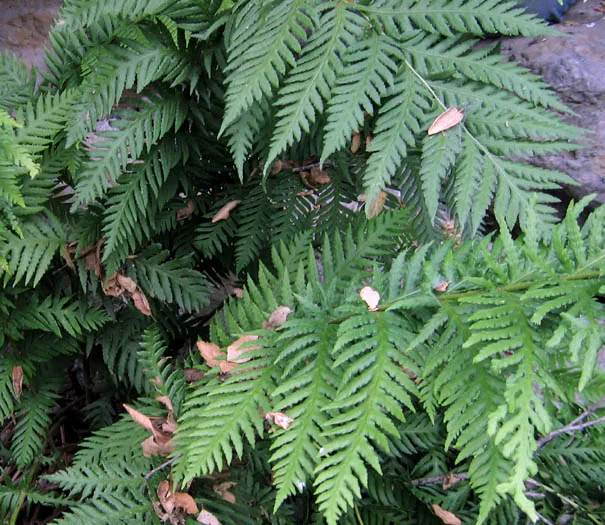

How to Grow and Care for Giant chain fern
Woodwardia fimbriata
Written by Emilio Marruso · last checked
At a glance
This big, graceful fern grows 4–6 ft tall and just as wide, filling shady corners with its fronds. It loves partial to full shade and soil kept moist but never soggy; give it regular water through its first year and it settles in well. Plant it in spring, tidy away old fronds each spring, and in colder areas grow it in a pot.
- Sun
Partial to full shade; full sun only if you give it extra water in summer
What the sources say (3)
Light: Partial to full shade; full sun only with extra summer moisture
this one prefers full to partial shade conditions with rich, loamy, and acidic soil – preferably on the moist side
— Woodwardia Giant Chain Ferns – Information About Chain Fern Planting | Gardening Know How [4] This fern grows in partial shade, but it can grow in full sun if extra moisture is given during summer.
— Plant Propagation Protocol for Woodwardia fimbriata [2] it performs best in a woodland garden especially next to streams, bogs, springs or ponds, but it can also grow in full sun with adequate summer moisture.
— Giant Chain Fern, Woodwardia fimbriata | Native Plants PNW [7] - Water
Keep the soil moist but not soggy; never let it dry out the first year
What the sources say (4)
Watering notes: Establish on a regular irrigation schedule for at least a year; do not let it dry out while establishing; keep moist but not soggy; extra moisture in summer drought allows growing in more sun
We recommend establishing these plants in shade on a regular irrigation schedule for at least a year and using them in a high water-us
— Giant Chain Fern - UC Landscape Plant Irrigation Trials™ [3] It may need some early or mid-spring trimming to tidy it up, removing the older worn-out fronds. Do not let it dry while it is establishing itself.
— Plant Propagation Protocol for Woodwardia fimbriata [2] Mulch with organic materials to retain moisture and reduce competition from weeds. Keep your new fern moist, but not soggy until it is established.
— Woodwardia Giant Chain Ferns – Information About Chain Fern Planting | Gardening Know How [4] If extra moisture is given during our Northwest drought period, this fern can even grow in full sun.
— Woodwardia fimbriata - GIANT CHAIN FERN [5] - Cold
Survives winters down to 10 °F (−12.2 °C)
Hardy in cold winters · USDA 8 · RHS H5 · Z8
What the sources say (5)
Hardiness, coldest zone: 8 [winter low −12.2 to −6.7 °C (10 to 20 °F)]
## Fern Facts Evergreen Hardiness (USDA zones): 8-10 Size: 4' - 8'
— Woodwardia fimbriata | Hardy Fern Foundation [1] Hardiness: Sunset zones: 4-9, 14-24. USDA zones: 8-9. Heat zones: 9-8.
— Woodwardia fimbriata - GIANT CHAIN FERN [5] Hardiness, warmest zone:
According to Hardy Fern Foundation: ## Fern Facts Evergreen Hardiness (USDA zones): 8-10 Size: 4' - 8'
— Woodwardia fimbriata | Hardy Fern Foundation [1] According to Rainy Side Gardeners: Hardiness: Sunset zones: 4-9, 14-24. USDA zones: 8-9. Heat zones: 9-8.
— Woodwardia fimbriata - GIANT CHAIN FERN [5] According to Gardening Know How: Hardy to USDA zones 8 to 9, the fern is not tolerant of frost and must be grown in containers brought inside in regions outside their hardiness.
— Woodwardia Giant Chain Ferns – Information About Chain Fern Planting | Gardening Know How [4] - Planting
Plant in spring; plant divisions in early spring
What the sources say (2)
Planting: Spring (divisions, early spring)
Giant chain ferns can also be propagated by division in the early spring.
— Woodwardia Giant Chain Ferns – Information About Chain Fern Planting | Gardening Know How [4] Propagation Methods: Sow spore as soon as ripe. Divide in spring.
— Woodwardia fimbriata - GIANT CHAIN FERN [5] - Pruning
In early to mid-spring, cut off dead and worn-out fronds
What the sources say (2)
Pruning: Early to mid-spring (remove dead and worn-out fronds)
Pruning Methods: In early spring cut back dead fronds.
— Woodwardia fimbriata - GIANT CHAIN FERN [5] It may need some early or mid-spring trimming to tidy it up, removing the older worn-out fronds. Do not let it dry while it is establishing itself.
— Plant Propagation Protocol for Woodwardia fimbriata [2] - Watch out
With too little water it grows poorly: water on a regular schedule for at least a year
What the sources say (4)
Watering notes: Establish on a regular irrigation schedule for at least a year; do not let it dry out while establishing; keep moist but not soggy; extra moisture in summer drought allows growing in more sun
We recommend establishing these plants in shade on a regular irrigation schedule for at least a year and using them in a high water-us
— Giant Chain Fern - UC Landscape Plant Irrigation Trials™ [3] It may need some early or mid-spring trimming to tidy it up, removing the older worn-out fronds. Do not let it dry while it is establishing itself.
— Plant Propagation Protocol for Woodwardia fimbriata [2] Mulch with organic materials to retain moisture and reduce competition from weeds. Keep your new fern moist, but not soggy until it is established.
— Woodwardia Giant Chain Ferns – Information About Chain Fern Planting | Gardening Know How [4] If extra moisture is given during our Northwest drought period, this fern can even grow in full sun.
— Woodwardia fimbriata - GIANT CHAIN FERN [5] - Size
4–6 ft tall and 4–6 ft wide
What the sources say (2)
Mature height: 122–183 cm (4–6 ft)
Reported Height & Width (at maturity): | 4-6' x 4-6'
— Giant Chain Fern - UC Landscape Plant Irrigation Trials™ [3] Mature width: 122–183 cm (4–6 ft)
Reported Height & Width (at maturity): | 4-6' x 4-6'
— Giant Chain Fern - UC Landscape Plant Irrigation Trials™ [3] - Propagation
Divide the clump or grow new plants from spores
What the sources say (3)
Propagation: Spores, division, tissue culture
Propagation Methods: Sow spore as soon as ripe. Divide in spring.
— Woodwardia fimbriata - GIANT CHAIN FERN [5] For the genus Woodwardia, (not specific to species fimbriata) propagate by spores and division (8). W. fimbriata has been tissue-cultured now (7).
— Plant Propagation Protocol for Woodwardia fimbriata [2] It also may be propagated in the spring by division of the rhizomes–but judicious collection of spores is preferable where this species is rare.
— Giant Chain Fern, Woodwardia fimbriata | Native Plants PNW [7] - Containers
Grows in containers too; in colder regions bring the pot inside
What the sources say (2)
In containers: Yes
Woodwardias grow well in woodlands or next to streams, moist bogs, springs or ponds and even containers.
— Woodwardia fimbriata - GIANT CHAIN FERN [5] Hardy to USDA zones 8 to 9, the fern is not tolerant of frost and must be grown in containers brought inside in regions outside their hardiness.
— Woodwardia Giant Chain Ferns – Information About Chain Fern Planting | Gardening Know How [4]
Overview
Woodwardia fimbriata (giant chain fern) is a large evergreen fern native to western North America, named for its sori arranged like a chain stitch. [1] It likes moist shade and acidic soils and is not very frost tolerant. [1][5] In irrigation trials it established best in shade with regular watering. [3]
Giant chain fern care
How to water Giant chain fern
Watering
The sources give different values depending on region, zone or growing conditions.
What each source says
UC Landscape Plant Irrigation Trials (California, WUCOLS Region 2): Weekly watering; high water needs
According to Gardening Know How: Moist side; fairly drought tolerant once established
What the sources say (4)
UC Landscape Plant Irrigation Trials (California, WUCOLS Region 2): Not surprisingly, plants performed best in loam soils with full shade and weekly watering.According to Gardening Know How: this one prefers full to partial shade conditions with rich, loamy, and acidic soil – preferably on the moist side, though it’s fairly tolerant of drought once established.Not surprisingly, plants performed best in loam soils with full shade and weekly watering.Size (cm): 122cm-244cm
Height and Spread: Large - Over 3' in height or spread in 5 years
Water Needs: Wet SoilsWatering notes
Establish on a regular irrigation schedule for at least a year; do not let it dry out while establishing; keep moist but not soggy; extra moisture in summer drought allows growing in more sun
What the sources say (4)
We recommend establishing these plants in shade on a regular irrigation schedule for at least a year and using them in a high water-usIt may need some early or mid-spring trimming to tidy it up, removing the older worn-out fronds. Do not let it dry while it is establishing itself.Mulch with organic materials to retain moisture and reduce competition from weeds. Keep your new fern moist, but not soggy until it is established.If extra moisture is given during our Northwest drought period, this fern can even grow in full sun.How much light Giant chain fern needs
Partial to full shade; full sun only with extra summer moisture
What the sources say (3)
this one prefers full to partial shade conditions with rich, loamy, and acidic soil – preferably on the moist sideThis fern grows in partial shade, but it can grow in full sun if extra moisture is given during summer.it performs best in a woodland garden especially next to streams, bogs, springs or ponds, but it can also grow in full sun with adequate summer moisture.How much cold Giant chain fern can take
Hardiness, coldest zone
8 [winter low −12.2 to −6.7 °C (10 to 20 °F)]
Hardiness, warmest zone
The sources give different values depending on region, zone or growing conditions.
What each source says
According to Hardy Fern Foundation: 8-10 [winter low −12.2 to 4.4 °C (10 to 40 °F)]
According to Rainy Side Gardeners: 8-9 [winter low −12.2 to −1.1 °C (10 to 30 °F)]
According to Gardening Know How: 8-9 [winter low −12.2 to −1.1 °C (10 to 30 °F)]
What the sources say (3)
According to Hardy Fern Foundation: ## Fern Facts
Evergreen
Hardiness (USDA zones): 8-10
Size: 4' - 8'According to Rainy Side Gardeners: Hardiness:
Sunset zones: 4-9, 14-24.
USDA zones: 8-9.
Heat zones: 9-8.According to Gardening Know How: Hardy to USDA zones 8 to 9, the fern is not tolerant of frost and must be grown in containers brought inside in regions outside their hardiness.Where to grow Giant chain fern
Yes
What the sources say (2)
Woodwardias grow well in woodlands or next to streams, moist bogs, springs or ponds and even containers.Hardy to USDA zones 8 to 9, the fern is not tolerant of frost and must be grown in containers brought inside in regions outside their hardiness.How to propagate Giant chain fern
Spores, division, tissue culture
What the sources say (3)
Propagation Methods:
Sow spore as soon as ripe.
Divide in spring.For the genus Woodwardia, (not specific to species fimbriata) propagate by spores and division (8). W. fimbriata has been tissue-cultured now (7).It also may be propagated in the spring by division of the rhizomes–but judicious collection of spores is preferable where this species is rare.How to grow Giant chain fern
The plant
Mature height
122–183 cm (4–6 ft)
What the sources say (1)
Reported Height & Width
(at maturity):
| 4-6' x 4-6'Mature width
122–183 cm (4–6 ft)
What the sources say (1)
Reported Height & Width
(at maturity):
| 4-6' x 4-6'Giant chain fern pests and problems
Frost sensitivity
Symptom: Not very frost tolerant
What to do: Grow in woodland or a protected area; in colder regions grow in containers brought inside
What the sources say (1)
The giant chain fern is not very frost tolerant, so grow in woodland or protected area.
— Woodwardia fimbriata - GIANT CHAIN FERN [5] Poor establishment under deficit irrigation
Symptom: Struggling growth and poorer appearance with low irrigation
What to do: Establish in shade with regular irrigation for at least a year
What the sources say (1)
Foliage appearance, disease resistance, vigor, and the overall appearance were all significantly higher at 80% ETo.
— Giant Chain Fern - UC Landscape Plant Irrigation Trials™ [3]
Remedies
The sources we checked give no remedies for this plant.
Calendar
Sowing
The sources disagree:
Collecting spores after a frost or in the spring time yielded the best results, but even then crops may be lean (10).
[2]
What the sources say (2)
Propagation Methods:
Sow spore as soon as ripe.
Divide in spring.The best time to collect spores is in the summer. The spores of the Woodwardia giant chain fern can be found on the underside of the fronds.Planting
Spring (divisions, early spring)
What the sources say (2)
Giant chain ferns can also be propagated by division in the early spring.Propagation Methods:
Sow spore as soon as ripe.
Divide in spring.Pruning
Early to mid-spring (remove dead and worn-out fronds)
What the sources say (2)
Pruning Methods:
In early spring cut back dead fronds.It may need some early or mid-spring trimming to tidy it up, removing the older worn-out fronds. Do not let it dry while it is establishing itself.Months as given by the sources, which are mostly from the United States (northern hemisphere). In the southern hemisphere they shift by about six months.
Indicative values
Values from a secondary source, not checked word for word like the rest of this page. Use them as a starting point.
- Life cycle
- PerennialIndicative value, adapt it to your climate · Secondary source
- Hours of sun
- 2-5 hoursIndicative value, adapt it to your climate · Secondary source
- Soil pH
- 5.5-6.5Indicative value, adapt it to your climate · Secondary source
- Care level
- MediumIndicative value, adapt it to your climate · Secondary source
- Growth rate
- HighIndicative value, adapt it to your climate · Secondary source
Similar plants
- Netted chainfern Woodwardia areolata
- Virginia chainfern Woodwardia virginica
- Rooting chainfern Woodwardia radicans
- Abies grandis Abies grandis
- Abraham Trachystemon orientalis
- Abyssinian banana Ensete ventricosum
- Acacia longifolia Acacia longifolia
- Acanthus hungaricus Acanthus hungaricus
Sources
Every value above is quoted from these documents. Links lead to the original publisher.
- Woodwardia fimbriata | Hardy Fern Foundation · hardyferns.org, consulted
- Plant Propagation Protocol for Woodwardia fimbriata · courses.washington.edu, consulted
- Giant Chain Fern - UC Landscape Plant Irrigation Trials™ · ucanr.edu, consulted
- Woodwardia Giant Chain Ferns – Information About Chain Fern Planting | Gardening Know How · gardeningknowhow.com, consulted
- Woodwardia fimbriata - GIANT CHAIN FERN · rainyside.com, consulted
- Plant Data Sheet http://depts.washington.edu/propplnt/Plants/Woodwardia fimbriata.htm · courses.washington.edu, consulted
- Giant Chain Fern, Woodwardia fimbriata | Native Plants PNW · nativeplantspnw.com, consulted
Written by Emilio Marruso · last checked