6 houseplants that bloom in winter, and which ones are safe for pets
Kalanchoe, cyclamen, African violet, moth orchid, bromeliads and clivia: light, temperature and one tip for each, plus what the ASPCA says about cats and dogs.
by Emilio MarrusoPublished
Winter is when a windowsill needs color the most, and a handful of flowering houseplants are happy to supply it. Choose ones that bloom and they bring a rainbow of color indoors, like a living bouquet that lasts for weeks or months [1].
Here are six reliable winter bloomers, each with its light, temperature and one tip from US university extension services and public gardens, plus what the ASPCA says about it and your cats and dogs.
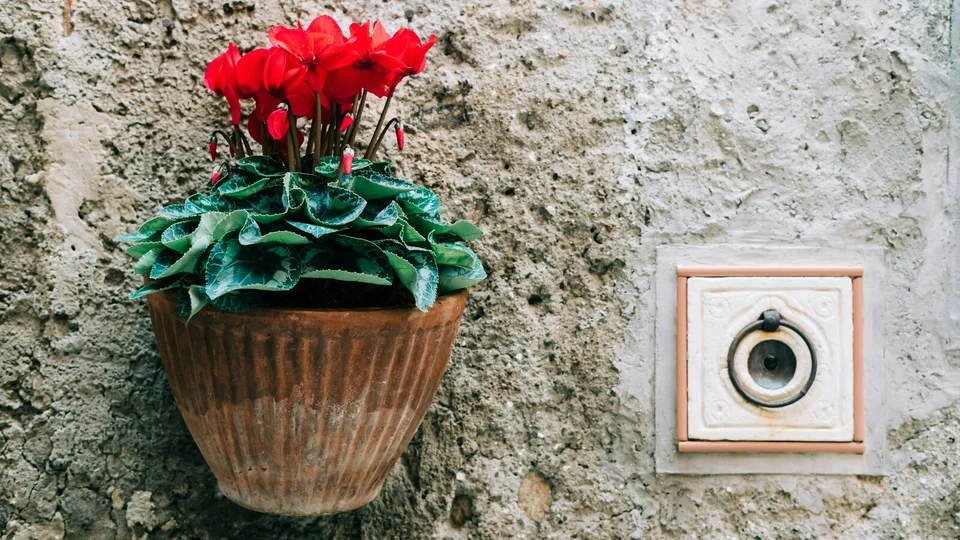
Choose a winter bloomer
Kalanchoe (Kalanchoe blossfeldiana)
Often called Christmas kalanchoe, this compact succulent is plentiful in stores at this time of year and blooms in red, orange, yellow, pink, salmon, purple and white [4]. With good care its flower clusters last six weeks or more [4]. Give kalanchoe a bright spot, let the soil dry between waterings without letting it wilt, and never leave the pot standing in a sleeve full of water [3].
Keeping it on the cool side prolongs the flowers: Iowa State suggests 45–65°F (7.2–18.3°C) at night and 50–70°F (10–21.1°C) by day [3]. Tip: to rebloom it, give it six weeks of 14-hour nights in a room where the lights stay off after dark [3]. Pets: toxic to dogs and cats, with vomiting and diarrhea and, rarely, an abnormal heart rhythm [12].
Cyclamen (Cyclamen persicum)
Marbled heart-shaped leaves and swept-back petals that look like little butterflies make cyclamen a winter favorite [2]. The two secrets to a long show are cool temperatures and moist soil [2]. Here the sources differ: Iowa State recommends 50–60°F (10–15.6°C) with bright, indirect light [2], while the AP gardening column suggests a cool room between 60 and 70°F (15.6–21.1°C) near an east- or north-facing window [1].
Both agree on keeping water off the crown, which rots easily [1] [2]: check the soil daily and water only when the surface feels dry [2], or water from below with a saucer [1]. Tip: when the leaves turn yellow in late spring, stop watering and feeding and let the plant rest in a cool, dim spot until fall [1]. Pets: toxic to dogs, cats and horses; it can cause drooling, vomiting and diarrhea, and large amounts of the tuber can affect the heart and cause seizures [13].
African violet (Saintpaulia)
Given the right conditions, African violets bloom almost nonstop indoors [5]. Their main need is light, more than most growers expect: north and east windows work best, or LED or fluorescent lights 4–8 inches (10.16–20.32 cm) above the plants for 12–16 hours a day [5]. Keep the room between 65 and 80°F (18.3–26.7°C); below 50°F (10°C) the leaves darken and wither [5].
On winter sun the sources differ: Iowa State warns that long periods of direct light can damage the plants [5], while the AP column suggests direct light from October through the end of February, except in the Deep South [1]. Tip: cold water spots the leaves, so in winter water from the saucer with room-temperature water [1] [5]. Pets: non-toxic to dogs, cats and horses [14].
Moth orchid (Phalaenopsis)
Its main bloom season runs from late winter through spring, and the flowers can last for months [8]. Clemson puts it at 2 to 3 months, with one or two reblooms a year under good care [7]. Moth orchids are low-light plants that do best in an east-facing window, at 60–85°F (15.6–29.4°C) [7].
In winter, keep the leaves from touching the cold glass [7], and skip the ice cubes: the cold stresses this tropical plant [8]. Tip: in autumn, several weeks of nights at 55–60°F (12.8–15.6°C) help start flowering; after two weeks of cooler nights a vigorous plant can begin a new spike, with buds a few months later [8]. Pets: non-toxic to dogs, cats and horses [15].
Bromeliads (Guzmania, Aechmea)
Bromeliads bloom only once, but their bright bracts in red, yellow, orange, purple or peach last for months [1]. Look for Guzmania lingulata, whose bracts range from yellow and orange to red and deep purple, or the silver vase, Aechmea fasciata, with a dense pink spike [9]. They want indirect light, 60–85°F (15.6–29.4°C) and humid air [9]; our guide to houseplants that like humid air has ideas.
Keep the central cup filled without soaking the soil, which invites root rot [9]; the AP column suggests rinsing the cup weekly and refilling it with room-temperature water [1]. Tip: after flowering the parent slowly fades [1], but its pups can be separated and potted up as new plants [9]. Pets: Clemson lists bromeliads among its pet-safe houseplants [6], and the ASPCA lists the blushing bromeliad (Neoregelia) as non-toxic to dogs and cats [16].
Clivia (Clivia miniata)
Also called Natal lily, clivia carries clusters of 12 to 20 funnel-shaped, scarlet-orange flowers with yellow throats from early winter to mid-spring [10]. It likes bright light without direct sun, such as a north window [11], prefers to be rootbound and can stay in the same pot for up to five years [10]. Buy a mature plant: young ones take a few years to bloom [10].
The secret is a cool, dry rest, and the numbers differ: NC State says a month or two of nights below 50°F (10°C) [10], Nebraska Extension 6–8 weeks at 50–55°F (10–12.8°C) with the soil almost dry [11]. Tip: when the flower stalk appears in late winter, water more and move the plant somewhere warmer [11]. Pets: toxic to dogs and cats; the bulbs are the most poisonous part [17].
Pet safety at a glance
Before you buy, Clemson suggests checking the ASPCA list of toxic and non-toxic plants [6]. Of these six, African violet [14], moth orchid [15] and bromeliads [6] [16] are the pet-friendly picks, while kalanchoe [12], cyclamen [13] and clivia [17] are toxic to dogs and cats.
In kalanchoe, the toxic compounds are found in every part of the plant, with higher concentrations in the flowers [4]. For a wider list, see our guide to plants safe for cats and dogs.
The holiday classics
Some winter stars already have their own pages: getting amaryllis to rebloom, the trick that keeps paperwhites from flopping, Christmas cactus and poinsettia. Clemson lists holiday cacti, including Thanksgiving and Christmas cacti, among its pet-safe houseplants [6].
Frequently asked questions
Which winter-blooming houseplants are safe for cats and dogs?
African violet [14] and moth orchid [15] are non-toxic according to the ASPCA, and Clemson lists bromeliads and holiday cacti as pet-safe [6].
Why won't my kalanchoe bloom again?
It is a short-day plant: flower buds form only after six weeks of 14-hour nights [3] [4]. Iowa State notes that reblooming can be difficult, so many people discard the plant after it flowers [3].
Can I keep my cyclamen for next winter?
Yes, with some effort: after bloom, water less as the leaves yellow, rest the plant for 6 to 8 weeks in a cool, shaded spot at 45–50°F (7.2–10°C), then start watering again in mid-to-late summer [2].
My African violet has leaves but no flowers. Why?
The usual causes are low light, low temperatures or the wrong amount of fertilizer, too little or too much [5].
Sources
- 5 flowering houseplants, and how to keep them blooming for a living bouquet — The Associated Press gardening column, November 10, 2026 (CP24) · cp24.com, consulted
- All About Cyclamen — Iowa State University Extension and Outreach · yardandgarden.extension.iastate.edu, consulted
- How do I care for Kalanchoe? — Iowa State University Extension and Outreach · yardandgarden.extension.iastate.edu, consulted
- A nontraditional holiday plant: Kalanchoe — University of Illinois Extension · extension.illinois.edu, consulted
- All About African Violets — Iowa State University Extension and Outreach · yardandgarden.extension.iastate.edu, consulted
- Pet-Safe Indoor Houseplants: What's Safe for Cats and Dogs — Clemson Cooperative Extension, HGIC · hgic.clemson.edu, consulted
- General Care for Phalaenopsis Orchids — Clemson Cooperative Extension, HGIC · hgic.clemson.edu, consulted
- Phalaenopsis (moth orchid) care guide — New York Botanical Garden · libguides.nybg.org, consulted
- Bromeliads (HGIC 1501) — Clemson Cooperative Extension · hgic.clemson.edu, consulted
- Clivia miniata (Natal lily) — NC State Extension Gardener Plant Toolbox · plants.ces.ncsu.edu, consulted
- Natal Lily – A Gift Plant for the Gardener in Your Life — Nebraska Extension in Lancaster County · lancaster.unl.edu, consulted
- Kalanchoe — ASPCA Toxic and Non-Toxic Plants · aspca.org, consulted
- Cyclamen — ASPCA Toxic and Non-Toxic Plants · aspca.org, consulted
- African Violet — ASPCA Toxic and Non-Toxic Plants · aspca.org, consulted
- Phalaenopsis Orchid — ASPCA Toxic and Non-Toxic Plants · aspca.org, consulted
- Blushing Bromeliad — ASPCA Toxic and Non-Toxic Plants · aspca.org, consulted
- Clivia Lily — ASPCA Toxic and Non-Toxic Plants · aspca.org, consulted
Written by Emilio Marruso · last checked