Planting Tomatoes in Containers: Pot Size, Support and Watering
Match pot volume to your tomato cultivar, set the transplant and support together, and water the whole root ball without leaving it saturated.
by Emilio MarrusoPublished
Plant one tomato per draining container, using fresh potting mix and a cultivar that fits the space. For a compact cherry tomato, start with a 2 gal (7.6 L) minimum. For a standard tomato, use the Maryland Extension minimum of 5 gal (18.9 L) and go larger when the plant will grow tall or the pot will dry quickly. Sources Iowa State University Extension, Growing Tomatoes in Containers, University of Maryland Extension, Growing Vegetables in Containers and Salad Tables and University of Minnesota Extension, Growing tomatoes in home gardens [1] [2] [3]
In short:
- Choose the pot by the mature size of the plant and pick a sunny place first.
- Use draining potting mix and put the support in place when you transplant.
- Water the full root ball, let excess water drain and check again when the pot dries faster.
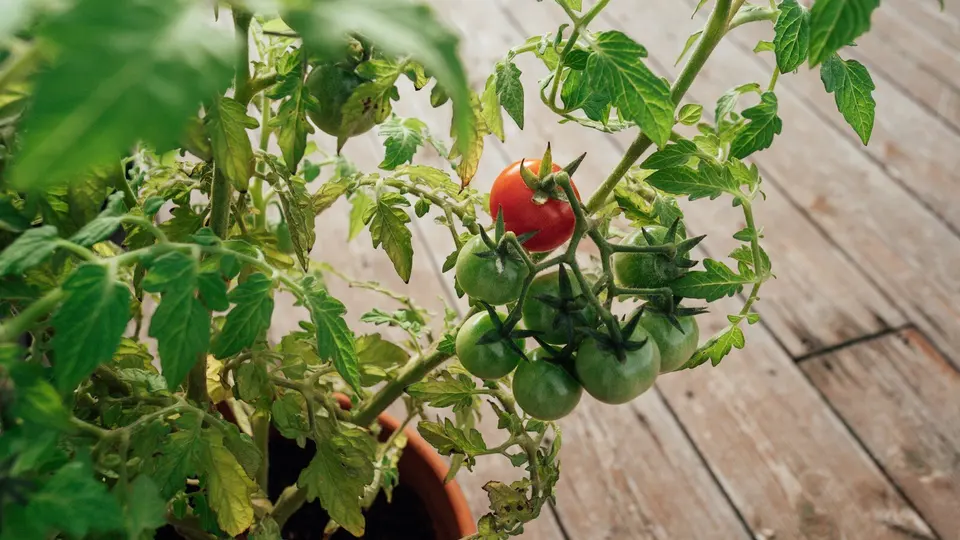
Which pot fits the tomato you want to grow?
| Tomato you have | How to choose a pot | What to set up first |
|---|---|---|
| Compact cherry or dwarf cultivar | Start with the cherry minimum and go larger if the site is exposed [1] [2] | A sunny location where you can keep the mix evenly moist |
| Standard determinate cultivar | Use Maryland's standard minimum as a starting point [2] | A broad base and support to hold fruiting stems |
| Vigorous indeterminate cultivar | Plan for a larger root zone and stronger support [1] [2] | A site that accommodates tall growth and regular watering |
Read the cultivar tag before buying the container. Fruit size and plant size describe different features. A cherry tomato can grow on a tall vine, while a determinate tomato bearing larger fruits may stay more compact. Find the expected height and spread on the tag, then match them to the space and support you have. The tomato profile identifies the species, but the cultivar determines the habit you need to accommodate [1] [2].
Look at shape as well as volume. A broad base can be steadier in wind than a tall narrow pot holding the same volume. Work out where the sun falls and whether you can reach the pot with water before you fill it. A deck corner can be easy to water but too shaded, while a sunny spot in a wind corridor may demand more frequent checks. Leave room to turn or remove the pot without lifting it by the cage or leaning on the plant [1] [2].
Prepare the container before you transplant
Open pot drainage holes and place the container so they remain unobstructed. If you reuse a bucket, choose one that is suitable for food use and add drainage holes if it lacks them. A self-watering planter uses a different design: check that its overflow is open and that the reservoir and potting mix are arranged as directed. Water should have a path out of the root zone [2].
Use a potting mix that retains some moisture and drains. Garden soil can compact in a container and leave the root zone poorly aerated. Wet the mix enough to make it evenly moist before you fill the pot. Look for a fertilizer charge on the bag and keep the label, since it affects when you will need to start feeding. Leave a rim below the top for watering and keep the pot in the position you chose [1] [2].
Set the transplant and support together
Wait for suitable outdoor weather and harden off plants raised inside or under cover. Prepare a hole for the root ball. Slide the tomato from its nursery pot without pulling it by the stem, settle it into the larger container and fill around it. Tomatoes can root along a buried stem. If you plant one deeper, remove the lowest leaves and keep the remaining foliage above the mix [3].
Fit the cage or stake while you still know where the root ball is. Standard plants benefit from a support that can hold the mature fruit load. Use a loose tie if you use a stake, and check it as the stem thickens. Water thoroughly, then confirm that water can leave the bottom or overflow. If the mix settles after you water, fill any gaps around the root ball without packing the mix hard [1] [2].
Watch how the pot dries after planting
Feel the mix before watering. Water slowly enough to moisten the whole container and let excess drain. Check more often in sun and wind, especially when the plant has filled out. If water runs down the side while the inside is dry, water in slower passes and check beneath the surface. Avoid leaving an ordinary draining pot standing in water. The goal is moisture through the roots with air still available in the mix [1] [2].
If you see blossom-end rot or cracking, review the wet and dry pattern before adding fertilizer. Inconsistent moisture can contribute to both. Compare the pot's current size to the plant it supports, especially if it swings from soaked to dry quickly. Follow the mix and fertilizer labels for feeding in pots. The tomato fertilizer guide covers garden rows, where the method and units differ [1] [2].
When choosing between two pots, picture how you will water each one once the canopy reaches the rim. A compact plant in a small pot may work well beside a tap. The same pot on a hot, windy balcony needs closer attention. If you can reach the site only once in the morning, choose more root volume or an appropriate self-watering design. Keep the plant tag and the pot volume together so you can compare how that combination performed at the end of the season [1] [2].
Frequently asked questions
Sources
- Iowa State University Extension, Growing Tomatoes in Containers · yardandgarden.extension.iastate.edu, consulted
- University of Maryland Extension, Growing Vegetables in Containers and Salad Tables · extension.umd.edu, consulted
- University of Minnesota Extension, Growing tomatoes in home gardens · extension.umn.edu, consulted
Written by Emilio Marruso · last checked