Can gardening help your heart? NIH funds a $3.8 million trial
Penn State won a five-year NIH grant to test whether a remote gardening and cooking program helps adults at risk of heart disease build healthier habits. It is funding, not a result: here is the trial, the pilot data and what earlier studies found.
by Emilio MarrusoPublished
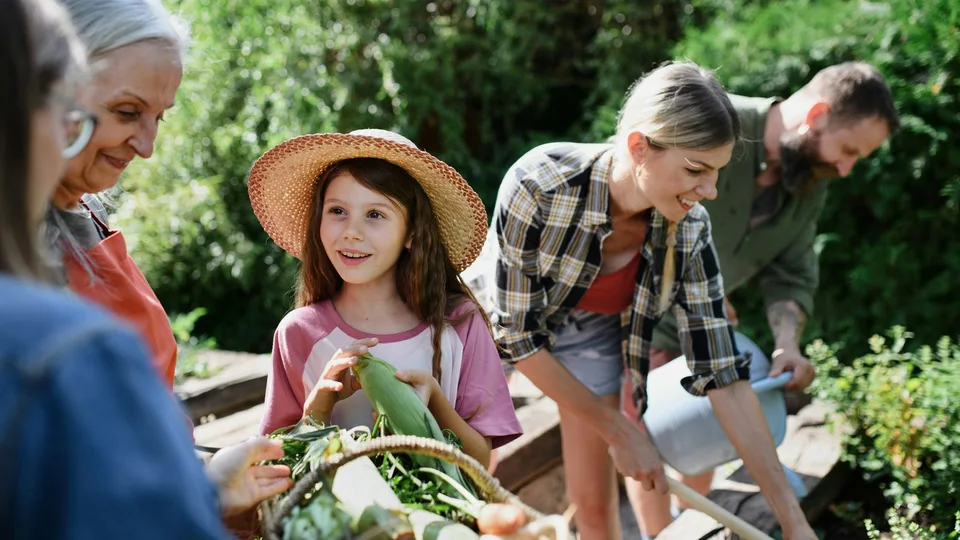
On November 12, 2026, Penn State announced a five-year, $3.8 million grant from the National Institute of Nursing Research to test Growing Healthy Hearts, a remote program that pairs gardening with cooking, nutrition education and peer support for adults at risk of cardiovascular disease [1]. To be clear from the start: this is money for a trial, not a result.
In short: - The trial will enroll 264 adults with at least one heart disease risk factor and a child at home, randomized to the program or a waitlist [1]. - In a 40-person pilot, newcomers to gardening ate 0.94 more cups of fruits and vegetables a day and took 1029 more steps a day than controls [4]. - Results will take years: the ClinicalTrials.gov registry estimates primary completion in October 2030 [3].
What the program involves
Per the abstract on NIH RePORTER, Growing Healthy Hearts lasts 6 months and is delivered remotely, through videoconference sessions and a private social media group [2]. Penn State Extension master gardeners and culinary nutrition experts will moderate the group, with gardening advice tailored to each participant's space and location [1]. Nutrition lessons follow the DASH eating plan, and the cooking part stresses fresh, frozen and shelf-stable foods for healthy eating all year [2].
The starting point is enjoyment: when gardeners are asked why they garden, Veldheer says, enjoyment is often the main reason [1]. The team will also check whether new habits reach the children living in the household [1] [2].
From pilot to full trial
| Pilot trial | New NIH trial | |
|---|---|---|
| Participants | 40, 20 per group [4] | 264 [1] |
| Comparison group | no treatment [4] | waitlist [1] |
| Program length | 24 weeks [4] | 6 months [2] |
| Main measure | feasibility [4] | fruit and vegetable intake [3] |
Our arithmetic: the new trial is 6.6 times the size of the pilot. It will also measure physical activity, biomarkers and children's health [1] [2].
What earlier studies found
| Study | Design | Outcome |
|---|---|---|
| Penn State pilot, Pilot and Feasibility Studies, 2026 | randomized, 40 adults with heart risk factors, 24 weeks | +0.94 cups of fruits and vegetables and +1029 steps a day vs control [4] |
| CAPS garden trial, Colorado, The Lancet Planetary Health00303-5), 2023 | randomized, 291 adults who had not gardened in 2 years | +1.41 g of fiber and +5.80 minutes of moderate-to-vigorous activity a day; no significant change in fruit and vegetable intake, BMI or waist size [5] |
| BRFSS 2019 survey, Journal of the Academy of Nutrition and Dietetics, 2023 | cross-sectional, 146047 adults aged 65 and older | gardeners had 0.60 times the odds of cardiovascular disease of non-exercisers [6] |
Our reading: the two randomized trials show small, measurable gains in diet and activity, while the survey shows an association that its own authors say cannot prove cause and effect [6]. On the same theme, see how ten minutes of watering plants lowered blood pressure and what a meta-analysis found on horticultural therapy and depression.
Planning a first vegetable bed
Winter is a fine time to sketch next year's garden; University of Maryland Extension offers beginner rules [8].
Start small
A starter garden of 25 to 50 square feet (2.32 to 4.65 m²) is enough, and you can expand later [8].
Follow the sun
Pick level ground with at least 6 hours of full sun a day, away from trees and shrubs [8].
Try containers
Pots are a great way to start: Maryland Extension shows tomato, pepper and eggplant growing in 5-gallon (18.93 L) buckets [8].
What the grant does not say
A grant is a plan to measure, not a finding: the trial registry lists the study as not yet recruiting [3]. The pilot was built to test feasibility, and its gains in diet and steps came from exploratory analyses in 40 people, 85% of them women [4]. The sources describe follow-up differently: the press release mentions 6 months and one year [1], while the NIH abstract lists 3, 6 and 12 months [2]. Every participant must have a child aged 5 to 17 at home and space for a garden, so the trial speaks to that group [3].
Frequently asked questions
Is gardening proven to prevent heart disease?
No: the randomized trials so far measured diet and activity, and the survey of older adults cannot show cause and effect [4] [5] [6].
Can I join the trial?
The registry lists it as not yet recruiting; eligibility includes being 18 or older, having a child aged 5 to 17 at home and having garden space [3].
Sources
- $3.8M NIH grant to test gardening, cooking program for heart health — Penn State News, 12 November 2026 · psu.edu, consulted
- Growing Healthy Hearts: a randomized controlled trial of a multicomponent gardening intervention for adults with cardiovascular disease risk and their families — NIH RePORTER, project 1R01NR022295-01 · reporter.nih.gov, consulted
- Growing Healthy Hearts (NCT07684027) — ClinicalTrials.gov, last update posted 7 July 2026 · clinicaltrials.gov, consulted
- Veldheer et al. (2026), Growing Healthy Hearts: a pilot randomized controlled trial of a digitally delivered gardening, cooking, and DASH diet intervention for adults with cardiovascular risk factors — Pilot and Feasibility Studies, 28 January 2026 · doi.org, consulted
- Litt et al. (2023), Effects of a community gardening intervention on diet, physical activity, and anthropometry outcomes in the USA (CAPS): an observer-blind, randomised controlled trial — The Lancet Planetary Health 7 (1) · doi.org, consulted
- Veldheer et al. (2023), Gardening is associated with better cardiovascular health status among older adults in the US: analysis of the 2019 BRFSS survey — Journal of the Academy of Nutrition and Dietetics 123 (5) · doi.org, consulted
- Growing Healthy Hearts — Penn State Extension Master Gardener, research collaborations · extension.psu.edu, consulted
- Planning a Vegetable Garden — University of Maryland Extension, updated 31 March 2026 · extension.umd.edu, consulted
Written by Emilio Marruso · last checked