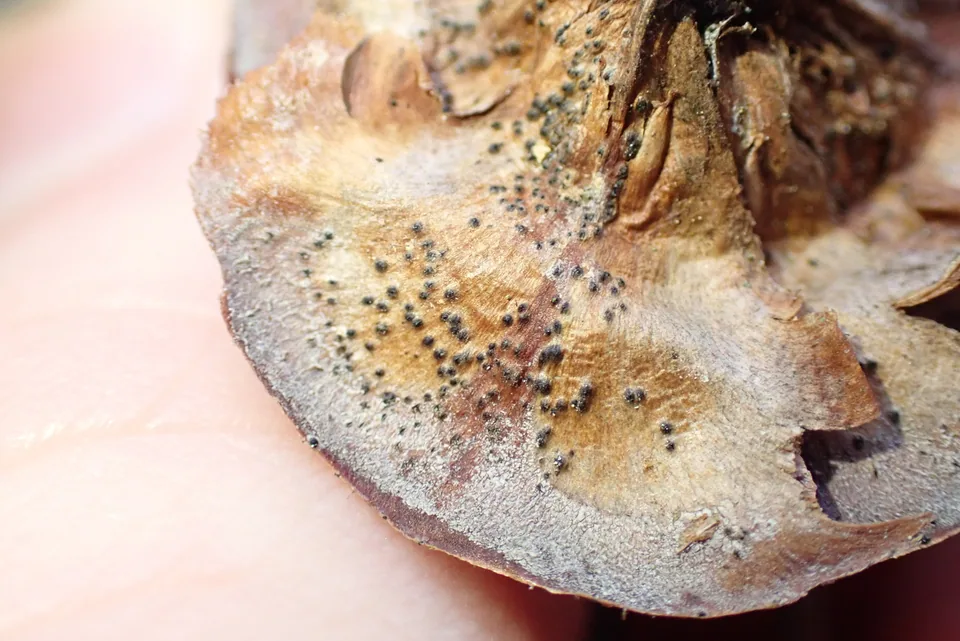
Fungus
Shoot dieback of conifers
Diplodia sapinea
Written by Emilio Marruso
Classification: Ascomycota › Pezizomycotina › Dothideomycetes › Botryosphaeriales › Botryosphaeriaceae › Diplodia
Plants it attacks
Plants in our guide where this problem is reported. Open a plant to see the sources.
- Japanese Black Pine
Symptom: Diplodia leaf blight often begins to defoliate the lower branches, creating a bedraggled look once trees reach maturity and set cones.
Also reported on: Japanese Red Pine, Loblolly Pine, Macedonian Pine, Mugo Pine, Pitch Pine, Table mountain pine
Remedies
What our plant sheets report, with the outcome checked against official sources. Traditional remedies without an official source are flagged.
Treat
pruning blighted twigs Works
How: Prune and remove blighted twigs, branches and cones during dry weather in autumn.
Reported for 1 plant: Japanese Red Pine
pruning blighted twigs and cones Partly works
How: Prune and remove blighted twigs, branches and cones during dry weather in autumn to reduce the fungus available to infect new growth.
Reported for 1 plant: Table mountain pine
pruning infected shoots Partly works
How: Diseased shoots should be removed as soon as they are noticed; prune during dry weather and cut 8 inches or more below visible damage into healthy wood; clean tools with a household disinfectant between cuts; discard clippings by burning or in the trash.
Reported for 1 plant: Macedonian Pine
pruning infected shoots in dry weather Partly works
How: To improve the appearance of a diseased tree, prune to remove and destroy infected branches and twigs during dry periods.
Reported for 1 plant: Pitch Pine
removing dead twigs and branches Partly works
How: Sanitation: remove dead twigs, branches, cones, litter and dead trees.
Reported for 1 plant: Loblolly Pine
mulching the drip line Official source, not independently tested
How: Consider mulching the tree's drip line down to a depth of 3 to 4 inches, as an alternative to letting weeds and grasses compete with young trees.
Reported for 1 plant: Loblolly Pine
removing fallen dead needles and tissue Official source, not independently tested
How: Remove all dead tissues that have fallen to the ground beneath the tree, which may harbor the fungus.
Reported for 1 plant: Pitch Pine
cutting away infected branches Not verified
How: Cut away infected branches and promote good air circulation.
Reported for 1 plant: Japanese Black Pine
removing infected cones and dead branches Not verified
How: Remove and destroy infected cones and dead and dying branches during dry weather; disinfect pruning tools between cuts; avoid pruning from late spring to early summer.
Reported for 1 plant: Mugo Pine
Where it is found
No distribution data.