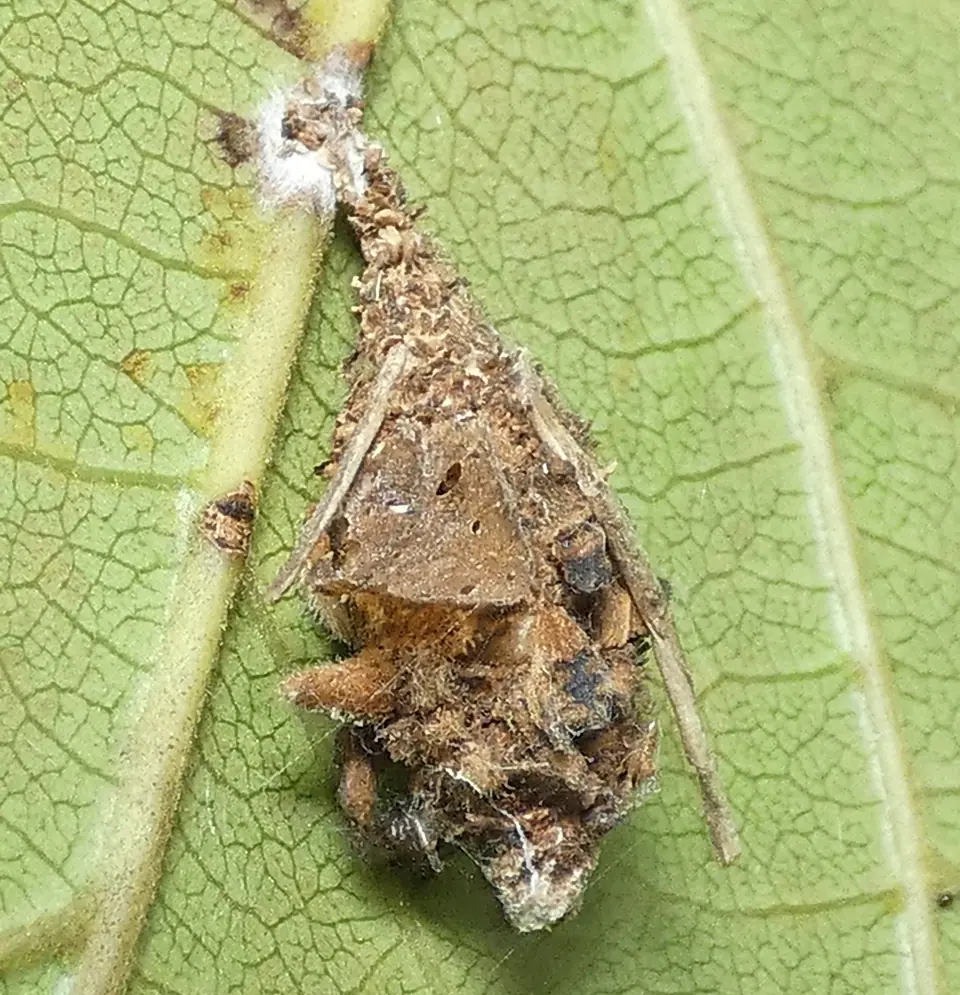
Insect
Bagworms
Psychidae
Written by Emilio Marruso
Classification: Arthropoda › Hexapoda › Insecta › Lepidoptera
Plants it attacks
Plants in our guide where this problem is reported. Open a plant to see the sources.
- Sawara False-cypress
Symptom: Somewhat susceptible to bagworms, root rot, and juniper blight
- Atlantic White Cedar
Symptom: Some susceptibility to juniper blight, root rot and insect pests such as bagworms.
- Italian Cypress
Symptom: Infestations of mites are a common issue, bagworms are an occasional problem, root rot can occur in poorly drained locations, and honey fungus and canker affect many trees.
- Eastern Redcedar
Symptom: Listed as pests and diseases of the tree
- Oriental Arborvitae
Symptom: Healthy, well-maintained trees have few problems; scout for bagworms and spider mites.
- Cypress
Symptom: Cercospora needle blight, bagworms, and fall webworms are potential problems
- American Arborvitae
Symptom: Small brown cones hanging from the branches, which can defoliate the tree if unchecked
- Western Redcedar
Symptom: Bagworms and some root rots may occur.
Also reported on: Abies grandis, Balsam Fir, Blue spruce, Chinese Juniper, Creeping Juniper, Formosa Sweet Gum, Hinoki Cypress, Japanese Garden Juniper, Nordmann Fir, One-seed Juniper, Rocky Mountain Juniper, Shore Juniper, Shortleaf Pine, Yellow Buckeye
Remedies
What our plant sheets report, with the outcome checked against official sources. Traditional remedies without an official source are flagged.
Treat
hand-picking bags Works
How: Handpick and destroy the bags in winter and early spring before the eggs hatch.
Reported for 2 plants: Italian Cypress, American Arborvitae
hand picking bags Works
How: In late fall or winter, before the eggs hatch, remove and destroy the bags by hand.
Reported for 1 plant: Atlantic White Cedar
hand-pick and remove bags Works
How: Hand-pick and remove the bags, then destroy them or dispose of them properly.
Reported for 1 plant: Shore Juniper
hand-picking bags into soapy water Works
How: Pick off small caterpillars together with their bags and drop them into a container of soapy water, which kills them directly.
Reported for 1 plant: Rocky Mountain Juniper
hand-picking bagworm bags Works
How: Hand-pick and remove bags whenever practical. Destroy the bags or dispose of them properly.
Reported for 1 plant: Eastern Redcedar
hand-picking the bags Works
How: Inspect junipers during winter and early spring, hand-pick and remove bags whenever practical, and destroy the bags or dispose of them properly.
Reported for 1 plant: Japanese Garden Juniper
hand-picking bags into soapy water Partly works
How: Pull off the bags and drop them in soapy water, which lets you skip the pesticides altogether.
Reported for 1 plant: Western Redcedar
hand-picking the bags Partly works
How: Pick off the bags during the fall, winter and spring, before the new generation hatches in May or early June; destroy them and throw them in the trash.
Reported for 1 plant: One-seed Juniper
handpicking bags Partly works
How: In late fall or winter, before the eggs hatch, remove and destroy the bags by hand; dispose of the bags properly to prevent the spread of eggs. For a few bags, snip them off with scissors or pruners, bag and trash them.
Reported for 1 plant: Sawara False-cypress
picking off by hand Partly works
How: Small numbers of insects may be picked off by hand.
Reported for 1 plant: Formosa Sweet Gum
picking off the bags by hand Partly works
How: Snip the bags off with scissors or pruners, bag and trash them; do not leave them on the ground.
Reported for 1 plant: Shortleaf Pine
hand removal of bags Official source, not independently tested
How: Bagworms can be removed with scissors or a sharp knife where practical.
Reported for 1 plant: Abies grandis
hand-picking caterpillars into soapy water Official source, not independently tested
How: Hand-picking any small caterpillars (along with their accompanying bag) and placing them into a container of soapy water will kill them directly.
Reported for 1 plant: Japanese Garden Juniper
picking off bags before eggs hatch Official source, not independently tested
How: Pick off the bags during the fall, winter, and spring, and destroy them; remove them before the new generation hatches out in May or early June.
Reported for 1 plant: Japanese Garden Juniper
removing bagworms by hand Official source, not independently tested
How: When practical, remove the bags with scissors or a sharp knife.
Reported for 1 plant: Balsam Fir
drowning bagworms in soapy water Not verified
How: Seal them in a plastic bag and put them in the trash or place them in a pail of soapy water so that they drown.
Reported for 1 plant: Eastern Redcedar
hand picked bags dropped in soapy water Not verified
How: Handpick the bags, crack them open and drop them in a bucket of warm or hot soapy water for hours.
Reported for 1 plant: Atlantic White Cedar
hand picking bags Not verified
How: If the infestation is light, hand-pick the bags off the tree and destroy them in fall or winter before the eggs hatch in spring.
Reported for 1 plant: Oriental Arborvitae
handpicking bags Not verified
How: Handpick the bags from the trees in winter and burn them.
Reported for 1 plant: Nordmann Fir
removing bagworm bags by hand Not verified
How: Remove the bagworm bags before August.
Reported for 1 plant: Hinoki Cypress
4 more remedies are reported in single plant sheets.
Where it is found
No distribution data.