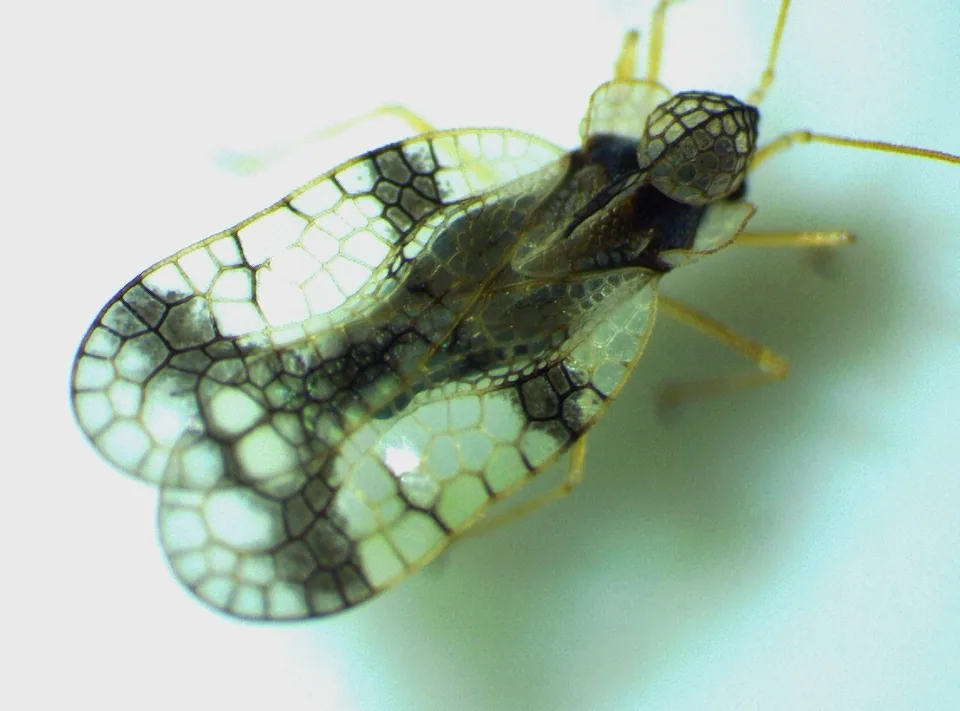
Insect
Azalea lace bug
Stephanitis pyrioides
Written by Emilio Marruso
Classification: Arthropoda › Hexapoda › Insecta › Hemiptera › Heteroptera › Tingidae › Stephanitis
Plants it attacks
Plants in our guide where this problem is reported. Open a plant to see the sources.
Plants it attacks: Cranberry, Cumberland Azalea, Doublefile Viburnum, Florida Azalea, Highbush blueberry, Laurel, Piedmont Azalea, Pieris, Plumleaf Azalea, Salal, Southern Indian Azalea, Southern Pinxter Azalea
Remedies
What our plant sheets report, with the outcome checked against official sources. Traditional remedies without an official source are flagged.
Treat
horticultural oil spray Works
How: Spray so the product directly coats the lace bugs; soap and oil sprays have no residual effect.
Reported for 2 plants: Florida Azalea, Southern Pinxter Azalea
insecticidal soap spray Works
How: Spray so the product directly coats the lace bugs; soap and oil sprays have no residual effect.
Reported for 2 plants: Florida Azalea, Southern Pinxter Azalea
horticultural oil Works
How: Spray so the product directly coats the lace bugs; oil sprays have no residual effect.
Reported for 1 plant: Cumberland Azalea
insecticidal soap Works
How: Spray so the product directly coats the lace bugs; soap sprays have no residual effect.
Reported for 1 plant: Cumberland Azalea
strong stream of water Partly works
How: Hose plants with a strong stream of water directed at the underside of leaves.
Reported for 1 plant: Southern Pinxter Azalea
insecticidal soap Official source, not independently tested
How: Insecticidal soaps may require repeat applications (about 2-week intervals) for effective control.
Reported for 2 plants: Piedmont Azalea, Plumleaf Azalea
hosing plants with a strong stream of water Official source, not independently tested
How: Hosing plants with a strong stream of water directed at the underside of leaves will help to remove them, and wingless nymphs will not return.
Reported for 1 plant: Plumleaf Azalea
hosing with a strong stream of water Official source, not independently tested
How: Hose the plants with a strong stream of water directed at the underside of the leaves to remove the insects.
Reported for 1 plant: Piedmont Azalea
neem extract spray Not proven
How: Applied to the undersides of the foliage at a dilution of 1:150.
Reported for 1 plant: Southern Pinxter Azalea
Where it is found
Present in 21 countries.