
How to Grow and Care for Kinnikinnick
Arctostaphylos uva-ursi
Written by Emilio Marruso · last checked
At a glance
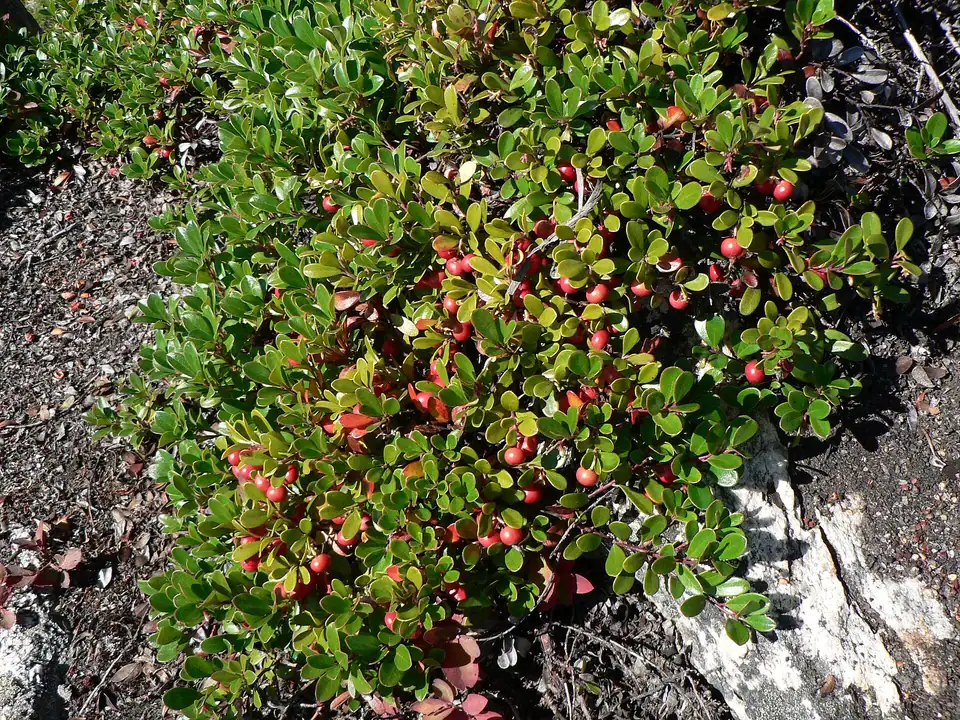
Bearberry is an easygoing perennial that stays low, just 6 to 12 inches tall, and is happy in full sun or partial shade. It is drought tolerant, prefers dry to moderate moisture and does not want fertilizer, so it asks for very little. It even grows in containers, and its berries are edible, though they have little flavor.
- Sun
Full sun, partial shade or dappled sunlight
What the sources say (1)
Light: Full sun, partial shade or dappled sunlight
Light: Dappled Sunlight (Shade through upper canopy all day) Full sun (6 or more hours of direct sunlight a day) Partial Shade (Direct sunlight only part of the day, 2-6 hours)
— Arctostaphylos uva-ursi (Bearberry, Bear's grape, Hog Craneberry, Kinnikinnick, Sandberry) | North Carolina Extension Gardener Plant Toolbox [1] - Water
Likes dry to slightly moist soil and handles drought; wet soil rots the roots
What the sources say (2)
Watering: Prefers dry to moderate moisture and is drought tolerant
It is low maintenance and prefers dry to moderate moisture and is drought tolerant.
— Arctostaphylos uva-ursi (Bearberry, Bear's grape, Hog Craneberry, Kinnikinnick, Sandberry) | North Carolina Extension Gardener Plant Toolbox [1] Watering notes: Moist to wet soil can lead to root disease
Issues : moist to wet soil can lead to root disease
— Arctostaphylos uva-ursi (Bearberry, Bear's grape, Hog Craneberry, Kinnikinnick, Sandberry) | North Carolina Extension Gardener Plant Toolbox [1] - Cold
Survives winters down to −40 °F (−40 °C)
Very hardy · USDA 3a · RHS H7 · Z3
What the sources say (2)
Hardiness, coldest zone: 3a [winter low −40 to −37.2 °C (−40 to −35 °F)]
USDA Plant Hardiness Zone: 3a, 3b, 4a, 4b, 5a, 5b, 6a, 6b, 7a, 7b
— Arctostaphylos uva-ursi (Bearberry, Bear's grape, Hog Craneberry, Kinnikinnick, Sandberry) | North Carolina Extension Gardener Plant Toolbox [1] Hardiness, warmest zone: 7b [winter low −15 to −12.2 °C (5 to 10 °F)]
USDA Plant Hardiness Zone: 3a, 3b, 4a, 4b, 5a, 5b, 6a, 6b, 7a, 7b
— Arctostaphylos uva-ursi (Bearberry, Bear's grape, Hog Craneberry, Kinnikinnick, Sandberry) | North Carolina Extension Gardener Plant Toolbox [1] - Spacing
12–24 in between plants
What the sources say (1)
Spacing: 30.5-61.0 cm (12-24 in)
Space : 12-24 inches apart
— Arctostaphylos uva-ursi (Bearberry, Bear's grape, Hog Craneberry, Kinnikinnick, Sandberry) | North Carolina Extension Gardener Plant Toolbox [1] - Feeding
No fertilizer needed: feeding is discouraged
What the sources say (2)
Avoid: Fertilizing, which is discouraged
Soil surrounding the plant should not be compacted. Fertilization is discouraged.
— Arctostaphylos uva-ursi (Bearberry, Bear's grape, Hog Craneberry, Kinnikinnick, Sandberry) | North Carolina Extension Gardener Plant Toolbox [1] full sun to very light shade - do not fertilize - does not need pruning
— Plant Database [2] - Harvest
The berries are edible but have little flavor
- Pests
Leaf spot when stressed; root disease in moist or wet soil
What the sources say (2)
Diseases: leaf spot, root disease
- does not like excessive summer heat - can develop foliar diseases when stressed (leaf spot)
— Plant Database [2] Issues : moist to wet soil can lead to root disease
— Arctostaphylos uva-ursi (Bearberry, Bear's grape, Hog Craneberry, Kinnikinnick, Sandberry) | North Carolina Extension Gardener Plant Toolbox [1] - Size
6–12 in tall and 15 in wide
What the sources say (2)
Mature height: 15.24-30.48 cm (6 to 12 in)
- low growing forming dense, spreading mats - individual plants can be 6" to 12" tall by 15" diameter
— Plant Database [2] Mature width: 38.1 cm (15 in)
- low growing forming dense, spreading mats - individual plants can be 6" to 12" tall by 15" diameter
— Plant Database [2] - Propagation
Easiest from stem cuttings or layering; seeds need special treatment before they sprout
What the sources say (2)
Propagation: Stem cuttings, layering; seed requires scarification and stratification
Propagation is best done with stem cuttings, they can be placed in sand or propagated by layering.
— Arctostaphylos uva-ursi (Bearberry, Bear's grape, Hog Craneberry, Kinnikinnick, Sandberry) | North Carolina Extension Gardener Plant Toolbox [1] by stem cuttings - seed require scarification and stratification
— Plant Database [2] - Containers
Grows in containers too
What the sources say (1)
In containers: Yes
Landscape Location: Container
— Arctostaphylos uva-ursi (Bearberry, Bear's grape, Hog Craneberry, Kinnikinnick, Sandberry) | North Carolina Extension Gardener Plant Toolbox [1]
Overview
An evergreen, low-growing, slow mat-forming shrub used as a ground cover. [1] It prefers dry to moderate moisture and light-textured soil, and moist to wet soil can lead to root disease. [1] It does not like to be transplanted and is propagated by stem cuttings or layering. [1]
This record is incomplete: the sources we read do not cover every field yet.
Not yet covered by our sources: Pruning
Kinnikinnick care
How to water Kinnikinnick
Watering
Prefers dry to moderate moisture and is drought tolerant
What the sources say (1)
It is low maintenance and prefers dry to moderate moisture and is drought tolerant.Watering notes
Moist to wet soil can lead to root disease
What the sources say (1)
Issues : moist to wet soil can lead to root diseaseHow much light Kinnikinnick needs
Full sun, partial shade or dappled sunlight
What the sources say (1)
Light:
Dappled Sunlight (Shade through upper canopy all day)
Full sun (6 or more hours of direct sunlight a day)
Partial Shade (Direct sunlight only part of the day, 2-6 hours)How much cold Kinnikinnick can take
Hardiness, coldest zone
3a [winter low −40 to −37.2 °C (−40 to −35 °F)]
What the sources say (1)
USDA Plant Hardiness Zone:
3a, 3b, 4a, 4b, 5a, 5b, 6a, 6b, 7a, 7bHardiness, warmest zone
7b [winter low −15 to −12.2 °C (5 to 10 °F)]
What the sources say (1)
USDA Plant Hardiness Zone:
3a, 3b, 4a, 4b, 5a, 5b, 6a, 6b, 7a, 7bWhere to grow Kinnikinnick
In containers
Yes
What the sources say (1)
Landscape Location:
ContainerSpacing
30.5-61.0 cm (12-24 in)
What the sources say (1)
Space : 12-24 inches apartHow to propagate Kinnikinnick
Stem cuttings, layering; seed requires scarification and stratification
What the sources say (2)
Propagation is best done with stem cuttings, they can be placed in sand or propagated by layering.by stem cuttings
- seed require scarification and stratificationHow to grow Kinnikinnick
The plant
Life cycle
perennial
What the sources say (1)
Known as common bearberry, this evergreen is a low-growing perennial shrub that can be effectively used as a ground cover.Family
Ericaceae
What the sources say (1)
kinnikinick Ericaceae Arctostaphylos
uva-ursi (L.) Spreng.
symbol: ARUVMature height
15.24-30.48 cm (6 to 12 in)
What the sources say (1)
- low growing forming dense, spreading mats
- individual plants can be 6" to 12" tall by 15"
diameterMature width
38.1 cm (15 in)
What the sources say (1)
- low growing forming dense, spreading mats
- individual plants can be 6" to 12" tall by 15"
diameterPests and diseases
Diseases
leaf spot, root disease
What the sources say (2)
- does not like excessive summer heat
- can develop foliar diseases when stressed (leaf spot)Issues : moist to wet soil can lead to root diseaseFertilizing
Avoid
Fertilizing, which is discouraged
What the sources say (2)
Soil surrounding the plant should not be compacted. Fertilization is discouraged.full sun to very light shade - do not fertilize - does not need pruningKinnikinnick pests and problems
Root disease
Symptom: Occurs in moist to wet soil.
What to do: Avoid moist to wet soil.
What the sources say (1)
Issues : moist to wet soil can lead to root disease
— Arctostaphylos uva-ursi (Bearberry, Bear's grape, Hog Craneberry, Kinnikinnick, Sandberry) | North Carolina Extension Gardener Plant Toolbox [1] Leaf spot
Symptom: Foliar diseases can develop when the plant is stressed.
What to do: Not stated in the source.
What the sources say (1)
can develop foliar diseases when stressed (leaf spot)
— Plant Database [2]
Remedies
Each remedy shows what official sources say about it; traditional remedies without an official source are marked as such. Harmful ones are listed so you know to avoid them.
Treating the plant
leaf spot
removing and destroying fallen and infected leaves Official source, not independently tested
How: Rake and destroy fallen leaves. Remove and destroy infected leaves from plants, where practical.
- Rake and destroy fallen leaves. - Remove and destroy infected leaves from plants, where practical.
— hortsense.cahnrs.wsu.edu [4] avoiding overhead watering and improving air circulation Official source, not independently tested
How: Avoid overhead irrigation. Space plantings and prune to improve air circulation; avoid planting in moist, shady areas if leaf spot is a problem.
- Avoid overhead irrigation. - Space plantings and prune to improve air circulation. Avoid planting in moist, shady areas if leaf spot is a problem.
— hortsense.cahnrs.wsu.edu [4]
rust
picking off infected leaves and removing nearby infected spruce Official source, not independently tested
How: Remove infected spruces from the vicinity of the plantings; pick off and destroy (do not compost) infected leaves when practical; rake and destroy fallen leaves under infected plants.
- Remove infected spruces from vicinity of desired kinnikinnick plantings, and vice versa. - Pick off and destroy (do not compost) infected leaves when practical.
— hortsense.cahnrs.wsu.edu [5]
leaf gall
picking and destroying galls Official source, not independently tested
How: Pick and destroy thickened, fleshy leaves and flowers before the white fungal spores are present; remove all old galls from plants prior to bloom and flushes of new growth.
- Pick and destroy thickened, fleshy leaves and flowers before the white fungal spores are present. - Remove all old galls from plants prior to bloom and flushes of new growth.
— hortsense.cahnrs.wsu.edu [6]
root rot and dieback
good drainage and avoiding over-watering Official source, not independently tested
How: Avoid over-watering, especially with automatic sprinkler systems; provide good drainage for plants in beds, fields, or containers; rake up and destroy dead leaves around the base; prune off infected leaves and branches.
- Avoid over-watering especially when using automatic sprinkler systems that come on every day using the same amount of water. - Provide good drainage for plants in beds, fields, or containers.
— pnwhandbooks.org [7]
Calendar
Pruning
Not stated in the sources we read.
Months as given by the sources, which are mostly from the United States (northern hemisphere). In the southern hemisphere they shift by about six months.
Edibility
Reported by the source, quoted verbatim. Do not eat a plant on the basis of this page alone: identification mistakes can be dangerous.
The berries are also suitable for human consumption, however, they are seldom eaten due to their lack of flavor.
[1]
Indicative values
Values from a secondary source, not checked word for word like the rest of this page. Use them as a starting point.
- Hours of sun
- 2-5 hoursIndicative value, adapt it to your climate · Secondary source
- Drought tolerant
- yesIndicative value, adapt it to your climate · Secondary source
- Soil
- Sandy Loamy RockyIndicative value, adapt it to your climate · Secondary source
- Soil pH
- 4.5-6Indicative value, adapt it to your climate · Secondary source
- Growth rate
- LowIndicative value, adapt it to your climate · Secondary source
- Pruning
- March, AprilIndicative value, adapt it to your climate · Secondary source
- Pests
- Fungal leaf spot, Galls, Root rot, Rust, Deer resistant, Drought resistantIndicative value, adapt it to your climate · Secondary source
Similar plants
- Black Huckleberry Gaylussacia baccata
- Bog Rosemary Andromeda polifolia
- Coast Leucothoe Agarista populifolia
- Coastal Azalea Rhododendron atlanticum
- Coastal Doghobble Leucothoe axillaris
- Cranberry Vaccinium macrocarpon
- Creeping Blueberry Vaccinium crassifolium
- Cumberland Azalea Rhododendron cumberlandense
Sources
Every value above is quoted from these documents. Links lead to the original publisher.
- Arctostaphylos uva-ursi (Bearberry, Bear's grape, Hog Craneberry, Kinnikinnick, Sandberry) | North Carolina Extension Gardener Plant Toolbox · plants.ces.ncsu.edu, consulted
- Plant Database · plantdatabase.uconn.edu, consulted
- Virginia Tech Dendrology Fact Sheet · dendro.cnre.vt.edu, consulted
- hortsense.cahnrs.wsu.edu · hortsense.cahnrs.wsu.edu
- hortsense.cahnrs.wsu.edu · hortsense.cahnrs.wsu.edu
- hortsense.cahnrs.wsu.edu · hortsense.cahnrs.wsu.edu
- pnwhandbooks.org · pnwhandbooks.org
Written by Emilio Marruso · last checked