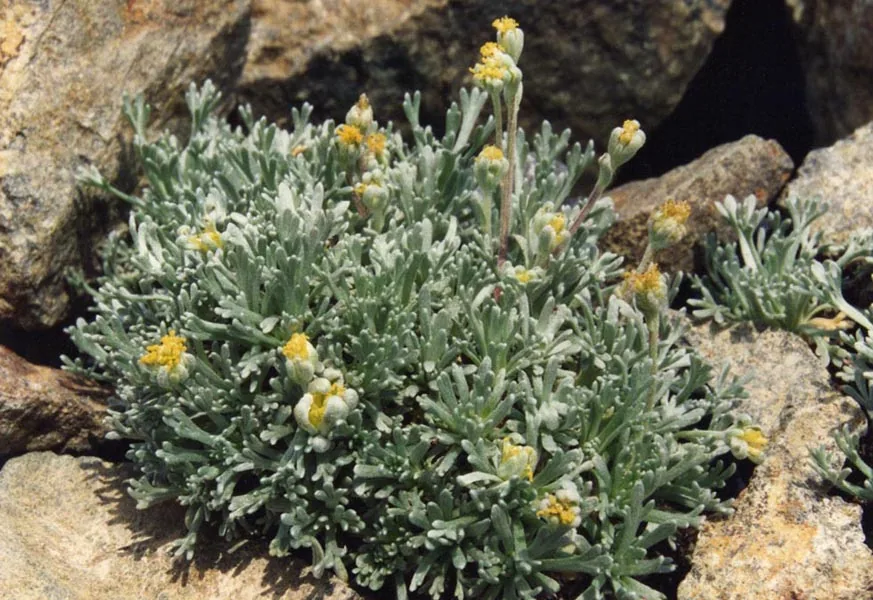
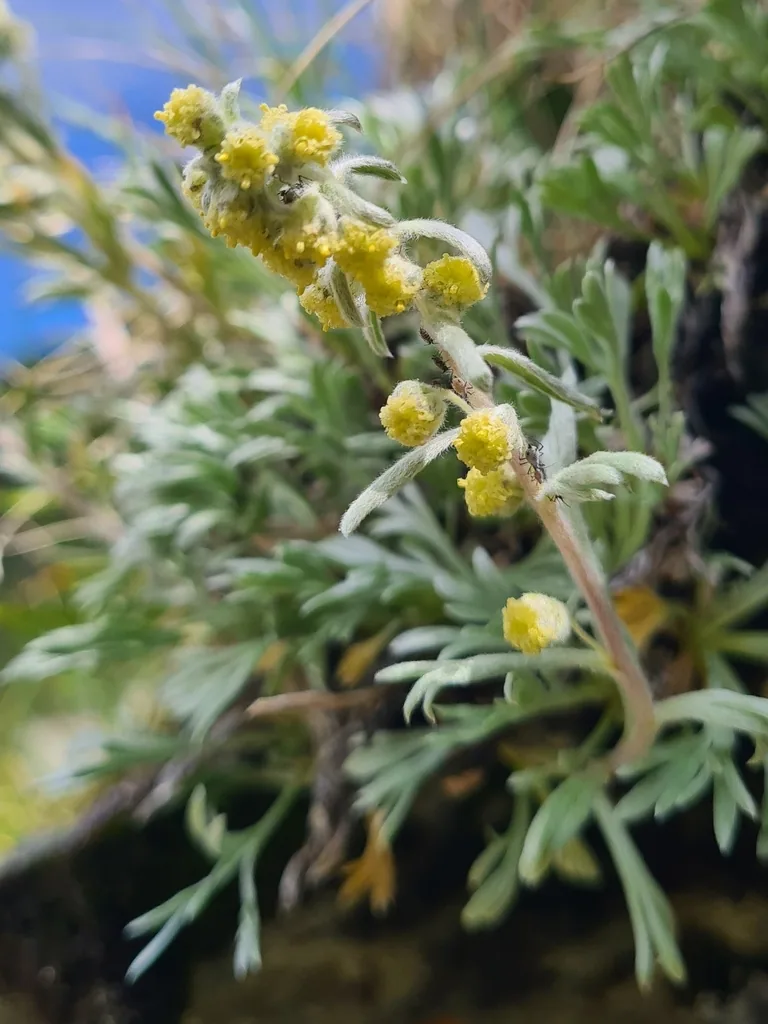

How to Grow and Care for Alpine Wormwood
Artemisia umbelliformis
Written by Emilio Marruso · last checked
Toxic to: People · Why
At a glance
This artemisia asks for almost nothing: a warm, sunny, dry spot, well-drained soil and no fertilizer at all. Once settled, it shrugs off drought. Its leaves season your dishes, and the herb goes into a homemade tea or liqueur; for the best quality, pick it just as it begins to flower.
- Sun
A warm, sunny, dry spot
What the sources say (1)
Watering notes: Well-drained soil; prefers a warm sunny dry position
Drainage well drained
— Alpine Wormwood (Artemisia umbelliformis) — Practical Plants [3] - Water
Moderate watering; once settled it handles drought, and too much water harms it
What the sources say (2)
Watering: Moderate; established plants are drought tolerant
Established plants are drought tolerant [3] .
— Alpine Wormwood (Artemisia umbelliformis) — Practical Plants [3] Avoid: Excess fertilizer, as well as excess water
Artemisias dislike excess water and fertilizer, but irrigation is necessary to help establish shrubs; then, only occasional watering is generally all that is needed.
— [5] - Cold
Survives winters down to −30 °F (−34.4 °C)
Very hardy · USDA 4 · RHS H7 · Z4
What the sources say (1)
Hardiness, coldest zone: 4 [winter low −34.4 to −28.9 °C (−30 to −20 °F)]
Hardiness Zone 4+
— Alpine Wormwood (Artemisia umbelliformis) — Practical Plants [3] - Soil
Well-drained soil
What the sources say (1)
Watering notes: Well-drained soil; prefers a warm sunny dry position
Drainage well drained
— Alpine Wormwood (Artemisia umbelliformis) — Practical Plants [3] - Planting
Plant in late spring or early summer
What the sources say (1)
Planting: Late spring or early summer
Plant out in late spring or early summer.
— Alpine Wormwood (Artemisia umbelliformis) — Practical Plants [3] - Feeding
No fertilizer needed; too much does harm
What the sources say (2)
How often: Not needed
Artemisias require no fertilizer, very little water, full sun or some light shade, and good drainage.
— [5] Avoid: Excess fertilizer, as well as excess water
Artemisias dislike excess water and fertilizer, but irrigation is necessary to help establish shrubs; then, only occasional watering is generally all that is needed.
— [5] - Harvest
Pick as flowering begins; the leaves season food and make tea or liqueur
What the sources say (1)
Harvest: Beginning of flowering (recommended for quality)
Harvesting of white genepi at the beginning of flowering is therefore recommended to guarantee a high quality product.
— Optimising the Cultivation of White Genepi to Achieve Stable Yields and High Quality. [1] - Propagation
From seed, by dividing in spring or fall, or from cuttings at the base in late spring
What the sources say (2)
- Sowing
Sow on the surface in a greenhouse, from late winter to early summer
What the sources say (1)
Sowing: Surface sow from late winter to early summer in a greenhouse
Seed - surface sow from late winter to early summer in a greenhouse
— Alpine Wormwood (Artemisia umbelliformis) — Practical Plants [3] - Safety
No known poisoning, but touching related plants can irritate the skin of some people
Overview
White genepi is a low alpine perennial used for tea and liqueur, and is cultivated for it. [3][1] It grows best in sandy, well-drained soil in a warm sunny dry position, and high altitude favours yield. [3][1]
This record is incomplete: the sources we read do not cover every field yet.
Not yet covered by our sources: Light
Alpine Wormwood care
How to water Alpine Wormwood
Watering
Moderate; established plants are drought tolerant
What the sources say (1)
Established plants are drought tolerant [3] .Watering notes
Well-drained soil; prefers a warm sunny dry position
What the sources say (1)
Drainage
well drainedHow much light Alpine Wormwood needs
Not stated in the sources we read.
How much cold Alpine Wormwood can take
4 [winter low −34.4 to −28.9 °C (−30 to −20 °F)]
What the sources say (1)
Hardiness
Zone 4+How to propagate Alpine Wormwood
Seed (surface sown), division in spring or autumn, basal cuttings in late spring
How to grow Alpine Wormwood
Fertilizing
How often
Not needed
What the sources say (1)
Artemisias require no fertilizer, very little water, full sun or some light shade, and good drainage.Avoid
Excess fertilizer, as well as excess water
What the sources say (1)
Artemisias dislike excess water and fertilizer, but irrigation is necessary to help establish shrubs; then, only occasional watering is generally all that is needed.Remedies
The sources we checked give no remedies for this plant.
Is Alpine Wormwood poisonous?
Reported by the source, quoted verbatim. This is not medical or veterinary advice: if a person or an animal may have eaten this plant, contact a poison control centre or a veterinarian.
Although no reports of toxicity have been seen for this species, skin contact with some members of this genus can cause dermatitis or other allergic reactions in some people [4] .
[3]
Calendar
Sowing
Surface sow from late winter to early summer in a greenhouse
What the sources say (1)
Seed - surface sow from late winter to early summer in a greenhousePlanting
Late spring or early summer
What the sources say (1)
Plant out in late spring or early summer.Harvest
Beginning of flowering (recommended for quality)
What the sources say (1)
Harvesting of white genepi at the beginning of flowering is therefore recommended to guarantee a high quality product.Months as given by the sources, which are mostly from the United States (northern hemisphere). In the southern hemisphere they shift by about six months.
Edibility
Reported by the source, quoted verbatim. Do not eat a plant on the basis of this page alone: identification mistakes can be dangerous.
The herb is used in the preparation of a tea and a liqueur, often with the addition of absinthe [2] . The leaves are used as a condiment [1] .
[3]
Similar plants
- Artemisia afra Artemisia afra
- Artemisia genipi Artemisia genipi
- Big sagebrush Artemisia tridentata
- Mugwort Artemisia vulgaris
- Southernwood Artemisia abrotanum
- Tarragon Artemisia dracunculus
- Tree Wormwood Artemisia arborescens
- Wormwood Artemisia absinthium
Sources
Every value above is quoted from these documents. Links lead to the original publisher.
- Optimising the Cultivation of White Genepi to Achieve Stable Yields and High Quality. · ira.agroscope.ch, consulted
- Artemisia umbelliformis - Useful Temperate Plants · temperate.theferns.info, consulted
- Alpine Wormwood (Artemisia umbelliformis) — Practical Plants · practicalplants.org, consulted
- Artemisia umbelliformis - Pl@ntUse · uses.plantnet-project.org, consulted
- ucanr.edu · ucanr.edu
Written by Emilio Marruso · last checked