
How to Grow and Care for British Columbia wildginger
Asarum caudatum
Written by Emilio Marruso · last checked
At a glance
Looking for something green for that shady corner? This perennial thrives in part to full shade and moist soil, and a layer of mulch over the rhizomes keeps it watered with little extra effort. Its aromatic stems and roots were reputedly used by early settlers in place of ginger, and its leaves as a tea substitute.
- Sun
Part shade to full shade
What the sources say (3)
Light: Part shade to full shade
Light Requirements: Part Shade, Full Shade
— Wild Ginger • East Multnomah Soil and Water Conservation District [4] prefers part to full shade in the understory of moist coniferous forests
— Plant Data Sheet http://depts.washington.edu/propplnt/Plants/asarumcaudatum.htm [1] Light Requirement: Shade
— Lady Bird Johnson Wildflower Center - The University of Texas at Austin [5] - Water
Keep the soil moist; mulch over the roots and it rarely needs extra water
What the sources say (4)
Watering: Moist soil, medium water use; extra watering not necessary where planted rhizomes are mulched
Soil Moisture: Moist
— Lady Bird Johnson Wildflower Center - The University of Texas at Austin [5] Water Use: Medium
— Lady Bird Johnson Wildflower Center - The University of Texas at Austin [5] as they prefer naturally wet environments, additional watering should not be necessary
— Plant Data Sheet http://depts.washington.edu/propplnt/Plants/asarumcaudatum.htm [1] Watering notes: Mulch planted rhizomes to ensure adequate moisture
Mulch planted rhizomes to ensure adequate moisture
— Plant Data Sheet http://depts.washington.edu/propplnt/Plants/asarumcaudatum.htm [1] - Spacing
1 ft between plants
What the sources say (1)
Spacing: 30 cm (1 ft)
Space about 30cm (1ft.) apart.
— Plant Data Sheet http://depts.washington.edu/propplnt/Plants/asarumcaudatum.htm [1] - Planting
Plant seedlings in late spring, root cuttings in fall
What the sources say (4)
Planting: Late spring (seedlings); fall (root cuttings)
seedlings: Plant them out when large enough in late spring.
— Wild Ginger (Asarum caudatum) — Practical Plants [3] root cuttings: For root cuttings, these should be started in a sand medium and planted out in the fall.
— Plant Data Sheet http://depts.washington.edu/propplnt/Plants/asarumcaudatum.htm [1] Plant them out when large enough in late spring.
— Wild Ginger (Asarum caudatum) — Practical Plants [3] For root cuttings, these should be started in a sand medium and planted out in the fall.
— Plant Data Sheet http://depts.washington.edu/propplnt/Plants/asarumcaudatum.htm [1] - Feeding
Spread fertilizer on top of the soil in spring
What the sources say (1)
When: Spring, as a top dressing
They are easy growers, only needing water in dry weather and a top dressing of fertilizer in the spring, much the same care one would give rhododendrons.
— [7] - Harvest
Dig roots any time, best in fall; settlers reputedly used them like ginger
What the sources say (1)
Harvest: Root: all year round, best in autumn
It can be harvested all year round, but is best in the autumn
— Wild Ginger (Asarum caudatum) — Practical Plants [3] - Pests
Watch out for slugs
What the sources say (1)
Pests: slugs
In parts of its range, wild ginger may comprise an important food source for rodents (particularly pocket gophers). The species is also palatable to slugs.
— Wild Ginger (Asarum caudatum) | US Forest Service [6] - Propagation
Divide the rhizomes, sow seed or take root cuttings
What the sources say (2)
Propagation: Rhizome division; seed; root cuttings
Propagates easily from rhizome divisions or seed.
— Lady Bird Johnson Wildflower Center - The University of Texas at Austin [5] also easily propagated from rhizome divisions, root cuttings
— Plant Data Sheet http://depts.washington.edu/propplnt/Plants/asarumcaudatum.htm [1]
Overview
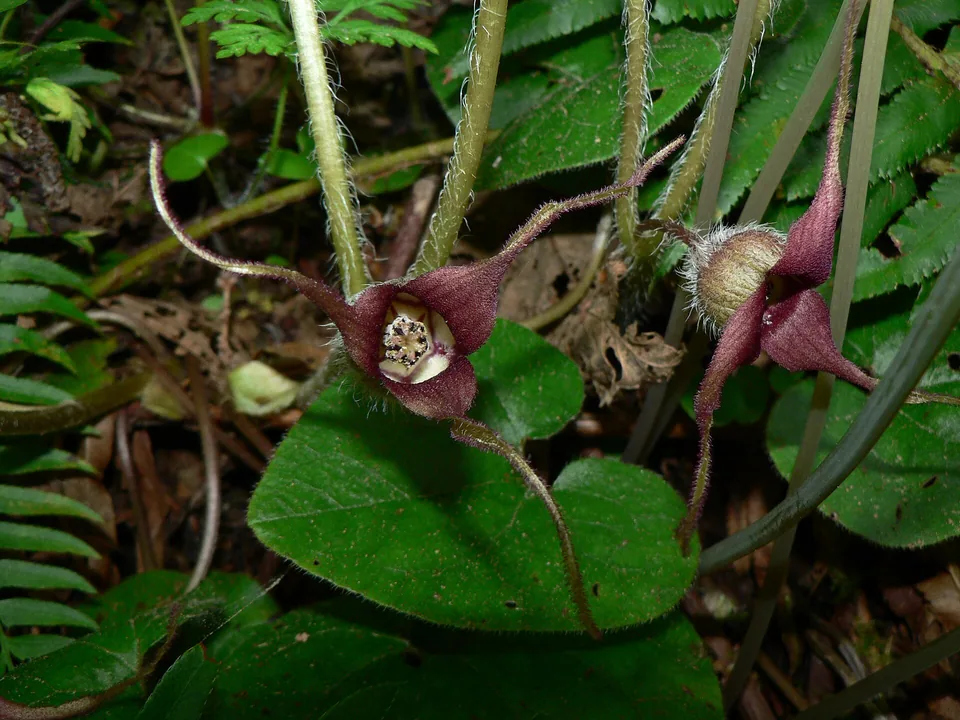
Western wild ginger is an evergreen, mat-forming groundcover of moist Pacific Northwest forest understory. [5][6] It grows in part to full shade in moist, organic soil and is propagated easily from rhizome divisions. [1][5]
This record is incomplete: the sources we read do not cover every field yet.
Not yet covered by our sources: Hardiness, coldest zone, Hardiness, warmest zone, Pruning
British Columbia wildginger care
How to water British Columbia wildginger
Watering
Moist soil, medium water use; extra watering not necessary where planted rhizomes are mulched
What the sources say (3)
Soil Moisture: MoistWater Use: Mediumas they prefer naturally wet environments, additional watering should not be necessaryWatering notes
Mulch planted rhizomes to ensure adequate moisture
What the sources say (1)
Mulch planted rhizomes to ensure adequate moistureHow much light British Columbia wildginger needs
Part shade to full shade
What the sources say (3)
Light Requirements: Part Shade, Full Shadeprefers part to full shade in the understory of moist coniferous forestsLight Requirement: ShadeHow much cold British Columbia wildginger can take
Hardiness, coldest zone
Not stated in the sources we read.
Hardiness, warmest zone
Not stated in the sources we read.
Where to grow British Columbia wildginger
30 cm (1 ft)
What the sources say (1)
Space about 30cm (1ft.) apart.How to propagate British Columbia wildginger
Rhizome division; seed; root cuttings
How to grow British Columbia wildginger
The plant
Life cycle
perennial
What the sources say (1)
Asarum caudatum , wild ginger [British Columbia wild ginger], is a native perennial forb that is evergreen throughout most of its range.Family
Aristolochiaceae
What the sources say (1)
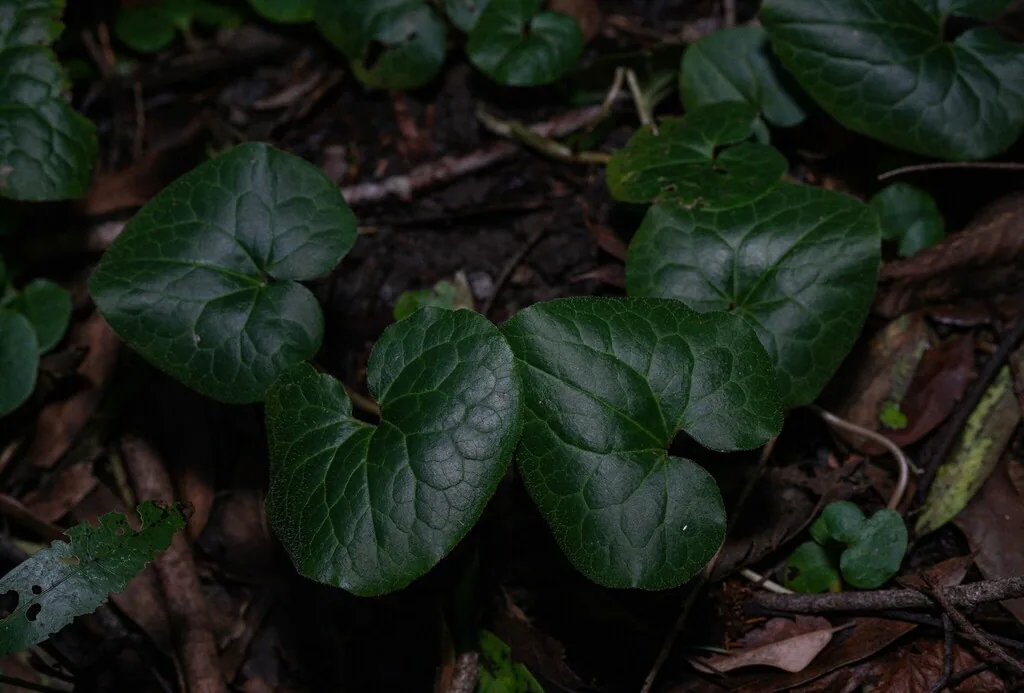
Wild ginger is a member of the birthwort family (Aristolochiaceae). Deep green, hirsute, heart shaped leaves with distinctive, prominent venationPests and diseases
Pests
slugs
What the sources say (1)
In parts of its range, wild ginger may comprise an important food source for rodents (particularly pocket gophers). The species is also palatable to slugs.Fertilizing
When
Spring, as a top dressing
What the sources say (1)
They are easy growers, only needing water in dry weather and a top dressing of fertilizer in the spring, much the same care one would give rhododendrons.Remedies
Each remedy shows what official sources say about it; traditional remedies without an official source are marked as such. Harmful ones are listed so you know to avoid them.
Treating the plant
slugs and snails
handpicking Official source, not independently tested
How: Slugs and snails can be removed by handpicking, looking for them a few hours after dark with a flashlight.
Slugs and snails can be removed by handpicking. The best time to look for them is a few hours after dark using a flashlight.
— hgic.clemson.edu [8] beer traps Official source, not independently tested
How: Fill shallow containers with beer and place them in a hole in the soil so the rims are level with the soil; water the area first to encourage slug activity that night.
Slug and snail traps can be made by filling shallow containers with beer and placing in a hole in the soil so that the rims are level with the soil.
— hgic.clemson.edu [8] removing mulch and leaf litter near plants Official source, not independently tested
How: Remove mulch and leaf litter near plants to reduce the moist conditions slugs and snails need to survive.
The first step in discouraging slugs and snails is to remove mulch and leaf litter near plants to reduce the moist conditions necessary for their survival.
— hgic.clemson.edu [8] diatomaceous earth Official source, not independently tested
How: Sprinkle diatomaceous earth around the plants; it must be reapplied after a rain or watering.
Protect plants by sprinkling diatomaceous earth around the plants. Diatomaceous earth is very sharp and scratches the skin of these soft-bodied critters, resulting in dehydration and death.
— hgic.clemson.edu [8]
Calendar
Sowing
The sources give different values depending on region, zone or growing conditions.
What each source says
fresh seed, cold frame (Practical Plants): As soon as ripe in the summer
stored seed, outdoors (University of Washington): April
stored seed (Practical Plants): Late winter
What the sources say (4)
fresh seed, cold frame (Practical Plants): Seed - best sown in a cold frame as soon as it is ripe in the summerstored seed, outdoors (University of Washington): sow outdoors in April for plants the following springstored seed (Practical Plants): Stored seed will require 3 weeks cold stratification and should be sown in late winterSeed - best sown in a cold frame as soon as it is ripe in the summerPlanting
Late spring (seedlings); fall (root cuttings)
What each source says
seedlings: Late spring
root cuttings: Fall
What the sources say (4)
seedlings: Plant them out when large enough in late spring.root cuttings: For root cuttings, these should be started in a sand medium and planted out in the fall.Plant them out when large enough in late spring.For root cuttings, these should be started in a sand medium and planted out in the fall.Harvest
Root: all year round, best in autumn
What the sources say (1)
It can be harvested all year round, but is best in the autumnPruning
Not stated in the sources we read.
Months as given by the sources, which are mostly from the United States (northern hemisphere). In the southern hemisphere they shift by about six months.
Edibility
Reported by the source, quoted verbatim. Do not eat a plant on the basis of this page alone: identification mistakes can be dangerous.
Indicative values
Values from a secondary source, not checked word for word like the rest of this page. Use them as a starting point.
- Mature height
- 7.6-15.2 cm (0.25-0.5 ft)Indicative value, adapt it to your climate · Secondary source
- Hours of sun
- 4-6 hoursIndicative value, adapt it to your climate · Secondary source
- Drought tolerant
- yesIndicative value, adapt it to your climate · Secondary source
- Soil
- Acidic, Bog, Humus richIndicative value, adapt it to your climate · Secondary source
- Soil pH
- 5.5-6.5Indicative value, adapt it to your climate · Secondary source
- USDA hardiness zones
- 7-10 [winter low −17.8 to 4.4 °C (0 to 40 °F)]Indicative value, adapt it to your climate · Secondary source
- Care level
- MediumIndicative value, adapt it to your climate · Secondary source
- Growth rate
- LowIndicative value, adapt it to your climate · Secondary source
- Pruning
- March, AprilIndicative value, adapt it to your climate · Secondary source
Similar plants
- Chinese Wild Ginger Asarum splendens
- Little Brown Jugs Asarum arifolium
- Little Heartleaf Asarum minus
- Virginia Heartleaf Asarum virginicum
- Wild Ginger Asarum canadense
- Asarabacca Asarum europaeum
- Dutchman's Pipe Aristolochia macrophylla
- Giant Pipevine Aristolochia gigantea
Sources
Every value above is quoted from these documents. Links lead to the original publisher.
- Plant Data Sheet http://depts.washington.edu/propplnt/Plants/asarumcaudatum.htm · courses.washington.edu, consulted
- Asarum caudatum - Useful Temperate Plants · temperate.theferns.info, consulted
- Wild Ginger (Asarum caudatum) — Practical Plants · practicalplants.org, consulted
- Wild Ginger • East Multnomah Soil and Water Conservation District · emswcd.org, consulted
- Lady Bird Johnson Wildflower Center - The University of Texas at Austin · wildflower.org, consulted
- Wild Ginger (Asarum caudatum) | US Forest Service · fs.usda.gov, consulted
- scholar.lib.vt.edu · scholar.lib.vt.edu
- hgic.clemson.edu · hgic.clemson.edu
Written by Emilio Marruso · last checked