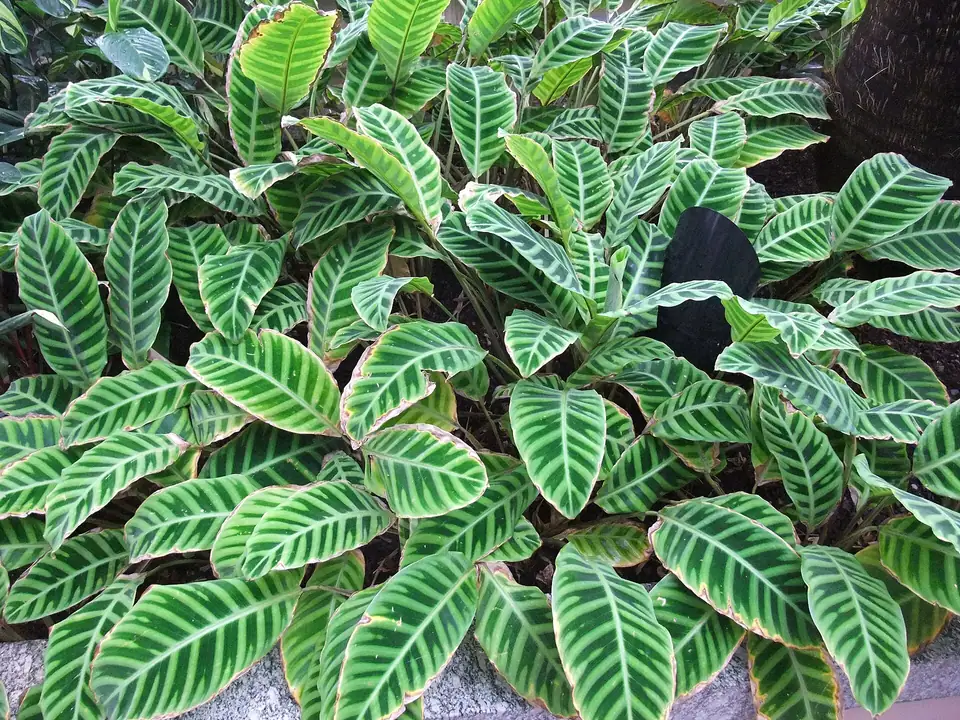
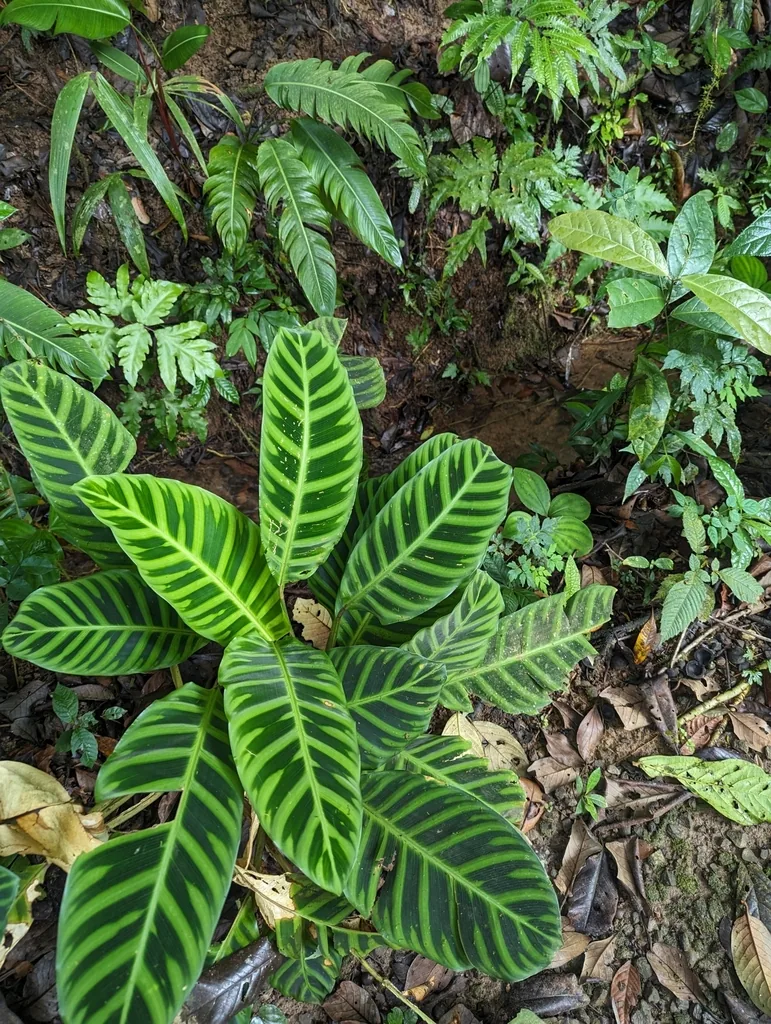

How to Grow and Care for Zebra Plant
Calathea zebrina
Written by Emilio Marruso · last checked
Not toxic to cats and dogs, according to the sources · Sources
At a glance
This perennial is happy indoors and in pots, asking only for bright, indirect light or partial shade. Give it distilled or rain water, since fluoride in tap water browns the leaf edges, and never let the soil stay soggy. Even better, it's non-toxic for cats, dogs and horses, so it's a worry-free pick for homes with pets.
- Sun
Bright, indirect light or partial shade
What the sources say (1)
Light: Bright, indirect light or partial shade
Zebra plant requires bright, indirect light or partial shade
— Goeppertia zebrina (Peacock Plant, Zebra Plant, Zebra Prayer Plant) | North Carolina Extension Gardener Plant Toolbox [1] - Water
Use distilled or rain water; never leave the soil soggy
What the sources say (1)
Watering notes: Use distilled or rain water; tap water contains fluoride, which can brown leaf edges and tips
Use distilled or rain water when watering this plant since tap water contains fluoride which can cause the edges and tips of the leaves to brown.
— Goeppertia zebrina (Peacock Plant, Zebra Plant, Zebra Prayer Plant) | North Carolina Extension Gardener Plant Toolbox [1] - Pests
Spider mites, mealybugs, aphids and scale; too much water rots the roots
What the sources say (2)
Pests: spider mites, mealybugs, aphids, scale insects
Monitor for spider mites, mealybugs, aphids, and scale insects.
— Goeppertia zebrina (Peacock Plant, Zebra Plant, Zebra Prayer Plant) | North Carolina Extension Gardener Plant Toolbox [1] Diseases: root rot, leaf spot
Overwatering can cause root rot, and leaf spot occurs from poor air circulation and by accidentally wetting the leaves when watering the plant.
— Goeppertia zebrina (Peacock Plant, Zebra Plant, Zebra Prayer Plant) | North Carolina Extension Gardener Plant Toolbox [1] - Size
1 to 3 ft tall and 1 to 2 ft wide
What the sources say (2)
Mature height: 30-91 cm (1-3 ft)
Height: 1 ft. 0 in. - 3 ft. 0 in.
— Goeppertia zebrina (Peacock Plant, Zebra Plant, Zebra Prayer Plant) | North Carolina Extension Gardener Plant Toolbox [1] Mature width: 30-61 cm (1-2 ft)
Width: 1 ft. 0 in. - 2 ft. 0 in.
— Goeppertia zebrina (Peacock Plant, Zebra Plant, Zebra Prayer Plant) | North Carolina Extension Gardener Plant Toolbox [1] - Containers
Grows well in a pot, indoors too
What the sources say (2)
Indoors: Yes
This plant is popular as an ornamental houseplant or office plant.
— Goeppertia zebrina (Peacock Plant, Zebra Plant, Zebra Prayer Plant) | North Carolina Extension Gardener Plant Toolbox [1] In containers: Yes
Select a container that is slightly larger than the root ball of the plant and has adequate drainage holes.
— Calathea Zebrina: Expert Care And Growing Guide | Gardening Know How [2] - Safety
Non-toxic for cats, dogs and horses
Overview
Zebra plant is an evergreen rhizomatous perennial of tropical Brazilian rainforests, popular as a houseplant. [1] It needs bright, indirect light or partial shade and moist, well-drained peat-based potting mix. [1] Tap water and low humidity can brown the leaf edges and tips. [1]
This record is incomplete: the sources we read do not cover every field yet.
Not yet covered by our sources: Watering
Zebra Plant care
How to water Zebra Plant
Watering
The sources give different values depending on region, zone or growing conditions.
What each source says
According to NC State Extension: Moist, but avoid overwatering or soggy soils
What the sources say (1)
According to NC State Extension: The soil needs to be moist, but avoid overwatering or soggy soils.Watering notes
Use distilled or rain water; tap water contains fluoride, which can brown leaf edges and tips
What the sources say (1)
Use distilled or rain water when watering this plant since tap water contains fluoride which can cause the edges and tips of the leaves to brown.How much light Zebra Plant needs
Bright, indirect light or partial shade
What the sources say (1)
Zebra plant requires bright, indirect light or partial shadeHow much cold Zebra Plant can take
Hardiness, coldest zone
The sources give different values depending on region, zone or growing conditions.
What each source says
According to NC State Extension: 10a [winter low −1.1 to 1.7 °C (30 to 35 °F)]
According to Gardening Know How: 11 [winter low 4.4 to 10 °C (40 to 50 °F)]
According to Gardener's Path: 10b [winter low 1.7 to 4.4 °C (35 to 40 °F)]
What the sources say (3)
According to NC State Extension: USDA Plant Hardiness Zone:
10a, 10b, 11a, 11bAccording to Gardening Know How: Slow-growing zebra plants can be grown inside as a houseplant, in the greenhouse or outside in USDA zones 11-12.According to Gardener's Path: Hardiness (USDA Zone): | 10b-11 | Soil pH: | 6.1-7.8Hardiness, warmest zone
The sources give different values depending on region, zone or growing conditions.
What each source says
According to NC State Extension: 11b [winter low 7.2 to 10 °C (45 to 50 °F)]
According to Gardening Know How: 12 [winter low 10 to 15.6 °C (50 to 60 °F)]
According to Gardener's Path: 11 [winter low 4.4 to 10 °C (40 to 50 °F)]
What the sources say (3)
According to NC State Extension: USDA Plant Hardiness Zone:
10a, 10b, 11a, 11bAccording to Gardening Know How: Slow-growing zebra plants can be grown inside as a houseplant, in the greenhouse or outside in USDA zones 11-12.According to Gardener's Path: Hardiness (USDA Zone): | 10b-11 | Soil pH: | 6.1-7.8Where to grow Zebra Plant
Indoors
Yes
What the sources say (1)
This plant is popular as an ornamental houseplant or office plant.In containers
Yes
What the sources say (1)
Select a container that is slightly larger than the root ball of the plant and has adequate drainage holes.How to propagate Zebra Plant
The sources disagree:
Calathea can be propagated with stem cuttings from a parent plant.
[2]
What the sources say (2)
Repot the plant every 2 years, and propagate by division.Your best option for propagating zebra calathea is to do so by dividing a mature plant.How to grow Zebra Plant
The plant
Life cycle
perennial
What the sources say (1)
Zebra plant is an evergreen rhizomatous perennial in the prayer plant family (Marantaceae) that is native to the tropical rainforests of Brazil.Family
Marantaceae
What the sources say (1)
Zebra plant is an evergreen rhizomatous perennial in the prayer plant family (Marantaceae) that is native to the tropical rainforests of Brazil.Mature height
30-91 cm (1-3 ft)
What the sources say (1)
Height: 1 ft. 0 in. - 3 ft. 0 in.Mature width
30-61 cm (1-2 ft)
What the sources say (1)
Width: 1 ft. 0 in. - 2 ft. 0 in.Pests and diseases
Pests
spider mites, mealybugs, aphids, scale insects
What the sources say (1)
Monitor for spider mites, mealybugs, aphids, and scale insects.Diseases
root rot, leaf spot
What the sources say (1)
Overwatering can cause root rot, and leaf spot occurs from poor air circulation and by accidentally wetting the leaves when watering the plant.Zebra Plant pests and problems
Root rot
Symptom: Overwatering can cause root rot; leaf spot follows poor air circulation and wet leaves.
What to do: Avoid overwatering or soggy soils.
What the sources say (2)
Overwatering can cause root rot, and leaf spot occurs from poor air circulation and by accidentally wetting the leaves when watering the plant.
— Goeppertia zebrina (Peacock Plant, Zebra Plant, Zebra Prayer Plant) | North Carolina Extension Gardener Plant Toolbox [1] The soil needs to be moist, but avoid overwatering or soggy soils.
— Goeppertia zebrina (Peacock Plant, Zebra Plant, Zebra Prayer Plant) | North Carolina Extension Gardener Plant Toolbox [1] Brown leaf edges and tips
Symptom: Low humidity and fluoride in tap water brown the leaf edges and tips.
What to do: Use distilled or rain water.
What the sources say (2)
Low humidity and fluoride in tap water can cause browning of the leaf edges and tips.
— Goeppertia zebrina (Peacock Plant, Zebra Plant, Zebra Prayer Plant) | North Carolina Extension Gardener Plant Toolbox [1] Use distilled or rain water when watering this plant since tap water contains fluoride which can cause the edges and tips of the leaves to brown.
— Goeppertia zebrina (Peacock Plant, Zebra Plant, Zebra Prayer Plant) | North Carolina Extension Gardener Plant Toolbox [1] Insect pests
Symptom: Spider mites, mealybugs, aphids and scale insects.
What to do: Monitor the plant.
What the sources say (1)
Monitor for spider mites, mealybugs, aphids, and scale insects.
— Goeppertia zebrina (Peacock Plant, Zebra Plant, Zebra Prayer Plant) | North Carolina Extension Gardener Plant Toolbox [1]
Remedies
Each remedy shows what official sources say about it; traditional remedies without an official source are marked as such. Harmful ones are listed so you know to avoid them.
Treating the plant
brown leaf tips
distilled or rain water Official source, not independently tested
How: Use distilled or rain water when watering this plant.
Use distilled or rain water when watering this plant since tap water contains fluoride which can cause the edges and tips of the leaves to brown.
— Goeppertia zebrina (Peacock Plant, Zebra Plant, Zebra Prayer Plant) | North Carolina Extension Gardener Plant Toolbox [1]
low humidity
pebble tray and daily misting Not verified
Traditional remedy, not verified by an official source.
How: Misting the foliage daily and/or placing the plant atop a saucer filled with pebbles can raise humidity levels.
Is Zebra Plant poisonous?
Reported by the source, quoted verbatim. This is not medical or veterinary advice: if a person or an animal may have eaten this plant, contact a poison control centre or a veterinarian.
#non-toxic for cats #non-toxic for horses #non-toxic for dogs
[1]The source flags the risk for this animal but does not explain why.
Indicative values
Values from a secondary source, not checked word for word like the rest of this page. Use them as a starting point.
- Hours of sun
- 4-6 hoursIndicative value, adapt it to your climate · Secondary source
- Soil pH
- 6-7Indicative value, adapt it to your climate · Secondary source
- Care level
- MediumIndicative value, adapt it to your climate · Secondary source
- Growth rate
- LowIndicative value, adapt it to your climate · Secondary source
- Pruning
- March, April, MayIndicative value, adapt it to your climate · Secondary source
Similar plants
- Rattle Snake Plant Calathea crotalifera
- Peacock Plant Calathea makoyana
- Rattlesnake Plant Calathea lancifolia
- Rose-Painted Calathea Goeppertia roseopicta
- Stromanthe Ctenanthe amabilis
- Ctenanthe Ctenanthe lubbersiana
- Giant Bamburanta Ctenanthe oppenheimiana
- Prayer Plant Maranta leuconeura
Sources
Every value above is quoted from these documents. Links lead to the original publisher.
- Goeppertia zebrina (Peacock Plant, Zebra Plant, Zebra Prayer Plant) | North Carolina Extension Gardener Plant Toolbox · plants.ces.ncsu.edu, consulted
- Calathea Zebrina: Expert Care And Growing Guide | Gardening Know How · gardeningknowhow.com, consulted
- How to Grow and Care for Calathea Zebrina Plants · gardenerspath.com, consulted
Written by Emilio Marruso · last checked