
How to Grow and Care for Giant Bellflower
Campanula latifolia
Written by Emilio Marruso · last checked
At a glance
This bellflower is easy to start: sow the seeds in spring, or make new plants from cuttings or by dividing a clump. Plant it out in late spring or early summer, once the last frosts are over, in fertile soil that stays moist but drains well. A sweet bonus: the young shoots and the flowers are edible, raw or cooked.
- Water
Keep the soil moist, but never soggy
What the sources say (1)
Watering notes: Prefers moist but well-drained soil; succeeds in most fertile well-drained soils
It succeeds in most fertile well-drained soils [10] , though it prefers a moist but well-drained rich sandy loam and a neutral or alkaline soil in sun or partial shade
— Large Campanula (Campanula latifolia) — Practical Plants [2] - Soil
Fertile soil that drains well; most good garden soils work
What the sources say (1)
Watering notes: Prefers moist but well-drained soil; succeeds in most fertile well-drained soils
It succeeds in most fertile well-drained soils [10] , though it prefers a moist but well-drained rich sandy loam and a neutral or alkaline soil in sun or partial shade
— Large Campanula (Campanula latifolia) — Practical Plants [2] - Planting
Plant in late spring or early summer, after the last frosts
What the sources say (1)
Planting: Late spring or early summer, after the last expected frosts
Plant them out into their permanent positions in late spring or early summer, after the last expected frosts.
— Large Campanula (Campanula latifolia) — Practical Plants [2] - Harvest
Young shoots and sweet flowers are edible, raw or cooked
- Propagation
From seed, from cuttings taken at the base, or by dividing the clump
What the sources say (3)
Propagation: Seed, basal cuttings, division
Seed - surface sow in spring in a cold frame. Three or four weeks pre-chilling of the seed improves the germination rate
— Large Campanula (Campanula latifolia) — Practical Plants [2] Basal cuttings in spring [1] . Harvest the shoots when they are about 10 - 15cm long with plenty of underground stem.
— Large Campanula (Campanula latifolia) — Practical Plants [2] Division in spring or autumn [2] . Very easy, larger clumps can be replanted direct into their permanent positions
— Large Campanula (Campanula latifolia) — Practical Plants [2] - Sowing
Sow in spring
What the sources say (1)
Sowing: Spring
Seed - surface sow in spring in a cold frame. Three or four weeks pre-chilling of the seed improves the germination rate
— Large Campanula (Campanula latifolia) — Practical Plants [2]
Overview
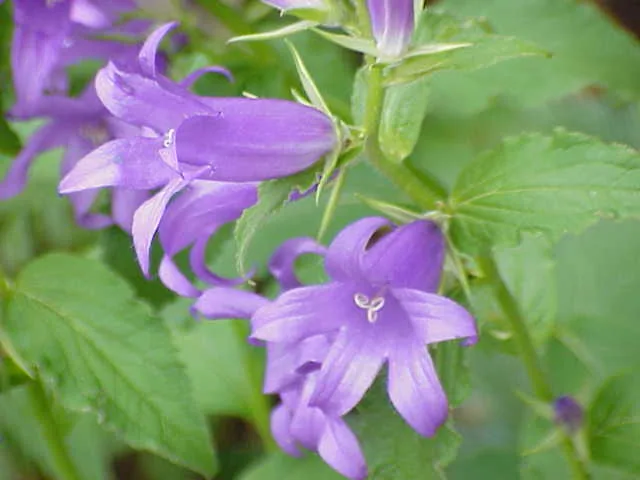
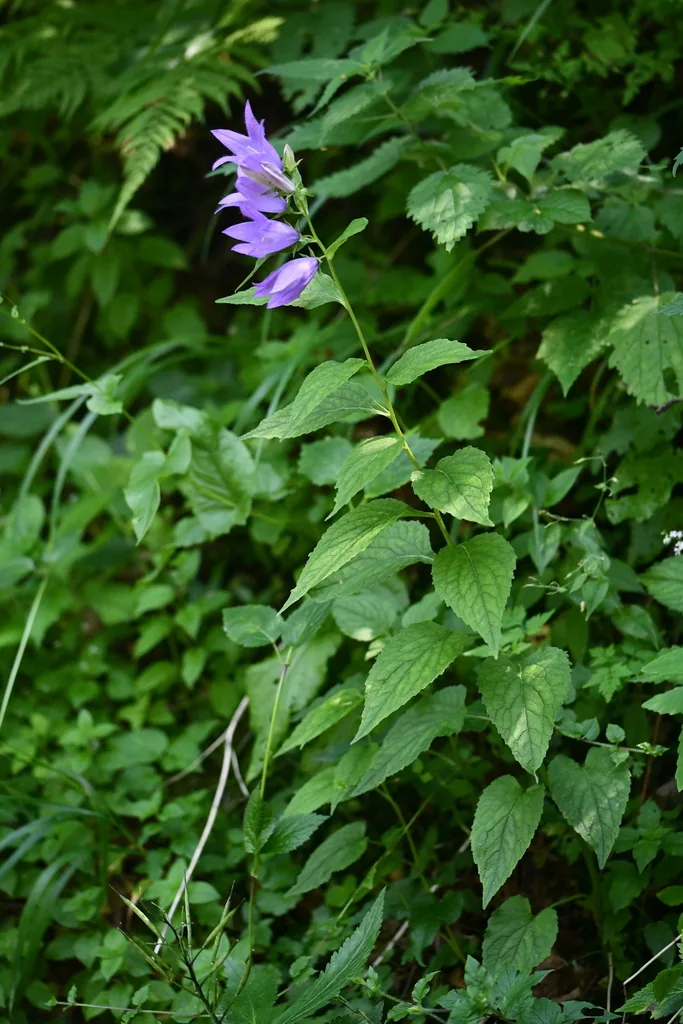
Campanula latifolia is an erect, clump-forming herbaceous perennial grown as an ornamental in gardens. [1] It is propagated by seed sown in spring, by basal cuttings in spring, or by division in spring or autumn. [2]
This record is incomplete: the sources we read do not cover every field yet.
Not yet covered by our sources: Hardiness, warmest zone, Pruning
Giant Bellflower care
How to water Giant Bellflower
Watering
The sources give different values depending on region, zone or growing conditions.
What each source says
fonti: Practical Plants: Moderate water; drought intolerant
According to UBC LARC 510B course blog: Moderate moisture; drought tolerant
What the sources say (2)
fonti: Practical Plants: Shade tolerance
permanent shade
Water
moderate
Hardiness
Zone 3+
Soil textures
sandy, loamy, heavy clay
Soil pH
neutral, alkaline
Drainage
well drained
Tolerates Nutritionally Poor Soil
No
Drought
intolerantAccording to UBC LARC 510B course blog: Tough, long-lived plant.
- Full sun to part shade. Moderate moisture. Drought tolerant.Watering notes
Prefers moist but well-drained soil; succeeds in most fertile well-drained soils
What the sources say (1)
It succeeds in most fertile well-drained soils [10] , though it prefers a moist but well-drained rich sandy loam and a neutral or alkaline soil in sun or partial shadeHow much light Giant Bellflower needs
The sources give different values depending on region, zone or growing conditions.
What each source says
According to Practical Plants (moist sandy loam): Sun or partial shade
According to Practical Plants (humus-rich soil): Shade or partial shade
What the sources say (4)
According to Practical Plants (moist sandy loam): It succeeds in most fertile well-drained soils [10] , though it prefers a moist but well-drained rich sandy loam and a neutral or alkaline soil in sun or partial shadeAccording to Practical Plants (humus-rich soil): Prefers a humus-rich soil in shade or partial shade [11] . Grows well in cool moist woodlands with light shade where it can spread freelyIt succeeds in most fertile well-drained soils [10] , though it prefers a moist but well-drained rich sandy loam and a neutral or alkaline soil in sun or partial shadeTough, long-lived plant.
- Full sun to part shade. Moderate moisture. Drought tolerant.How much cold Giant Bellflower can take
Hardiness, coldest zone
The sources give different values depending on region, zone or growing conditions.
What each source says
According to Practical Plants: 3 [winter low −40 to −34.4 °C (−40 to −30 °F)]
According to UBC LARC 510B course blog: 4 [winter low −34.4 to −28.9 °C (−30 to −20 °F)]
What the sources say (2)
According to Practical Plants: Water
moderate
Hardiness
Zone 3+
Soil textures
sandy, loamy, heavy clayAccording to UBC LARC 510B course blog: Native to Europe and across Russia
- Zone 4
- Upright stems, 1 m tall.Hardiness, warmest zone
Not stated in the sources we read.
How to propagate Giant Bellflower
Seed, basal cuttings, division
What the sources say (3)
Seed - surface sow in spring in a cold frame. Three or four weeks pre-chilling of the seed improves the germination rateBasal cuttings in spring [1] . Harvest the shoots when they are about 10 - 15cm long with plenty of underground stem.Division in spring or autumn [2] . Very easy, larger clumps can be replanted direct into their permanent positionsRemedies
The sources we checked give no remedies for this plant.
Calendar
Sowing
Spring
What the sources say (1)
Seed - surface sow in spring in a cold frame. Three or four weeks pre-chilling of the seed improves the germination ratePlanting
Late spring or early summer, after the last expected frosts
What the sources say (1)
Plant them out into their permanent positions in late spring or early summer, after the last expected frosts.Pruning
Not stated in the sources we read.
Months as given by the sources, which are mostly from the United States (northern hemisphere). In the southern hemisphere they shift by about six months.
Edibility
Reported by the source, quoted verbatim. Do not eat a plant on the basis of this page alone: identification mistakes can be dangerous.
Similar plants
- American Bellflower Campanula americana
- Appalachian Bellflower Campanula divaricata
- Bellflower Campanula glomerata
- Campanula cochleariifolia Campanula cochleariifolia
- Campanula portenschlagiana Campanula portenschlagiana
- Campanula poscharskyana Campanula poscharskyana
- Canterbury Bells Campanula medium
- Carpathian Bellflower Campanula carpatica
Sources
Every value above is quoted from these documents. Links lead to the original publisher.
- Campanula latifolia - Useful Temperate Plants · temperate.theferns.info, consulted
- Large Campanula (Campanula latifolia) — Practical Plants · practicalplants.org, consulted
- Campanula latifolia – LARC 510B – Herbaceous Plants in the Landscape – Patrick Beech · blogs.ubc.ca, consulted
Written by Emilio Marruso · last checked