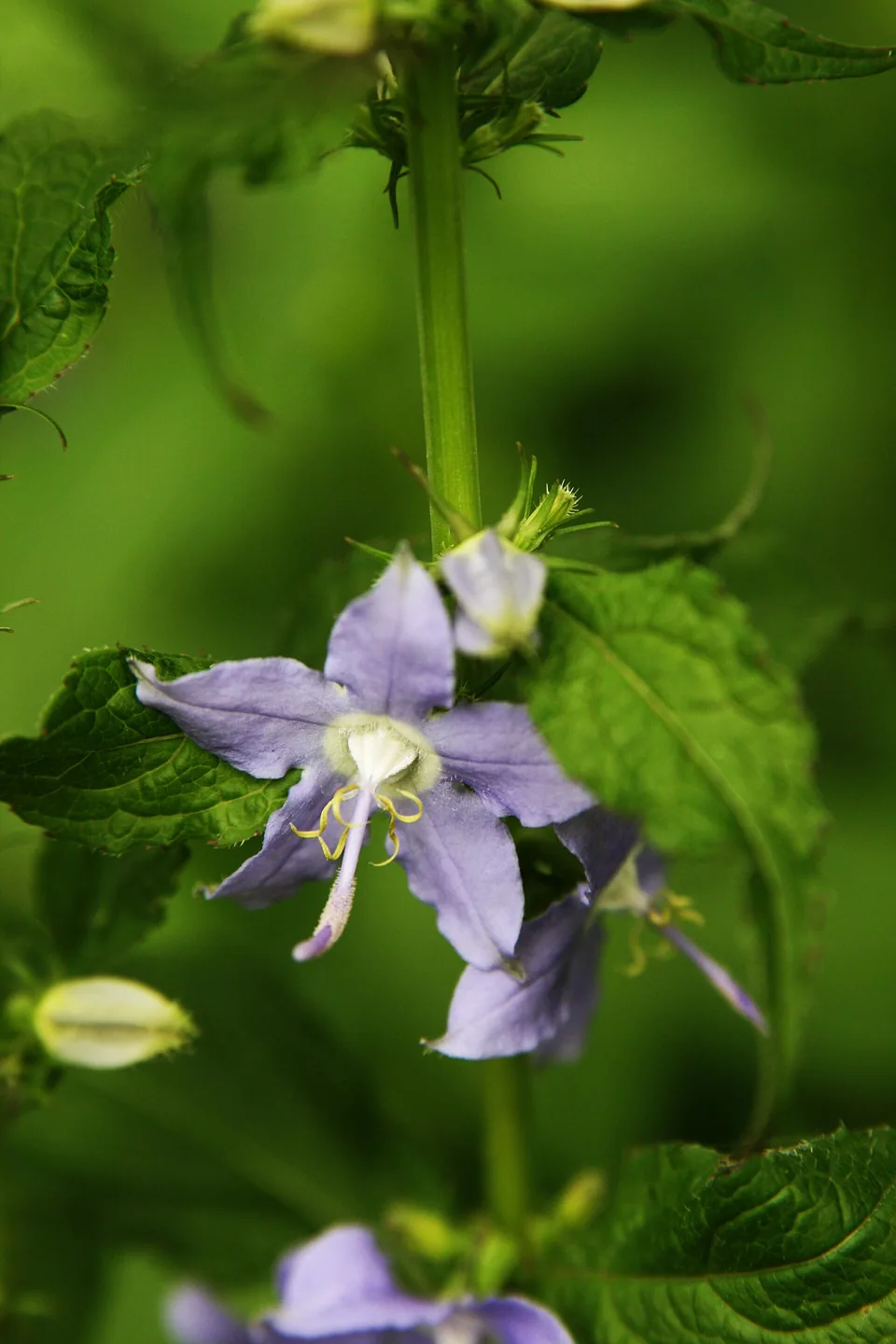
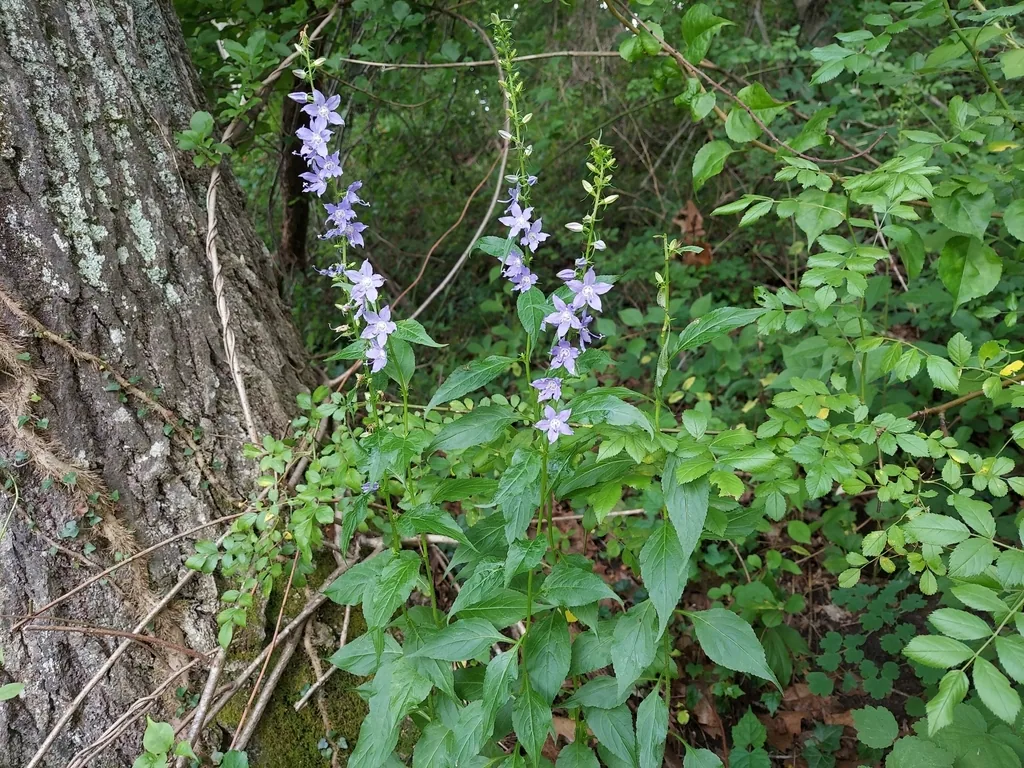

How to Grow and Care for American Bellflower
Campanula americana
Written by Emilio Marruso · last checked
At a glance
American bellflower can reach 2 to 6 feet tall, bringing a tall, eye-catching touch to any corner of the garden. It asks only for medium watering and adapts to soil from slightly acidic to alkaline, pH 6.0 to 8.0. Sow it in spring to grow it as a biennial, or in fall to enjoy it as an annual.
- Water
Medium watering: not too much, not too little
What the sources say (1)
Watering: Medium water use
Water Use: Medium
— Lady Bird Johnson Wildflower Center - The University of Texas at Austin [5] - Soil
Slightly acidic to alkaline soil, pH 6.0–8.0
What the sources say (2)
Soil pH, minimum: 6.0
Neutral (6.0-8.0)
— Campanulastrum americanum (American Bellflower, American Tall Bellflower, Tall Bellflower) | North Carolina Extension Gardener Plant Toolbox [1] Soil pH, maximum: 8.0
Neutral (6.0-8.0)
— Campanulastrum americanum (American Bellflower, American Tall Bellflower, Tall Bellflower) | North Carolina Extension Gardener Plant Toolbox [1] - Pests
Watch for snails, slugs and aphids
What the sources say (1)
Pests: snails, slugs, aphids
Has no significant insect or disease problems. Monitor for snails, slugs, and aphids.
— Campanulastrum americanum (American Bellflower, American Tall Bellflower, Tall Bellflower) | North Carolina Extension Gardener Plant Toolbox [1] - Size
2–6 ft tall and 1–2 ft wide
What the sources say (2)
Mature height: 61-183 cm (2-6 ft)
It grows 2 to 6 feet tall on an unbranched light green central stem.
— Campanulastrum americanum (American Bellflower, American Tall Bellflower, Tall Bellflower) | North Carolina Extension Gardener Plant Toolbox [1] Mature width: 30-61 cm (1-2 ft)
Width: 1 ft. 0 in. - 2 ft. 0 in.
— Campanulastrum americanum (American Bellflower, American Tall Bellflower, Tall Bellflower) | North Carolina Extension Gardener Plant Toolbox [1] - Sowing
Sow in spring to grow it as a biennial, or in fall as an annual
What the sources say (2)
Sowing: Spring (for a biennial plant) or fall (for an annual)
Shallow plant the small seeds in spring for a biennial plant or fall for an annual.
— Lady Bird Johnson Wildflower Center - The University of Texas at Austin [5] Life cycle: annual or biennial
American bellflower is an erect, annual or biennial wildflower native to moist open woods, moist meadows, streambanks, and ditches in shady areas of eastern and central North America.
— Campanulastrum americanum (American Bellflower, American Tall Bellflower, Tall Bellflower) | North Carolina Extension Gardener Plant Toolbox [1]
Overview
American bellflower is an erect annual or biennial wildflower of moist woods, meadows and streambanks in eastern and central North America. [1] The small seeds are surface sown. [4]
This record is incomplete: the sources we read do not cover every field yet.
Not yet covered by our sources: Light, Pruning
American Bellflower care
How to water American Bellflower
Medium water use
What the sources say (1)
Water Use: MediumHow much light American Bellflower needs
Not stated in the sources we read.
How much cold American Bellflower can take
Hardiness, coldest zone
The sources give different values depending on region, zone or growing conditions.
What each source says
According to NC State Extension: 4a [winter low −34.4 to −31.7 °C (−30 to −25 °F)]
According to Cornell Botanic Gardens: 3 [winter low −40 to −34.4 °C (−40 to −30 °F)]
What the sources say (2)
According to NC State Extension: 4a, 4b, 5a, 5b, 6a, 6b, 7a, 7b, 8a, 8bAccording to Cornell Botanic Gardens: USDA Hardiness Zone
3Hardiness, warmest zone
8b [winter low −9.4 to −6.7 °C (15 to 20 °F)]
What the sources say (1)
4a, 4b, 5a, 5b, 6a, 6b, 7a, 7b, 8a, 8bBest soil for American Bellflower
Soil pH, minimum
6.0
What the sources say (1)
Neutral (6.0-8.0)Soil pH, maximum
8.0
What the sources say (1)
Neutral (6.0-8.0)How to propagate American Bellflower
What the sources say (3)
Recommended Propagation Strategy:
SeedSurface sow in seed starting mix or similar medium.They should be surface sown and require 30 days of cold stratification for germination.How to grow American Bellflower
The plant
Life cycle
annual or biennial
What the sources say (1)
American bellflower is an erect, annual or biennial wildflower native to moist open woods, moist meadows, streambanks, and ditches in shady areas of eastern and central North America.Family
Campanulaceae
What the sources say (1)
It is a member of the bellflower family (Campanulaceae).Mature height
61-183 cm (2-6 ft)
What the sources say (1)
It grows 2 to 6 feet tall on an unbranched light green central stem.Mature width
30-61 cm (1-2 ft)
What the sources say (1)
Width: 1 ft. 0 in. - 2 ft. 0 in.Pests and diseases
Pests
snails, slugs, aphids
What the sources say (1)
Has no significant insect or disease problems. Monitor for snails, slugs, and aphids.Remedies
The sources we checked give no remedies for this plant.
Calendar
Sowing
Spring (for a biennial plant) or fall (for an annual)
What the sources say (1)
Shallow plant the small seeds in spring for a biennial plant or fall for an annual.Pruning
Not stated in the sources we read.
Months as given by the sources, which are mostly from the United States (northern hemisphere). In the southern hemisphere they shift by about six months.
Indicative values
Values from a secondary source, not checked word for word like the rest of this page. Use them as a starting point.
- Light
- Full sun, part shadeIndicative value, adapt it to your climate · Secondary source
- Care level
- MediumIndicative value, adapt it to your climate · Secondary source
- Growth rate
- LowIndicative value, adapt it to your climate · Secondary source
- Pruning
- December, January, March, April, MayIndicative value, adapt it to your climate · Secondary source
Similar plants
- Appalachian Bellflower Campanula divaricata
- Bellflower Campanula glomerata
- Campanula portenschlagiana Campanula portenschlagiana
- Canterbury Bells Campanula medium
- Carpathian Bellflower Campanula carpatica
- Creeping Bellflower Campanula rapunculoides
- Harebell Campanula rotundifolia
- Italian Bellflower Campanula isophylla
Sources
Every value above is quoted from these documents. Links lead to the original publisher.
- Campanulastrum americanum (American Bellflower, American Tall Bellflower, Tall Bellflower) | North Carolina Extension Gardener Plant Toolbox · plants.ces.ncsu.edu, consulted
- Campanulastrum americanum (American Bellflower): Minnesota Wildflowers · minnesotawildflowers.info, consulted
- American Bellflower | Cornell Botanic Gardens · cornellbotanicgardens.org, consulted
- Tall Bellflower, Campanulastrum americanum (L.) Small · friendsofeloisebutler.org, consulted
- Lady Bird Johnson Wildflower Center - The University of Texas at Austin · wildflower.org, consulted
- Campanula americana page · missouriplants.com, consulted
- Tall Bellflower (American Bellflower) | Missouri Department of Conservation · mdc.mo.gov, consulted
- American bellflower | Kansas Wildflowers · kswildflower.org, consulted
Written by Emilio Marruso · last checked