
How to Grow and Care for Alpine clematis
Clematis alpina
Written by Emilio Marruso · last checked
At a glance
Alpine clematis brings spring flowers and asks for little in return. Feed it in spring once it is established, trim it just after the blooms fade, and spread a 2–3 inch mulch of compost at its base. It even grows in containers, and you can make new plants from cuttings, layering, division or seed.
- Feeding
Feed in spring once established; too much nitrogen gives lots of leaves but few flowers
What the sources say (10)
When: In spring, once established
in containers: In containers, clematis can benefit from being fed throughout spring and summer. Use an organic based, general-purpose liquid fertiliser, following the dose rate and frequency recommended on the packaging.
— [7] Fertilize established plants in spring with an all-purpose garden fertilizer with relatively low numbers. A 10-10-10 or a 5-10-5 are good options. Avoid fertilizers high in urea and ammonia.
— [8] Once established, clematis responds well to rose or tomato fertilizer (5-10-5 or 5-10-10), compost or chicken manure. Feed three times a year in spring, summer and fall.
— [9] Natural fertilizers: Compost or chicken manure once established; each spring a 5–7.5 cm [2–3 in] mulch of leaf mould, garden compost or well-rotted manure at the base, not against the stems
Once established, clematis responds well to rose or tomato fertilizer (5-10-5 or 5-10-10), compost or chicken manure. Feed three times a year in spring, summer and fall.
— [9] Annual mulching is very beneficial, helping to improve the soil, retain moisture and smother weed growth. Spread a 5-7.5cm (2-3in) layer of organic matter, like leaf mould, garden compost
— [7] or well-rotted manure, around the base of your plant each spring, being careful not to bank it up against stems to prevent rotting.
— [7] Avoid: Overfertilizing new plants; fertilizers high in urea and ammonia; too much nitrogen
Water new plants well but avoid overfertilizing. Once established, clematis responds well to rose or tomato fertilizer (5-10-5 or 5-10-10), compost or chicken manure.
— [9] Fertilize established plants in spring with an all-purpose garden fertilizer with relatively low numbers. A 10-10-10 or a 5-10-5 are good options. Avoid fertilizers high in urea and ammonia.
— [8] Poor fertilization. When not fertilized regularly, plants can reduce or stop blooming. Alternatively, applying too much fertilizer, especially nitrogen, results in abundant growth but few blooms.
— [8] Signs of excess: Abundant growth but few blooms
Poor fertilization. When not fertilized regularly, plants can reduce or stop blooming. Alternatively, applying too much fertilizer, especially nitrogen, results in abundant growth but few blooms.
— [8] - Pruning
Prune just after the spring flowers have finished
- Pests
Clematis wilt, powdery mildew and aphids; cut wilted stems back to healthy growth and clean your tools
- Propagation
Cuttings in spring or early summer, layering in late winter, division in spring, or seed
What the sources say (2)
Propagation: Root softwood cuttings in spring; semi-ripe cuttings in early summer; layering in late winter; division in spring; seed; basal softwood cuttings in spring
Layer branches in late winter. Basal and softwood cuttings in spring. Division in spring.
— Clematis alpina - ALPINE CLEMATIS [4] Root softwood cuttings in spring or semi-ripe cuttings in early summer.
— World Plants [2] - Containers
Grows in containers too; feed with liquid fertilizer through spring and summer
What the sources say (8)
In containers: Yes
This clematis does best in full sun and also grows well in a container.
— Clematis alpina - ALPINE CLEMATIS [4] it is well suited to limited space or even a container.
— Clematis alpina [5] When: In spring, once established
in containers: In containers, clematis can benefit from being fed throughout spring and summer. Use an organic based, general-purpose liquid fertiliser, following the dose rate and frequency recommended on the packaging.
— [7] Fertilize established plants in spring with an all-purpose garden fertilizer with relatively low numbers. A 10-10-10 or a 5-10-5 are good options. Avoid fertilizers high in urea and ammonia.
— [8] Once established, clematis responds well to rose or tomato fertilizer (5-10-5 or 5-10-10), compost or chicken manure. Feed three times a year in spring, summer and fall.
— [9] Mineral fertilizers: All-purpose garden fertilizer with low numbers, such as 10-10-10 or 5-10-5, or 5-10-10
in containers: In containers, clematis can benefit from being fed throughout spring and summer. Use an organic based, general-purpose liquid fertiliser, following the dose rate and frequency recommended on the packaging.
— [7] Fertilize established plants in spring with an all-purpose garden fertilizer with relatively low numbers. A 10-10-10 or a 5-10-5 are good options. Avoid fertilizers high in urea and ammonia.
— [8] Once established, clematis responds well to rose or tomato fertilizer (5-10-5 or 5-10-10), compost or chicken manure. Feed three times a year in spring, summer and fall.
— [9]
Overview
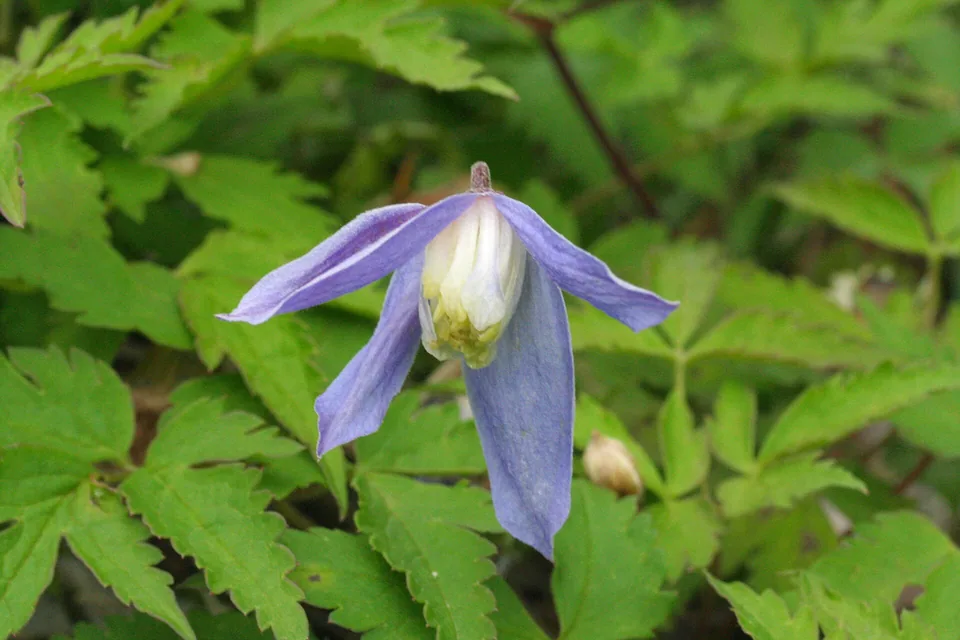
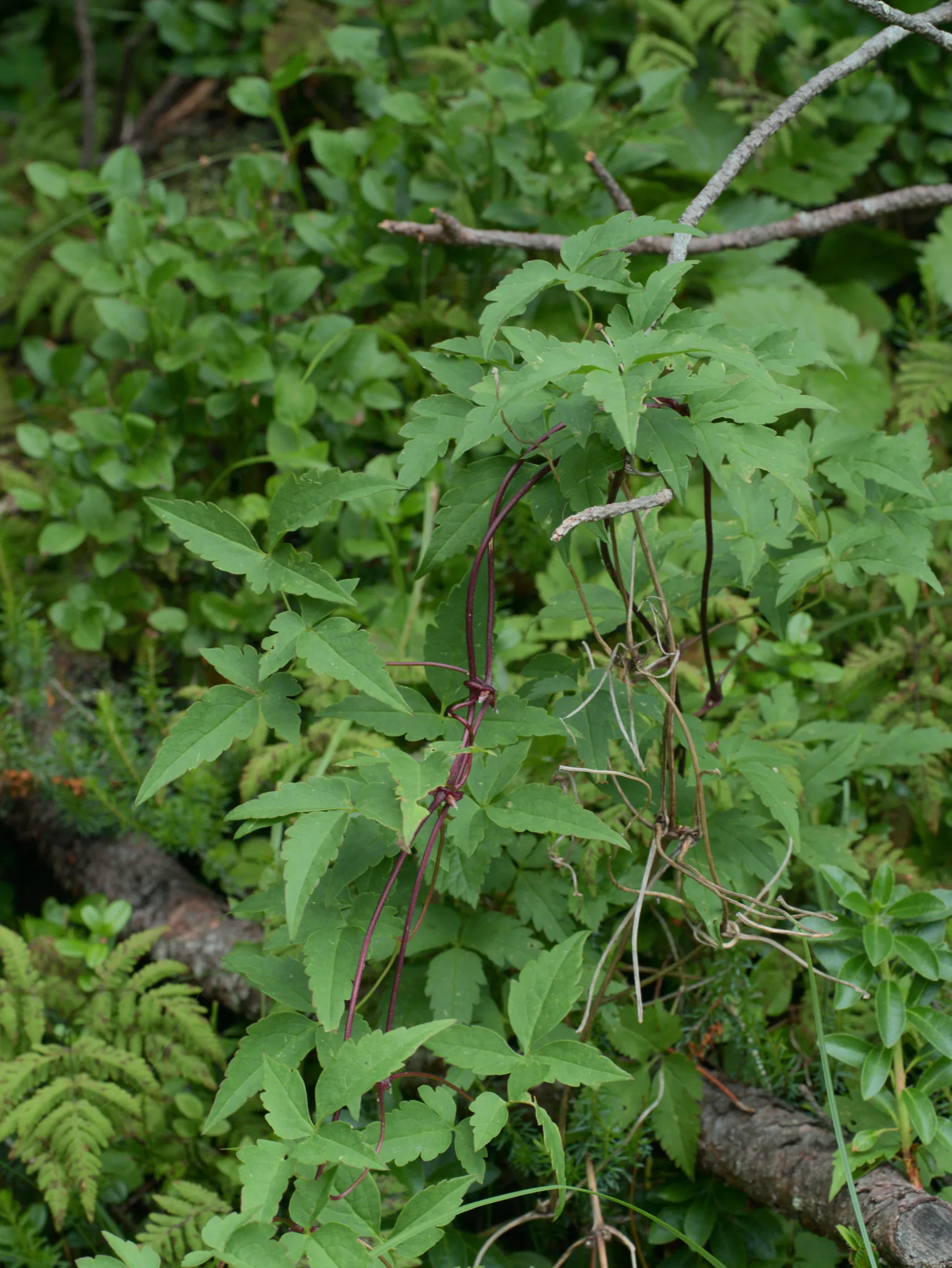
A deciduous climber of the European Alps, 2-3 m (6-10 ft) tall, flowering in spring with bell-shaped blue flowers. [4] It is among the hardiest clematis and belongs to pruning group 1, so it is pruned only just after flowering. [5][4] It is propagated by cuttings, layering, division or seed and also grows well in a container. [4]
This record is incomplete: the sources we read do not cover every field yet.
Not yet covered by our sources: Watering
Alpine clematis care
How to water Alpine clematis
Not stated in the sources we read.
How much light Alpine clematis needs
The sources give different values depending on region, zone or growing conditions.
What each source says
According to World Plants: Well drained soil in full sun to partial shade
According to Rainy Side Gardeners: Full sun to partial shade, with the base in shade
According to Fine Gardening: Partial shade to full shade
What the sources say (3)
According to World Plants: Well drained soil in full sun to partial shade.According to Rainy Side Gardeners: Tops in full sun to partial shade, feet in shade.According to Fine Gardening: Grows better in shade than in sun. Best suited for a north-facing, cool, shady position.How much cold Alpine clematis can take
Hardiness, coldest zone
The sources give different values depending on region, zone or growing conditions.
What each source says
According to World Plants: 6 [winter low −23.3 to −17.8 °C (−10 to 0 °F)]
According to Rainy Side Gardeners: 6 [winter low −23.3 to −17.8 °C (−10 to 0 °F)]
According to Fine Gardening: 4 [winter low −34.4 to −28.9 °C (−30 to −20 °F)]
What the sources say (3)
According to World Plants: USDA Hardiness Zone | 6 - 9
| USDA Hardiness Ref. |
| Canadian Hardiness Zone | 5aAccording to Rainy Side Gardeners: Hardiness:
Sunset zones: All (Western).
USDA zones: 6-9.According to Fine Gardening: Zones :
4, 5, 6, 7, 8, 9Where to grow Alpine clematis
How to propagate Alpine clematis
Root softwood cuttings in spring; semi-ripe cuttings in early summer; layering in late winter; division in spring; seed; basal softwood cuttings in spring
How to grow Alpine clematis
Fertilizing
When
In spring, once established
What each source says
in containers: Throughout spring and summer
What the sources say (3)
in containers: In containers, clematis can benefit from being fed throughout spring and summer. Use an organic based, general-purpose liquid fertiliser, following the dose rate and frequency recommended on the packaging.Fertilize established plants in spring with an all-purpose garden fertilizer with relatively low numbers. A 10-10-10 or a 5-10-5 are good options. Avoid fertilizers high in urea and ammonia.Once established, clematis responds well to rose or tomato fertilizer (5-10-5 or 5-10-10), compost or chicken manure. Feed three times a year in spring, summer and fall.How often
The sources disagree:
What each source says
in containers: Throughout spring and summer, at the frequency on the label
What the sources say (1)
in containers: In containers, clematis can benefit from being fed throughout spring and summer. Use an organic based, general-purpose liquid fertiliser, following the dose rate and frequency recommended on the packaging.Natural fertilizers
Compost or chicken manure once established; each spring a 5–7.5 cm [2–3 in] mulch of leaf mould, garden compost or well-rotted manure at the base, not against the stems
What the sources say (3)
Once established, clematis responds well to rose or tomato fertilizer (5-10-5 or 5-10-10), compost or chicken manure. Feed three times a year in spring, summer and fall.Annual mulching is very beneficial, helping to improve the soil, retain moisture and smother weed growth. Spread a 5-7.5cm (2-3in) layer of organic matter, like leaf mould, garden compostor well-rotted manure, around the base of your plant each spring, being careful not to bank it up against stems to prevent rotting.Mineral fertilizers
All-purpose garden fertilizer with low numbers, such as 10-10-10 or 5-10-5, or 5-10-10
What each source says
in containers: Organic-based general-purpose liquid fertilizer at the label dose
What the sources say (3)
in containers: In containers, clematis can benefit from being fed throughout spring and summer. Use an organic based, general-purpose liquid fertiliser, following the dose rate and frequency recommended on the packaging.Fertilize established plants in spring with an all-purpose garden fertilizer with relatively low numbers. A 10-10-10 or a 5-10-5 are good options. Avoid fertilizers high in urea and ammonia.Once established, clematis responds well to rose or tomato fertilizer (5-10-5 or 5-10-10), compost or chicken manure. Feed three times a year in spring, summer and fall.Avoid
Overfertilizing new plants; fertilizers high in urea and ammonia; too much nitrogen
What the sources say (3)
Water new plants well but avoid overfertilizing. Once established, clematis responds well to rose or tomato fertilizer (5-10-5 or 5-10-10), compost or chicken manure.Fertilize established plants in spring with an all-purpose garden fertilizer with relatively low numbers. A 10-10-10 or a 5-10-5 are good options. Avoid fertilizers high in urea and ammonia.Poor fertilization. When not fertilized regularly, plants can reduce or stop blooming. Alternatively, applying too much fertilizer, especially nitrogen, results in abundant growth but few blooms.Signs of deficiency
Reduced or no flowering when not fertilized regularly
What the sources say (1)
Poor fertilization. When not fertilized regularly, plants can reduce or stop blooming. Alternatively, applying too much fertilizer, especially nitrogen, results in abundant growth but few blooms.Signs of excess
Abundant growth but few blooms
What the sources say (1)
Poor fertilization. When not fertilized regularly, plants can reduce or stop blooming. Alternatively, applying too much fertilizer, especially nitrogen, results in abundant growth but few blooms.Alpine clematis pests and problems
Clematis wilt
Symptom: Wilting leaves, leaf stalks turning black, then the stems quickly wilt.
What to do: Cut the wilted stems back to the healthy tissue, disinfect tools thoroughly and destroy the removed infected tissue; no chemical controls are available.
What the sources say (2)
Clematis wilt is caused by the fungus Phoma clematidina with the symptoms evident through wilting leaves, leaf stalks turning black and then with the stems starting to quickly wilt.
— World Plants [2] If an infection is apparent, cut the wilted stems back to the healthy tissue.
— World Plants [2] Wilt, powdery mildew, rust, fungal spots and stem cankers
Symptom: Listed as common problems; scale insects, whiteflies, earwigs and aphids can occur.
What to do: No management given in the source.
What the sources say (1)
Wilt, powdery mildew, rust, fungal spots, and stem cankers are common. Scale insects, whiteflies, earwigs, and aphids can occur.
— Alpine clematis - Fine Gardening [3]
Remedies
Each remedy shows what official sources say about it; traditional remedies without an official source are marked as such. Harmful ones are listed so you know to avoid them.
First aid
First aid: not a substitute for a doctor
sap skin irritation
wash with running water and soap Official source, not independently tested
Observe the area for such signs of infection as red streaks around the area, swelling, pus, or a lot of discharge. If this happens, see your health care provider.
— poison.org [10] How: Wash the area thoroughly with plenty of running water and soap.
Wash the area thoroughly with plenty of running water and soap.
— poison.org [10]
Calendar
Months as given by the sources, which are mostly from the United States (northern hemisphere). In the southern hemisphere they shift by about six months.
Indicative values
Values from a secondary source, not checked word for word like the rest of this page. Use them as a starting point.
- Life cycle
- PerennialIndicative value, adapt it to your climate · Secondary source
- Watering
- AverageIndicative value, adapt it to your climate · Secondary source
- Soil
- Humus rich, Well-drainedIndicative value, adapt it to your climate · Secondary source
- Soil pH
- 6-7Indicative value, adapt it to your climate · Secondary source
- Growth rate
- HighIndicative value, adapt it to your climate · Secondary source
- Pests
- Aphids, adelgids, Canker, sap rot, Fungal leaf spot, Mildew, Rust, Scale insects, Whitefly, psyllidsIndicative value, adapt it to your climate · Secondary source
Similar plants
- Blue Jasmine Clematis crispa
- Bush Clematis Clematis integrifolia
- Bush Clematis Clematis recta
- Curlyhead Clematis ochroleuca
- Fragrant clematis Clematis flammula
- Golden Bell Clematis Clematis tangutica
- Italian Clematis Clematis viticella
- Leatherflower Clematis viorna
Sources
Every value above is quoted from these documents. Links lead to the original publisher.
- Clematis alpina (L.) Mill. | Plants of the World Online | Kew Science · powo.science.kew.org, consulted
- World Plants · worldplants.ca, consulted
- Alpine clematis - Fine Gardening · finegardening.com, consulted
- Clematis alpina - ALPINE CLEMATIS · rainyside.com, consulted
- Clematis alpina · internationalclematissociety.org, consulted
- Clematis alpina - Alpine Clematis · first-nature.com, consulted
- rhs.org.uk · rhs.org.uk
- yardandgarden.extension.iastate.edu · yardandgarden.extension.iastate.edu
- extension.oregonstate.edu · extension.oregonstate.edu
- poison.org · poison.org
Written by Emilio Marruso · last checked