
How to Grow and Care for Northern bush honeysuckle
Diervilla lonicera
Written by Emilio Marruso · last checked
At a glance
Northern bush honeysuckle is an easygoing shrub that grows 2–4 ft tall and up to 5 ft wide, and it is happy anywhere from full sun to part shade. It asks for little: dry to medium moisture and well-drained soil suit it best, and fairly dry ground keeps it neatly in check. You can even start new plants from cuttings, root cuttings or seed.
- Sun
Full sun to part shade
What the sources say (3)
Light: Full sun to part shade
Light: full sun to part shade Moisture and Soil: average, dry to medium moisture, well-drained
— Dwarf Bush Honeysuckle | Cornell Botanic Gardens [7] Full sun to light shade; medium to dry moisture level; tolerant of a wide range of soils
— Diervilla lonicera | Tennessee Smart Yards [5] Withstands shade but best in sun.
— Species Records | Boone County Arboretum [6] - Water
Likes dry to medium moisture; no need to keep it wet
What the sources say (2)
Watering: Dry to medium moisture, well-drained soil
Light: full sun to part shade Moisture and Soil: average, dry to medium moisture, well-drained
— Dwarf Bush Honeysuckle | Cornell Botanic Gardens [7] Full sun to light shade; medium to dry moisture level; tolerant of a wide range of soils
— Diervilla lonicera | Tennessee Smart Yards [5] - Soil
Well-drained soil
What the sources say (2)
Watering: Dry to medium moisture, well-drained soil
Light: full sun to part shade Moisture and Soil: average, dry to medium moisture, well-drained
— Dwarf Bush Honeysuckle | Cornell Botanic Gardens [7] Full sun to light shade; medium to dry moisture level; tolerant of a wide range of soils
— Diervilla lonicera | Tennessee Smart Yards [5] - Watch out
Spreads fast in rich, moist soil; plant it in fairly dry soil to keep it in check
What the sources say (1)
Watering notes: On rich, moist soil it spreads more aggressively; better planted in fairly dry soil, where it is more restrained
On rich, moist soil it spreads more aggressively and is better planted in fairly dry soil where it will be more restrained.
— Diervilla lonicera | Tennessee Smart Yards [5] - Size
2–4 ft tall and 2–5 ft wide
What the sources say (2)
Mature height: 61-122 cm (2-4 ft)
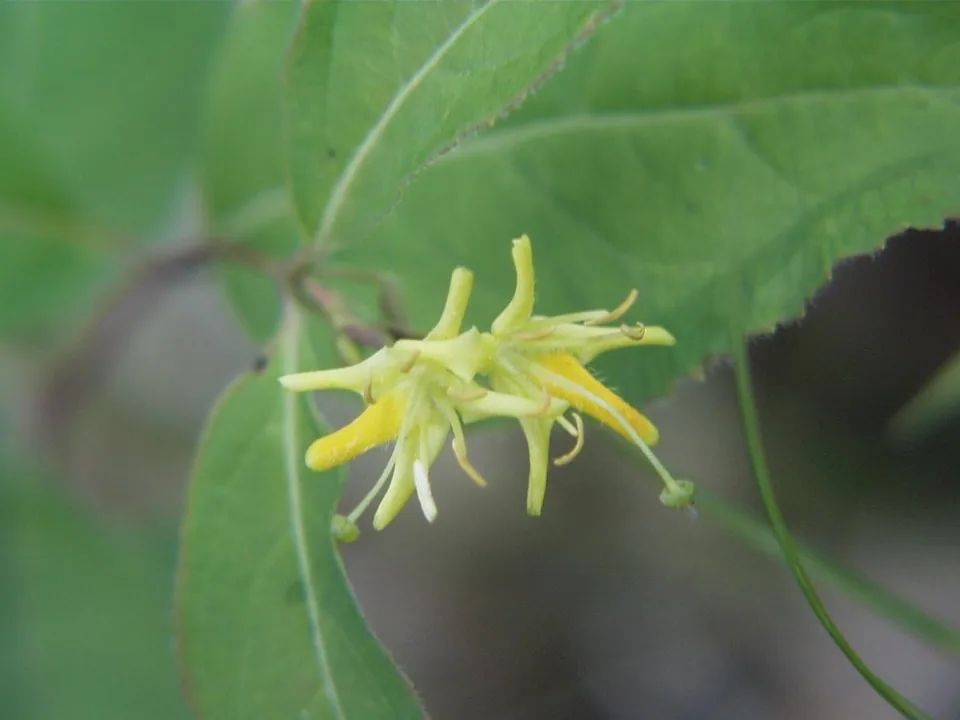
2-4 feet height by 2-5 feet spread; blooms in summer, yellow flowers fading to red
— Diervilla lonicera | Tennessee Smart Yards [5] Mature width: 61-152 cm (2-5 ft)
2-4 feet height by 2-5 feet spread; blooms in summer, yellow flowers fading to red
— Diervilla lonicera | Tennessee Smart Yards [5] - Propagation
From cuttings, root cuttings or seed
Overview
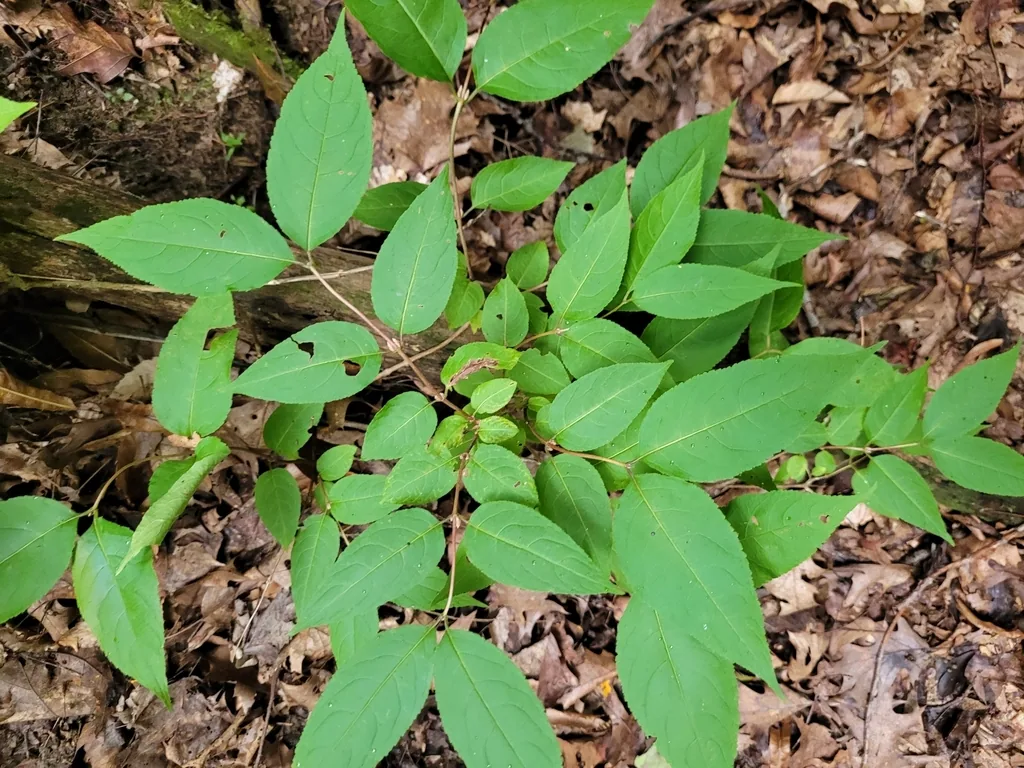
Northern bush honeysuckle is a suckering, densely branched deciduous shrub that typically grows to 3 ft [91 cm] tall and 4 ft [1.2 m] wide. [7] It grows in full sun to part shade in dry to medium moisture, well-drained soil. [7] It is easy to grow from cuttings, root cuttings and seed. [5] It is considered a good native substitute for non-native invasive honeysuckles. [2]
This record is incomplete: the sources we read do not cover every field yet.
Not yet covered by our sources: Hardiness, warmest zone, Pruning
Northern bush honeysuckle care
Measurements in square brackets are our conversion into the other unit system; the quoted text is unchanged.
How to water Northern bush honeysuckle
Watering
Dry to medium moisture, well-drained soil
What the sources say (2)
Light: full sun to part shade
Moisture and Soil: average, dry to medium moisture, well-drainedFull sun to light shade; medium to dry moisture level; tolerant of a wide range of soilsWatering notes
On rich, moist soil it spreads more aggressively; better planted in fairly dry soil, where it is more restrained
What the sources say (1)
On rich, moist soil it spreads more aggressively and is better planted in fairly dry soil where it will be more restrained.How much light Northern bush honeysuckle needs
Full sun to part shade
What the sources say (3)
Light: full sun to part shade
Moisture and Soil: average, dry to medium moisture, well-drainedFull sun to light shade; medium to dry moisture level; tolerant of a wide range of soilsWithstands shade but best in sun.How much cold Northern bush honeysuckle can take
Hardiness, coldest zone
The sources give different values depending on region, zone or growing conditions.
What each source says
According to Cornell Botanic Gardens: 4 [winter low −34.4 to −28.9 °C (−30 to −20 °F)]
According to Boone County Arboretum: 3-7 [winter low −40 to −12.2 °C (−40 to 10 °F)]
What the sources say (2)
According to Cornell Botanic Gardens: ## USDA Hardiness Zone
4
## Special characteristics
fall colorAccording to Boone County Arboretum: Withstands shade but best in sun. Zones 3-7. A tremendously tough plant that withstands cold and winds.Hardiness, warmest zone
Not stated in the sources we read.
How to propagate Northern bush honeysuckle
How to grow Northern bush honeysuckle
The plant
Family
Caprifoliaceae
What the sources say (1)
northern bush-honeysuckle Caprifoliaceae Diervilla lonicera Mill. symbol: DILOMature height
61-122 cm (2-4 ft)
What the sources say (1)
2-4 feet height by 2-5 feet spread; blooms in summer, yellow flowers fading to redMature width
61-152 cm (2-5 ft)
What the sources say (1)
2-4 feet height by 2-5 feet spread; blooms in summer, yellow flowers fading to redRemedies
The sources we checked give no remedies for this plant.
Calendar
Pruning
Not stated in the sources we read.
Months as given by the sources, which are mostly from the United States (northern hemisphere). In the southern hemisphere they shift by about six months.
Indicative values
Values from a secondary source, not checked word for word like the rest of this page. Use them as a starting point.
- Life cycle
- PerennialIndicative value, adapt it to your climate · Secondary source
- Hours of sun
- 5-6 hoursIndicative value, adapt it to your climate · Secondary source
- Soil
- Sandy Loamy RockyIndicative value, adapt it to your climate · Secondary source
- Soil pH
- 5.5-7.5Indicative value, adapt it to your climate · Secondary source
- Care level
- MediumIndicative value, adapt it to your climate · Secondary source
- Growth rate
- LowIndicative value, adapt it to your climate · Secondary source
- Pruning
- March, AprilIndicative value, adapt it to your climate · Secondary source
Similar plants
- Bush Honeysuckle Diervilla sessilifolia
- Alpine honeysuckle Lonicera alpigena
- Beauty Bush Kolkwitzia amabilis
- Chinese Abelia Abelia chinensis
- Common Valerian Valeriana officinalis
- Coralberry Symphoricarpos orbiculatus
- Dwarf honeysuckle Lonicera xylosteum
- European Honeysuckle Lonicera periclymenum
Sources
Every value above is quoted from these documents. Links lead to the original publisher.
- Northern bush honeysuckle - Cooperative Extension: Maine Wild Blueberries - University of Maine Cooperative Extension · extension.umaine.edu, consulted
- Diervilla lonicera (bush-honeysuckle): Go Botany · gobotany.nativeplanttrust.org, consulted
- Woody Plants Database · woodyplants.cals.cornell.edu, consulted
- Virginia Tech Dendrology Fact Sheet · dendro.cnre.vt.edu, consulted
- Diervilla lonicera | Tennessee Smart Yards · tnyards.utk.edu, consulted
- Species Records | Boone County Arboretum · bcarboretum.org, consulted
- Dwarf Bush Honeysuckle | Cornell Botanic Gardens · cornellbotanicgardens.org, consulted
- Diervilla lonicera (Bush Honeysuckle): Minnesota Wildflowers · minnesotawildflowers.info, consulted
Written by Emilio Marruso · last checked